Children today spend a large portion of their time with digital content, yet much of it does not nurture imagination, values, or cultural identity
That realisation is where Auxtoria began.
As a team passionate about technology, education, and storytelling, we started observing children’s cartoons and digital content more intentionally, trying to understand the narratives shaping young minds. It quickly became clear that while many stories entertain, they often fail to reflect the values, cultural experiences, and moral foundations children need.
This sparked a bold idea to change that narrative.
Auxtoria was created as a digital interactive playground where children can explore stories, games, and learning experiences that nurture imagination, positive values, Christian virtues, and African culture. By focusing on interactive storytelling and gamified learning, children do more than consume content. They participate, make decisions, solve challenges, and learn in engaging ways.
The vision is simple but powerful: help children learn, imagine, and grow beyond the traditional four walls of the classroom.
Stories profoundly shape how children see the world, how they treat others, and who they aspire to become. Yet many digital platforms prioritise entertainment over character formation. This gap, combined with Africa’s rich storytelling tradition, shaped Auxtoria’s direction.
For generations, storytelling has been used to pass down wisdom, values, and identity. Auxtoria reimagines this tradition for the digital age, combining storytelling, technology, and gamification to help children grow intellectually, morally, and creatively.
Building Auxtoria came with its own challenges
One of the earliest was translating a broad and ambitious idea into a practical product experience. Building for children requires more than functionality. It demands careful attention to safety, engagement, and educational value.
There was also the challenge of integrating different disciplines — technology, storytelling, and education — into one cohesive platform. Each operates differently, and bringing them together required continuous experimentation and iteration.
At the same time, the team had to build in a market already dominated by global entertainment platforms competing for children’s attention.
Yet despite the crowded space, a clear gap remained.
While digital content is abundant, there is still a shortage of platforms focused on meaningful and value-driven experiences. Parents are becoming more aware of what their children consume and are increasingly seeking safer, more intentional digital environments.
They are not necessarily trying to eliminate screen time. They want better screen time.
Technology has always been central to Auxtoria’s vision.
The platform transforms stories into interactive experiences where children actively participate in the narrative. Instead of simply reading or watching, they explore story worlds, make choices, and solve problems. This level of engagement strengthens both learning retention and emotional connection.
Built on modern digital architecture, Auxtoria supports multiple formats including interactive stories, comics, audiobooks, animated narratives, and educational mini-games. This creates a dynamic ecosystem where both creators and children can engage in meaningful storytelling experiences.
Technology also enables instant distribution, allowing creators to publish content digitally and reach audiences without geographical limitations. A story created in one part of Africa can reach children across the world within seconds.
As a digital platform, Auxtoria’s growth is driven by content expansion, creator partnerships, and user adoption.
As more storytellers, educators, and creatives contribute, the platform becomes richer and more engaging. At the same time, user behaviour continues to evolve. Parents and educators now expect more than passive entertainment. They want content that nurtures creativity, reinforces values, and engages children actively.
Children, in turn, respond better to experiences that allow them to participate and interact.
These shifts reinforce Auxtoria’s core focus.
At its foundation, Auxtoria remains deeply rooted in storytelling and cultural authenticity
Every story is intentionally designed to reflect real experiences, environments, and values. This ensures that even as the platform grows globally, it remains grounded in its purpose — helping children see themselves in the stories they consume.
Looking ahead, Auxtoria aims to grow into a comprehensive digital ecosystem for children’s storytelling and interactive learning.
Future plans include expanding its content library, introducing multiple African languages, and empowering children to create their own stories and content. The goal is to move children from passive consumers to active creators.
What excites us most is the opportunity to shape a generation of children who grow up with stories that inspire creativity, empathy, courage, and strong moral values.
Stories influence how children see themselves and the world.
When they are intentional, interactive, and rooted in positive values, they spark imagination, curiosity, and critical thinking.
Children deserve digital environments that nurture their creativity and help them imagine better futures.
For many businesses across Africa, customer communication remains fragmented and inefficient. Important messages are often split across multiple tools, from SMS gateways to email platforms and separate WhatsApp solutions. This creates operational complexity, especially for startups and growing businesses trying to scale customer engagement.
At the same time, customer expectations are rising. Users want instant updates, secure authentication, and timely marketing messages delivered through the channels they already use.
This gap between need and infrastructure is what SmarthiveSMS is addressing.
What SmarthiveSMS Is Building
SmarthiveSMS is a communication platform that enables businesses to engage their customers through SMS, Email, and WhatsApp from a single system.
The platform is designed to serve both technical and non technical users. For tech startups, SmarthiveSMS provides APIs that allow seamless integration into existing products. These APIs can be used for OTP delivery, transactional alerts, and automated marketing campaigns.
For non technical businesses, the platform offers a simple web interface where messages can be created and sent without coding.
The result is a unified communication system that reduces friction across multiple channels.
From Multiple Tools to One Platform
Traditionally, businesses have had to rely on different providers for different communication needs. One tool handles SMS. Another handles email. Another is used for WhatsApp messaging. This separation creates inefficiencies in both cost and workflow.
SmarthiveSMS simplifies this structure by bringing all major communication channels into one platform. This allows businesses to manage customer engagement from a single dashboard or API layer.
Instead of switching systems, teams can focus on sending the right message at the right time.
Why Multi Channel Communication Matters
Customer engagement is no longer limited to one channel. Users may expect a verification code via SMS, a receipt via email, and a promotional update through WhatsApp. Businesses that cannot coordinate across these channels risk losing customer trust and engagement.
SmarthiveSMS is built to solve this by enabling consistent communication across multiple touchpoints.
This creates a more reliable and scalable system for businesses that depend on timely customer interactions
Built for Startups and Growing Businesses
One of the key strengths of SmarthiveSMS is its flexibility. Startups can integrate its APIs directly into their products to automate communication flows. This is especially useful for authentication, onboarding, and transactional messaging.
At the same time, smaller or non technical businesses are not left behind. They can still access the platform through a simple interface that does not require development experience.
This dual approach makes the platform accessible across different levels of technical capability.
The Value Layer Behind SmarthiveSMS
SmarthiveSMS sits at the intersection of infrastructure and customer engagement. Businesses rely on it to communicate reliably with their users, which makes messaging a critical part of product experience and marketing performance.
The platform’s value is driven by message volume, API usage, and business adoption across sectors such as fintech, e commerce, logistics, and service based industries.
As businesses scale, the demand for reliable communication infrastructure continues to grow.
A Simpler Way to Reach Customers
SmarthiveSMS is positioning itself as a unified communication layer for businesses that want to engage customers more effectively without managing multiple tools.
By combining SMS, Email, and WhatsApp into one system, it reduces complexity while improving speed and consistency of communication.
Getting Started
Businesses can begin using the platform by creating an account at app.smarthivesms.com.
From there, they can access both the web interface and API tools depending on their needs.
Lagos is one of Africa’s most dynamic cities. It is filled with energy, commerce, and endless opportunity. Yet for many residents, daily life comes with a hidden cost. Finding trusted services, discovering new places, or even identifying what is happening nearby often requires effort, guesswork, and multiple platforms.
For millions of Lagosians, the city remains fragmented. Information is scattered across social media, informal networks, and disconnected apps. This fragmentation creates friction that slows down everyday life.
This is the challenge MyLagosApp is built to solve.
What MyLagosApp Is Building
MyLagosApp is a city focused platform designed to simplify how people experience Lagos. It brings together essential services, local businesses, events, and opportunities into a single digital environment.
The goal is simple but powerful. Instead of switching between platforms or relying on inconsistent information, users can access what they need in one place. The app turns Lagos into a structured and navigable digital experience.
At its core, MyLagosApp is about making the city easier to use.
From Chaos to Clarity
What makes MyLagosApp stand out is not just aggregation. It is the ability to make Lagos more understandable and accessible in real time.
The platform is designed around how people actually move through the city. It focuses on relevance, proximity, and immediate need. This means users are not just browsing information. They are discovering options that are useful in the moment.
In a city where time and distance directly impact daily decisions, this approach changes how people interact with their environment. Lagos becomes less overwhelming and more actionable.
Building With Local Context
Many global platforms have attempted to organize urban living, but Lagos operates differently. Informal systems play a major role in commerce. Trust is often built through personal networks rather than digital platforms. Reliable data can be difficult to find.
MyLagosApp is built with these realities in mind. Its approach is not about copying global solutions but adapting to local behavior. This local intelligence gives it a stronger foundation to succeed where generic platforms struggle.
Why This Matters Now
Lagos continues to grow rapidly, both in population and economic activity. As the city expands, the complexity of navigating it increases.
This creates a clear need for platforms that reduce friction and improve access. When people can find what they need faster, they save time, make better decisions, and participate more actively in the economy.
MyLagosApp sits at the center of this shift. It is not just a convenience tool. It is part of a broader movement toward digitizing everyday urban experiences in Africa.
The Business Behind the Platform
Beyond user convenience, MyLagosApp creates value across multiple layers of the ecosystem. Local businesses gain visibility and access to customers. Service providers connect with demand more efficiently. Users benefit from a more organized and reliable experience.
This positions the platform to capture value through business visibility, service transactions, and partnerships tied to urban commerce. As usage grows, the data generated also becomes a powerful asset for understanding consumer behavior in Lagos.
A Smarter Way to Experience Lagos
The long term vision for MyLagosApp goes beyond discovery. It is about building the digital infrastructure that supports daily life in Lagos.
By connecting people to services, opportunities, and experiences in a seamless way, the platform has the potential to reshape how the city is navigated. It moves Lagos closer to becoming a smarter and more accessible urban environment.
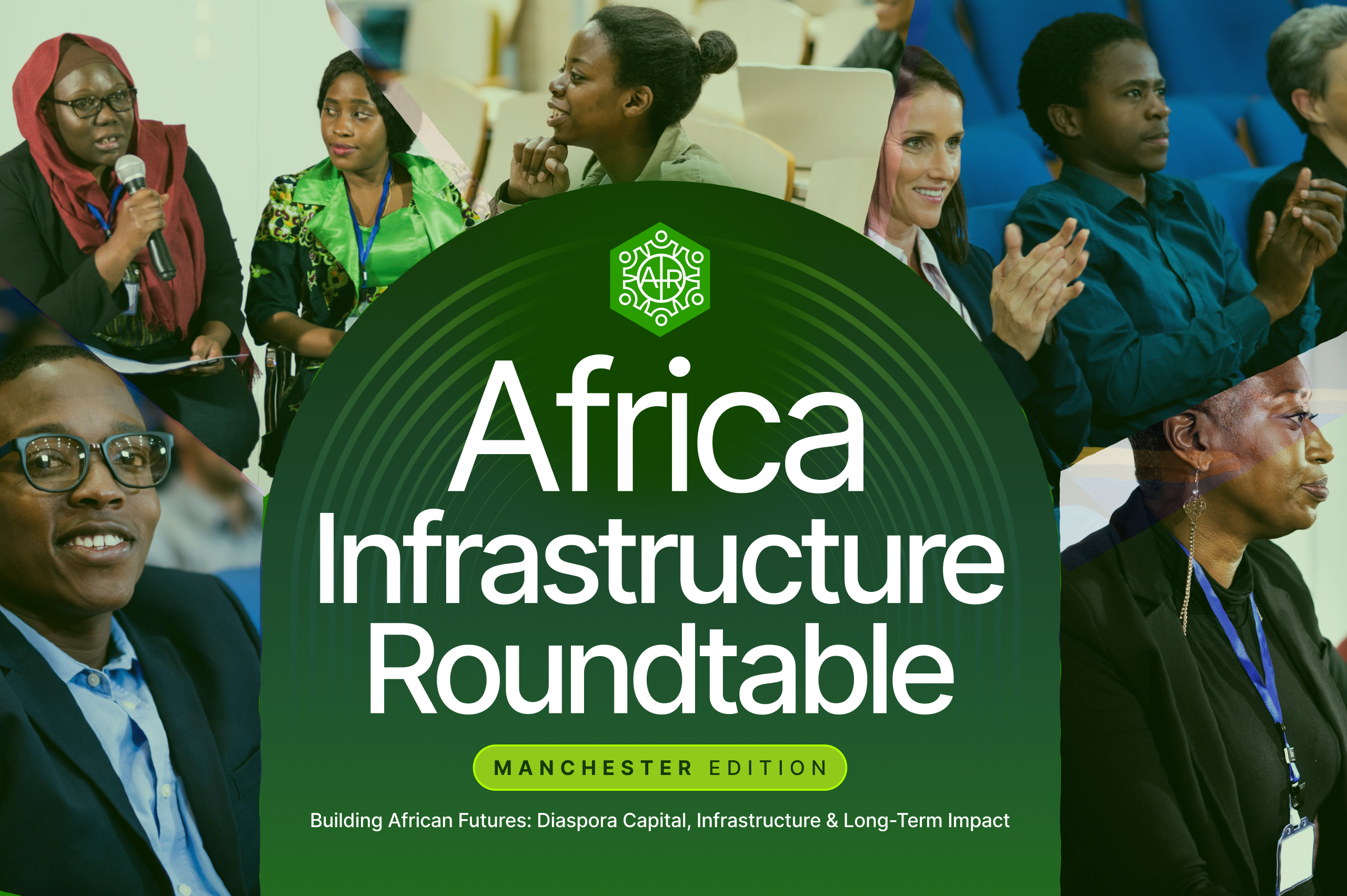
The Africa Infrastructure Roundtable (AIR) is built on a simple but urgent observation: while the African diaspora remains deeply invested in the continent’s future, there are still very few intentional, credible spaces where that interest can translate into structured dialogue, coordinated thinking, and long-term development outcomes. AIR exists to begin addressing this gap; creating a platform where capital, policy, and enterprise can be meaningfully aligned through focused, high-quality conversations.
This edition of the Roundtable will be held in Manchester, United Kingdom, on April 24th, 2026, under the theme:
Building African Futures: Diaspora Capital, Infrastructure & Long-Term Impact
At its core, the conversation will explore how diaspora leadership, investment, and institutional engagement can move beyond remittances and sentiment toward more structured participation in Africa’s infrastructure and economic systems. It will examine how capital can be coordinated for long-term value creation, how trust between diaspora actors and home institutions can be strengthened, and what sustainable, community-aligned development should look like over time.
To ensure the Roundtable is both intentional and deeply engaging, the theme will be explored through two structured conversations:
Community Capital & Infrastructure for Collective Growth This session focuses on how trust can be built within African and diaspora communities to enable more coordinated, community-driven investment ecosystems. It will explore how these systems can translate into credible infrastructure development, and what it takes to move from fragmented efforts to collective, scalable participation.
Institutional Bridges & Future Pathways This session builds on the first by examining how diaspora professionals can connect capital, policy, and enterprise into structured impact.
It will explore the kinds of platforms, partnerships, and institutional frameworks required to enable sustained collaboration between the diaspora and the continent.
The Roundtable will also feature keynote addresses designed to frame and deepen the conversation:
Timi Olagunju, a policy expert, lawyer, and governance strategist, will deliver a keynote titled “From Diaspora Potential to Institutional Impact.” His address will explore how diaspora professionals can move beyond individual success to build structured bridges between capital, policy, and enterprise, and what systems are required to translate influence into measurable, long-term impact.
Sally Amoasah, an impact and investment professional, will deliver a keynote titled “Funding What Matters: Lessons from Impact Investment for Diaspora-Led Development.” Her keynote will focus on how capital can be redirected toward meaningful outcomes, and how funding models can be structured for sustainable and scalable development impact.
The conversations will be guided by experienced moderators with backgrounds across governance, law, business, policy, and leadership, ensuring the dialogue remains structured, insightful, and outcome-oriented.
A number of speakers will be contributing to the discussions, including:
Cameroonian changemaker Paul M. Laka, founder and managing partner of Fuest Construction Brokers, also a diaspora investment and development advisor focused on diaspora engagement and sustainable finance
Jeffrey Williams-Edem, a strategy and investment professional focused on connecting capital, enterprise, and cross-border opportunities. His work centres on building pathways for sustainable investment and fostering partnerships that drive long-term economic growth across African markets.
Henry Adebisi, a finance leader and investor focused on unlocking capital and building scalable businesses across Africa. He is the founder of AfriStakes, a platform connecting African enterprises with local, diaspora, and global investors to bridge capital gaps and drive long-term economic growth
Seun Odusanya, a communications and engagement professional working across public policy, community insight, and youth-focused development initiatives
— among other professionals, founders, and ecosystem leaders contributing diverse perspectives to the dialogue.
The event is being supported by a growing network of Nigerian, African, and Caribbean diaspora communities in the UK, alongside student organisations, unions, and ecosystem groups, reflecting the collective nature of the conversation and the importance of broad-based participation.
AIR will be a hybrid event, taking place in person in Manchester while also being livestreamed to a wider Africa-based and global audience through Langovest’s digital platforms and those of its media partners, ensuring the conversation extends beyond the room and continues to engage a broader community.
Overall, the Africa Infrastructure Roundtable is designed not just as an event, but as a starting point and a deliberate step toward building more structured, collaborative, and sustained diaspora participation in Africa’s long-term development.
In 2024, a series of incidents began to feel less like isolated tragedies and more like a pattern.
Stories of insecurity were no longer distant headlines. They were personal, frequent, and unsettling. From cases of violence involving trusted individuals to deeply disturbing reports affecting young people, the sense of vulnerability was becoming harder to ignore.
For the founder of Quida, the turning point came with a realization: reacting emotionally was not enough. If nothing changed, these patterns would continue.
That moment led to a decision — to build something practical.
Quida was born from that decision.
Rethinking Safety as an Everyday Need
At its core, Quida is built on a simple idea.
People should not have to rely on luck to stay safe.
In Nigeria, safety information is often fragmented and reactive. Many people depend on word-of-mouth updates, WhatsApp broadcasts, or social media posts that surface after incidents have already occurred.
While these systems work to an extent, they lack structure, speed, and reliability.
Quida is designed to address that gap by creating a system where people can stay informed, connected, and prepared in real time.
Building With Limited Resources but Clear Intent
The early days of Quida were defined less by capital and more by conviction.
With limited financial resources, the team focused on what they had: a clear understanding of the problem, digital skills, and a willingness to learn and build.
Early influences came from lived experiences and community conversations. The problem was not abstract. It was visible in everyday discussions, shared frustrations, and a growing sense that existing systems were not enough.
This shaped Quida into more than just a product. It became the foundation for a broader movement around safety awareness and collective responsibility.
Moving Beyond Reactive Systems
One of the early insights behind Quida was that traditional approaches to safety are inherently limited.
They are often delayed, scattered, and reactive.
By the time information reaches people, the situation has already unfolded.
Quida takes a different approach. Instead of waiting for information to circulate informally, it focuses on building a structured system that enables:
Real-time alerts
Location-based safety insights
Immediate access to emergency tools
Community-driven reporting
This shift changes safety from something people react to, into something they can actively manage.
Technology as the Foundation for Scale
From the beginning, technology has been central to Quida’s model.
The platform is built to handle real-time data, enabling users to receive alerts, share information, and access emergency support quickly. Features such as location tracking, panic alerts, and crime mapping are designed to make safety information both accessible and actionable.
But beyond the technology itself, Quida is building an ecosystem.
Through initiatives like the Quida Movement, WhatsApp communities, and planned campus programs, the platform extends beyond the app into a broader network of users contributing to shared safety awareness.
This combination of technology and community is what enables scale.
Early Growth and User Behavior
At its current stage, Quida’s growth is focused less on revenue and more on awareness, trust, and network building.
The team has begun developing:
A growing digital presence
Early community structures
A waitlist with active interest
Grassroots expansion plans through campus initiatives
Even at this stage, user behavior is already evolving.
There is a clear demand for real-time information rather than delayed updates. Users are also more engaged when they feel part of a system, not just passive consumers of information.
Trust, however, remains critical. For a product like Quida, reliability is not optional. It is foundational.
Designing for the Nigerian Context
One of Quida’s core principles is building for real, everyday experiences.
This means designing around local realities — from public transport risks to informal safety systems people already rely on.
It also means communicating in ways that feel natural, including the use of local languages and familiar platforms like WhatsApp.
Rather than forcing entirely new behaviors, Quida builds on existing ones, adding structure and reliability.
Lessons From the Journey
Quida’s journey highlights a few key lessons.
First, meaningful products often come from lived experiences, not abstract ideas.
Second, starting does not require perfect conditions. Clarity of purpose and consistency can carry a product through uncertainty.
And finally, community can be as important as the product itself. Especially in a context like safety, where collective awareness strengthens the system.
Looking Ahead
The long-term vision for Quida is to evolve into a fully integrated safety ecosystem.
This includes expanding across major Nigerian cities, scaling campus initiatives, and improving features such as real-time alerts and predictive safety tools.
There are also plans to extend beyond Nigeria into regions facing similar challenges.
As technology continues to shape the safety landscape, the shift is clear. Safety is moving from reactive systems to proactive, data-driven networks powered by users themselves.
Closing Note
What makes Quida stand out is not just the technology, but the intent behind it.
It represents a shift from fear to action.
A move towards giving people more control over their safety. And building a system where awareness, connection, and response are not left to chance.
If it works at scale, Quida will not just be an app.
There is a version of Lagos that thrives on spectacle. LED screens, demo-day theatrics, founders exchanging LinkedIn QR codes in crowded rooms that promise access but rarely deliver clarity. It is the Lagos of branded lanyards and pitch competitions where the winner is photographed and then largely forgotten. It is loud, visible, and for a certain kind of founder building a certain kind of business, almost entirely useless.
And then there was Baraza Lagos.
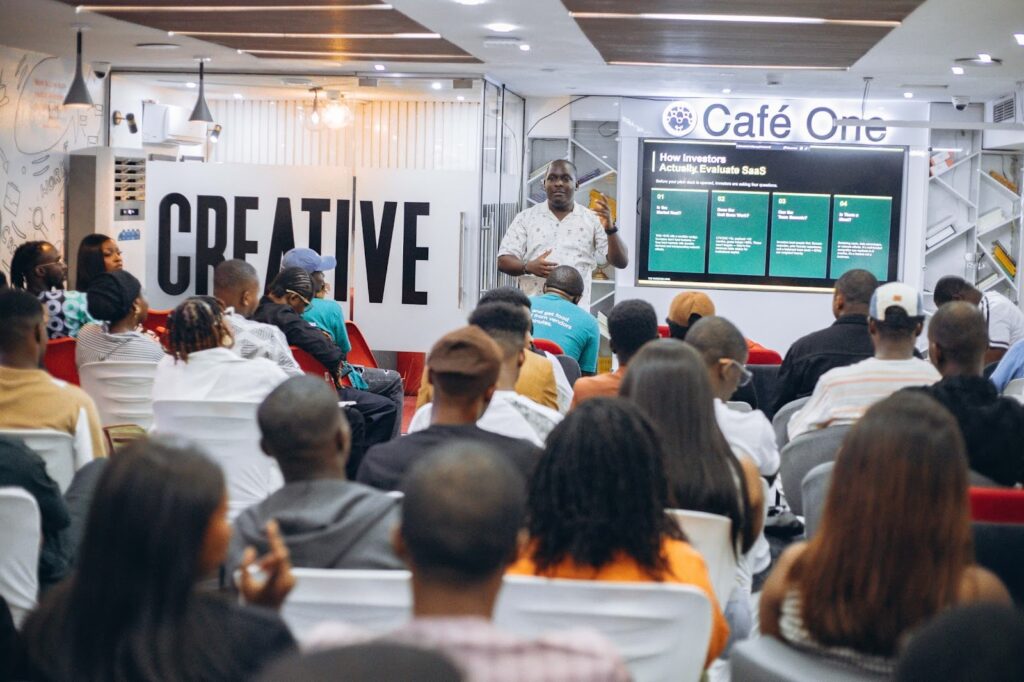
On February 21, 2026, at Café One in Yaba, the energy was noticeably different. The room held roughly a hundred founders, operators, legal advisors, and investors – and what distinguished it was not who was present but what they were doing.
No oversized branding installations. No performative networking rounds with a timer. People were leaning in, not posturing, notebooks were open. When the sessions broke into smaller clusters, nobody was debating valuations in the abstract or rehearsing their elevator pitches on each other.
They were asking specific questions about specific problems. Cap table structures that had been assembled hastily in year one and were now creating friction in year three, compliance obligations that had been deferred and were now threatening deals, governance arrangements that looked fine on paper and were quietly becoming liabilities.
The conversations were, by any conventional measure of tech event programming, deeply unglamorous. They were also exactly the conversations most African founders most need to be having – and almost never are.
Not fundraising hype, not valuation optics. Structure.
Because across African startup ecosystems, failure is rarely caused by lack of ambition. The ideas are frequently correct – correctly identified problems, correctly sized markets, correctly intuited solutions. What kills startups is the infrastructure of bad decisions made before the business had the revenue or the resilience to absorb them: equity structured carelessly in year one, compliance ignored until it becomes expensive in year three, governance reactive rather than proactive throughout, documentation incomplete precisely when due diligence arrives.
Baraza has chosen to sit directly inside that tension.
Kigali: Testing a thesis about serious rooms
Baraza did not begin in Lagos.
The first edition was held in Kigali on November 18, 2025, positioned as a pre-event mixer ahead of Norrsken Africa Week. Not designed to compete with large conferences – designed, rather, to filter them.
The theme was direct: “Funding the Future: What smart money looks for in African founders.”
Behind the design of that room was Semudara Abayomi, the convener known across Lagos’s startup corridors as Bayomi – who had spent enough time inside Africa’s ecosystem events to understand what most of them got wrong. The signal-to-noise problem, the tendency to pack rooms with people and empty them of depth, the gap between the conversations that happened on stage and the conversations founders actually needed to be having with each other.
He had a clear instinct: that the value of a gathering is not proportional to its headcount. That a room of fifty people asking uncomfortable questions is worth more than a hall of five hundred applauding comfortable answers.
Rather than chasing attendance volume, Baraza Kigali focused on curation. Founders, investors, and ecosystem leaders from across seven countries convened in a controlled room where the conversation centred on capital readiness, not capital aspiration.
The thesis that shaped the programming was simple and strategic: serious capital requires serious structure.
In an ecosystem where visibility can be mistaken for viability, Baraza emphasised that investor confidence is built on disciplined cap tables, governance alignment, compliance hygiene, and operational clarity – not on the size of the pitch deck or the ambition of the vision statement.
Intimate rooms, when designed with intention, generate more actionable ecosystem value than conference halls full of badges. Founders didn’t leave with tote bags. They left with clarity.
It proved something important enough to test again. Lagos became the next logical stress test.
Lagos: When compliance became competitive advantage
If Kigali was about funding readiness, Lagos was about structural survival. The theme was unapologetically direct: “Building Compliant, Scalable and Investment-Ready Tech Startups.” The tone shifted from what investors want to what founders must fix – and the room felt that shift from the first session.
Speakers were selected not for inspiration but for operational authority. Practitioners who had lived inside the problems they were discussing and had earned the right to speak to them.
Segun Cole set the temperature early. His point was precise and, for many founders in the room, quietly devastating: a pitch deck does not secure capital. It secures a meeting. What closes the gap or collapses it is disciplined economics, a defensible structure, and the founder’s ability to answer hard questions without deflecting.
Several people in the room, by their own admission afterward, realised mid-session that they were not as ready as they had assumed. That realization was the point.
Omoruyi Edoigiawerie pushed on a different pressure point. The instinct to model African startups on Western templates, to build for a version of a market that exists in San Francisco rather than the one that exists in Lagos, Accra, or Nairobi – is, he argued, one of the more expensive mistakes a founder can make. The frameworks are borrowed. The assumptions embedded in them frequently do not survive first contact with local regulatory and market realities.
Founders who understand this early build differently. They localise not just their product but their operating logic.
Cynthia E. Chisom’s session was the one people were still discussing as they stood in the car park afterward. She drew the line between governance architecture, stakeholder management, and long-term revenue durability in a way that reframed compliance entirely – not as legal overhead bolted onto a business after the fact, but as enterprise infrastructure built into its foundations.
A business with weak governance is not just a compliance risk. It is a revenue risk, a retention risk, a fundraising risk. The room went quiet in the way rooms go quiet when a speaker articulates something the audience already knew but had never heard said directly.
By the end of the evening, the conversation in the room had shifted. Not ‘How do I raise?’ but ‘What needs restructuring before I raise?’ That difference is subtle and transformative.
The format held everything together: short, dense sessions; direct Q&A that ran long because the questions were real; breakout discussions that formed organically and refused to end on schedule.
Founders were not leaving inspired in the vague sense the word usually implies at tech events. They were leaving with specific things to fix.
Why the timing is not accidental
African startup ecosystems are entering a maturity phase, and the terrain is shifting in ways that reward structural discipline. The early era of unchecked experimentation is narrowing. Investors are more cautious, regulatory bodies are more observant, cross-border expansion requires legal clarity that founders of three years ago could afford to defer.
The next generation of African builders will not be measured only by growth curves. They will be measured by governance quality, by the cleanliness of their cap tables, by whether their compliance posture can survive the scrutiny of institutional capital.
In that context, Baraza is less an event series and more a signal. It signals that the ecosystem is recalibrating – from noise toward durability, from visibility toward viability. The founders who treat compliance as leverage rather than liability will likely be the ones still standing when funding cycles shift again. The rooms shaping that mindset are only getting sharper.
The Architecture Behind the Room
A well-run event and a well-told story about a well-run event are two entirely different achievements. Baraza Lagos earned both. The second achievement required a specific and uncommon kind of expertise.
Hype Empire came into the Baraza Lagos story not as a vendor executing a brief but as a strategic communications partner that understood what the event needed to become. The question was never simply how to promote it. It was more foundational than that: how do you translate a room full of serious, non-performative conversations into a public narrative that is equally serious, equally unperformed, and still compelling enough to reach the founders who were not in the room? Events that deliberately resist hype are harder to tell stories about than events designed for it.
The instinct in communications is to reach for the dramatic, the quotable, the shareable spectacle.
Hype Empire’s discipline built over years of working inside Africa’s ecosystem – was to resist that instinct and find the harder, more durable story: that the quietest room at a tech event is sometimes the most important one.
There is a difference between publicity and positioning. Publicity fills a moment. Positioning builds a narrative that compounds. Hype Empire understands that difference, and the Baraza Lagos amplification strategy was built on it.
From pre-event ecosystem framing to post-event media syndication, from curated social heat to visual storytelling that preserved the room’s focused intensity without manufacturing spectacle, the strategy delivered one outcome above all others: Baraza Lagos was perceived not as another tech meetup on the Lagos calendar, but as a structural intervention in how African founders think about building. That perception did not happen by accident. It was engineered.
The involvement of the Nigerian Bar Association, Lagos Branch added institutional gravity. Compliance was not discussed as an afterthought but as architecture. Legal structure treated as foundational to innovation, not antagonistic to it.
Media partners including Africa Tech Journal reinforced the reach, amplifying the discourse beyond Yaba and signalling that this was not a private gathering but a directional shift.
Depth met reach. Substance met visibility. That combination is rare in African tech communications, and it was engineered deliberately. This is what it looks like when PR is treated as strategy rather than afterthought – when the story of an event is designed with the same care and intention as the event itself.
Bayomi’s take
In the short video Baraza released, now making rounds on X and Instagram, convener Semudara Abayomi known across the ecosystem as Bayomi, sounded quietly proud, the way someone does when a bet pays off.
He described Baraza as building “spaces where founders leave with maps, not just memories.”
He spoke about reframing compliance from “that scary legal thing” into “the boring superpower that lets you raise, scale, and sleep at night.” It was a subtle but radical repositioning. Compliance not as constraint. Not as bureaucratic friction. But as leverage.
You could hear relief in his voice. The room had done exactly what it was designed to do.
Less than 48 hours later he was already teasing next moves on X: “Baraza Lagos… Abuja next or Nairobi?”
The continental horizon
Less than 48 hours after Lagos concluded, conversations had already shifted to the next question: Abuja, or Nairobi?
Each city carries a different strategic weight.
Abuja is policy-proximate in ways Lagos is not – a city where decisions inside ministries and regulatory agencies shape the operating terrain for every startup in Nigeria. A Baraza room there would tilt toward regulatory engagement, public-sector dialogue, and the structural realities of building close to federal power. For founders navigating that interface, such a room barely exists today.
Nairobi represents a different frontier. It is Africa’s deepest startup density outside Lagos – cross-border by default, seasoned in fintech regulation, and experienced in scaling across markets with varying compliance demands. The conversation there would not be about whether structure matters, but about which structures to build, in what order, and for which markets.
Different cities. Same DNA: curated rooms, structural honesty, zero performance.
If Kigali tested the thesis and Lagos refined it, the next editions will determine whether Baraza becomes a continental standard – the series serious African builders treat as essential rather than optional.
Build with Hype Empire
At Hype Empire, we don’t just report on what’s happening in Africa’s startup ecosystem, we help shape how it’s understood. The Baraza story is one example of what happens when communications strategy is built with the same intentionality as the event it serves.
If you are building something meaningful and need it positioned with clarity, depth, and long-term narrative relevance – not just a press release, a post-event recap, but a story that compounds over time, Hype Empire is the team that knows how to build it.
Nigerian companies are no longer building products and services, they are shaping the narratives. And Podcasting has quietly become one of the strategic storytelling tools.
The need for founder visibility, vision-driven growth, proper documentation, distribution control, and owning one’s narrative has led to the rise in the adoption of podcasting.
The rising cost and high barrier to entry of traditional media is driving founders and business owners to target cost-effective approaches like podcasting.
Between 2021 and 2022, Spotify recorded a whopping 222% increase in podcast listenership in Nigeria, placing Nigeria as number 2, behind South Africa who is leading the charts in Africa.
Turntable Charts also reported Gen Z and Millennials leading the demography charts in podcast listenership here in Nigeria.
This signals more than entertainment consumption, it represents an opportunity for brands to build sustained attention and own their narrative.
Nigerian companies have recognized this shift and are leveraging podcasting in distinct but strategic ways.
Companies like Fincra, Cowrywise, and Paystack have adopted podcasting to tell their story thus controlling the narrative and connecting more with their users through storytelling.
Individual podcasts like Afrobility, Afropolitan, The Open Africa Podcast, Founders Connect,Totally on Brand etc feature founders and provide a platform for them to leverage an existing listener base to tell their stories and build brand authority.
At the core of it all, is the ability to connect more with those who matter; the users and target audience.
When Piggyvest’s COO, Odunayo Eweniyi appeared on the 210 episode of the London Fintech
Podcast to shed more light on the origin story of Piggyvest, she wasn’t just telling Nigerians who they were, she was positioning Piggyvest in the global fintech conversation.
When Nathan Nwachukwu appeared on the Afropolitan Podcast to talk about how Nigeria needs sovereign intelligence, he wasn’t just marketing Terra Industries, he was shaping the intellectual narrative around Africa owned deep tech.
By creating The Afincran Playbook, Fincra shifted from a fintech infrastructure provider to becoming a thought leader in championing cross-border trade across Africa.
For Cowrywise, Ope’s Money Diary moves beyond product marketing. It humanizes decision-making, allowing Cowrywise to build emotional equity, not just financial trust.
As more Nigerian tech companies embrace podcasting as a trust and distribution tool, the differentiator is strategy. With the right partner, podcasting moves from being content to becoming infrastructure.
Nigerian companies are no longer waiting to be invited into conversations; they are creating them and inviting the world to listen.
Nkem Creatives helps brands move beyond simply recording episodes to building intentional podcast ecosystems that drive visibility, authority, and measurable growth.
From narrative positioning and guest strategy to multi-channel repurposing and distribution, we ensure every episode works as a business asset, not just content.
If your company is ready to turn conversations into community and influence, partner with Nkem Creatives and build a podcast that moves your business forward.
For years, Africa’s tech narrative has revolved around large corporations, venture capital funding, While those stories dominate headlines, they don’t fully capture where real momentum is building. The truth is quieter and more powerful. Africa’s tech future is increasingly being shaped by creators.
Creators In this context are not just Influencers . They are developers building niche tools from their bedrooms. Designers launching digital products on low budgets. Writers monetizing knowledge online. Educators running tech communities. Small founders solving hyper local problems with simple but scalable solutions.
Unlike large corporations, creators move with speed. They are not slowed down by heavy bureaucracy or shareholder pressure. They experiment quickly, respond directly to their audiences , and build products rooted in lived experience. In a continent as diverse and dynamic as Africa, this agility matters.
Technology has also lowered the barrier to entry. With access to no code platforms, AI tools Fintech APis, and global distribution channels, individuals can now build and monetize ideas without massive capital. A laptop, internet access, and skill are often enough to start. This democratization of innovation is changing the power structure of tech.
Corporation will always have a role especially in infrastructure and large scale investment. But creators understand culture. They understand language, behavior, and community. They build solutions that feel personal, not imposed. And in emerging markets, trust and relatability are currency.
Across Africa, we are already seeing this shift. Independent developers are launching fintech tools tailored to specific communities. Content creators are education thousands about coding, investing, and digital skills. Small tech founders are building for real problems not pitch decks.
The next wave of African innovation may not come from towering headquarters, it may come from shared work spaces, small studios, and home offices. It will come from people who see gaps in their immediate environment and decide to build.
Africa’s strength has always been its entrepreneurial spirit. Technology is simply amplifying it.
The future will not belong solely to corporations with capital. It will belong to creators with courage, clarity, and connection.
It’s the 26th. You’ve got ₦47k left. Groceries almost done ₦35k. Your data just finished. Your mom needs ₦5,000. Femi’s owambe is Saturday.
On New Year’s, you made a budget. Excel sheet, colour-coded, formulas. You felt responsible. Adult. You haven’t opened it since January 3rd.
You’re not bad at budgeting. The system was never built for you.
Your Income Isn’t Predictable
Traditional budgeting starts with, “How much do you earn monthly?”
In Nigeria, the first rule of budgeting is “We don’t talk about salary.”
Even with a salary, you’ve got freelance gigs, black tax, and fluctuating exchange rates. Your income isn’t predictable. Regular budgeting methods assume one employer, one salary, and regular expenses.
Nigeria doesn’t work like that.
Your Expenses Aren’t Optional
Budgeting apps separate spending into “wants” and “needs”.
Here, everything is urgent:
Family is insurance. Ajo contributions, mumsi’s allawee, last borns, emergencies; ₦50k to ₦100k minimum. Apps call this “overspending on gifts”. You call it Monday.
Fuel scarcity adds ₦7k to transport. NEPA kills your inverter battery—₦45k fiam. Data finishes mid-meeting—₦2k. Generator maintenance, water shortages? You can’t budget chaos.
Appearances are investments. That owambe costs ₦150k (aso-ebi, tailor, shoes, hair, gift). Not going? It’s your boss’s wife’s birthday. Apps tag it entertainment. Reality? ‘Networking’.
The Apps Don’t Speak Your Language
I tried Mint once. Beautiful app. Very Un-Nigerian.
Couldn’t track ₦20k across four vendors. Didn’t understand Opay, Palmpay, or my domiciliary account. Wanted me to categorise keke rides!
What category is “replacing your phone screen because okada fell”? Or “sending money to mumsi who’ll give it to your brother—basically paying his rent, but asking questions feels wrong”?
By week two: 37 uncategorised transactions. App said I’m “falling behind”.
No. Nigeria is beyond your comprehension.
Looking at Your Finances Feels Like Failure
Not checking your balance is self-preservation.
When fuel goes from ₦175 to ₦1,030 in a day, tracking documents your powerlessness. The app suggests “cut back on transportation”. Sure. I’ll just stop going to work.
Budget breaks on Day 3, you abandon it. No grace for emergencies. No way forward in this economy designed to frustrate you.
What If You Just… Knew?
Don’t say ‘budgeting’. Try ‘witnessing’.
Market women keep small notebooks. Freelancers forward receipts to one WhatsApp chat. Bankers voice-note expenses while driving.
They’re not using apps. They’re using what’s already in their hands.
That’s the insight everyone misses: Nigerian budgeting doesn’t fail because Nigerians lack discipline. It fails because the tools demand new behavior.
Download apps. Build spreadsheets. Link banks. Set up categories. These aren’t small asks, they’re requests to change your entire routine.
But what if you didn’t have to change at all?
Your Money Is Already Talking. Text It.
You’re already on WhatsApp 50 times a day. What if budgeting happened there too?
Not by downloading anything new. Just by texting what you spend.
“2k fuel.”
“15k mumsi’s medicine.”
Done.
That’s what we built at MonieDiary. A WhatsApp bot that turns your existing behavior into financial clarity. Four months in, I discovered ₦52,000 monthly in expenses I never noticed.
Knowing you spent ₦180k on food doesn’t mean you failed. It means you have data. Data lets you decide: cut back? Worth it? Okay with it?
Those questions only matter if you know the numbers.
The bigger lesson: Tools that work in Nigeria don’t fight Nigerian behavior. They work with it. They meet people where they are, on WhatsApp, texting, living their lives.
Your money is already talking. The question is: are you listening?
In the Nigerian attention economy, N30.1 million isn’t just a box office number—it’s a data point.
When Onobiren: A Woman’s Story debuted on March 6, 2026, it didn’t just enter the cinemas; it colonized the timeline. Surpassing both local and Hollywood heavyweights in its opening weekend, the film’s success has become a distribution masterclass for the next generation of African creators. The message is clear: Distribution is no longer about billboards; it’s about “Social Proofing.”
The Death of the Traditional Ad
The “Onobiren Effect” proves a theory we’ve been tracking at African Tech Journal: The 18-35 demographic has developed a biological filter against traditional ads. We don’t buy tickets because of a radio jingle; we buy them because of a shared “Hot Take” on X or a high-energy Reel on Instagram.
Laju Iren’s strategy wasn’t built on a massive traditional marketing budget. Instead, it leveraged inclusive virality. By positioning the story as a universal tale of resilience rather than a niche “faith-based” film, the production team tapped into multiple overlapping communities—from the CCI network to the secular Nollywood fanbase.
The Mechanics of the “Silent Tsunami”
Why did it work? Because the marketing mirrored the product: Empathy-driven.
Organic Amplification: The film used hashtags like #OnobirenTheMovie to turn viewers into advocates. When @OfficialSuo called the film a “silent tsunami” of excellence, it wasn’t just a review—it was a trust signal that reached 80,000+ people instantly.
Community-as-Infrastructure: The launch utilized existing community networks not as a closed circle, but as a distribution node. This grassroots momentum converted online hype into real-world, sold-out screenings across Nigeria and Ghana.
The “Drop the Should” Hook: By creating culturally resonant taglines, the film invited user-generated content (UGC). This allowed the audience to co-author the film’s identity, moving it from a “product” to a “movement.”
The “Onobiren” Playbook: Distribution as Infrastructure
The opening weekend success of Onobiren isn’t just a win for Nollywood; it’s a roadmap for any builder looking to pierce the noise of the 2026 African market. To win, you have to move from “running ads” to “building rails.”
The Logic of “Social Proofing”: In a low-trust environment, the most expensive ad is less effective than a single “Hot Take” from a credible peer. Onobiren succeeded because the team didn’t just market a film; they engineered a trust signal. By leveraging high-engagement nodes and micro-influencers, they turned “viewers” into “distribution infrastructure.”
Context Over Content: The data shows a massive engagement spike specifically around the film’s local nuances and pidgin dialogue. For the 18-35 demographic, “generic” is invisible. Whether you are building an app or a movie, your product must speak the specific language of its community. If it isn’t shareable in a 15-second “silent tsunami” moment, it doesn’t exist.
Ownership of the Narrative: The N30.1M opening weekend proves that in the modern attention economy, the audience is the distributor. By using user-generated hooks like the “Drop the Should” challenge, the production team decentralized their marketing. They stopped being the only ones talking about the product, allowing the ecosystem to take ownership of the story.
The Verdict
The era of the “Gatekeeper” is dead. Onobiren cracked the code by recognizing that Community is the new Algorithm. For builders, the lesson is clear: Build a product worth defending, identify the nodes that will amplify it, and let the organic momentum handle the scale.
Read more about how Nollywood’s new wave is influencing the African Tech ecosystem at www.africantechjournal.com