Author: ATJ Super Admin

  • Before the Brief, There Was the Conversation: Why Rank Is Bringing Designers Together Through The Design Mixer

    Before the Brief, There Was the Conversation: Why Rank Is Bringing Designers Together Through The Design Mixer

    Creative communities rarely grow because of events alone.

    More often, they grow through conversations. A designer shares a process. A brand strategist explains a difficult decision. A visual storyteller reveals the thinking behind a campaign. Ideas move from one person to another, relationships form, and over time, a community begins to take shape.

    Yet despite the rapid growth of Africa’s creative economy, many designers still work in silos. Graphic designers, product designers, brand strategists, illustrators, photographers, and creative directors often operate within separate circles, even though their work increasingly intersects.

    As African brands become more sophisticated and technology continues reshaping how people interact with products, businesses, and culture, the role of design is expanding far beyond aesthetics.

    That reality is what inspired The Design Mixer by Rank.

    Created as a curated networking and conversation experience, the event brings together designers, creatives, and visual storytellers from different industries to connect, exchange ideas, and explore the growing influence of design in shaping brands, culture, and society.

    The mixer also serves as a pre-event experience leading into The Collective, reflecting Rank’s broader commitment to supporting creative communities through collaboration, meaningful dialogue, and shared learning.

    But unlike traditional networking events that focus primarily on introductions and portfolio exchanges, The Design Mixer is built around deeper conversations about creativity itself.

    One of the central discussions, Design in Africa: Craft, Culture & Commerce, examines how African identity, storytelling, and creative expression intersect with business. As African brands continue to build stronger global recognition, designers are increasingly being asked to balance cultural authenticity with commercial relevance.

    Questions around designing for African audiences, preserving cultural narratives through modern design systems, building commercially sustainable creative brands, and the evolution of African visual identity sit at the heart of the conversation.

    The second theme, Transcending Design: How Design Shapes the World Beyond Visuals, expands the discussion even further.

    Today, design influences far more than logos, websites, and marketing materials. It shapes products, user experiences, behaviours, systems, and communities. From technology platforms and digital products to public services and brand ecosystems, design increasingly functions as a strategic tool for solving problems and creating meaningful experiences.

    The conversation explores how design thinking drives innovation, how branding influences culture, and how multidisciplinary creativity is shaping the future of industries across Africa.

    As the continent’s creative economy continues to evolve, the importance of spaces where designers can learn from one another, challenge ideas, and build meaningful relationships becomes increasingly valuable.

    The Design Mixer represents more than a networking event. It is an opportunity for Africa’s creative community to engage with the ideas shaping the future of design while building the relationships that will influence the next generation of creative work.

    Because before great brands, products, and movements are built, there is usually a conversation that starts it all.

  • ShawnSMS Becomes Nexar as Nigerian SMS Verification Platform Pushes Toward Super-App Territory

    ShawnSMS Becomes Nexar as Nigerian SMS Verification Platform Pushes Toward Super-App Territory

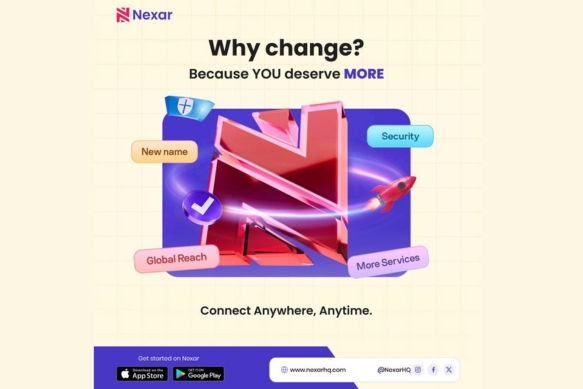
    ShawnSMS has officially rebranded as Nexar marking its evolution from a niche virtual numbers service into a multi-product ecosystem serving over 100,000+ users.

    For years, ShawnSMS built quiet dominance in Nigeria’s virtual number and SMS verification space, becoming a go-to solution for users needing reliable access to international OTPs. That identity is now being retired as the company aligns its brand with a broader suite of products and a longer-term ambition.

    Alongside the rebrand, operations have fully migrated from shawnsms.com to nexarhq.com. According to the company, the shift reflects not a sudden pivot but years of gradual expansion beyond its original category.

    What started as a single-purpose verification tool has steadily grown into a digital services platform. Nexar now offers virtual numbers across 99+ countries, travel eSIMs, gift card trading, airtime and utility bill payments, social media growth tools, and crypto-to-naira conversions. Each addition, the company says, emerged directly from user demand.

    “Our name ShawnSMS represented where we started,” a company spokesperson told African Tech Journal. “Nexar represents what we have become. Users were already engaging with us like a platform, so the brand needed to reflect that reality.”

    Why this matters

    Nigeria’s digital economy is increasingly shaped by consolidation. Mobile-first users are showing less interest in juggling separate apps for payments, utilities, identity verification, and online transactions. Fintech platforms such as Opay and PalmPay have already demonstrated the strength of bundled services in financial life. Nexar is extending that logic into what it describes as the broader “digital life” stack.

    This includes identity verification, digital goods exchange, communication tools, and financial off-ramps within a single ecosystem rather than scattered platforms.

    One of the more sensitive additions is its crypto-to-naira conversion feature, introduced in a regulatory environment that remains cautious toward crypto activity. Nexar positions this function as a transparent conversion layer rather than a trading platform, aligning it with current Central Bank expectations.

    What changes for existing users

    Practically, nothing. Logins, wallet balances, order history, saved virtual numbers, and payment methods carry over untouched. Old shawnsms.com links now redirect automatically to their nexarhq.com equivalents. The Nexar app is available on both Google Play and the Apple App Store under the new name.

    The bigger shift is brand posture. Nexar is no longer pitching itself as “the SMS company.”  It is pitching itself as infrastructure for online life. Whether the Nigerian market rewards that ambition will depend on whether the platform can keep its original product reliability, the thing that built the 100,000+ user base in the first place, while shipping the next wave of services.

    For now, the company is keeping its message simple. As the rebrand page puts it: new name, same promise.

  • From a Nigerian Kahoot Idea to a Lead Intelligence Platform: The Story Behind Tadlace

    From a Nigerian Kahoot Idea to a Lead Intelligence Platform: The Story Behind Tadlace

    During an event, the founder observed how a simple Kahoot quiz completely changed audience energy. People were engaged, competitive, and fully present. It was not just content consumption, it was participation. That moment triggered a question that would eventually shape the company: what if there was a Nigerian version of Kahoot, built for local engagement and interaction?

    That question became the starting point for Tadlace.

    At the time, the motivation was not heavily business driven. It was more about building something interactive, fun, and different from the wave of fintech products dominating the ecosystem. As a software engineer, the appeal was in the product itself, not necessarily the market category it would eventually fit into. The early vision was simple: create an engaging experience that people actually enjoy using.

    The company started with very limited resources. There was no external funding, no structured team, and no institutional support. It was built by the founders themselves using personal time, technical skills, and a shared belief in the idea. In the early stages, execution depended more on commitment than capital.

    The First Reality Check: Building Is Easier Than Distribution

    Like many early-stage products, Tadlace’s first major challenge was not technology. It was content.

    The platform relied on users creating public quizzes that others could discover and play. Without enough content, the experience quickly felt incomplete. That created a cycle problem. Without users, there was no content. Without content, there were no users.

    Interestingly, competition was not the main pressure point. The larger issue was demand itself. While the product was designed for social, multiplayer engagement, users often defaulted to familiar alternatives like traditional games. The expected level of organic adoption did not materialize in the way the team initially imagined.

    This phase forced a hard realization. Building a product is not the same as building a market.

    Structuring the Chaos: How Tools Changed Execution

    As the product evolved, the team introduced more structure into how they worked. One of the key tools adopted was Linear for product and engineering management. This shift had a noticeable impact on execution.

    Work became more organized. Priorities were clearer. Tasks were tracked more effectively. Instead of scattered development cycles, the team could now operate with better alignment and visibility. This improved coordination directly translated into faster shipping and more consistent iteration.

    More importantly, it allowed the team to experiment faster. Ideas could be tested quickly, user behavior could be observed in real time, and feedback could be used to adjust direction without long delays. That speed of iteration became a critical factor in how the product eventually began to evolve.

    Growth Through Iteration and a Defining Early Milestone

    As Tadlace improved its development cycle, growth started to shift from assumption-driven to feedback-driven. The team began learning directly from user behavior, refining the product based on what people actually engaged with rather than what was originally imagined.

    One of the earliest validation moments came through Lagos Trivia Night, one of the largest trivia events in Nigeria at the time. Tadlace powered the experience, and for the first time, the product was used at real scale in a live environment. That moment served as a strong signal that the platform could support structured, high-volume engagement beyond casual experimentation.

    Alongside organic usage, digital marketing also played a role in expansion. Channels like Instagram ads helped the team reach audiences beyond their immediate network. This allowed them to test different user segments, refine targeting, and understand where the product resonated most strongly.

    Lessons From Building: Distribution Over Everything

    One of the most important lessons from the journey is that go-to-market strategy matters as much as product quality. A strong product without distribution struggles to survive. The real challenge is not just building something valuable, but ensuring it reaches the right users in the right way.

    Another key insight was the importance of validating the problem early. Speaking to customers before writing code helps reduce wasted effort and ensures that what is being built aligns with real demand rather than assumptions. In hindsight, this step would have significantly shaped early decisions.

    The Pivot: From Quizzes to Lead Intelligence

    Tadlace is now in an active phase of evolution.

    The platform is shifting from a simple multiplayer quiz experience into something more structured and commercially driven. Today, Tadlace is being positioned as a tool that turns quizzes into lead qualifying campaigns, allowing businesses to engage users, segment responses, and trigger automated actions based on user inputs.

    This represents a major shift from entertainment-focused interaction to business utility. Instead of quizzes existing purely for engagement, they now serve as structured funnels for understanding and qualifying audiences.

    The Future of Tadlace

    The broader vision is to sit at the intersection of marketing and customer intelligence. As businesses increasingly prioritize engagement-driven acquisition, interactive experiences are becoming more valuable as data collection and segmentation tools.

    Tadlace is positioning itself within that shift. Not just as a quiz platform, but as an infrastructure layer for interactive customer engagement that produces actionable insights.

    What began as a simple idea inspired by a live quiz at an event is now evolving into a platform designed to help businesses better understand and convert their audiences.

    The journey is still ongoing, but the direction is clear. Tadlace is no longer just about quizzes. It is about turning interaction into intelligence.

  • African Tech Stopped Racing and Now It is Acquiring

    African Tech Stopped Racing and Now It is Acquiring

    What 67 deals in a single year tells you about where African tech is actually headed.

    For most of the last decade, the dominant logic in African tech was simple: raise, expand, repeat. Startups competed for market share in fragmented markets, grew headcount faster than revenue, and treated the next funding round as both validation and lifeline.

    The playbook rewarded ambition over discipline, and for a while, capital was available enough to make it work. The 2025 numbers say that era is done and over. African startups recorded 67 merger and acquisition deals across the continent in 2025, the highest annual total ever, a 72% increase from the 39 deals recorded in 2024, and well above the previous record of 40 deals set in 2022. Total funding also grew, reaching $3.4 billion across 502 deals, up 44% year-on-year.

    However fewer deals received more capital, meaning money is concentrating rather than spreading. The ecosystem is not just growing, it is narrowing deliberately around the companies that have proven they can survive. 

    What changed is not just the volume of deals, but the character of them. In earlier years, acquisitions in African tech were largely distress events, a struggling startup selling to avoid a disorderly shutdown.

    The recent wave looks different, well-capitalised companies use acquisitions to buy capabilities they could have built but chose not to wait for, to enter markets without the cost of building from zero, and to secure regulatory licences that would otherwise take years to obtain.

    The deal logic shifted from rescue to strategy, the deals themselves tell the story clearly, Flutterwave acquired Mono; Nigeria’s leading open banking infrastructure provider  in a transaction valued between $25 million and $40 million, folding identity verification, account connectivity, and bank payment capabilities directly into its own stack. One deal turned a competitor relationship into an internal capability.

    Moniepoint moved on two fronts in quick succession: first acquiring Orda, a cloud-based restaurant management platform, to deepen its merchant tooling, then completing a 78% stake acquisition in Kenya’s Sumac Microfinance Bank, a 20-year-old licensed institution to enter East Africa without waiting for new licences the Central Bank of Kenya had frozen.

    South African infrastructure firm Stitch made two acquisitions of its own: ExiPay in January and Efficacy Payments in July, each designed to internalise critical payment rails rather than depend on third parties. Paystack absorbed Ladder Microfinance Bank in Nigeria for similar reasons.

    Twiga Foods in Kenya acquired three distributors to own more of its own supply chain. These were not opportunistic moves. They were deliberate vertical integrations by companies that had decided owning the infrastructure mattered more than partnering with it. 

    Fintech led the wave by some distance, accounting for nearly 46% of all deals in 2025, that concentration is not accidental. Fintech in Africa operates in one of the most regulation-dense environments on the continent. Licences are difficult to obtain, compliance costs are rising, and regulators in Nigeria, Kenya, and South Africa have become more assertive. In that environment, acquiring a company that already holds the right licence in the right market is not just convenient, it is often the only realistic path to expansion at speed.

    Analysts have begun calling this pattern “licence hunting”: acquisitions driven less by customer bases or product fit, and more by the regulatory permissions the target already holds. 

    It is necessary to state that not every company that tried to participate in this wave succeeded, several startups entered acquisition talks in 2024 and 2025, found no takers, and shut down.

    The market has become selective, acquirers are looking for clean governance, clear unit economics, and genuine strategic fit. Distress alone is not enough to close a deal and that selectiveness is itself a sign of maturity.

    African tech M&A has grown up enough to be discriminating. What the data points toward is a smaller number of dominant platforms emerging across the continent’s major markets, companies with vertical integration, cross-border reach, and regulatory moats that make them difficult to displace.

    TechCabal Insights projected the formation of three to four dominant multi-country platforms controlling payments, logistics, and digital banking across multiple African countries by the end of 2026.

    For founders building today, this is the new context. The blitzscaling playbook: raise aggressively, grow fast, figure out the economics later has been replaced by a simpler and harder question: what do you own, and is it worth owning? The companies that can answer that clearly are the ones getting acquired or doing the acquiring. The ones that cannot are the ones disappearing quietly.

    The land grab produced a generation of African startups, the consolidation era will determine which ones actually last.

    Sources:

    1. TechCabal Insights, State of Tech in Africa 2025 — https://insights.techcabal.com/state-of-tech-in-africa-2025-from-growth-at-all-costs-to-sustainable-scale/
    2. TechCabal, Flutterwave-Mono — https://techcabal.com/2026/01/06/aquisitions-in-africas-tech-ecosystem-in-2025/
    3. TechCabal, Moniepoint-Orda and Moniepoint-Sumac — https://techcabal.com/2026/03/26/nigerias-moniepoint-enters-kenya-with-78-stake-in-sumac-microfinance/
    4. BusinessDay, Moniepoint-Sumac — https://businessday.ng/technology/article/nigerias-moniepoint-enters-kenya-through-sumac-acquisition-targeting-sme-lending-boom/
    5. TechPoint, Stitch-Efficacy Payments — https://techpoint.africa/news/stitch-acuires-efficacy-payments/
  • How FUSE Varsity is Bringing Tech to 1,000 Primary School 
pupils through Its
Community Initiative, KITI 2.0

    How FUSE Varsity is Bringing Tech to 1,000 Primary School pupils through Its Community Initiative, KITI 2.0

    In Celebration of Children’s Month,

    In many underserved communities across Nigeria, children are growing up in a digital world that feels close, but not accessible.

    They see phones, apps, and the internet shaping everything around them, yet very few are ever shown how to move from being consumers of technology to creators within it.

    This gap is not about intelligence, but more about exposure than anything. And what is not introduced early is often never imagined later.

    The Kids in Tech Initiative (KITI) was created to change that reality.
    A TrybebyFUSE community initiative powered by FUSE Varsity, in collaboration with KAAFoundation and Suleiman Abubakar, KITI 2.0 is an impact-driven programme focused on introducing primary school
    pupils in underserved communities across Lagos and Ilorin, Kwara State, to digital literacy and technology awareness.


    Scheduled to run from May 13th to May 22nd, the initiative aims to reach 1,000 pupils across ten public primary schools.

    But beyond the numbers, the focus remains simple: helping children see technology as something they can understand, explore, and eventually grow into.

    According to Hassanat, Founder of FUSE Varsity and TrybebyFUSE:
    “KITI started with a single belief: that the future lies in the hands of children.

    Every adult today was once a child, and every child deserves the opportunity to dream, learn, build, and become.”

    Through student-centered sessions, the programme introduces children to what technology means, how it shapes their everyday lives, and why digital skills are becoming increasingly important in today’s world.

    Rather than overwhelming students with technical language, KITI focuses on curiosity, confidence, and awareness.

    Reflecting on its early beginnings, Hassanat adds:
    “When we started this initiative last year, we were only able to reach one primary school in Lagos with just 45 students.

    This year, we wanted to do more; to expand our reach, deepen our impact, and give more children the opportunity to experience technology early.”

    Beyond learning, the initiative also recognizes the importance of representation and confidence.

    Many children grow up without seeing themselves reflected in technology spaces, which quietly limits what they believe is possible. By engaging directly with students through relatable conversations and encouragement, KITI reinforces that innovation is not defined by background or environment.

    The initiative also seeks to build a long-term culture of tech-focused Children’s Month programming while fostering partnerships that can sustain future school outreach efforts.

    At its core, the Kids in Tech Initiative is about access, representation, and possibility. Because talent exists everywhere, but opportunity does not.

    And when children are exposed early, encouraged to ask questions, and reminded that their ideas matter, the future begins to feel within reach.

    As KITI 2.0 moves across schools in Lagos and Kwara this May, its impact will not only be measured in numbers, but in something quieter and more lasting; the moment a child realizes they have not been left
    out of the future after all.

    Because the children we often overlook today are the same ones who will shape what tomorrow becomes.

    Hassanat concludes by saying: “This is not just about teaching children technology. It is about reminding them early that they belong in
    the future being built around them, and that their ideas, voices, and dreams are valid enough to shape it.”

  • Why Tonye Irims Believes the Future of Energy Is Ecosystem led

    Why Tonye Irims Believes the Future of Energy Is Ecosystem led

    When most solar companies launched across Africa in the last decade, the business model was relatively straightforward: sell panels, install inverters, and move to the next customer. But for WiSolar founder Tonye Irims, that approach always felt too small for the scale of Africa’s energy problem. Across cities like Lagos, Johannesburg, and Cape Town, businesses were burning through diesel budgets while households struggled with unstable electricity and rising power costs. Solar technology existed, but adoption remained limited because the systems were expensive, fragmented, and heavily dependent on upfront capital. For Irims, the opportunity was not simply about renewable energy. It was about redesigning how electricity itself could be accessed across African markets.

    That idea became the foundation for WiSolar in 2016. Instead of operating as a traditional solar installation company, WiSolar introduced a prepaid solar electricity model designed to function more like a digital utility platform. Customers could access electricity through flexible payment systems, monitor usage remotely, and recharge power directly from their devices. The company positioned the experience as something closer to buying airtime or mobile data than making a long term infrastructure purchase. That distinction helped WiSolar stand out in an industry where many providers still focused heavily on one time hardware transactions. WiSolar Official Website

    Over time, the company evolved from a clean energy startup into something broader. WiSolar’s business increasingly sits at the intersection of climate tech, infrastructure, and fintech. Through its WiGo platform, customers are able to manage solar systems, track energy performance, and access prepaid electricity from mobile devices. The platform also supports remote monitoring and payment flexibility, reducing some of the friction that has historically slowed solar adoption across African markets. Internally, this appears to reflect WiSolar’s larger ambition of becoming embedded within how electricity is distributed and consumed across the continent rather than simply selling solar products. WiSolar WiGo Platform

    That strategy is beginning to attract international recognition. In 2025, WiSolar was recognised for the second consecutive year on the Financial Times Africa’s Fastest Growing Companies ranking, a list produced in partnership with Statista that tracks high-growth businesses across the continent. The recognition placed WiSolar among a growing class of African startups building infrastructure-focused businesses rather than lightweight consumer applications. For the company, the ranking reflects years of expansion across Nigeria and South Africa as demand for alternative energy solutions continues to rise. Financial Times Africa Fastest Growing Companies

    But internally, WiSolar’s ambitions appear far bigger than growth rankings. The company has increasingly used this momentum to push into new operational areas tied directly to Africa’s evolving energy economy. Recent expansion efforts include growing merchant onboarding networks, expanding financing access for homes and SMEs, increasing battery deployment systems, and scaling partnerships with developers and third party installers. With over 500 accredited and vetted partner installers on the WiSolar platform nationwide, the company has been able to scale more seamlessly while improving customer experience and speeding up after sales support. The model is also contributing to green job creation for electrical and solar engineers across the country. Reports linked to the company’s Financial Times recognition also highlighted strong revenue growth between 2021 and 2024, providing WiSolar with additional leverage as it expands into newer markets and deeper operational layers. WiSolar Financial Times Recognition

    One of the company’s most aggressive expansion plans involves scaling prepaid solar electricity access across thousands of homes and businesses in Nigeria through its Power Purchase Agreement model. The goal is not simply to increase installations, but to reduce reliance on unstable grid electricity and diesel powered systems while making solar adoption operationally easier for customers. In practical terms, WiSolar is betting that Africa’s next generation of energy companies will function less like hardware vendors and more like utility platforms layered with software, financing, and digital payments. WiSolar Nigeria Expansion Plans

    That positioning is becoming increasingly relevant as energy instability continues affecting productivity across African economies. For many SMEs, power reliability remains one of the largest operational challenges to scaling efficiently. Diesel costs continue rising, national grids remain inconsistent, and many businesses are now actively searching for predictable alternatives that do not require overwhelming upfront costs. WiSolar’s prepaid approach attempts to solve both accessibility and affordability simultaneously. By allowing users to consume electricity more flexibly while avoiding heavy installation costs, the company is gradually building around a deeper behavioural shift in how energy is consumed across African cities. WiSolar Nigeria

    Founder Tonye Irims has consistently framed WiSolar’s mission around democratising access to clean energy across Africa, but the company’s recent expansion signals suggest something larger is unfolding underneath. WiSolar is no longer just competing within the solar market. It is positioning itself within Africa’s broader infrastructure conversation alongside fintech, logistics, and connectivity companies reshaping how cities operate. Some of the continent’s fastest growing startups are now building underneath the systems people rely on every day — payments, mobility, internet access, and increasingly, energy. Tonye Irims on Africa’s Clean Energy Push

    For WiSolar, the Financial Times recognition validates the speed of its growth, but the company’s long term vision appears rooted in something much bigger than rankings alone. The business is not simply trying to participate in Africa’s clean energy transition. It is attempting to become part of the infrastructure powering the continent’s next phase of economic growth. And if WiSolar’s recent expansion plans are any indication, the company believes Africa’s future energy systems will be digital, prepaid, and deeply integrated into everyday life.

  • Hult Prize Nigeria Nationals 2026 Celebrates Student Innovation, Crowns Devspace National Winner

    Hult Prize Nigeria Nationals 2026 Celebrates Student Innovation, Crowns Devspace National Winner

    The 2026 edition of the Hult Prize Nigeria National Competition concluded successfully at the University of Lagos on May 9, bringing together some of the country’s brightest student entrepreneurs, investors, academics, and industry leaders in a celebration of innovation and social impact.


    Widely regarded as the world’s largest student social entrepreneurship competition and often described as the “Nobel Prize for Students,” the Hult Prize Foundation challenges university teams to build for-profit ventures that solve pressing global problems.

    Supported by Hult International Business School and the United Nations, the competition awards a grand prize of $1 million USD to the global winner.


    This year’s Nigeria Nationals recorded participation from 44 universities across the country, with 609 startups registered for the competition. Following months of campus programs, mentorship, and selection rounds, only 25 startups advanced to pitch at the national finals in Lagos.


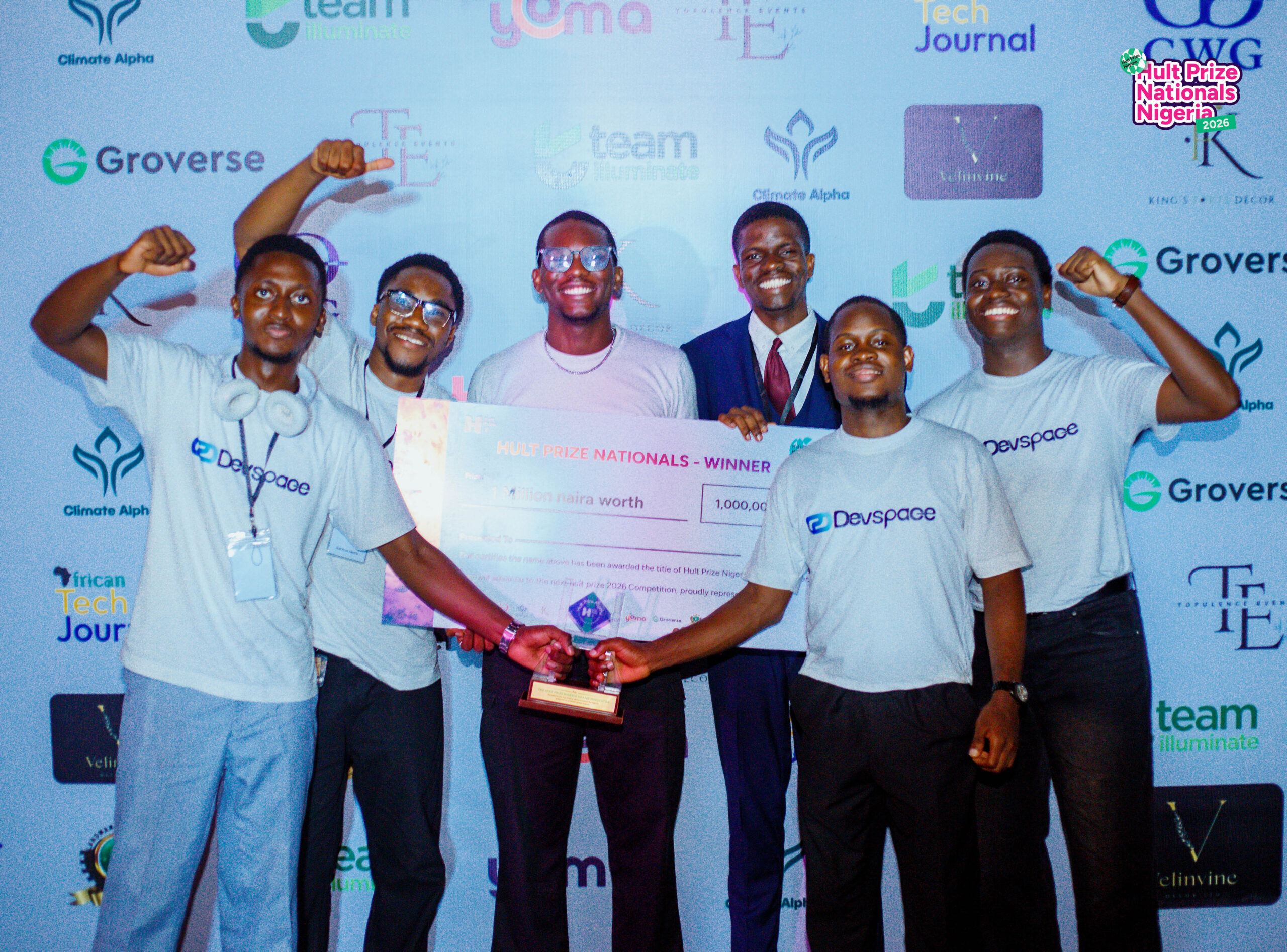
    At the end of an intense pitching session before a panel of judges comprising investors, business executives, and innovation experts, Devspace from Covenant University emerged as the national winner, securing first place and advancing to the next stage of the global competition.


    Blank Book from the University of Ibadan emerged second, while Aquanut, also representing Covenant University, finished in third place.
    The remaining startups that made the Top 8 were Blood Deck from Lead City University, Zisocare and Amana from Bayero University Kano, Skycorv from Kwara State University, and Tropical from the University of Uyo.


    As national winner, Devspace will proceed to the Hult Prize Digital Incubator, an intensive international entrepreneurship acceleration program where selected startups from around the world receive mentorship, strategic business training, investor access, and funding opportunities as they compete for a place at the Global Finals and the
    coveted $1 million USD prize.


    The Hult Prize Nigeria Nationals is more than a competition; it is proof that young Nigerians are capable of building globally relevant solutions to some of society’s most urgent challenges.

    From over 600 registered startups to the exceptional teams that pitched today, we have witnessed the remarkable ingenuity, resilience,
    and ambition that exists within our universities. — Olamide Otasanya, Hult Prize Nigeria National Coordinator


    “On behalf of Hult Prize Nigeria, I congratulate all participating teams and especially Devspace of Covenant University for emerging as our national winner.

    We are proud to see them represent Hult Prize Nigeria


    Nigeria at the Global Accelerator, where they will join outstanding startups from across the world in refining their ventures for global impact. We also celebrate Blank Book, Aquanut, and every finalist whose ideas demonstrate that innovation remains one of Nigeria’s greatest strengths.


    What we witnessed today goes beyond student competition. These young founders are building solutions with the potential to transform industries, create jobs, and improve lives across Africa.

    Hult Prize Nigeria continues to demonstrate the power of investing in youth innovation, and we remain proud to support a platform that is shaping the next generation of African entrepreneurs. — Olubunmi Sobande, Member, Hult Prize Board of Governance

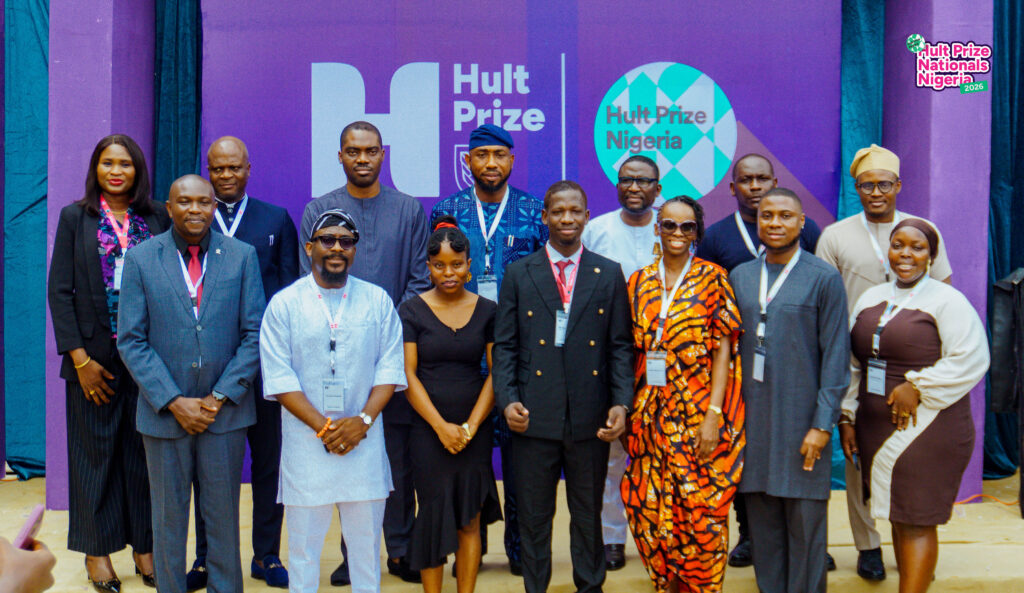
    The event concluded with an award ceremony where winning startups, campus leaders, faculty advisors, volunteers and other outstanding contributors were recognized for their excellence and contributions to the growth of the Hult Prize ecosystem in Nigeria.


    The Nigeria Nationals also attracted venture capitalists, startup ecosystem leaders, corporate executives, university
    representatives, members of the press, and innovation stakeholders from across the country, reinforcing the growing
    importance of youth-led entrepreneurship in driving economic and social transformation.


    Enquiries
    Samuel Olomu
    Head of PR and Communications
    [email protected]

    About Hult Prize Nigeria
    Hult Prize challenges university students to solve pressing global issues through scalable, sustainable social enterprises.

    In Nigeria, we provide a vital platform for future leaders to develop impactful, purpose-driven ventures, fostering a national
    community dedicated to profit with purpose and driving significant socio-economic transformation.

    ■ www.hultprize-ng.com
    ■ linkedin.com/company/hult-prize-nigeria

  • Mytherapist.ng Sets Sights on Solving Nigeria’s ₦400 Billion Productivity Crisis

    Mytherapist.ng Sets Sights on Solving Nigeria’s ₦400 Billion Productivity Crisis

    Across the bustling tech hubs of Lagos, Nairobi, and Johannesburg, a silent epidemic is draining the lifeblood of the continent’s most promising enterprises. It isn’t a lack of funding, a shortage of talent, or infrastructure deficits. It is the invisible weight of employee burnout, stress, and unaddressed mental health challenges.

    Recent data paints a sobering picture: Nigerian businesses alone are losing an estimated ₦400 billion annually due to productivity losses tied to employee stress and mental health issues. This isn’t just a human resources concern; it is a full-scale economic crisis.

    At Mytherapist.ng, we believe the “Productivity Problem” in Africa is, at its core, a mental health problem. Today, we are proud to announce our expanded corporate wellness initiative and the upcoming launch of Mytherapist.ng 2.0, aimed at bridging the gap between workplace performance and emotional well-being.

    The Invisible Drain: Why Africa’s Workforce is Burning Out

    Within the relentless rhythm of African tech and corporate sectors, the “hustle” is often glorified. However, the cost of this relentless grind is becoming impossible to ignore. Trends like “Quiet Quitting”: where employees disengage emotionally while doing the bare minimum: and chronic stress are no longer peripheral issues.

    When an employee is struggling with anxiety or burnout, they aren’t just “tired.” They are operating with diminished cognitive capacity, reduced creativity, and a higher propensity for error. For many Nigerian professionals, the weight of economic instability, long commutes, and high-pressure work environments creates a perfect storm for mental health decline.

    Redefining ROI: Mental Health as a Business Strategy

    For too long, corporate wellness has been viewed as a “nice-to-have” luxury: a box to be checked with an occasional office lunch or a gym membership. At Mytherapist.ng, we are changing that narrative by providing data-driven solutions that deliver a tangible Return on Investment (ROI).

    Our data shows that businesses implementing targeted mental health support see a 25% boost in overall productivity. More importantly, organizations investing in mental health through our platform experience a 4x to 6x ROI on their wellness spend.

    “We aren’t just offering a ‘feel-good’ service,” says Oluwaseun Raphael Afolayan, Founder of Mytherapist.ng. “We are offering a productivity tool. When you support an employee’s mind, you are directly impacting your bottom line. A healthy mind is the most efficient engine of growth for any company.”

    How Mytherapist.ng is Solving the Crisis

    We’ve built our platform to be “therapy in your pocket”: accessible, affordable, and culturally resonant. Our corporate plans, starting at just ₦2,250 per employee per month, are designed to fit the budgets of startups and established enterprises alike.

    Key features driving this workforce revolution include:

    • Virtual Therapy Sessions: Employees can connect with licensed specialists via chat, audio, or video calls, ensuring complete confidentiality.
    • Digital Tools for Daily Maintenance: Between sessions, our built-in digital journals, daily check-ins, and breathing exercises help employees manage stress in real-time.
    • The Comfort Store: Our e-commerce shop offers affirmations and physical products that boost confidence and provide sensory grounding during high-pressure days.

    A Milestone of Impact: 25,000 Users and Counting

    As we prepare for the release of Mytherapist.ng 2.0, we are celebrating a significant milestone: 25,000 users across Nigeria have trusted us with their mental health journey. This growth is a testament to the shifting cultural landscape: a move away from the stigma of the past and toward a future where seeking help is viewed as a brave step and a professional advantage.

    The upcoming 2.0 version will introduce enhanced analytics for HR leaders, allowing them to track the “wellness pulse” of their organizations (anonymously) and intervene before burnout leads to turnover. It also features a more intuitive interface for users to find therapists who understand their specific cultural and professional contexts.

    Addressing the Stigma: A Culturally Sensitive Approach

    In many African cultures, mental health is often misunderstood or dismissed. We address this head-on by ensuring our network of licensed professionals: like Segun Matthew and Lois Oginni: possess a deep understanding of the local landscape.

    We don’t just use clinical jargon; we talk about the “weathering of the storm” and the “buzzing of a busy mind.” We treat mental health with the same radical empathy you’d expect from a trusted friend, but backed by the clinical authority of the country’s top specialists.

    7 Signs Your Workforce is in the “Red Zone”

    Is your team currently contributing to that ₦400 billion loss? Look out for these indicators:

    1. The “Ghost” Employee: Consistently missing deadlines or being “online” but non-responsive.
    2. Increased Irritability: Small conflicts turning into major office disruptions.
    3. Physical Fatigue: Employees frequently taking sick leave for physical ailments that may be stress-induced.
    4. Creative Stagnation: A noticeable drop in new ideas or “out of the box” thinking.
    5. High Turnover: Losing talent to competitors not because of salary, but because of culture.
    6. Withdrawal: Employees who used to be engaged in social or collaborative activities suddenly pulling back.
    7. The “Always-On” Syndrome: Employees responding to emails at 3:00 AM, which often precedes a total collapse in productivity.

    Join the Revolution

    The future of Africa’s workforce isn’t just about working harder; it’s about working healthier. By prioritizing mental health, Nigerian businesses can reclaim that ₦400 billion and turn it into fuel for innovation and growth.

    Whether you are a founder leading a small tech team or an HR director at a multi-national firm, the time to act is now. Providing your team with the tools to manage their mental well-being is the single most effective way to future-proof your business.

    Are you ready to boost your team’s productivity and well-being?

    Book a Discovery Call with Mytherapist.ng Today to learn how our corporate plans can transform your workplace. Let’s build a more productive, mentally healthy Africa, one session at a time.


    About Mytherapist.ng
    Mytherapist.ng is Nigeria’s leading digital mental health platform, connecting individuals and organizations with licensed therapists and counselors. With a mission to make therapy affordable, accessible, and confidential, Mytherapist.ng is at the forefront of the mental health revolution in Africa.

    Media Kit: Mytherapist.ng Media Kit

    Media Contact:
    Oluwaseun Raphael Afolayan
    Co-Founder, Mytherapist.ng
    Email: founders[@]mytherapist.ng
    Website: mytherapist.ng

  • Building Credit Rails for the African Missing Middle: The Quiet Work of Bidemi Adebayo

    Building Credit Rails for the African Missing Middle: The Quiet Work of Bidemi Adebayo

    From factory floors in China to fintech infrastructure in Abuja Nigeria — one operator’s long road to solving SME finance.

    There is a type of founder the African tech ecosystem does not talk about loudly enough: the operator. Not the one chasing headlines or viral launches, but the one doing the quiet, technical work building underwriting systems, structuring partnerships, and designing credit policies that determine whether a business gets access to capital or not.

    Bidemi Adebayo is one of those founders.

    As co-founder and CEO of Hadi Finance, she is focused on building structured credit infrastructure for African SMEs the segment often described as the “missing middle.” Businesses too large for microfinance, yet too informal or unstructured for traditional bank lending.

    Her focus is clear: close the cash-flow gaps that keep viable businesses from scaling.

    As she puts it, “The issue is not demand, it’s timing.”

    Learning trade at its most practical level

    Before fintech, before partnerships, there was a steel factory in Jinzhou, in China’s Liaoning province.

    Adebayo spent over two years there as a translator intern, converting documents from Chinese to English, working with foreign clients, and observing how industrial trade operates across borders. It was not glamorous work, but it offered something more valuable—exposure to how trust, contracts, and relationships underpin commerce.

    Those lessons carried into her time at Stackfill, where she verified over 2,500 OEM manufacturers across China, Taiwan, Hong Kong, and India. Within six months, she built a sales pipeline of over $400,000, while also establishing partnerships with logistics companies and an asset financing firm to support customers.

    It was early exposure to a simple truth: goods, money, and trust move together—or not at all.

    From distribution to infrastructure

    At CrowdForce, her focus shifted to distribution at scale.

    As Growth and Partnerships Manager, she onboarded over 150 partners within eleven months and helped grow transaction volume by 70% in three months. But the numbers were only part of the story. What made that growth sustainable was the structure behind it commission systems, policy documentation, and ongoing communication with partners.

    Growth without structure does not last. Systems do.

    That mindset carried into Hadi, where she co-founded the company and served as COO, helping to build and scale a network that supported over 1,000 retailers across Africa. The work involved more than onboarding. It meant building delivery partnerships, improving inventory systems, and understanding how small businesses actually operate day to day.

    The credit problem she is solving

    In 2025, Adebayo stepped into the CEO role at Hadi Finance, the financial services arm that grew out of that operational foundation.

    The transition was a natural progression from building and running the system to now leading the credit infrastructure behind it.

    The focus is specific: build credit systems that work in the realities of African markets.

    This means designing for environments where credit bureau data is limited, collateral is inconsistent, and cash flows are often seasonal. These are not edge cases. They are the operating conditions.

    “You don’t route around the environment, you build for it,” she says.

    Hadi Finance focuses on invoice and inventory financing.

    The logic is straightforward. Suppliers deliver goods but wait weeks or months to get paid, locking up cash in receivables. Retailers, on the other hand, need to restock constantly to keep selling, but often lack the liquidity to do so.

    The result is a broken cycle goods move, but cash lags behind.

    Invoice financing unlocks cash after delivery. Inventory financing ensures businesses can continue buying and selling without interruption. Together, they keep both sides of the cycle moving.

    This is not generic working capital. It is credit tied directly to real transactions, with clearer visibility into how businesses earn and repay.

    A focus on women-led businesses

    Part of that focus is on women-led enterprises, shaped by both experience and observation.

    Growing up, Adebayo watched her mother run a retail business and saw how access to the right kind of capital could change its trajectory. Later, during her time in China, she saw what happens when small businesses operate within systems that support their growth.

    Coming back to Nigeria and across Africa, the contrast is clear.

    Women are a significant part of the informal economy. They are the traders and operators keeping commerce moving every day, yet they remain consistently underserved by formal financial systems.

    Not because they are less capable, but because they have been mispriced and misunderstood for years.

    The approach at Hadi reflects that reality. The products are not charity—they are disciplined credit solutions designed for a segment that has long been overlooked.

    The operator’s edge

    Her background also includes early work at Mobile Forms, where she was involved in large-scale field operations and data collection across Nigeria.

    She worked on TraderMoni, supporting the onboarding of over 3 million retailers, and contributed to nationwide facility audits across primary healthcare centers in collaboration with the Federal Ministry of Health, alongside projects with FMCG companies.

    What sets Adebayo apart is not just her focus on credit, but the range of experience she brings to it.

    Her work spans data collection, government-backed programs, international trade, logistics, distribution, and now credit. Each role added a layer of understanding about how systems function and where they break.

    Individually, those experiences may seem unrelated. Together, they form a clear pattern: a career built around understanding how value moves, and what happens when it doesn’t. That perspective shapes how she approaches credit not as a standalone product, but as infrastructure.

    For Bidemi, the work is not about speed or visibility. It is about building systems that hold.And in markets where financial access remains uneven, that kind of work matters.

    Bidemi Adebayo is co-founder and CEO at Hadi Finance. She is based in Nigeria. Connect with her on LinkedIn.

  • Chowdeck Is Coming for Your Courier App Too

    Chowdeck Is Coming for Your Courier App Too

    The food delivery darling just made its boldest move yet – and it has nothing to do with jollof rice.

    There is a peculiar ritual Nigerians know well. You order something from a vendor on Instagram. They quote you a delivery fee. You haggle. You balance the rider “small something”. The package arrives two hours late, slightly roughed up, with no way to track where it’s been. You swear you’ll never do it again. You do it again next week.

    This is the informal courier economy that has propped up millions of small businesses and frustrated millions more customers. It is disorganised by design, personal by necessity, and ripe for disruption by anyone with a large enough rider network.

    Chowdeck has that network, and now, it is coming for that market.

    This May, the Lagos-based food delivery company pushed its Relay courier service into the spotlight with a flat ₦1,000 intra-city delivery offer. Same-day. Tracked. Backed by the same logistics infrastructure that has made Chowdeck one of Nigeria’s most reliable delivery brands.

    It is a quiet pivot. But the ambitions behind it are anything but.

    The Company That Outlasted Everyone

    Founded in October 2021 by Femi Aluko, Olumide Ojo, and Lanre Yusuf, all veterans of Paystack, the fintech acquired by Stripe, Chowdeck launched as a simple idea: get food from Lagos restaurants to customers in under 30 minutes.

    The timing looked naïve. The graveyard of food delivery in Nigeria was already crowded. Jumia Food had burnt through capital and retreated. Bolt Food had exited Nigeria altogether. Glovo was hedging its bets. Every major player had tried and failed to crack what was obviously a huge market, and just as obviously, a brutal one.

    Chowdeck survived by doing the boring things well. Its geotagging system matched orders to the nearest rider with precision that competitors couldn’t match. Its incentive structure kept couriers loyal in a market notorious for rider churn. And it kept delivery fees honest enough to build trust with price-sensitive Nigerian consumers.

    By October 2023, the platform crossed ₦1 billion ($830,000) in monthly order value for the first time. By March 2024, that figure had more than doubled to ₦2.4 billion ($2 million). That same year, Chowdeck closed a $9 million Series A, one of the largest fundraises ever for a local African food delivery player, with investors betting on the company’s ability to scale beyond meals.

    Today, Chowdeck operates across eight cities in Nigeria, processes over 30,000 daily deliveries, runs a fleet of roughly 20,000 riders, and has facilitated over $19 million in vendor deliveries on its platform alone. In August 2025, it launched in Accra, Ghana, hitting 1,000 daily orders in just three months, a milestone that took nearly a year to reach in Lagos.

    The company is not just surviving. It is compounding.

    The Courier Gap Is Worth $230 Million

    Here is what makes the Relay push strategically sensible: the infrastructure Chowdeck has already built is overkill for food delivery alone.

    Twenty thousand vetted, geotagged, app-enabled riders across major Nigerian cities, that is an asset most logistics companies would spend hundreds of millions of dollars to assemble. Chowdeck assembled it to deliver jollof rice. The marginal cost of routing some of those riders to deliver packages instead is nearly zero.

    Meanwhile, the market they are entering is enormous and deeply underserved.

    Nigeria’s last-mile delivery market is currently valued at $230 million, with urbanisation, e-commerce growth, and smartphone penetration driving steady expansion. The broader African last-mile delivery market stood at $1.45 billion in 2024 and is projected to reach $3.02 billion by 2033, growing at a compound annual rate of 8.45%.

    In Nigeria specifically, e-commerce orders grew 22% year-on-year in Q1 2025, with 58% of total orders now originating from secondary cities, an indicator that demand for reliable delivery is spreading beyond Lagos and Abuja. Yet the courier experience for most consumers and small businesses remains chaotic, unreliable, and opaque.

    Existing players like GIG Logistics, Kwik Delivery, and Sendbox have carved out niches. But none of them holds the brand trust that Chowdeck has built through millions of successful food deliveries. Trust, in a market defined by theft, delays, and accountability gaps, is a moat.

    ₦1,000 Is Not a Price. It’s a Statement.

    The flat ₦1,000 rate for intra-city delivery is not just a promotional offer. It is a market signal, Chowdeck telling competitors, small business owners, and individual senders that it intends to compete aggressively on price.

    For context, most Lagos courier services charge between ₦1,500 and ₦4,000 for same-day intra-city delivery depending on distance, package size, and the rider’s mood. Kwik, one of the better-organised options, raised $4.7 million to build its two-hour delivery promise in Lagos and Abuja. GIG Logistics operates 100+ service centres across Nigeria using a hub-and-spoke model, but its pricing reflects that infrastructure overhead.

    Chowdeck has no such overhead problem. Its riders are already on the road. Its app already handles live tracking, payments, and customer support. All it needs is to redirect existing capacity to a new category.

    The ₦1,000 flat rate is designed to make the switching cost for a first-time Relay user essentially zero and to make the comparison with informal bike-rider delivery unmistakably favourable.

    Beyond Delivery: The Superapp That Won’t Say It Is One

    What is really happening here is a quiet superapp strategy.

    Chowdeck has spent three years building the hard parts: a reliable rider network, a geolocation stack competitors couldn’t replicate, and consumer trust earned meal by meal. Now it is running those assets across multiple revenue lines.

    The product map tells the story clearly:

    • Food delivery, the core, is still growing
    • Grocery & pharmacy delivery, launched alongside 1,500+ vendors across multiple verticals
    • Chowpass, a subscription product that drives retention and revenue predictability
    • Relay, intra-city courier for packages
    • Mira, a restaurant POS and operations tool acquired in June 2025, is extending Chowdeck’s footprint into vendor-side infrastructure

    Each of these is independently useful. Together, they form a logistics and commerce operating system, one that makes Chowdeck increasingly difficult to displace from the lives of its users.

    This is the same playbook Grab executed in Southeast Asia: start with the thing people need every day (food, rides), earn their trust, then expand the surface area of the relationship. The difference is that Chowdeck is doing it in a market where the baseline infrastructure is far less mature, which means both the challenge and the ceiling are considerably higher.

    Chowdeck’s CEO, Femi Aluko, has been careful not to use the “superapp” label. But the feature releases suggest a company that has figured out what it wants to be when it grows up.

    What This Means for Nigerian Small Businesses

    For Instagram vendors, WhatsApp merchants, and small shop owners across Lagos, Port Harcourt, and Abuja, Relay could represent something genuinely transformative: a named, trackable, accountable courier service at a price that doesn’t eat their margin.

    The informal delivery economy that currently serves these businesses is large but unreliable. Theft is common. Accountability is rare. When a customer does not receive a package, the business owner absorbs the cost of the goods, the refund, and the reputational damage. Organised logistics apps have helped, but at price points that make per-order economics painful for low-ticket items.

    A ₦1,000 flat delivery rate changes the calculus. For a vendor selling a ₦5,000 product, with a 20% logistics overhead, it is still meaningful but workable. For a vendor who previously lost packages or paid ₦3,000 for unreliable delivery, it is a revelation.

    And because Relay rides on Chowdeck’s existing app infrastructure, it comes with live delivery tracking and vetted riders, the two features small business owners most need and have historically been unable to afford.

    The Road Ahead

    Relay is not yet a fully realised product. Its rollout is still limited in scope, and the ₦1,000 rate appears to be an introductory offer rather than a permanent pricing floor. The long-term unit economics will need to hold up as volume grows and the promotional period fades.

    There are also structural challenges that no app can fully resolve. Lagos traffic is a logistics problem with no software solution. Fuel prices remain volatile and represent a significant cost pressure on rider margins. And the informal courier culture, built on personal relationships and flexible arrangements, will not simply dissolve because a better-priced alternative exists.

    But Chowdeck has already demonstrated that it can build trust in a market that did not believe trust was possible. It cracked food delivery in Nigeria, which was supposed to be uncrackable. It is now applying the same model to a courier market that is larger, more fragmented, and arguably even more broken.

    The food was just the beginning. Chowdeck wants to deliver everything else, too.

    Data sourced from TechCrunch, Rest of World, Afridigest, Ken Research, Straits Research, Mordor Intelligence, and Chowdeck’s official communications.