Author: ATJ Super Admin

  • Why Generalists Are Becoming Central to African Tech Teams

    Why Generalists Are Becoming Central to African Tech Teams

    AI is raising the bar for specialization and increasing the value of cross-functional operators.

    The early days of any startup follow a recognisable pattern: the first hires are rarely specialists, they are people who can manage a sales pipeline in the morning, handle a customer complaint by afternoon, and put together a report before the day ends.

    Their job titles say one thing; their actual work says something broader. This is not a gap in planning, it is the only model that works when resources are limited and the margin for inefficiency is close to zero.

    As companies grow, the structure changes; headcount expands, roles become defined.

    The person who once handled three functions hands two of them off to new hires brought in for those responsibilities.

    The generalist gets a lane, the specialists fill the others. For a long time, this progression made sense. Depth of expertise justified the cost of hiring for a single function, particularly in well-capitalised environments.

    That model is now under pressure, but not in the way it is often described. Artificial intelligence is not eliminating specialization, it is changing what qualifies as valuable specialization.

    Tasks that once required a dedicated hire; drafting communications, analysing datasets, building reports, managing workflows can now be executed faster and at lower cost using AI tools.

    The effect is not the disappearance of roles, but a compression of execution. Less human effort is required for repeatable work. However, this distinction matters, what is being eroded is not expertise itself, but the need for roles built purely around execution.

    As that layer shrinks, the remaining work shifts upward toward judgment, context, and decision-making.

    In that environment, generalists become more valuable, and it’s not because they “do everything,” but because they connect everything.

    They sit at the intersection of function, they understand enough about product, growth, operations, and finance to coordinate effectively. When execution becomes easier, coordination becomes harder; this is where generalists operate.

    At the same time, a different class of specialists become more important; these are not execution specialists, but strategic ones — people whose value lies in deep problem-solving, original thinking, and domain expertise that cannot be automated. AI does not replace them; it amplifies them.

    The gap between low-level and high-level specialization widens, for African tech companies, this shift is arriving in a specific context. Funding tightened significantly across 2023 and 2024, many startups were forced to reduce burn, extend runway, and focus on revenue.

    Layoffs across the ecosystem were not just reactions to capital constraints; they were corrections in how teams were structured. Roles that could not justify their cost in a lean environment were the first to go.

    This has always been a defining constraint in African tech. Unlike Silicon Valley, where over-hiring has historically been tolerated, African startups operate with less margin for inefficiency. Every hire must carry weight. As a result, cross-functional operators have been the norm, not the exception.

    A growth lead in Lagos often handles partnerships, contributes to product decisions, and understands the numbers well enough to defend them.

    An operations lead is expected to manage processes, interpret financial performance, and flag product issues. This is not disorganisation, it is adaptation to constraint. What AI does is extend that model, a capable generalist equipped with AI tools can now execute faster across multiple domains.

    They can analyse data without waiting on a dedicated analyst, produce structured communication without relying on a separate function, and test ideas with lower cost and shorter timelines. Their output improves, and their capacity expands.

    The implication is straightforward: fewer people can carry more operational weight.

    This does not remove the need for specialists, but it changes how they are used. Instead of building large teams of narrowly defined roles, companies are more likely to rely on a smaller core team of operators, supplemented by specialists brought in for specific, high-value problems.

    In some cases, this takes the form of consultants or short-term engagements rather than full-time hires. The risk for companies is continuing to hire based on the old model. Building teams around narrowly scoped roles that focus on execution will become increasingly difficult to justify, the cost remains fixed, but the value of that work declines as tools improve.

    The risk for individuals is similar, professionals who define themselves by a single, repeatable function are more exposed. Those who combine functional competence with broader business understanding are better positioned, this does not mean abandoning specialization; it means building range alongside it. The direction is already visible, teams are becoming leaner, expectations per role are increasing, the distinction between “this is my job” and “this needs to get done” is fading, particularly in early and growth-stage companies.

    For a young operator entering African tech today, the implication is practical, depth still matters, but it is not sufficient on its own. The ability to move across functions, understand how decisions connect, and use tools that extend output will determine how much responsibility you can carry.

    For companies, the implication is structural. The most effective teams will not be the ones with the most specialists, but the ones that balance high-level expertise with strong cross-functional execution.

    This is not a distant shift, it reflects conditions that already exist. The difference is that the tools now reinforce a model African startups have been building under constraint for years.


  • How Aidra Is Using Crypto to Unlock Global Fundraising for Underserved Regions

    How Aidra Is Using Crypto to Unlock Global Fundraising for Underserved Regions

    The Biggest Barrier to Global Giving Is Not Willingness but Access

    Across the world, millions of people are willing to support humanitarian causes. From disaster relief to community driven initiatives, the intent to give exists at scale.

    Yet in many regions, especially across parts of Africa and other emerging markets, raising funds globally remains difficult. Traditional payment systems are often restrictive, slow, or completely inaccessible. Cross border transactions fail, fees eat into donations, and organizers struggle to receive funds when they need them most.

    The result is a broken system where help exists but cannot always reach the people who need it.

    This is the gap Aidra is stepping in to solve.

    What Aidra Is Building

    Aidra is a fundraising platform designed to enable humanitarian campaigns to raise funds globally without the limitations of traditional financial systems.

    At its core, the platform leverages crypto infrastructure to facilitate borderless donations. This allows supporters from anywhere in the world to contribute to causes without being restricted by geography or payment barriers.

    At the same time, Aidra focuses on stability and accessibility for campaign organizers. While donations move through crypto rails, the experience is designed to remain simple and practical for those receiving the funds.

    The goal is not just to move money differently but to make it actually usable.

    Bridging the Gap Between Donors and Impact

    One of the biggest challenges in global fundraising is the disconnect between donors and recipients. Even when funds are successfully raised, delays and inefficiencies can reduce their impact.

    Aidra addresses this by creating a more direct and efficient flow of funds. Donations can move faster across borders, reaching campaigns without the friction that typically slows down traditional systems.

    This creates a more reliable environment for both sides. Donors gain confidence that their contributions will reach the intended cause, while organizers gain faster access to the resources they need.

    Why Crypto

    Crypto has often been discussed in terms of trading and speculation, but its underlying infrastructure offers something more fundamental. It enables value to move globally without relying on traditional intermediaries.

    For humanitarian campaigns operating in regions with limited financial access, this becomes a powerful advantage. It removes barriers that have historically excluded entire communities from global support networks.

    Aidra is applying this infrastructure in a practical way by focusing on real world impact rather than abstract use cases.

    Timing and Opportunity

    The need for more inclusive fundraising tools is growing. As global awareness of social issues increases, more people are willing to contribute to causes beyond their immediate environment.

    At the same time, the limitations of traditional systems are becoming more visible. This creates an opportunity for platforms that can bridge the gap between global intent and local impact.

    Aidra sits at the intersection of these trends, positioning itself as a platform that can expand access to funding for underserved communities.

    The Value Layer Behind Aidra

    Aidra operates within a unique ecosystem that connects donors, campaign organizers, and global financial infrastructure.

    By enabling seamless fundraising across borders, the platform creates value through transaction flows, platform usage, and potential partnerships with organizations operating in the humanitarian space.

    Over time, the data generated from campaigns and donations could also provide insights into giving patterns and emerging needs across regions.

    A Future Where Giving Has No Borders

    The long term vision for Aidra is clear. It is about removing the structural limitations that prevent people from helping each other.

    By making fundraising more accessible and ensuring funds can move freely, the platform has the potential to reshape how humanitarian support is delivered globally.

    This is not just about technology. It is about making generosity more effective.

  • He Applied for 1,423 Jobs in 3 Months. What Africa’s Job Market Never Tells You

    He Applied for 1,423 Jobs in 3 Months. What Africa’s Job Market Never Tells You

    The story of Africa’s job market is not just about unemployment. It is about a system that gives people almost no feedback.

    Clinton Nwachukwu did not start his career with clarity. After completing NYSC in 2020, he entered the job market the way most people do. He knew he needed a job, but he did not know what role fit him, how to position himself, or what employers were actually looking for.

    His first opportunity came through a previous connection who invited him to Lagos. The role paid ₦30,000 a month at a digital marketing and e-commerce agency. Around the same time, he had another offer from a bank that would have paid ₦250,000.

    He chose the ₦30,000 role. It was not a financially comfortable decision. His father had just retired, his mother was the only one working, and he had three siblings in university. There were moments he had to borrow money to support his family and pay it back gradually.

    But the role gave him something more valuable than salary. It gave him exposure to how digital businesses work. He learned marketing, sales, pricing, and how value is created in the digital economy.

    By early 2022, he wanted more. So he went back into the job market. This time, he applied with intensity.

    In three months and two weeks, he submitted 1,423 job applications.

    For most of that period, nothing worked. He got almost no meaningful responses. No useful feedback. Just silence and the occasional rejection email saying the company had moved on with another candidate.

    Then, within two weeks, everything changed. He landed his first two foreign remote roles. The difference was not effort, but understanding.

    The Filter He Did Not Know Existed

    What Clinton did not know at the time was that most of his applications were not even reaching human recruiters.

    They were being filtered out.

    Many organizations rely on Applicant Tracking Systems to handle the volume of applications they receive. These systems scan CVs for specific keywords, structure, and alignment with job descriptions. A CV that appears strong to a human reviewer can fail these systems entirely.

    Clinton was adjusting his CV based on online advice, but he was adjusting blind. He had no visibility into how these systems evaluated his applications.

    When feedback did come, it was generic and unhelpful.

    “We’ve decided to move forward with other candidates.”

    Research from Harvard Business School has shown that automated hiring systems routinely eliminate qualified candidates whose applications do not match predefined criteria.

    The candidate may be qualified. The effort may be real. But the system never passes the application forward.

    In many African job markets, this knowledge is not widely available. Most job seekers are unaware of how these filters work, and so they continue applying without understanding why they are being rejected.

    A System Built Around Volume, Not Clarity

    Across Africa, millions of job seekers are actively applying for roles. In Nigeria alone, estimates from the National Universities Commission suggest that hundreds of thousands of graduates enter the workforce every year.

    At the same time, employers continue to report difficulty finding suitable candidates. The International Labour Organization has consistently highlighted skills mismatch as a major issue across African labour markets.

    This creates a paradox. People are applying in large numbers. Companies are hiring. Yet the connection between the two is inefficient.

    The system encourages activity. It does not provide clarity. Job seekers are told to apply more, learn more, and try harder. But they are rarely shown what exactly is wrong or what needs to change.

    As a result, many people operate on guesswork.

    What Preparation Actually Requires

    Improving job outcomes requires more than effort.

    A job seeker needs to understand whether their CV is structured for the systems evaluating it. They need to know how their experience aligns with the roles they are targeting and how to communicate that alignment clearly.

    They need a realistic assessment of their competitiveness and a clear view of what gaps exist. None of this is provided by a typical job board. Very little of it is provided by traditional learning platforms.

    Where it exists, it is often accessible only through personal networks or expensive coaching. This creates an uneven distribution of opportunity, where some people receive guidance while others are left to navigate the process alone.

    The Shift That Changed Everything

    For Clinton, the turning point came when he moved from volume to clarity. He began to understand how hiring systems evaluate applications. He aligned his CV properly, positioned his experience more effectively, and focused on roles that matched his profile.

    Within two weeks, he secured two foreign remote roles. That shift changed the trajectory of his career.

    Over time, he moved from earning ₦30,000 monthly to earning over $3,000 in a month at certain points. He went on to work with global companies like Yellow Card and BingX, building in growth and SEO, and supporting others in landing remote opportunities.

    But the most important outcome was not financial, it was clarity.

    The Platform That Starts with the Honest Question

    That experience led to the creation of JobLadda. The platform is built around a simple but often ignored question: before applying to more jobs, do you understand why your previous applications are not working?

    JobLadda focuses on helping users assess their job readiness, optimise their CVs for real hiring systems, and gain clear insight into what needs to be improved. It also provides access to career coaching, offering the kind of direct feedback that many job seekers lack.

    The approach prioritizes clarity before action. This is a departure from most existing platforms, which focus on increasing application volume rather than improving understanding.

    Workers’ Day and the Honest Reckoning

    Clinton eventually built a successful career. But his breakthrough did not come because the system worked. It came because he learned how the system worked. That distinction matters.

    On Workers’ Day, conversations often focus on job creation. While important, that focus is incomplete.

    Creating more jobs does not guarantee better outcomes if people are not prepared to access those opportunities.

    Africa’s workforce is growing very fast. According to the United Nations, one in every three young people globally will be African by 2050.

    This represents potential. But realising that potential depends on the systems that support career development.

    Without a better career navigation infrastructure, effort will continue to produce inconsistent outcomes.

    Clinton’s story is not an exception. It is a reflection of how the system currently operates. It raises a simple question. How many people are still applying, waiting, and guessing, without ever being told what they are doing wrong?

  • From Checkout to Food Intelligence: Skaap Reaches 2,000 Users Across 9 Countries

    From Checkout to Food Intelligence: Skaap Reaches 2,000 Users Across 9 Countries

    Years ago, while working retail at Lululemon in Canada, he noticed something almost everyone had accepted as normal: long checkout lines. Customers waited. Staff rushed. Stores lost time. Friction was everywhere.

    For many people, it would have remained an annoyance. For Samuel Ayo Oyedemi, it became the seed of Skaap, founded in 2025 and now building at the intersection of AI, retail infrastructure, and nutrition intelligence.

    And what started as a self-checkout idea is quietly becoming something much bigger.

    The Problem Was Never Just Checkout

    Retail, particularly physical retail, has always had an invisible inefficiency tax.

    Consumers waste time in lines, and retailers struggle with store throughput. And increasingly, shoppers are making food decisions with very little understanding of what they are buying.

    Skaap appears to sit at the intersection of all three.

    Its original wedge into the market was mobile self-checkout, allowing users to scan products, pay, and walk out, reducing traditional checkout friction.

    Then Skaap Pivoted Into Something Unexpected: Food Intelligence

    The bigger surprise may be what came next.

    Rather than stop at checkout, Skaap expanded into what it calls Food Intelligence — an AI-powered layer that helps consumers understand what is actually inside the food they consume.

    According to the company, the feature attracted 2,000 users in under five weeks.

    That may sound modest by consumer internet standards. But for a behavior-changing health utility, it is a signal.

    Skaap’s AI analyzes food substances, decodes ingredient labels and helps users understand whether a product aligns with their nutritional profile.

    Take the recent controversy involving Bon Bread, where concerns raised online about bread quality sparked wider debate around preservatives, ingredients and food transparency.

    Whatever side of that debate one sits on, it surfaced a bigger issue: many consumers have questions about what is in everyday products, but often lack tools to interpret labels or verify what they are consuming.

    That is exactly where Skaap’s use case starts to feel timely.

    Instead of relying on speculation or viral discourse, a user could scan a product, decode additives, and make a more informed decision before purchase.

    That moves Skaap beyond convenience and closer to something more foundational: consumer clarity.

    From Lagos Roots to 9 Countries

    Though founded by a Nigerian, Skaap’s ambitions have never been geographically narrow.

    Its Food Intelligence product is already live in nine countries, according to the company, with long-term plans to expand further — including Nigeria.

    And the company has already started attracting editorial attention.

    Recent coverage from Techpoint Africa profiled how Samuel Ayo is taking a Nigerian-inspired retail solution into Canada and the US. (Techpoint Africa)

    The startup has also participated in DMZ, often described as one of Canada’s leading startup programs. (Nigerians in Canada)

    For an early-stage company, those signals matter.

    A Product That Doesn’t Want You to Download Another App

    One subtle but important product choice says a lot about Skaap’s philosophy.

    It is not pushing a traditional mobile app model.

    Instead, the company operates via a Progressive Web App (PWA), allowing users to access the product from the browser and pin it to a home screen.

    What If the Future of Retail Intelligence Is Invisible?

    The most interesting companies often make complexity disappear.

    Skaap seems to be betting that the future of retail and food intelligence should feel ambient — almost invisible.

    And while still early, the contours are becoming visible:

    Connect With Skaap Tech

    Website: https://www.useskaap.com

    Founder LinkedIn: Samuel Oyedemi on LinkedIn

    Editorial Features:

  • The Real Reason Every Startup Pitch Deck Now Has AI in the First Slide

    The Real Reason Every Startup Pitch Deck Now Has AI in the First Slide

    By Tosin Oladokun

    I’ve been reviewing startup pitches lately, and there is a shift that I cannot miss. Two years ago, decks led with the problem being solved, including the customer pain points, market gaps and real user needs. Now, slide one is almost always about AI. “We’re using AI to revolutionise…” “Our AI-powered platform…” “Leveraging artificial intelligence to transform…” My first instinct was to write this off as hype-chasing, another buzzword cycle like blockchain or the metaverse. However, after watching it repeat across dozens of pitches from founders who are clearly not stupid (PhDs, cracked engineers/operators), I think something more structural is going on.

    The surface explanation is that founders put AI on slide one because investors want to see it. Fine, but that doesn’t explain why investors want to see it. The deeper thing is that AI has become shorthand for an answer to the question investors have always cared about most: “How do you scale this without it breaking?” Every scalable business eventually hits the same wall. You need more people to deliver more value, i.e., more customer service reps, more analysts, more operations staff and then the math stops working. AI became the credible answer to that problem, and once it did, it stopped being a feature and became infrastructure.

    The timing matters too. In 2019, machine learning was expensive, complicated, and unreliable for most use cases. You needed specialised teams and massive datasets just to get something mediocre. By 2025, the technology could handle complex decisions with enough accuracy to actually change how a company operates day to day. So founders aren’t just slapping AI onto their decks for decoration — many of the business models that work now genuinely require it to function.

    Founders, though, are missing the point of startup pitching.

    When you build something that works because you figured out regulatory navigation, or you nailed the user experience, or you found a real gap in the market, and then you lead your pitch with “AI-powered platform” – you’ve buried the thing that actually makes it valuable. I’ve seen companies facilitate hundreds of business incorporations not because of some machine learning model, but because they understood how to work with regulatory authorities and make an intimidating process feel simple.

    If those same companies pitched today, I guarantee slide one would say “AI-powered business incorporation.” And that framing would completely miss the point. The better pitch is just: “We solve X problem. Solving it requires doing Y at a massive scale. AI is how we keep the unit economics from falling apart.” That’s a tools-in-service-of-the-mission framing. What we’re getting instead is “We’re an AI company that happens to work in X industry,” which is a fundamentally different claim about what the company is.

    There’s a split coming, and you can already see the edges of it. One camp is companies where AI genuinely is the product — they’re building models, infrastructure, foundational technology.

    Leading with AI makes sense for them because AI is what they sell. The other camp is companies using AI as plumbing to solve real problems in specific industries, and for them, the industry problem should probably come first. Right now, both camps use the same pitch deck template, which muddies what’s actually being built. And most of the AI features being added to products right now aren’t that transformative anyway.

    They’re helpful, they might improve efficiency by 10 or 20 percent, but they’re not the reason the business will succeed or fail. The companies I keep paying attention to are the ones that can tell you what problem they’re solving and why it matters before they ever mention their tech stack.

    When I see a deck leading with AI now, I’ve started asking a simpler question: would this business work without it?

    If the answer is no, I want to understand why. If the answer is yes, I start wondering what they’re not telling me about the actual business and whether AI on slide one is covering for a pitch that doesn’t know what it’s really about.

    Tosin Oladokun is currently pursuing his MBA at UC Berkeley’s Haas School of Business. He previously worked as a Senior Product Manager-Technical Intern at Amazon and has built digital products across Nigeria and the United States.

  • Forget SaaS. Xara Runs Your Sales, Payments, and Operations on WhatsApp

    Forget SaaS. Xara Runs Your Sales, Payments, and Operations on WhatsApp

    The average African founder is suffering from “App Fatigue.” Between the bank app for transfers, a spreadsheet for profit and losses, a separate tool for invoicing, and a different platform for payroll, the sheer volume of tasks just to run a business is stifling innovation.

    We’ve been tracking a shift toward “Conversational Finance,” the idea that you shouldn’t have to leave your chat app to manage your cap table or your customer follow-ups

    Leading this charge is Xara, a platform that is effectively building “The WeChat of Nigeria” by turning WhatsApp into a high-powered business personal assistant.

    With over 48,000 users and billions of naira already processed, the market has sent a clear signal: The future of business infrastructure isn’t a new app; it’s a better conversation.

    1. Collapsing the Stack: WhatsApp as a Backend

    Xara isn’t just another payment gateway. It is a conversational layer that handles the “boring” parts of business ops so you can focus on growth. For the 18-45 founder, this means the end of app-switching.

    • Automated Invoicing: You can share a quote, generate a professional invoice, and deliver it to your customer—all within the same WhatsApp thread.
    • Frictionless Payments: Customers pay directly via bank transfer, crypto, or the Xara wallet without ever leaving the chat.
    • Real-time Follow-ups: Xara acts as your assistant, handling delivery check-ins and customer communication on your behalf.

    2. Visibility Without the Spreadsheet Headache

    Most SMEs fly blind because tracking profit and loss is a manual nightmare. Xara’s Business Accounts narrative is built on Financial Visibility.

    • Profit and Loss Tracking: Automatically monitor your profits and losses to understand your true margins.
    • Spending Analysis: Get context-aware breakdowns of where the money is going, supporting better decision-making.
    • Tax & Compliance: Integrated tax calculation and management to simplify a process that usually requires a consultant.

    3. Payroll Management

    Managing a team shouldn’t be a three-day ordeal at the end of every month. Xara allows organizations to upload employee data and automate salary payments directly. This turns a manual transaction into a scheduled workflow, freeing up founder time for high-leverage tasks.

    4. The Crypto-to-Cash Conversion System.”

    For Tier 3 users, Xara provides a seamless way to fund wallets using stablecoins (USDT, USDC, BUSD) across multiple networks. The “Killer App” here is the automatic conversion to naira, which eliminates the risks and delays of peer-to-peer (P2P) trading. It’s a faster, compliant alternative for businesses operating in a global, digital-first economy.

    The Verdict

    Founders don’t want “more features”; they want “less friction.” Xara’s strength lies in its Conversational Logic. By meeting the business owner where they already are—WhatsApp—Xara has bypassed the “onboarding wall” that kills most B2B tools.

    The traction metrics—moving from ₦135M in early weeks to billions in volume—validate that the African SME isn’t looking for a complex dashboard. They are looking for a personal assistant who lives in their pocket.

    If you can text, you can run a multi-million-naira operation. Xara has turned the “Invisible Office” into a reality, proving that the most powerful business infrastructure is the one you already know how to use.

  • Circuit 1.0: Where Ideas, Innovation, and Community Collide

    Circuit 1.0: Where Ideas, Innovation, and Community Collide

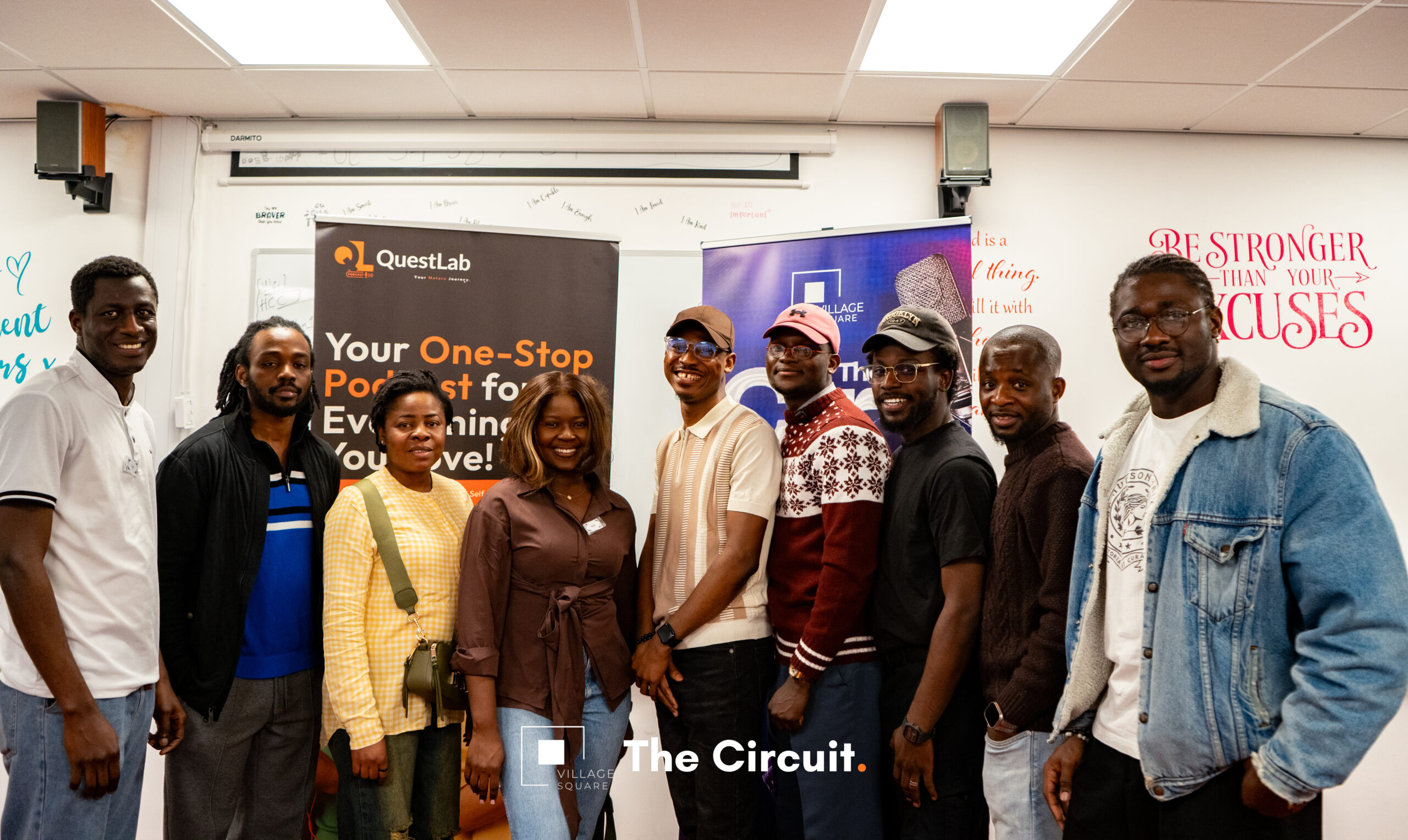
    Circuit 1.0 is a community meetup event that brings together professionals, creatives, and emerging innovators in a collaborative environment focused on open dialogue, shared learning, and practical growth.

    Held in Hull, United Kingdom, Circuit 1.0 convened participants from diverse backgrounds, creating a space where ideas could be exchanged freely and every voice contributed to the conversation. The meetup was intentionally designed to prioritise participation over presentation, encouraging active engagement rather than passive attendance.

    The session was organised by Tosin Ojo, alongside Benjamin Ajibade, Oluwasegun Aluko, Dayo Ibrahim, Oladapo Ogunfeitimi, Adebisi Ajibade, Abimbola Babasanya, Odunayomi Stella, and Damilare Bakare, who collectively led the planning, coordination, and delivery of the event.

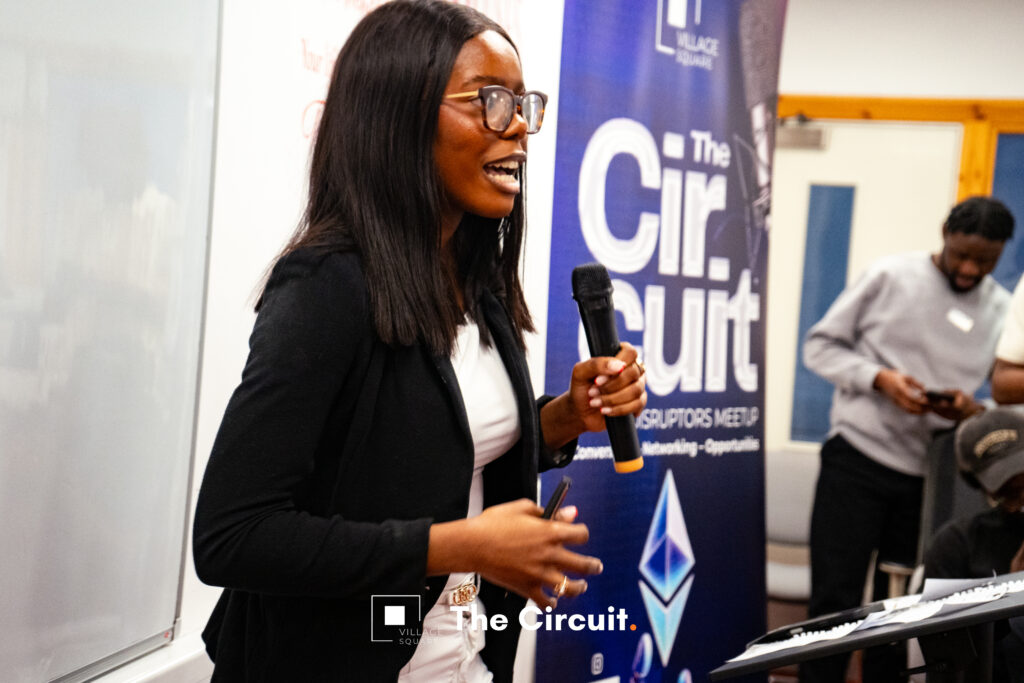
    A key highlight of the meetup was the idea presentation segment, where participants showcased ideas and innovations across technology and applied problem-solving. Presenters included Osapkolor Emmanuel Omonbude, who explored open-source large language models for everyday use cases, Joy Balogun, who presented on AI-driven systems for lifestyle and decision-making, and Damilare Bakare, who shared insights on edge AI and introduced Sermio, a mobile application that converts sermon audio into summaries, key points, and structured insights using on-device AI.

    Across discussions and sessions, themes such as innovation, personal development, career transition, and community building were explored, with participants engaging in thoughtful and constructive exchanges

    Circuit 1.0 highlighted the growing need for intentional meetup spaces that foster real engagement, collaboration, and knowledge sharing within emerging tech and career ecosystems.

    Following the success of this first edition, Circuit is set to continue as a recurring meetup series, expanding its reach and deepening opportunities for connection, collaboration, and innovation across communities.

  • How TBM Events Is Fixing Discovery and Ticketing in One Platform

    How TBM Events Is Fixing Discovery and Ticketing in One Platform

    It’s Saturday evening.

    You’re scrolling through Instagram and see clips from an event everyone seems to be at. Good crowd, good music, people you know. You check the comments, then your group chat.

    “Why didn’t anyone tell me about this?”

    Someone replies, “Tickets sold out since Wednesday.”

    That moment is familiar.

    In many African cities, events don’t suffer from lack of demand. They suffer from how they’re discovered, shared, and managed.

    That gap is what TBM Events is building around.

    Today, event discovery still depends heavily on social media posts, WhatsApp broadcasts, and word of mouth. Information is often incomplete, late, or lost in timelines.

    TBM Events introduces a more structured approach.

    The platform allows users to discover events in one place, purchase tickets seamlessly, and receive instant confirmation through QR-based access. Instead of chasing links or sending DMs, the process becomes straightforward.

    For users, it reduces friction.
    For organizers, it removes guesswork.

    Behind the scenes, event organizers deal with a different set of challenges.

    Tracking attendees manually. Confirming payments across multiple channels. Managing check-ins with little visibility.

    TBM Events brings these processes into a single system.

    Ticketing, payments, and attendee management are handled in one place, allowing organizers to focus on execution rather than coordination. It also creates a clearer picture of attendance and engagement, something that is often missing in traditional setups.

    Distribution as a Missing Layer

    Beyond ticketing, visibility remains a key issue.

    Many events don’t fail because they lack value. They fail because the right audience never sees them early enough.

    TBM Events addresses this by acting as a distribution layer. Events listed on the platform are not just hosted, they are positioned for discovery within an ecosystem where users are already looking for things to attend.

    This shifts discovery from passive scrolling to active searching.

    Reflecting How Events Are Changing

    The way people attend events is also evolving.

    From physical gatherings to webinars and hybrid formats, users expect flexibility. TBM Events supports this shift by accommodating different event types within the same system.

    For organizers, this means broader reach.
    For users, it means more access.

    TBM Events is not trying to redefine events.

    It is addressing the friction that sits around them.

    Finding events late. Missing tickets. Managing attendance manually.

    These are small problems individually, but together, they shape the overall experience.

    By building structure into discovery and ticketing, TBM Events is quietly solving a problem many people already recognize.

    They just haven’t named it yet.

  • Still Creating for One Audience? Reach 50+ with One Upload Using Reedapt

    Still Creating for One Audience? Reach 50+ with One Upload Using Reedapt

    In a continent where language diversity often limits distribution, Reedapt is taking a different approach: scale African stories across borders without losing their voice.

    Founded in October 2024 in Lagos, Reedapt is an AI startup focused on voice cloning and real-time translation for creators and media companies. Its core idea is simple but powerful: African stories shouldn’t be confined by language.

    At the heart of Reedapt’s offering are two products. Reedapt Dub allows creators from Nollywood filmmakers to faith-based broadcasters to clone their voices and dub content into over 50 languages. Instead of generic voiceovers, audiences hear the original storyteller’s voice, now speaking French, Swahili, or Arabic.

    Then there’s Reedapt Live, built for real-time multilingual streaming and interpretation. This is particularly relevant for churches, live events, and broadcasters targeting pan-African or diaspora audiences.

    The timing is strategic. As African content gains global traction especially through platforms like Netflix and YouTube distribution remains fragmented by language. Reedapt is positioning itself as the infrastructure layer that bridges that gap.

    The founding team reflects this mission. CEO Eri Owoade brings a deeply personal connection to multilingual storytelling, having grown up in Saki, a border town in Oyo State. CTO Maryann leads the AI and data science efforts, alongside COO David Mac-Asore and a product team focused on scalable backend systems.

    Reedapt’s early focus markets include Nollywood, African broadcasters, faith media, and Francophone Africa creators segments where language has historically limited reach and monetization.

    The company officially launched Reedapt Dub on April 17, 2026, with a freemium pricing model starting from free tiers up to enterprise plans. This lowers the barrier for creators to experiment with multilingual distribution.

    For African media, the implications are clear: more reach, more revenue, and more cultural export.

    As the global appetite for African content grows, Reedapt isn’t just translating stories; it’s expanding their surface area.

  • Snagged Is Building a Google Maps for Finding Discounts Across the Internet

    Snagged Is Building a Google Maps for Finding Discounts Across the Internet

    The Internet Has Discounts Everywhere but No Way to Find Them

    Every day, brands and creators share discounts across newsletters, Instagram pages, group chats, Telegram channels, and scattered promotional posts. The problem is not that discounts are rare. The problem is that they are invisible unless you already know where to look.

    Most users miss out on deals not because they are unavailable, but because they are fragmented across too many platforms. Discovery is broken.

    This is the gap Snagged is built to fix.

    What Snagged Is Building

    Snagged is a global discount discovery platform designed to centralize and organize deals from across the internet.

    The simplest way to describe it is this: Snagged is Google Maps, but for finding discounts.

    Instead of searching randomly across social media or relying on word of mouth, users can use Snagged to search and explore discounts in one structured place. It aggregates scattered deals and makes them searchable, accessible, and easy to navigate.

    The goal is not to sell products. The goal is to help people find where the value already exists.

    From Scattered Deals to Structured Discovery

    Today, discounts live in isolated pockets. A fashion brand might post a flash sale on Instagram. A SaaS company might send a limited offer through email. A creator might share a promo code in a Telegram group.

    Each of these works independently, but there is no unified system connecting them.

    Snagged introduces structure to this chaos. It organizes discounts so users can discover them intentionally instead of stumbling upon them by chance.

    This transforms promotions from scattered content into a searchable discovery layer.

    Why snagged?

    Brands spend heavily on promotions, but distribution is inefficient. A discount can go viral in one channel and remain invisible in another. At the same time, users actively want to save money but do not have a reliable way to find all available offers in one place.

    This creates a clear mismatch between supply and discovery.

    Snagged sits in the middle of this gap by making discounts easier to find, compare, and access.

    The Google Maps Analogy

    Snagged uses a familiar mental model to simplify a complex problem.

    Just like Google Maps organizes physical locations into a navigable system, Snagged organizes discounts into a searchable map of value across the internet.

    Users do not need to know where a deal was posted. They only need to search for it in one place.

    This shifts discovery from passive scrolling to active searching.

    Early Stage But Actively Evolving

    Snagged currently has a live version and is still under active development. The platform is being refined based on how users interact with it and how discounts behave across different sources.

    The long term focus is on improving search relevance, expanding deal coverage, and making discovery faster and more intuitive.

    The Value Behind Snagged

    Snagged creates value by bridging the gap between brands and consumers in a more efficient way. Brands get better visibility for their offers. Users get a centralized system for finding savings. The platform becomes the infrastructure that connects both sides.

    Over time, this opens opportunities around featured listings, deal amplification, and partnerships with brands that want structured distribution for their promotions.

    A New Layer for Internet Commerce Discovery

    The internet has made it easy to post deals but difficult to find them. Snagged is building a discovery layer that sits on top of existing platforms and organizes discounts into a usable system.

    Instead of relying on chance, users get intentional access to value that already exists online.

    The biggest problem with discounts today is not creation. It is discovery.

    Snagged is building a system that makes finding deals as simple as searching a map. If successful, it could become the default way people discover value across the internet.