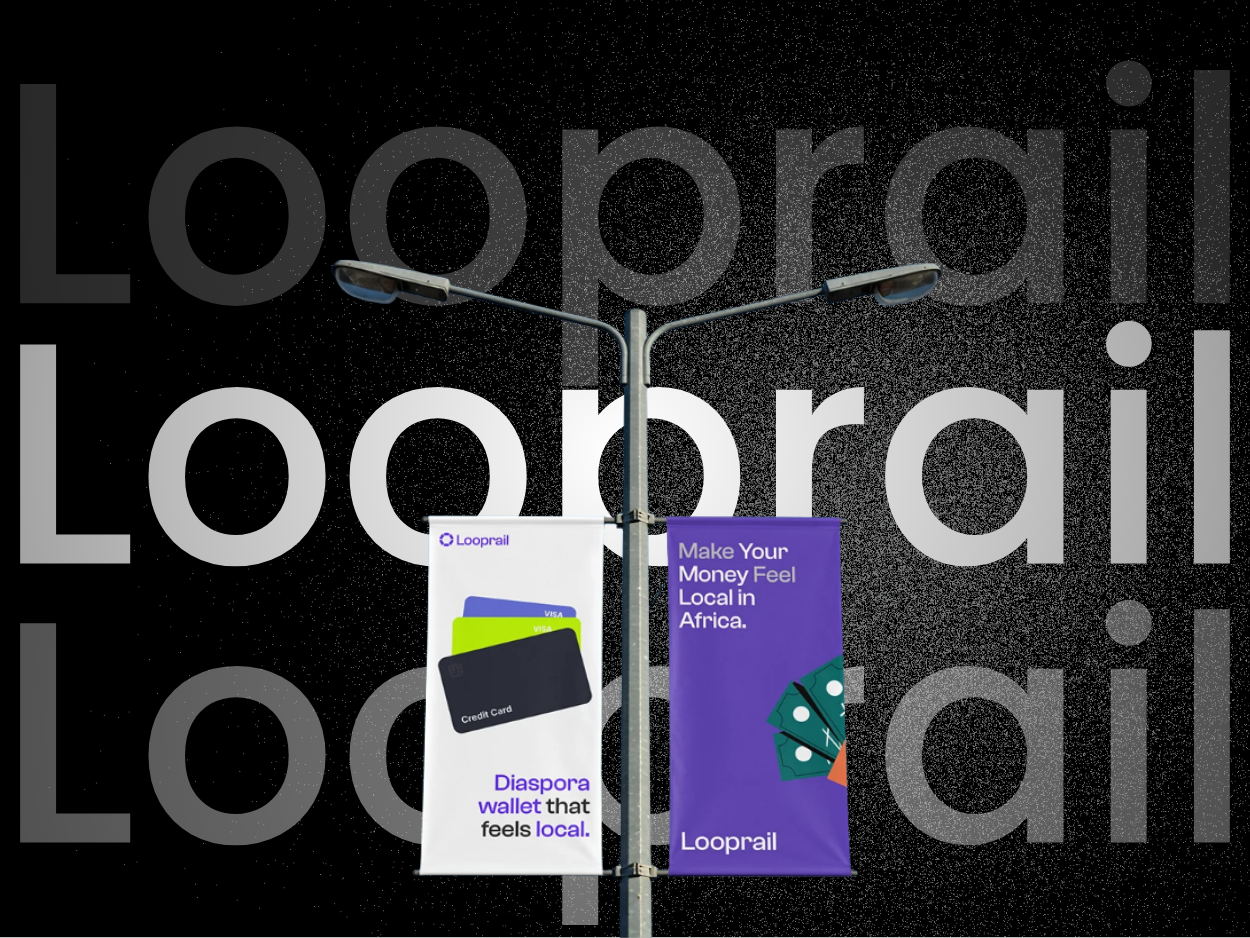
The first time I wanted to receive funds from abroad, I combed several apps, and the journey was excruciating. The founder of Looprail has a similar story.
Waiting through the familiar frustration of traditional cross-border transfers. High fees quietly deducted. Settlement times stretching into days that you can’t control.
Exchange rates change between “send” and “receive.” And when the money finally arrived, it came with a final disappointment. It was converted to cash, locked in a bank account, and stripped of real utility.
Even local payments had already evolved, and in many African markets, you can easily transfer from Moniepoint to OPay in an instant, even with digital checkouts. But the moment your money crosses borders, it falls into an outdated maze of correspondent banks and intermediaries.
For me, the problem was not sending money. The problem was what happened after it arrived.
That gap became the foundation of Looprail.
Seeing Remittance as Infrastructure, Not a Transaction
I began looking at remittance from a different angle and asking questions about what if remittance is more than a transaction but a rail. And here’s what I mean
What if money did not just arrive and sit idle in a bank account or get converted into cash? What if it could immediately pay bills, book travel, support local merchants, and circulate inside the economy?
That shift in thinking, from remittance service to payment infrastructure, changed everything.
Why Stablecoins Became the Answer
Stablecoins offered that path. They solved the core problems I experienced firsthand. They moved money instantly, not in days. They reduced fees from percentages to pennies. They offered transparency instead of hidden markups. Most importantly, they allowed money to remain digital and programmable rather than being trapped on arrival.
Stablecoins became the foundation of Looprail’s vision.
Building Without Capital, Only Conviction
For us, the first real challenge was not technology. It was people.
There was no funding. No guaranteed salaries. Just a vision and equity. Convincing talented people to join meant offering something deeper than compensation. It meant ownership in solving a systemic problem that affects millions of people.
That constraint became a filter. Everyone who joined believed deeply in the mission. Everyone was comfortable building in uncertainty. The team that emerged was aligned, resilient, and focused on building hard things properly.
Why Nigeria is the Proving Ground for us.
Looprail’s first corridor is in Nigeria, and the reason is simple. The country has one of the largest diaspora populations in the world and receives over $20 billion in remittances annually. At the same time, traditional remittance remains expensive, slow, and fragmented.
Our pre-launch focus is clear. Build belief before product. Validate demand through a growing waitlist. Then soft launch with a small group of testers and prove that the rails work at scale.
If it works in Nigeria, it can work anywhere.
Beyond Remittance, Toward a Financial Bridge
Looprail is not being built as a cheaper way to send money home. It is being built as a financial bridge between diaspora life and African economies.
The vision is simple. Send money home, and that money should immediately work. It should pay bills, support family, fund travel, and flow directly to local merchants. As more diaspora users adopt the platform, more merchants integrate. As utility grows, adoption accelerates. That is how remittance becomes infrastructure.
What Drives the Mission Forward
What excites me most is not valuation or headlines. It is product-market fit in its truest sense. A world where money sent from outside Africa does not just arrive, but actively powers local economies.
That is what Looprail is building.