Tag: finance

  • Cardron Is Building a WhatsApp-First Way to Buy Digital Products in Nigeria

    Cardron Is Building a WhatsApp-First Way to Buy Digital Products in Nigeria

    The Nigerian digital commerce platform is helping users access gift cards, virtual cards, event tickets and other digital products without having to navigate multiple apps and complicated checkout processes.

    For many Nigerians who regularly use digital products, buying something as simple as a gift card, virtual card or software subscription can involve several steps.

    You may need to download an app, create an account, complete verification, fund a wallet, wait for confirmation and then contact support if something goes wrong.

    For developers, creators, influencers and other digital users who depend on these products, what should be a straightforward purchase can quickly become frustrating.

    This was the problem that led to the creation of Cardron, a WhatsApp-first digital commerce platform designed to make digital products easier, faster and more trusted to access.

    The company was built around a simple observation: people already use WhatsApp every day, so buying a digital product should not require them to learn another complicated system.

    Instead, Cardron allows customers to order directly through WhatsApp, reducing the number of steps between deciding what they need and receiving it.

    Building Around a Familiar Platform

    Cardron’s approach is centred around WhatsApp-first commerce.

    Rather than requiring customers to download another application or move through a lengthy signup process, the platform allows them to interact with the business through WhatsApp.

    Behind that experience is a web-based system that manages orders, payments, customer support, fulfilment, notifications and reporting.

    The technology is designed to make the customer experience simpler while giving the team more structure behind the scenes.

    The platform currently focuses on digital products including gift cards, virtual cards, event tickets and other digital access products.

    For Cardron, the choice of WhatsApp is also about accessibility.

    Customers do not have to learn a new platform before making a purchase. They can use a communication channel they already understand and use regularly.

    Trust Became Part of the Product

    One of the biggest challenges Cardron encountered was trust.

    Digital commerce already has a trust problem, particularly when customers have previously dealt with fake vendors, delayed orders or poor customer support.

    The company therefore had to build more than a convenient purchasing process.

    It had to create confidence that customers would receive what they paid for and that there would be someone available to help when something went wrong.

    Cardron’s response has been to focus on speed, reliability, communication and customer support as part of the product experience.

    The wider economic environment has also made these factors more important.

    Inflation and exchange-rate pressures have made customers more careful about where they spend money, particularly when purchasing digital products.

    For Cardron, this reinforces the importance of providing a service that customers can trust.

    From Gift Cards to Digital Commerce

    Cardron did not remain limited to its initial product categories.

    The platform has expanded beyond gift cards and virtual cards into areas including digital fulfilment and event ticketing, with plans to continue expanding its digital product offering.

    That expansion reflects a broader ambition for the company.

    Instead of becoming a platform for one type of digital product, Cardron wants to become a place where people can access different digital products and services through a familiar buying experience.

    Its technology allows the business to manage different parts of the customer journey from one system, including orders, support, delivery and tracking.

    As customer expectations change, the company says users increasingly want faster delivery, clearer communication and less friction when buying online.

    Technology That Solves a Practical Problem

    For Cardron, technology is not the product for its own sake.

    The technology exists to address a practical problem that customers already experience.

    The company began with industry knowledge, technical skills and an understanding of the frustrations people faced when trying to purchase digital products.

    That shaped the product philosophy from the beginning: technology should reduce stress rather than introduce more steps.

    This is also reflected in the company’s view of entrepreneurship.

    One of the key lessons Cardron has taken from its journey is that good business ideas often come from everyday problems. Building something technically advanced is not enough if it does not make life easier for the customer.

    What Comes Next for Cardron

    Cardron plans to continue expanding its digital product categories while improving delivery, automation and customer support.

    Event ticketing is another area the company sees as an opportunity, alongside partnerships that can expand the range of services available through the platform.

    The long-term goal is to build Cardron into a trusted digital platform that people can rely on for different everyday digital needs.

    The company operates under Devloopr Web Solution Ltd, the registered company behind Cardron.

    As digital commerce continues to grow in Nigeria, the platforms competing for customers will not only need to provide access to products. They will also need to make the purchasing experience reliable and easy to understand.

    For Cardron, that means meeting customers on a platform they already use, reducing unnecessary steps and building the systems required to deliver digital products with less friction.

    The company is still building toward that larger vision, but its starting point remains simple: making digital access easier, faster and more reliable.
  • Peerless Launches SeaBaas Lite to Transform Core Banking for Nigerian Microfinance Institutions

    Peerless Launches SeaBaas Lite to Transform Core Banking for Nigerian Microfinance Institutions

    Peerless, a modern enterprise technology company, has officially announced the launch of SeaBaas Lite. This core banking solution is built to support the digital transformation of microfinance institutions (MFIs) and fintechs across Africa.

    The product represents a standardized version of the company’s flagship SeaBaas core, designed for rapid deployment and operational efficiency.

    The Nigerian financial sector currently faces significant infrastructure hurdles. High capital expenditure on hardware, foreign exchange volatility affecting software maintenance, and the complexity of local regulatory compliance have created barriers for many institutions.

    SeaBaas Lite addresses these challenges by offering a cloud-native platform hosted on Huawei Cloud with local data residency. This ensures that Nigerian financial data stays within the country, meeting the requirements of the Central Bank of Nigeria (CBN) and the Nigeria Data Protection Regulation (NDPR).

    SeaBaas Lite is built on an API-first modern core. This technical foundation allows for seamless integration with external channels, facilitating automatic verifications and faster customer onboarding. By removing the need for manual data entry and disjointed verification processes, institutions can reduce their transaction processing time by 60%.

    The platform also solves a major pain point for compliance officers through built-in regulatory reporting templates. These templates are pre-mapped to local requirements, allowing banks to generate reports for regulators with a single click. This automation reduces the risk of manual errors and the potential for regulatory fines.

    Data is a central component of the new offering. SeaBaas Lite provides robust analytics that give banks rich insights into customer behavior. These data-driven tools help institutions move beyond simple record-keeping to identify new revenue opportunities and improve credit scoring models.

    “Peerless is on a mission to remove the high barriers of entry that have historically held back African financial institutions,” says Dr. Joachim Adenusi, Co-Founder and CEO of Peerless. “SeaBaas Lite gives MFBs and regional banks access to world-class infrastructure without the heavy price tag of legacy systems. We believe every institution deserves a core that supports growth instead of hindering it.”

    Support remains a key differentiator for Peerless. Unlike global competitors that often manage support from different time zones, Peerless maintains a top-quality technical and customer support team based in Lagos. This proximity allows for one-hour response times and a deeper understanding of local integration rails and network conditions.

    The track record of the SeaBaas infrastructure is substantial. The platform has served over 12 million end users and processed more than 4 billion transactions. These operations have led to over $30 million in operational savings for Peerless customers. The system maintains a 99.99% availability rate, providing stability even during peak transaction periods.

    Olumide Odeyemi, Marketing & Growth Manager at Peerless, notes that the transition from traditional hardware ownership to cloud access is a necessity in the current economic climate. “The cost of maintaining rigid legacy systems consumes budgets that should go toward innovation. SeaBaas Lite moves these costs from a heavy upfront investment to a predictable operational expense.”

    SeaBaas Lite is now open for subscription. Interested institutions can visit https://bepeerless.co/product/seabaaslite to learn more about the platform’s capabilities and the 30-day deployment promise.


    About Peerless

    Peerless is a modern enterprise technology company purpose-built to support the digital transformation of institutions in emerging markets. With offices in Nigeria and the UAE, Peerless provides core digital infrastructure including core banking software, business process automation, and customer relationship management tools.

  • The African Tech Brand Quietly changing lives : Paystack

    The African Tech Brand Quietly changing lives : Paystack

    When I think about the African tech brand that has quietly made life easier for thousands of creatives, small business owners, and dreamers like me, Paystack is the first name that comes to mind. It’s funny because I didn’t start out paying attention to fintech at all.

    I just wanted to understand why so many business pages on Instagram were suddenly taking payments smoothly without all the usual back-and-forth. Somewhere along the line, the answer kept pointing back to one company: Paystack.

    My first real interaction with the brand wasn’t even as a business owner. It was as a customer. I remember trying to pay for a virtual class and expecting the usual stress-failed transactions, double debits, or the “network not available” message.

    But the payment went through instantly, and the receipt hit my email before I could even refresh the page.

    It was such a small moment, but it made me pause. In this country, where simple things often become complicated, that small moment of ease meant something.

    The more I paid attention, the more I realized how deeply Paystack is woven into the daily hustle across Africa.

    The vendors who rely on payment links. The creators who send invoices. The startups that feel “official” because they have a proper checkout page. Even NGOs and schools use it now.

    Paystack somehow manages to be present but not loud , almost like a quiet backbone that keeps so many ideas alive.

    What I love most is how simple they make things feel. You don’t need to be tech-savvy to use it. You don’t need a big business. You don’t even need a website.

    There’s something empowering about that the idea that anyone with a skill or a passion can start collecting payments and building something real.

    And of course, the global recognition they’ve gotten, especially after their acquisition by Stripe, made me genuinely proud. It felt like a win for everyone who believes Africa can build world-class technology.

    But beyond the headlines and the milestones, Paystack represents something personal to me: possibility.

    The possibility that African problems can be solved by African innovators. The possibility that a simple idea can transform how we work and create.

    Paystack may be a fintech company, but to me, it’s a reminder that progress doesn’t always have to be loud. Sometimes, it’s the quiet systems running in the background that change the most lives.

    That’s why Paystack is the tech brand I love.

  • Chams Mobile is quietly building real solutions for Nigeria

    Chams Mobile is quietly building real solutions for Nigeria

    I still remember the first time someone mentioned Chamsmobile to me. It was during a casual conversation about digital payments and identity systems in Nigeria, and a friend said, “Have you checked what Chamsmobile is doing?

    They are not loud, but they’re doing real work.” Out of curiosity, I went online to see for myself, and honestly, that small search opened my eyes to a brand that deserves far more attention than it gets.

    What I love about Chamsmobile is that they are building solutions for realities we face every day in this country, not fantasies.

    Many tech companies chase hype; Chamsmobile builds quietly for people who need technology the most: market women, transport workers, SMEs, civil servants, and communities usually left out of the main conversation.

    One thing that really stood out to me is their focus on digital identity and financial inclusion. In a country where a simple thing like verifying someone’s identity can delay jobs, stop access to credit, or complicate business transactions,

    Chamsmobile found a way to simplify it with their Kegow platform. It’s not just about transferring money. It’s about helping people prove who they are, opening accounts easily, and accessing financial services without stress.

    I also respect how they operate. They don’t try to be everywhere at once; instead, they focus on solving real administrative and financial gaps in Nigeria.

    For example, the way they’ve built partnerships with government agencies and private organizations shows that they understand the Nigerian system deeply. They’ve also created room for agents and small business owners to earn through their digital services, and for me, that’s one of the most practical ways a tech brand can empower ordinary people.

    Another thing I admire is the trust they’ve built over the years. In a space where many fintechs rise fast and crash even faster, Chamsmobile is consistent.

    They don’t make noise, but they deliver. They’ve been part of Nigeria’s digital identity journey long before it became trendy, with the help of their parents’ company, Chams Hold Co, and they’ve stayed committed to it through every challenge.

    Chamsmobile makes me proud because they represent what African tech should be: innovation rooted in real problems, solutions created with Nigerians in mind, and a quiet confidence that speaks louder than hype. They may not always trend on social media, but they are impacting lives in a way that truly matters.

    For me, that’s the kind of tech brand worth celebrating.

  • Good Work Gets Done in a Great Ambience: How Emmanuel Faith Redefined the Human in African Tech

    Good Work Gets Done in a Great Ambience: How Emmanuel Faith Redefined the Human in African Tech

    In the high-velocity world of African startups, the “Human” in Human Resources is often the first thing to get lost in the sprint for scale. Between the high-burn culture of Lagos tech and the cold precision of multinational conglomerates, a new philosophy is emerging.

    I sat down with Emmanuel Faith, a name synonymous with the “relatable” side of tech leadership. From the hallowed halls of General Electric (GE) to the high-stakes trenches of Cowrywise and Big Cabal Media (BCM), Faith has navigated the “storms” of the ecosystem with a unique blend of financial literacy and radical empathy.

    The Origin: From Taxaide to the “Big Boy” Era at GE

    Before he was an HR powerhouse, Emmanuel Faith was a Tax Intern at Taxaide Professional Services, starting just a day after graduation. While many wait for their “dream role” to find them, Faith used his time as a Tax Trainee to study the intersection of payroll automation and people operations.

    When he eventually landed at General Electric (GE), he entered a world of “packaging” and prestige—jumping danfo buses from Iyana-Ipaja to VI by 4 AM, only to stroll into AXA Mansard later that morning looking like a top-tier consultant.

    “There are two kinds of people: those who know GE and those who don’t,” Faith laughs. “I was a ‘big boy’ earning in the upper echelon, but the real growth happened in the ‘bubble assignments’.”

    The “Bubble” Strategy: How Personal Branding Opened Doors

    Faith didn’t start in the HR department at GE, but he made his intentions impossible to ignore. He pioneered the “Bubble Assignment”—proactively asking HR managers for tasks that wouldn’t breach confidentiality.

    His breakthrough came when he branded a company-wide engagement “Chat and Palley.” By leveraging his writing skills and his charisma as an “emergency Emcee,” he recorded a 96% attendance rate—the highest the team had seen in years.

    “The reward for good work is more work,”

    Cowrywise & The “Multipotentialite” HR

    If GE was his training ground for culture, Cowrywise was where his ability was truly tested. In the fintech world, HR isn’t just about payroll; it’s about product. Faith describes this as his “best work,” largely because he wasn’t confined to a silo.

    “Cowrywise tested my ability. I wore a lot of shoes—shoes I was quite capable of wearing,”

    Whether he was partnering with Dev teams to build a product or supporting the marketing engine, his Economics background became his “unfair advantage.”

    The work ethic was relentless. At one point, the company expanded by nearly 90% within 250 days of his joining. Faith himself was in the office for 100 days straight—a testament to the “grit” phase many tech enthusiasts romanticise, but few survive.

    Navigating the Storm: Why the Documentary?

    Every leader faces a season of restructuring. At Big Cabal Media (BCM), Faith joined during a “storm” where several leaders had resigned. He was tasked with “studying the ship” during a period of significant organisational change.

    When BCM eventually underwent a downsizing exercise, Faith found himself among those affected. While a layoff is often seen as a “dip,” Faith used it as a moment of deep reflection. It was during this period of silence—navigating the transition from a high-profile role to the “what’s next”—that the idea for his career documentary was born.

    The documentary isn’t just a highlight reel; it’s an honest, behind-the-scenes look at the pressures, trade-offs, and emotional weight of HR leadership. Faith shared the idea with his editor during this reflective period as a way to “open source” the story behind the scenes. It serves as a playbook for resilience, showing that even when a role ends, your reputation and your “Why” remain intact.

    The Philosophy: “Good work gets done in a great ambience”

    One of the standout phrases Faith insists on is Ambience. In his view, charisma is a tool of leadership, but empathy is the foundation.

    “People come to work for different reasons,” he explains. “Sometimes it’s the person with the ‘gist,’ sometimes it’s the person who dresses well. As HR, you must recognize these diverse motivations.”

    By making himself “easy-going,” Faith created a safe harbour for talent. However, he warns that this friendliness must be balanced: “It’s good for people to recognise you as an easy-going person so that when you are being serious, they recognise that too.”

    Redefining the Gap: The HR Clinic Portfolios

    Emmanuel identified a glaring hole in the African ecosystem: Quality HR service provision. Through HR Clinic, Faith has provided HR advisory for startups, SMEs, and NGOs—including working with high-growth clients like Nestuge. He is democratizing HR knowledge, providing a framework for startups to treat their people as assets rather than expenses.

    The Takeaway: Building Your Career Capital

    For the 18–35-year-old tech cohort, Faith’s story (and his new documentary) offers a playbook on Resilience:

    1. Don’t be shy about what you want: Ask rationally, but ask.
    2. Bet on yourself first: Faith missed movies and social time during NYSC to work on his “Bubble assignments.”
    3. Show your work: You need people speaking for you in rooms you haven’t entered yet.

    Emmanuel Faith’s career proves that in the “New Africa,” the most valuable technology is the way we manage the people building Africa’s Tech.

    🎥 Watch the Journey

    Ready to see the story behind the headlines?

    Click here to watch Emmanuel Faith’s Doing HR in Africa: Eight Years Behind the Scenes

  • The African Fintech Library: Preserving the Institutional Memory of a Continent in Motion

    The African Fintech Library: Preserving the Institutional Memory of a Continent in Motion

    In the African tech ecosystem, the greatest barrier to scale isn’t always capital or talent: it’s the “Knowledge Gap.”

    For a decade, the “how-to” of African fintech has existed in silos. Valuable lessons on navigating the Central Bank of Nigeria (CBN), managing cross-border liquidity in the EAC, or scaling credit in South Africa are often trapped in private WhatsApp groups or lost when an operator switches roles.

    Today, Builders in Fintech are changing that. With the launch of the African Fintech Library (AFL), the ecosystem finally has a structured, durable archive for the hard-won lessons of its builders.

    Beyond the Informal: Why Structure Matters

    The AFL didn’t emerge from a vacuum. It was born from a recurring observation: Africa’s fintech sector is projected to grow 5x by 2028, yet its “institutional memory” is scattered.

    “Valuable operational and regulatory lessons are being generated every day,” the AFL team notes. “But they are rarely captured in a format that outlives the moment.”

    The Library is the intentional answer to this problem. It is designed to preserve knowledge before it disappears, making it accessible to a founder in Senegal who needs to understand the compliance mistakes made by a predecessor in Ghana.

    One Archive. 10,000 Practical Insights.

    The vision for the AFL is as bold as the sector it serves. It isn’t just a blog; it is a Structured Knowledge Infrastructure.

    Think of it as the “Reference Manual” for the African context. The Library covers the critical, often unglamorous, pillars of the industry:

    • Payments & Infrastructure: The “plumbing” of how money actually moves across borders.
    • Regulation & Governance: Navigating the shifting sands of continental policy.
    • Risk & Credit: Managing the math behind Africa’s lending boom.

    Built by Practitioners, for Builders

    The most distinctive feature of the AFL is its authorship. Every guide is written by real world practitioners, the people who have sat in the rooms where the decisions were made.

    By moving from “theory” to “hands-on experience,” the AFL levels the playing field. Emerging talent and first-time founders no longer need to rely solely on “private circles” to understand the nuances of the market. They now have a central publication that offers expert knowledge backed by thorough research and lived experience.

    A Call to the Ecosystem: Contribute Your Story

    The AFL is a living asset. As the ecosystem evolves, so must the Library. The team is calling on builders across the continent to share their practical knowledge.

    The process is rigorous but rewarding:

    1. Write: Draft a publication ready guide based on a topic you know in theory and practice.
    2. Submit: Your work undergoes a 2–4 week review by the Builders in Fintech editorial team.
    3. Preserve: Once live, your insights become a permanent part of the continent’s fintech history.

    The ATJ Perspective: Why We Are Amplifying This

    At African Tech Journal, we believe that Structured Knowledge = Faster Innovation. The launch of the African Fintech Library marks a new dispensation. It is the moment the African fintech sector stops “reinventing the wheel” and starts building on a foundation of collective intelligence. Whether you are an operator looking to build faster or a student looking to understand the mechanics of money, the AFL is now your primary reference.

    Start Exploring the Archive Today

    Don’t build in the dark. Access the collective memory of the continent’s best builders.

    Visit: www.buildersinfintech.com/afl


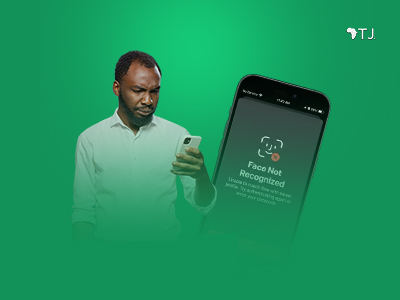
  • Is Face ID Really 2FA? Rethinking Biometric Security in Financial Apps

    Is Face ID Really 2FA? Rethinking Biometric Security in Financial Apps

    Financial institutions increasingly use 2-Factor Authentication (2FA) in their mobile apps to protect customer transactions. Traditionally, 2FA combines two different types of verification. This is usually something you know, such as a transaction PIN or one-time password, and something you have, such as your registered phone or a token.

    In many modern transaction flows, after a user enters a transaction PIN or token, the app then requests biometric authentication. This could be Face ID or a fingerprint, depending on the user’s device. While this improves convenience, it raises an important question. Should device-level biometrics really count as a valid second factor for transaction authentication when the verification does not happen within the financialinstitution’s systems?

    How Biometrics Work in Financial Apps

    When a financial app uses Face ID or fingerprint authentication:

    ● The app does not see or transmit the raw biometric data. Instead, it asks the phone whether the biometric presented matches one of the biometrics already enrolled on the device

    ● The biometric data itself is stored securely on the phone, within protected hardware designed for this purpose. The app simply receives a yes or no response from the device. The financial institution never receives the actual fingerprint or facial data.

    This means the institution is relying on the phone’s confirmation rather than directly verifying the user’s biometric identity.

    Can Biometrics Count as a “Second Factor”?

    Traditionally, 2FA is based on using two different categories of authentication:

    1. Something you know, such as PIN or password

    2. Something you have, such as a phone or token

    3. Something you are, such as a fingerprint or face

    On the surface, combining a transaction PIN with Face ID or a fingerprint appears to meet the definition of 2FA. However, there is an important distinction.

    Because the biometric check is performed entirely on the device, the financial institution cannot independently confirm who was authenticated. For this reason, device biometrics are often best viewed as a strong convenience layer rather than a fully independent second factor on their own. They work best when combined with other institution-verified controls, especially for high-risk transactions.

    Security Risks and Edge Cases

    1. Device Access by Another Person

    If another person is able to register their fingerprint or face on a phone, whether intentionally or under pressure, financial apps that rely on biometrics may treat that person as a legitimate user.

    2. Device Trust Over User Identity

    Because the biometric decision comes from the phone, anyone who can unlock the device and add their biometric may be approved during transactions. The financial institution has no visibility into changes made at the device level.

    3. Spoofing and Advanced Attacks

    While modern phones include strong protections, biometric systems are not immune to spoofing attempts such as fake fingerprints or manipulated facial images, especially on older or less secure devices.

    4. Biometrics Cannot Be Changed

    Unlike a PIN or password, biometrics are permanent. If they are compromised, they cannot simply be reset. This makes them riskier as a primary security control over time.

    Is It Safe to Use Device Biometrics as Part of 2FA?

    Benefits

    ● Convenience. Transactions are faster and easier for users.

    ● Device-level protection. Biometric data is stored securely on the phone and is difficult for remote attackers to extract.

    Limitations

    ● Dependence on the device. If a phone is lost, stolen, or compromised, risk increases.

    ● No direct verification. The financial institution cannot confirm who passed the biometric check.

    ● Accuracy limits. Biometric systems can sometimes fail or incorrectly approve access.

    Regulatory and Legal Considerations

    ● Most financial institutions clearly state in their terms that enabling biometric login means any biometric registered on the device may be able to access the account.

    ● Device manufacturers aren’t legally liable for financial fraud from financial app transactions authenticated via device biometrics. Responsibility typically rests with the financial institution’s policies and local financial regulations.

    ● In many regions, financial institutions must still comply with privacy and data protection laws related to biometric use, even when the data is stored only on the device. However, this does not automatically transfer liability to device providers.

    In conclusion, device biometrics add meaningful value by improving convenience and strengthening security at the device level. However, they are not a perfect or fully independent second factor when used alone for transaction authentication. For users, it is important to maintain strong device security, protect phone access codes, and understand how biometric authentication works.

    For financial institutions, biometrics are most effective when used as part of a layered 2FA approach rather than as the sole line of defense.

    By Sunny Ogbari

  • I said goodbye to scam exchangers, a Raenest app story

    I said goodbye to scam exchangers, a Raenest app story

    N500/$ is the rate I’ll use to exchange the funds. Na my account you take collect am.”

    If you’ve freelanced since the days of oDesk and Elance, you’ll recognise this. It’s what so-called exchangers say to freelancers trying to receive payments from clients worldwide.

    Some exchangers are honest, but many are crooks. They take a large cut of freelancers’ earnings or scam them entirely. It’s shocking!

    I fell victim for years. Freelance platforms then updated to allow direct deposits to Africa. FinTech companies like Raenest emerged, enabling us to be paid in any currency.

    Raenest has addressed the scammer-exchanger issue with popular ACH accounts and useful virtual cards.

    Here are five reasons why I believe they will continue to thrive:

    Timely Free Deposit Offers: I’ve signed up with other fintech companies, but none have offered free payment deposits. My ‘grey’ matter just doesn’t have any memory of it 🙂


    Since joining Raenest, I’ve received many free deposit offers. FinTechs usually charge fees for operational costs and regulations. But with Raenest, my USD, GBP, or EUR deposits periodically come in full, with no fees.

    This shows their commitment to helping global earners keep every cent. I think it’s their most thoughtful ‘gift’ and one of the things I love about the them.

    Cross-border Payments: The distance between Europe and Africa is about 14 kilometers. Although people like Pelumi Nubi have crossed the borders using just their cars, 14km is still a far stretch. Let’s not even fact-check the for America to Africa. Yet, we can send and receive money without traveling that distance! Whether you’re a freelancer or a business in Africa needing payments from the UK, US, or China, Raenest has you covered.

    Stablecoin Integration: Many freelancers want to earn in coins like Ethereum or Tron to handle exchange rate changes. Raenest surprised everyone by announcing stablecoin accounts!

    If you have a USD account, you can easily create a stablecoin wallet. Receive payments in USDT or USDC with competitive exchange rates. Exciting, right? 🤭

    Virtual Cards: Using a virtual credit card has never been cheaper. With Raenest, you can get a virtual card for at a low fee. Fund it easily and use it for subscriptions, courses, or ads!

    Bella’s Exclusive Perks: Raenest has launched ‘Raenest Perks’. This offers special discounts for freelancers and business owners. Whether you need groceries or the latest Adidas shoes at 15% off, Raenest is your go-to.

    In conclusion, business development is key to success. Raenest understands its customers and continues to develop strategies to meet their needs.

    If you’re a freelancer, content creator, or running a business in Africa, visit Raenest today at www.raenest.com. Enjoy hassle-free payments and send money to over 40 countries!

  • My first dividend alert from Bamboo changed everything

    My first dividend alert from Bamboo changed everything

    I got a credit alert on Friday, and it completely surprised me. At first, I thought it was just a random notification. But when I checked properly, I realized it was my first-ever dividend payout, from one of the stocks I invested in through Bamboo.

    That small moment made everything feel real, like, “Wow, I’m actually investing.”

    My interest in investing started about two years ago, even though I didn’t fully understand it then. Last year at my former workplace, a few of us, the ladies, got into a conversation about savings, wealth-building, and different investment apps.

    Someone mentioned Bamboo, and we all downloaded it on the spot. We tried setting it up that day, but something came up for me, and I didn’t complete my registration. The excitement faded, and life moved on.

    Earlier this year, I started seeing people on X (Twitter) talk about investment again. I love reading those conversations, especially when they break things down in simple ways.

    Bamboo kept coming up, and because I had interacted with it before, I decided to go back to it. This time, I completed my setup and began investing, even though I wasn’t fully consistent and didn’t understand everything at first.

    What made it easier is how simple the Bamboo app is.

    The interface is clean, clear, and beginner-friendly. You can see your stocks, track your money, and understand what’s happening without feeling confused. And even though I didn’t learn from any official community, I picked up so many helpful tips from regular people sharing their experiences on X, things like how dividends work or how to navigate certain features.

    But nothing prepared me for the feeling of seeing that dividend alert on Friday. The amount wasn’t the point.

    What mattered was the realization that something I invested in actually grew and returned value. It felt like a small victory, but a very meaningful one.

    Bamboo stands out to me because it makes investing accessible. It brings global stocks closer and makes the whole process simple enough for anyone who is just starting the journey.

    And that first dividend? It gave me the motivation to keep going.

  • Lumi business -an idea to 400,000 monthly sales transactions in peak periods

    Lumi business -an idea to 400,000 monthly sales transactions in peak periods

    It started during COVID, when movement was restricted, and many of us finally had time to think deeply about the structural problems facing African businesses.

    There were four of us at the beginning. We met roughly once a month, not to rush into building a startup, but to talk through patterns we were seeing in the market. One issue kept resurfacing. Most businesses in Nigeria were operating with very little data and almost no modern tools to guide day-to-day decision making.

    At the time, many startups were focused almost entirely on payment collection. That mattered, but it felt incomplete. Collecting money is only one part of running a business. Inventory, expenses, reporting, and performance visibility were still largely unmanaged. Businesses were working hard, but without clarity.

    That gap became the foundation of Lumi Business.

    After Payments, Businesses Were Left Alone

    Speaking directly with business owners shaped our conviction. Again and again, we saw that once payments were collected, owners were largely left on their own. Many relied on foreign software that was not built for Nigeria. Others stitched together fragmented local tools that never worked as a single system.

    The result was predictable. Decisions were made based on instinct rather than insight. Owners put in effort without knowing what was truly working. That disconnect between effort and clarity pushed us into this space.

    We did not want to build another narrow solution. We wanted to help businesses actually run better.

    Starting With People and Patience

    We started with a technically strong founding team, most of us with engineering backgrounds. Several of us had worked in structured retail and manufacturing environments like KraftHeinz and Pepsi, as well as tech startups serving small and medium businesses. Those experiences shaped how we thought about systems, efficiency, and scale.

    On the capital side, we raised a small friends and family round. It allowed us to build an early product, test with real merchants, and iterate quickly without external pressure. Family and close friends were critical, not just financially, but emotionally. Their belief gave us the patience to build deliberately and stay focused on real customer problems.

    Trust, Pricing, and Market Reality

    Early challenges were unavoidable. The first was trust. Convincing business owners to move critical operations onto a new platform takes time. The second was hiring, especially in an environment where experienced talent often had safer or better-paying options.

    Pricing was another constraint. Nigerian businesses are highly price sensitive, and we could not charge what similar tools cost in Europe or North America, even though development costs were comparable. Inflation and currency instability made long-term planning difficult.

    Interestingly, recent tax reforms shifted behaviour. More businesses began to understand the importance of proper record keeping and structured systems. That shift aligned closely with what we were building.

    Technology as the Foundation

    Lumi was technology-first from day one. We were not a traditional business that later adopted tech. Technology was the lever for scale, consistency, and insight.

    We built an all-in-one platform combining sales, inventory management, payments, expenses, customer management, analytics, and integrations with financial partners. Internally, strong data infrastructure and scalable cloud systems allowed us to support hundreds of merchants across multiple locations.

    Once customers got past the learning curve, many became deeply reliant on the visibility and control the platform provided. Over time, Lumi shifted from being a nice-to-have to being operationally essential.

    Growth, Impact, and What Endures

    At our peak, we were processing over 400,000 sales transactions monthly and more than ₦11 billion in transaction value across hundreds of merchants. Beyond scale, we are proud that we built a profitable, sustainable business solving real operational problems.

    As customers matured, their questions changed. They began asking about margins, trends, and optimisation. Access to data was reshaping how they thought about their businesses.

    Through it all, certain principles remained non-negotiable. Treat the team fairly. Reward hard work. Champion the customer. Build patiently.

    Looking ahead, the focus is on scaling through aligned partnerships and ensuring technology remains digestible for business owners used to manual systems. As AI reshapes competitive advantage, structured data will be the entry point. That is where Lumi’s foundation matters most.

    It feels like we have only scratched the surface.