Tag: tech

  • Circlebox Wants to Fix How African Communities Organize: Starting With Events

    Circlebox Wants to Fix How African Communities Organize: Starting With Events

    For many African communities, event planning still looks the same as it did years ago.

    Someone creates a WhatsApp group. A flyer goes up on Instagram. Registrations are collected through Google Forms. Payments are handled somewhere else entirely. And by the time the event actually happens, the organizer has been juggling five different tools, three group chats, and a spreadsheet that stopped making sense once it starts getting longer.

    Attendees show up confused. Organizers show up exhausted.

    Mubarak Hammed watched this happen enough times that he decided to do something about it.

    He’s a software engineer with experience across finance, healthcare, and HR. But it wasn’t a corporate problem that pushed him to build his own company. It was a simpler, more personal one, the fact that communities around him still had no decent tool for organizing themselves.

    That observation became Circlebox.

    What the Platform Does

    At its core, Circlebox is an events platform. But it’s built around a specific frustration: that African organizers have always had to stitch together too many separate tools just to run a single event.

    The platform brings it under one roof. Organizers can list events, manage capacity, send communications, and track attendance through QR-based check-ins,  all in one place. There are dedicated group chats for each event, Google Maps integration for physical locations, and embedded meeting links for virtual ones.

    Think of it as what Meetup might look like if it was designed with African communities in mind from the start, rather than adapted for them as an afterthought.

    Circlebox is currently live on Android and iOS.

    The Bigger Picture

    But Mubarak is clear that events are just the entry point.

    “What we have right now,” he says, “is maybe 30% of what we’re building toward.”

    The rest of that vision is about communities themselves, not just the events they host, but the infrastructure around them. That means community pages, interest-based networking, payment integrations, and long-term member management tools that let groups actually grow in an organized way.

    One of the more unexpected directions the company is exploring is a B2B product for churches. Not a generic tool, but something purpose-built, designed to help churches manage attendance, coordinate zones and parishes, track members, and run internal operations digitally. It’s a niche that doesn’t get much attention, but it reflects exactly the kind of thinking behind Circlebox: communities that are already large and active, but still running on informal systems that don’t scale.

    AI plays a role too, though a quiet one. The platform uses it to help organizers auto-generate event descriptions and create banner images. It’s not the headline feature, and that’s probably intentional. Rather than positioning itself as an AI company, Circlebox is using AI the way most practical builders do: to remove friction from the parts of the process people find tedious.

    The Hard Part

    Mubarak doesn’t oversell where the company is right now.

    The user base is still small. Partnerships are limited. The company is bootstrapped, with no outside investment. And he’s not rushing that part,  his focus right now is on validating the product and building real traction before going to investors.

    But the thing he talks about most honestly isn’t funding or growth numbers. It’s the lesson that caught him off guard as a technical founder.

    “Development is only half the work,” he said.

    Marketing, partnerships, content, user adoption, these turned out to be just as hard as building the product itself. It’s a lesson many technically strong founders learn later than they’d like. A good product, it turns out, doesn’t automatically find its users.

    Why This Space Makes Sense

    Africa’s creator economy is growing. So are its professional networks, its startup communities, its churches, and its local organizations. But most of them are still organizing on platforms that were never really designed for them.

    WhatsApp works, until a group gets too big and too noisy. Telegram works, until it doesn’t. And none of it gives organizers any real visibility into who showed up, who engaged, or how to reach their community again next time.

    That gap is what Circlebox is betting on.

    Whether it gets there depends on a lot of things like adoption, partnerships, whether organizers are willing to move off tools they already know. None of that is guaranteed.

    But the problem Mubarak identified is real. And the communities that need a better solution aren’t getting smaller.
  • Mytherapist.ng Partners with Ally Healthcare to Expand Access to Mental Health Support

    Mytherapist.ng Partners with Ally Healthcare to Expand Access to Mental Health Support

    Mytherapist.ng, a leading Nigerian health-tech platform focused on accessible mental healthcare, has entered into a service partnership with Ally Healthcare HMO to provide mental health support services to Ally Healthcare users.

    Through this partnership, Mytherapist.ng will deliver professional mental health services to Ally Healthcare’s customers, giving them access to licensed therapists and mental health professionals through Mytherapist.ng’s secure platform or any other agreed service channel based on the selected plan.

    The collaboration reflects a shared commitment by both organisations to make mental health support more accessible, structured, confidential, and responsive for individuals, families, and organisations.
    Mytherapist.ng, a leading Nigerian health-tech platform focused on accessible mental healthcare, has entered into a service partnership with Ally Healthcare HMO to provide mental health support services to Ally Healthcare users.

    As part of the agreement, Mytherapist.ng will provide access to therapy services, onboarding support, platform orientation, periodic usage and engagement reports, crisis support for critical cases, and strict confidentiality protocols in line with professional ethical standards and applicable data protection regulations.

    Speaking on the partnership, Oluwaseun Raphael Afolayan, Co-founder and CEO of Mytherapist.ng, said:

    “This partnership is an important step in our mission to make quality mental healthcare more accessible to Nigerians. Ally Healthcare has built a strong reputation for providing comprehensive and affordable health solutions, and we are pleased to support their users with professional mental health services that are private, convenient, and clinically grounded.”

    Also commenting on the partnership,Mr Ayoola Johnson Ally Healthcare’s MD / CEO said “At Ally Healthcare, we recognize that mental health is an essential part of overall health and wellbeing. This partnership with Mytherapist.ng reinforces our commitment to providing comprehensive and affordable health insurance solutions by giving our clients access to professional, confidential, and high-quality mental health support. We are excited to collaborate with a trusted partner that shares our vision of making mental healthcare more accessible, affordable, and responsive to the needs of individuals, families, and organizations across Nigeria.”

    The partnership will also support Ally Healthcare’s broader wellness goals by providing structured reporting on service usage, user engagement, and outcomes, while maintaining strict confidentiality around individual client information.

    Ally Healthcare, a health service organisation focused on comprehensive, affordable, and personalised health solutions, will work with Mytherapist.ng to make the service accessible to eligible users and support the onboarding process.

    The service agreement is expected to run for an initial period of one year, with room for renewal by mutual agreement.

    This partnership further strengthens Mytherapist.ng’s growing role as a trusted mental health infrastructure provider for healthcare organisations, employers, communities, and institutions seeking to offer accessible therapy and emotional wellness support to their members.

    About Mytherapist.ng

    Mytherapist.ng is a Nigerian mental health platform that provides easy access to therapy services through licensed therapists and mental health professionals. The platform supports users through therapy sessions, mental health resources, and a community focused on helping people understand and prioritise their mental wellbeing.

    About Ally Healthcare

    Ally Healthcare is a health service organisation dedicated to providing comprehensive, affordable, and personalised health solutions for individuals, families, and organisations.

  • How Misturah Abisola is Using a Gamified Quiz to Build Africa’s First Inclusion Infrastructure

    How Misturah Abisola is Using a Gamified Quiz to Build Africa’s First Inclusion Infrastructure

    The tech ecosystem has an expensive habit: building complex, full-scale platforms before validating if the market actually understands the problem.

    When Misturah Abisola set out to build IncluNorm by Misty Glam Company, she knew the problem she was tackling was massive. Disability inclusion is one of the largest untapped spaces in Africa, affecting an estimated 1.3 billion people globally. But instead of dropping a heavy enterprise platform into a market that was never taught the basics of accessibility, Abisola did something smarter. She launched a lightweight, interactive quiz platform just to test the waters first.

    “We are still building the broader educational infrastructure,” Abisola shares. “But we launched a quiz platform just to test the waters, collect real-time behaviour data, and give people a safe space to discover their own blind spots.”

    The result? The IncluNorm Inclusion Quiz not only validates the market, but it has also become the fastest-growing entry point into her ecosystem.

    Why a Quiz Beats a PDF

    Most founders think validation means a landing page or a waiting list. For Abisola, validation meant measuring actual human behaviour.

    Before launching the quiz, the team put out a practical dictionary of disability-inclusive language titled Before You Say That. The downloads were steady, but passive reading doesn’t change behaviour. When they gamified the logic into an interactive quiz, engagement exploded.

    • The Psychology: Instead of lecturing an audience with “Here is what you don’t know,” the platform asks, “Do you actually know this?” It triggers curiosity rather than defensiveness.
    • The Architecture: The quiz spans 35 questions and 7 progressive levels. It puts users through scenario-based loops tracking workplace inclusion, media representation, and digital accessibility.
    • The Closed Loop: Every answer serves as an immediate learning moment. Once a user finishes testing their gaps, the platform offers them the Before You Say That dictionary for free to bridge those exact gaps.

    The Problem: Systems Built to Exclude

    Abisola’s approach is deeply personal. Living with multiple chronic conditions, she has navigated firsthand a Nigerian infrastructure that casually leaves out anyone with accessibility needs. Professionally, working in marketing communications and advertising, she watched brands routinely shun talented creatives and models with visible differences, unless it was for a performative corporate CSR campaign.

    “Most people genuinely want to be inclusive, but they were never taught how,” Abisola says. “Because we aren’t taught inclusive language or adaptive design from day one, exclusion gets built into our websites, our office spaces, and our marketing campaigns by default.”

    IncluNorm isn’t asking for goodwill or charity. It’s treating inclusion as a hard skill that can be taught, practised, and measured.

    The Long-Term Play: Inclusion as an API

    While the interactive quiz is currently taking centre stage to drive awareness and gather data, the backend architecture being built under the hood is pure infrastructure.

    Abisola’s long-term roadmap for IncluNorm is to build an inclusion intelligence infrastructure. Over the next 12–18 months, as the full educational platform scales, the startup will begin piloting enterprise-level inclusion tools.

    The ultimate goal is to build IncluNorm APIs that allow corporate platforms, tech startups, and media houses to integrate inclusion checkpoints directly into their workflows. Imagine a system that automatically flags exclusionary text in an ad campaign, audits the accessibility of a new fintech interface, or benchmarks workplace equity metrics in real time.

    “Just as cybersecurity became a core layer of modern technology, we believe inclusion will become a core layer too.” — Misturah Abisola.

    The Verdict

    You can’t fix an ecosystem problem if you don’t even know your own biases. Misturah Abisola’s gamified validation play is a lesson for every builder on the continent: test the market’s readiness before you build the empire.

    The baseline is shifting, and “I didn’t know” is no longer a valid excuse for building exclusionary products, content, or workplaces. The infrastructure is coming. It’s time to see where you stand.

    Think your business, content, or design process is genuinely inclusive? Stop guessing and audit your blind spots right now. Take the IncluNorm Inclusion Quiz and see if you actually know the basics.

  • Sell, Track and Engage customers without leaving Whatsapp with AVABOOKS

    Sell, Track and Engage customers without leaving Whatsapp with AVABOOKS

    During the pandemic, like many founders, Segun Awoniyi was trying to solve his own problem.

    At the time, he had launched a clothing brand and needed an online store. Shopify seemed like the obvious solution, but the monthly subscription costs raised a simple question. If paying for these tools felt expensive for him, what did it look like for thousands of small businesses trying to sell online in Nigeria?

    That question led to the launch of FinRik, a no-code e-commerce platform built for small businesses. The product gained paying users almost immediately. Merchants signed up, created stores, and began building an online presence.

    But something interesting started happening.

    The websites existed.

    The sales did not.

    Many of the businesses still preferred to close deals on WhatsApp. Customers wanted conversations. They wanted reassurance. They wanted to ask questions before making payments. The storefront had become important, but the transaction itself was still happening elsewhere.

    For Segun, that observation would eventually change the direction of the company.

    Nigerian SMEs Never Really Left WhatsApp

    For years, conversations around small business digitisation in Africa focused heavily on websites, mobile applications, and online storefronts.

    Yet for many Nigerian businesses, commerce still happens inside conversations.

    Products are shared through WhatsApp Status. Orders happen through direct messages. Payments are discussed before they are made. Trust is built through conversation rather than interfaces.

    The average small business owner may not understand SaaS, dashboards, or product ecosystems. But they understand WhatsApp.

    As digital commerce evolved, many businesses found themselves paying for tools they rarely used while continuing to operate inside messaging applications. Websites became digital brochures while customer relationships remained conversational.

    This was not simply a technology problem.

    It was a trust problem.

    The founders realised they had spent years trying to localise Shopify when the real opportunity was much closer to home.

    The Pivot That Led to Ava

    After the currency fluctuations and economic uncertainty that followed the 2023 elections, many businesses struggled. Margins became thinner. Small merchants needed financing, bookkeeping tools, and better visibility into their businesses.

    At the same time, Shagu noticed that many former users of their e-commerce products had returned to selling almost entirely through WhatsApp.

    Instead of fighting that behaviour, the company decided to build around it.

    That decision led to Ava.

    Ava is a bookkeeping and business management platform that operates directly on WhatsApp. Businesses can record sales, track expenses, create invoices, send payment links, and monitor transactions without leaving the platform they already use every day.

    The company later introduced Ava Analytics, an AI-powered data analysis layer capable of processing business data, identifying patterns, and helping businesses make better financial decisions. The long-term vision is to help merchants understand not only how their businesses perform, but whether they qualify for financing and how they can improve operations.

    Building on WhatsApp Comes With Its Own Problems

    The biggest challenge turned out to be speed.

    Users expect messaging applications to respond instantly. If a chatbot delays for a few seconds, many assume the product is broken and simply leave.

    Trust also became another major hurdle.

    Many business owners initially believed their financial information was stored directly on WhatsApp rather than on secure backend infrastructure. The company had to spend time educating users about how the system actually worked.

    For Segun, these lessons reinforced something he already believed.

    Small businesses care less about typography, product aesthetics, or startup buzzwords. They care about trust, sales, and reliability.

    Looking Beyond Nigeria

    Today, Ava serves thousands of businesses through direct community engagement rather than paid advertising. The team works closely with merchant communities, collects feedback continuously, and improves the product based on real usage patterns.

    Looking ahead, the company sees opportunities beyond Nigeria.

    One market stands out.

    Brazil.

    Like Nigeria, Brazil is heavily dependent on WhatsApp as a communication and business tool. For Shagu, expansion should follow user behaviour rather than assumptions.

    “Every expansion should be based on data,” he explained. “Not really based on what you feel or what you want.”

    The broader ambition for Ava is not simply to build another business software product.

    It is to build around where small businesses already work.

    For years, African startups tried to move merchants away from WhatsApp.

    Ava is betting that the smarter approach may be to meet them there.

  • From Conversations to Continental Intelligence: How Business Bee Africa Is Amplifying African Builders

    From Conversations to Continental Intelligence: How Business Bee Africa Is Amplifying African Builders

    Across Africa, thousands of founders are building solutions that address some of the continent’s most pressing challenges. Yet many of these stories remain untold, limiting their visibility to investors, policymakers, partners, and the global audience that could help accelerate their growth.

    Business Bee Africa was founded to change that.
    What began as a simple curiosity has evolved into a platform dedicated to documenting, amplifying, and understanding the African innovation ecosystem. Today, Business Bee Africa operates at the intersection of storytelling, ecosystem intelligence, and market research, helping founders, investors, and policymakers gain a clearer view of the opportunities shaping Africa.
    The journey began when founder Benedict Dayas was running a sneaker business that struggled to scale. Searching for answers, he started having conversations with entrepreneurs who had successfully built and grown their businesses. What started as a personal quest for knowledge soon became a podcast dedicated to uncovering the realities of entrepreneurship.

    Initially focused on Nigerian founders, the conversations quickly revealed a broader truth: many of the challenges faced by entrepreneurs were not unique to Nigeria. Founders across Africa were navigating similar obstacles, from access to capital and market expansion to policy limitations and infrastructure gaps.
    This realization transformed Business Bee Africa from a local platform into an Africa-focused platform.

    As conversations expanded to founders across multiple African countries, a deeper understanding emerged. While startup ecosystems often operate within similar industries, each market presents unique realities shaped by consumer purchasing power, regulatory environments, support systems, infrastructure, and culture. These differences create valuable lessons not only for founders but also for investors, corporations, and governments seeking to engage with Africa’s growing innovation economy.

    Recognizing the growing influence of video storytelling and the need for deeper ecosystem engagement, Business Bee Africa launched its first African Tech Tour.

    Over the course of one month, Benedict Dayas traveled across seven African countries: Benin, Togo, Ghana, Côte d’Ivoire, Liberia, Sierra Leone, and Guinea, meeting founders, documenting their work, and capturing the realities of building businesses across the continent.

    The tour provided firsthand insight into emerging startup ecosystems, uncovered untold stories of innovation, and helped establish relationships with founder communities across West Africa. More importantly, it reinforced the need for a platform dedicated to showcasing Africa’s builders and creating pathways for collaboration across borders.

    Beyond storytelling, Business Bee Africa has evolved into a data-gathering and ecosystem intelligence company. Through founder interviews, ecosystem mapping, market observations, and direct engagement with stakeholders, the organization collects valuable insights on startup growth, market readiness, expansion opportunities, policy environments, and investment trends across Africa.

    This intelligence serves a critical purpose: helping founders make better-informed decisions about growth and expansion. By understanding how markets differ, where opportunities exist, and what challenges are likely to arise, entrepreneurs can enter new regions with greater confidence and stronger strategies. The same insights also provide investors, corporations, and policymakers with a clearer understanding of emerging opportunities within Africa’s innovation economy.

    At its core, Business Bee Africa exists to ensure that startups solving real problems for Africans receive the visibility they deserve. By amplifying these stories and backing them with ecosystem intelligence, the platform helps founders attract investment, build strategic partnerships, and scale their impact.

    The organization also works to strengthen collaboration between startup ecosystems and policymakers, advocating for environments that make it easier for African founders to innovate, expand, and work across borders.

    Following the success of African Tech Tour 1.0, Business Bee Africa is preparing for African Tech Tour 2.0. The next phase will explore new markets, engage a new set of founders, collect deeper ecosystem data, and continue documenting the people and ideas shaping Africa’s future.


    As Africa’s innovation ecosystem continues to grow, Business Bee Africa remains committed to uncovering the insights that matter and helping founders make smarter decisions; one founder, one ecosystem, and one country at a time.

  • Fintech and Chill Is Creating Space for the Stories Nigerian Builders Rarely Tell

    Builders in Fintech (BIF) will host the maiden edition of Fintech & Chill in Lagos on June 27, bringing together founders, operators, builders, and thought leaders for conversations around the theme: “Beyond the Hype: The Reality of Building in Fintech.”

    At a time when many conversations in tech are dominated by funding announcements, expansion plans, and success stories, the event aims to spotlight the realities that often remain hidden. These include the setbacks, pivots, difficult decisions, and lessons that come with building fintech products and companies in Nigeria over the long term.

    But why are such builder-to-builder conversations important, and why shouldn’t they be too formal?

    1. Success Stories Rarely Tell the Whole Story

    African tech has come a long way, and it goes without saying that Nigeria is Africa’s leading technology hub, with Lagos alone attracting billions of dollars in investment and producing globally recognised companies.

    Funding rounds, unicorn announcements, expansion plans, and breakthrough products have become familiar headlines. But headlines rarely tell the full story.

    With such big wins across social media, it is easy to believe that building in tech is a straight line from idea to product-market fit, followed by growth and international expansion. But anyone who has spent time building knows that in reality, products fail, businesses change strategies, teams experience growing pains, customer behaviour evolves, regulations shift, and markets become more competitive.

    For instance, PaidHR CEO Seye Bandele recently revealed that his team shut down the product they had spent 15 months building after receiving expert feedback. It then took another five months to rebuild.

    That was nearly two years of learning, iteration, and difficult decisions before eventually launching into the market. Conversations like that rarely make it to conference stages, social media threads, or media headlines. When they do, they often provide far more value to aspiring builders than another announcement about growth metrics or funding rounds.

    Unfortunately, these experiences are not always shared openly. Companies are under pressure to maintain momentum, attract investors, reassure customers, and retain talent. But when only the wins are visible, younger builders may develop unrealistic expectations, and the ecosystem loses out on valuable lessons.

    Some of the most useful knowledge in tech often comes from understanding what went wrong, what nearly failed, and what had to change before progress was possible.

    2. Builders Need More Than Inspiration

    Inspiration has its place, but builders need more than motivation. People building products, companies, and careers need context, perspective, and stories that reflect the realities they encounter every day.

    Hearing how a founder navigated regulatory uncertainty, how an operations team managed rapid growth, or how a product leader responded when an initial strategy failed can be far more valuable than another polished success story.

    These conversations create room for nuance. They remind us that growth is messy, progress takes time, and setbacks are often part of the process rather than evidence of failure.

    More importantly, they help people make better decisions. For instance, a product manager struggling with adoption challenges may learn more from hearing how another team navigated similar issues than from a motivational keynote.

    An early-stage founder may benefit more from understanding why a strategy failed than from hearing a polished success story stripped of its setbacks.

    This is one reason communities and ecosystem events are important. They create spaces where lessons can be shared openly and where builders can learn from one another’s experiences rather than repeating the same mistakes.

    3. Building Is Bigger Than Founders

    When people talk about tech, the spotlight often falls on founders. While founders play a critical role, ecosystems are built by far more than a handful of visible individuals.

    Think of the engineers who keep systems running, the designers who shape experiences, operators who ensure execution happens, marketers who connect products with customers, compliance professionals navigating regulations, and community builders who bring people together.

    Yet these contributions rarely receive the same attention as founders and CEOs. Some of the most important decisions affecting product quality, customer trust, and operational excellence are made by people whose names never appear in press releases.

    Recognising these contributions creates healthier conversations and stronger communities. It also broadens our understanding of what it means to be a builder.

    Which is perhaps why some of the best conversations in tech happen when titles are left at the door, and everyone is simply talking builder to builder.

    4. Stronger Ecosystems Are Built on Shared Lessons

    As the industry becomes more competitive and expectations continue to evolve, collaboration and knowledge sharing will matter more than ever.

    Healthy ecosystems are not built solely on success stories. They are built on trust, transparency, and a willingness to share both positive and painful lessons.

    This does not mean celebrating failure for its own sake or becoming cynical about the future. Instead, it means embracing the idea that honest conversations are just as important as ambitious dreams when building.

    Because when builders share what they have learned, everyone benefits. As the ecosystem matures, builders need more than networking opportunities and inspirational speeches. They need spaces where difficult questions can be asked, assumptions challenged, and experiences shared openly.

    They need opportunities to hear from founders who made costly mistakes, operators who scaled teams, marketers who navigated growth challenges, and product leaders who learned painful lessons.

    These conversations do not always happen on social media. Neither do they always make the headlines. But they are often the conversations that move the ecosystem forward.

    5. Tech Doesn’t Always Have to Be Serious

    In many ways, the best conversations in tech are rarely the most “serious” ones. They are the candid discussions that happen without fancy titles in a space where builders are comfortable enough to share their stories.

    Those conversations are insightful, relatable, and sometimes, even funny. Because building is already serious work and builders can chill too.

    Where Are Builders Sharing Such Stories?

    On June 27, BIF will bring those conversations under one roof in Lagos through the maiden edition of Fintech & Chill.

    “Beyond the Hype” by BIF is an invitation for builders to speak more openly about what building really looks like, including the wins and the realities that accompany them. Because beyond the funding announcements and success stories are the stories builders rarely tell — and those stories may contain the lessons that matter most.

    Attendees will hear firsthand from some of the industry’s most experienced operators and leaders, including Feranmi Ajetumobi, Director of Growth at Timon (formerly Flutterwave and Cowrywise); Kazeem Noibi, CTO at Cray (formerly VP of Technology at FairMoney and CTO at Fincra); and Tokunbo Omonubi, Chief Product Officer at Remita, alongside other founders, builders, and thought leaders shaping the future of technology in Nigeria.

    And yes, there will be networking, interactive games, and enough builder stories to remind everyone that nobody really has it all figured out.

    Because Fintech & Chill isn’t just about fintech. It’s about the “chilled” people building it.

    Be a part of Fintech & Chill 2026

    📅 June 27, 2026
    📍 Lagos, Nigeria
    🎟 Early Bird Tickets: ₦5,000

    Secure your seat and join the conversation.

  • Worsship Wants to Fix What Happens After the Sermon Ends

    Worsship Wants to Fix What Happens After the Sermon Ends

    A few months after converting to Christianity through marriage, Worsship’s founder found herself experiencing something she couldn’t quite explain.

    She had just finished watching a sermon on YouTube.
    The message was powerful. It challenged her thinking. It stayed with her long after the video ended.

    Then the algorithm did what algorithms do. The next recommendation had nothing to do with faith.

    The moment disappeared almost instantly.

    There was nowhere to discuss what she had learned. No community that understood what she was processing. No space designed for believers navigating similar journeys.

    Despite having access to endless faith content online, she still felt alone. That moment stayed with her.

    And eventually, it became the foundation for Worsship.
    For many people, discovering faith as an adult can be surprisingly isolating. Finding sermons, devotionals, and Christian content has never been easier. YouTube, Instagram, TikTok, and podcasts have created an endless supply of spiritual content.

    But content and community are not the same thing.

    People can spend hours consuming faith-based videos without ever building meaningful relationships with other believers. They can listen to sermons daily and still struggle to find spaces where they can ask questions, request prayer, share experiences, or simply feel understood.

    The internet solved access. It never fully solved belonging.

    That gap became increasingly obvious to Worsship’s founder. Rather than creating another content platform, she began imagining a space built specifically around what happens after the sermon ends.

    The result is Worsship.

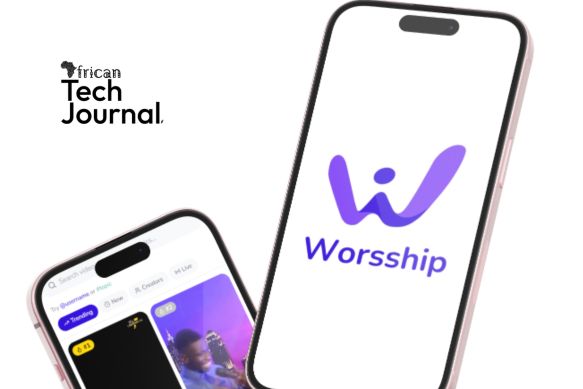
    A platform designed to combine short-form Christian content, creator communities, anonymous prayer requests, live engagement features, creator tipping, and community channels into a single faith-focused ecosystem.

    The goal is not simply to help people watch more content. The goal is to help them stay connected to faith throughout their daily lives.
    Building that vision came with challenges.

    The founding team initially came from backgrounds more familiar with fintech infrastructure than video streaming. Building a consumer-facing platform required learning entirely new technical disciplines, from content delivery and video storage to streaming reliability and scalability.

    The costs were significant.

    Video platforms demand infrastructure long before they generate meaningful revenue. Storage, delivery networks, and streaming systems create expenses that arrive long before growth does.
    Yet the team remained convinced they were solving a problem worth pursuing.


    That conviction appears to be resonating.


    Within the first week of actively introducing Worsship to the market, the platform onboarded 15 creators through direct conversations alone. More importantly, creators immediately understood the vision behind what was being built.

    For the founder, one milestone stands above every metric.

    The first creator who uploaded a video and described the platform as feeling like home. Because that response validated the original idea.

    Worsship is ultimately betting on a larger shift.

  • WiSolar’s Bigger Bet on Africa

    WiSolar’s Bigger Bet on Africa

    For years, Africa’s energy conversation has largely focused on one thing: access.

    How do millions of homes and businesses get stable electricity in markets where grid 

    infrastructure remains unreliable, diesel prices continue rising, and power interruptions affect everything from productivity to quality of life?

    But WiSolar founder Tonye Irims believes the next phase of the continent’s energy transition may no longer be about access alone. It may be about ecosystems.

    That distinction is shaping how WiSolar is expanding across Africa today.

    While many solar companies still operate around one time installations and hardware deployment, WiSolar has gradually positioned itself differently. The company’s broader strategy increasingly revolves around building the operational systems around energy itself, combining software, financing, partnerships, deployment networks, and customer management into a single coordinated platform.

    In many ways, WiSolar is approaching electricity less like a product and more like an everyday digital service.

    That shift becomes clearer when looking at how the company has evolved since launching in 2016. Founded by Tonye Irims, the company introduced a prepaid solar electricity model designed to function more like a digital utility platform than a traditional solar installer. Customers are able to monitor usage remotely, manage payments digitally, and access electricity through flexible recharge systems. (WiSolar)

    But perhaps the most important layer behind WiSolar’s growth is the ecosystem forming underneath the technology.

    The company now works with more than 500 accredited and vetted installer partners across Nigeria, creating a distributed operational network that allows deployments, maintenance, and after sales support to happen faster and at larger scale. Instead of relying entirely on a centralized installation structure, WiSolar has built around operational partnerships that improve customer experience while enabling the business to expand more efficiently across multiple markets.

    That model is also contributing to green job creation for electrical and solar engineers as renewable energy adoption accelerates across African cities.

    For Tonye Irims, this ecosystem approach appears central to WiSolar’s long term positioning.

    The company is no longer just installing solar systems. It is coordinating multiple layers of the energy experience, from financing and deployment to software management, maintenance coordination, customer support, and digital payments.

    Internally, the company’s ambitions appear to be growing alongside that recognition.

    Recent expansion efforts have included increasing financing access for homes and SMEs, growing battery deployment systems, strengthening developer partnerships, and scaling prepaid electricity models designed to reduce dependence on unstable national grids and diesel powered alternatives. WiSolar’s broader Power Purchase Agreement strategy also points toward a future where customers may consume electricity more flexibly without carrying the full burden of upfront installation costs. (WiSolar)

    That matters because affordability remains one of the biggest barriers to renewable energy adoption across many African markets.

    WiSolar’s model attempts to reduce that friction by combining financing flexibility, prepaid access, digital monitoring, and distributed operational support into one coordinated system. But underneath the technology itself is a much larger thesis.

    Tonye Irims appears to believe that the future of African energy will not be defined only by who manufactures solar hardware, but by who builds the strongest ecosystem around access, reliability, financing, software infrastructure, and operational scale.

    That distinction is becoming increasingly important across Africa’s technology landscape.

    Some of the continent’s fastest growing companies are no longer building simple standalone products. They are building systems that sit underneath how cities function every day through payments, connectivity, logistics, mobility, and increasingly, energy infrastructure. (Financial Times)

    WiSolar’s recent trajectory suggests the company wants to sit inside that category.

    The Financial Times recognition may validate the speed of its growth, but WiSolar’s larger story appears tied to something deeper. The company is positioning itself as part of the infrastructure layer shaping how electricity will be consumed, financed, distributed, and managed across African cities in the years ahead.

    And if its ecosystem strategy continues scaling successfully, WiSolar may end up building far more than a solar company. It may be building one of Africa’s next energy platforms.

  • ShawnSMS Becomes Nexar as Nigerian SMS Verification Platform Pushes Toward Super-App Territory

    ShawnSMS Becomes Nexar as Nigerian SMS Verification Platform Pushes Toward Super-App Territory

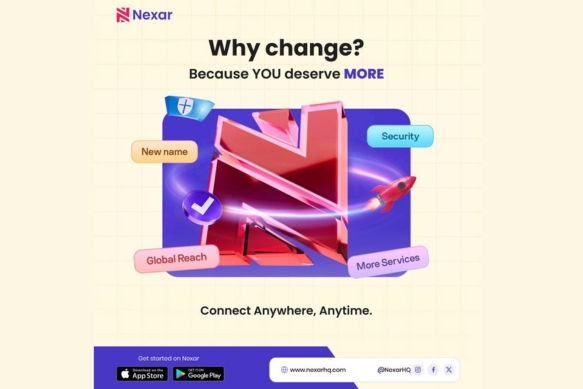
    ShawnSMS has officially rebranded as Nexar marking its evolution from a niche virtual numbers service into a multi-product ecosystem serving over 100,000+ users.

    For years, ShawnSMS built quiet dominance in Nigeria’s virtual number and SMS verification space, becoming a go-to solution for users needing reliable access to international OTPs. That identity is now being retired as the company aligns its brand with a broader suite of products and a longer-term ambition.

    Alongside the rebrand, operations have fully migrated from shawnsms.com to nexarhq.com. According to the company, the shift reflects not a sudden pivot but years of gradual expansion beyond its original category.

    What started as a single-purpose verification tool has steadily grown into a digital services platform. Nexar now offers virtual numbers across 99+ countries, travel eSIMs, gift card trading, airtime and utility bill payments, social media growth tools, and crypto-to-naira conversions. Each addition, the company says, emerged directly from user demand.

    “Our name ShawnSMS represented where we started,” a company spokesperson told African Tech Journal. “Nexar represents what we have become. Users were already engaging with us like a platform, so the brand needed to reflect that reality.”

    Why this matters

    Nigeria’s digital economy is increasingly shaped by consolidation. Mobile-first users are showing less interest in juggling separate apps for payments, utilities, identity verification, and online transactions. Fintech platforms such as Opay and PalmPay have already demonstrated the strength of bundled services in financial life. Nexar is extending that logic into what it describes as the broader “digital life” stack.

    This includes identity verification, digital goods exchange, communication tools, and financial off-ramps within a single ecosystem rather than scattered platforms.

    One of the more sensitive additions is its crypto-to-naira conversion feature, introduced in a regulatory environment that remains cautious toward crypto activity. Nexar positions this function as a transparent conversion layer rather than a trading platform, aligning it with current Central Bank expectations.

    What changes for existing users

    Practically, nothing. Logins, wallet balances, order history, saved virtual numbers, and payment methods carry over untouched. Old shawnsms.com links now redirect automatically to their nexarhq.com equivalents. The Nexar app is available on both Google Play and the Apple App Store under the new name.

    The bigger shift is brand posture. Nexar is no longer pitching itself as “the SMS company.”  It is pitching itself as infrastructure for online life. Whether the Nigerian market rewards that ambition will depend on whether the platform can keep its original product reliability, the thing that built the 100,000+ user base in the first place, while shipping the next wave of services.

    For now, the company is keeping its message simple. As the rebrand page puts it: new name, same promise.

  • From a Nigerian Kahoot Idea to a Lead Intelligence Platform: The Story Behind Tadlace

    From a Nigerian Kahoot Idea to a Lead Intelligence Platform: The Story Behind Tadlace

    During an event, the founder observed how a simple Kahoot quiz completely changed audience energy. People were engaged, competitive, and fully present. It was not just content consumption, it was participation. That moment triggered a question that would eventually shape the company: what if there was a Nigerian version of Kahoot, built for local engagement and interaction?

    That question became the starting point for Tadlace.

    At the time, the motivation was not heavily business driven. It was more about building something interactive, fun, and different from the wave of fintech products dominating the ecosystem. As a software engineer, the appeal was in the product itself, not necessarily the market category it would eventually fit into. The early vision was simple: create an engaging experience that people actually enjoy using.

    The company started with very limited resources. There was no external funding, no structured team, and no institutional support. It was built by the founders themselves using personal time, technical skills, and a shared belief in the idea. In the early stages, execution depended more on commitment than capital.

    The First Reality Check: Building Is Easier Than Distribution

    Like many early-stage products, Tadlace’s first major challenge was not technology. It was content.

    The platform relied on users creating public quizzes that others could discover and play. Without enough content, the experience quickly felt incomplete. That created a cycle problem. Without users, there was no content. Without content, there were no users.

    Interestingly, competition was not the main pressure point. The larger issue was demand itself. While the product was designed for social, multiplayer engagement, users often defaulted to familiar alternatives like traditional games. The expected level of organic adoption did not materialize in the way the team initially imagined.

    This phase forced a hard realization. Building a product is not the same as building a market.

    Structuring the Chaos: How Tools Changed Execution

    As the product evolved, the team introduced more structure into how they worked. One of the key tools adopted was Linear for product and engineering management. This shift had a noticeable impact on execution.

    Work became more organized. Priorities were clearer. Tasks were tracked more effectively. Instead of scattered development cycles, the team could now operate with better alignment and visibility. This improved coordination directly translated into faster shipping and more consistent iteration.

    More importantly, it allowed the team to experiment faster. Ideas could be tested quickly, user behavior could be observed in real time, and feedback could be used to adjust direction without long delays. That speed of iteration became a critical factor in how the product eventually began to evolve.

    Growth Through Iteration and a Defining Early Milestone

    As Tadlace improved its development cycle, growth started to shift from assumption-driven to feedback-driven. The team began learning directly from user behavior, refining the product based on what people actually engaged with rather than what was originally imagined.

    One of the earliest validation moments came through Lagos Trivia Night, one of the largest trivia events in Nigeria at the time. Tadlace powered the experience, and for the first time, the product was used at real scale in a live environment. That moment served as a strong signal that the platform could support structured, high-volume engagement beyond casual experimentation.

    Alongside organic usage, digital marketing also played a role in expansion. Channels like Instagram ads helped the team reach audiences beyond their immediate network. This allowed them to test different user segments, refine targeting, and understand where the product resonated most strongly.

    Lessons From Building: Distribution Over Everything

    One of the most important lessons from the journey is that go-to-market strategy matters as much as product quality. A strong product without distribution struggles to survive. The real challenge is not just building something valuable, but ensuring it reaches the right users in the right way.

    Another key insight was the importance of validating the problem early. Speaking to customers before writing code helps reduce wasted effort and ensures that what is being built aligns with real demand rather than assumptions. In hindsight, this step would have significantly shaped early decisions.

    The Pivot: From Quizzes to Lead Intelligence

    Tadlace is now in an active phase of evolution.

    The platform is shifting from a simple multiplayer quiz experience into something more structured and commercially driven. Today, Tadlace is being positioned as a tool that turns quizzes into lead qualifying campaigns, allowing businesses to engage users, segment responses, and trigger automated actions based on user inputs.

    This represents a major shift from entertainment-focused interaction to business utility. Instead of quizzes existing purely for engagement, they now serve as structured funnels for understanding and qualifying audiences.

    The Future of Tadlace

    The broader vision is to sit at the intersection of marketing and customer intelligence. As businesses increasingly prioritize engagement-driven acquisition, interactive experiences are becoming more valuable as data collection and segmentation tools.

    Tadlace is positioning itself within that shift. Not just as a quiz platform, but as an infrastructure layer for interactive customer engagement that produces actionable insights.

    What began as a simple idea inspired by a live quiz at an event is now evolving into a platform designed to help businesses better understand and convert their audiences.

    The journey is still ongoing, but the direction is clear. Tadlace is no longer just about quizzes. It is about turning interaction into intelligence.