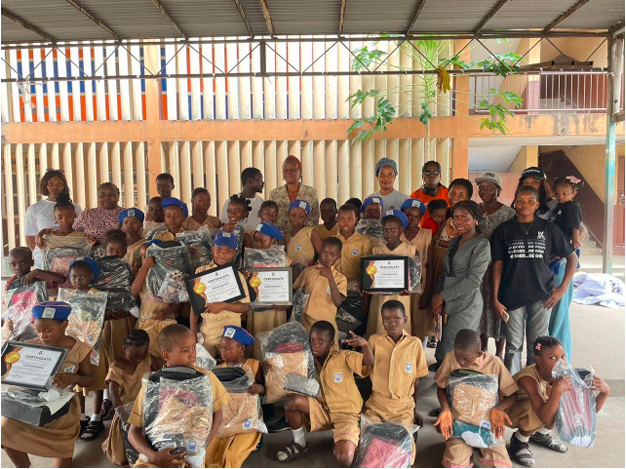
In Celebration of Children’s Month,
In many underserved communities across Nigeria, children are growing up in a digital world that feels close, but not accessible.
They see phones, apps, and the internet shaping everything around them, yet very few are ever shown how to move from being consumers of technology to creators within it.
This gap is not about intelligence, but more about exposure than anything. And what is not introduced early is often never imagined later.
The Kids in Tech Initiative (KITI) was created to change that reality.
A TrybebyFUSE community initiative powered by FUSE Varsity, in collaboration with KAAFoundation and Suleiman Abubakar, KITI 2.0 is an impact-driven programme focused on introducing primary school
pupils in underserved communities across Lagos and Ilorin, Kwara State, to digital literacy and technology awareness.
Scheduled to run from May 13th to May 22nd, the initiative aims to reach 1,000 pupils across ten public primary schools.
But beyond the numbers, the focus remains simple: helping children see technology as something they can understand, explore, and eventually grow into.
According to Hassanat, Founder of FUSE Varsity and TrybebyFUSE:
“KITI started with a single belief: that the future lies in the hands of children.
Every adult today was once a child, and every child deserves the opportunity to dream, learn, build, and become.”
Through student-centered sessions, the programme introduces children to what technology means, how it shapes their everyday lives, and why digital skills are becoming increasingly important in today’s world.
Rather than overwhelming students with technical language, KITI focuses on curiosity, confidence, and awareness.
Reflecting on its early beginnings, Hassanat adds:
“When we started this initiative last year, we were only able to reach one primary school in Lagos with just 45 students.
This year, we wanted to do more; to expand our reach, deepen our impact, and give more children the opportunity to experience technology early.”
Beyond learning, the initiative also recognizes the importance of representation and confidence.
Many children grow up without seeing themselves reflected in technology spaces, which quietly limits what they believe is possible. By engaging directly with students through relatable conversations and encouragement, KITI reinforces that innovation is not defined by background or environment.
The initiative also seeks to build a long-term culture of tech-focused Children’s Month programming while fostering partnerships that can sustain future school outreach efforts.
At its core, the Kids in Tech Initiative is about access, representation, and possibility. Because talent exists everywhere, but opportunity does not.
And when children are exposed early, encouraged to ask questions, and reminded that their ideas matter, the future begins to feel within reach.
As KITI 2.0 moves across schools in Lagos and Kwara this May, its impact will not only be measured in numbers, but in something quieter and more lasting; the moment a child realizes they have not been left
out of the future after all.
Because the children we often overlook today are the same ones who will shape what tomorrow becomes.
Hassanat concludes by saying: “This is not just about teaching children technology. It is about reminding them early that they belong in
the future being built around them, and that their ideas, voices, and dreams are valid enough to shape it.”