If you’ve ever organized an event in Nigeria, you’ve probably experienced this.
Registrations happen on Google Forms. Payments come through bank transfers. Attendee lists live inside spreadsheets. Updates are sent through WhatsApp. On event day, volunteers manually check names against printed lists while attendees wait in line.
Individually, each tool works.
Together, they create unnecessary complexity.
That was the pattern the founders of Tixdorm kept seeing while attending and working on events across Nigeria. Organizers spent more time coordinating software than creating memorable experiences. Every event seemed to rely on a patchwork of disconnected tools, with no single system tying everything together.
That observation eventually became the foundation for Tixdorm.
For years, event technology in Africa has largely focused on ticket sales. Once someone buys a ticket, organizers are often left to manage everything else themselves. Applications, volunteer management, attendee communication, event websites, analytics, check-ins, and post-event reporting typically happen across different platforms.
The result is a fragmented workflow.
As events become larger and communities continue growing, this fragmentation becomes increasingly difficult to manage. Organizers aren’t necessarily looking for more software. They’re looking for fewer operational problems.
The founders believed the opportunity wasn’t to build another ticketing platform.
It was to build the infrastructure behind modern events.
That thinking shaped Tixdorm into something broader than ticket sales.
Today, the platform combines registrations, applications, attendee management, QR code check-ins, communications, analytics, event websites, and developer infrastructure into a single operating system for event organizers.
One of the company’s biggest milestones has been the introduction of the Tixdorm API.
Rather than asking organizers to abandon their existing websites or customer experience, the API allows developers and organizations to integrate Tixdorm’s event infrastructure directly into their own platforms. Organizers keep their brand while Tixdorm quietly manages the operational complexity behind the scenes.
For the team, this represents a shift from building a product to building infrastructure.
The company was bootstrapped from the beginning, relying on in-house expertise across product design, software development, branding, and community building rather than external funding. Product decisions were shaped less by assumptions and more by conversations with student leaders, creators, conference organizers, brands, and event communities who continued highlighting the operational challenges they faced. Many of the platform’s most valuable features came directly from those conversations rather than internal brainstorming sessions.
Since launch, Tixdorm has supported campus events, conferences, creator communities, entertainment experiences, and community gatherings across Southwest Nigeria. As adoption has grown, the company has also expanded its role beyond software by helping organizers with marketing, event websites, and attendee engagement.
The next phase focuses on expansion.
The company is preparing to grow into Southeast Nigeria through strategic partnerships while continuing to strengthen its developer ecosystem. Long term, the ambition extends beyond individual events.
Tixdorm wants developers, universities, brands, entertainment companies, communities, and conference organizers to build on top of its infrastructure instead of recreating common event functionality every time.
As Africa’s events industry continues to mature, the demand for reliable operational infrastructure is likely to grow alongside it.
For Tixdorm, the future is no longer just about helping people sell tickets.
It is about becoming part of the infrastructure that powers how events are created, managed, and experienced across Africa.
For many African communities, event planning still looks the same as it did years ago.
Someone creates a WhatsApp group. A flyer goes up on Instagram. Registrations are collected through Google Forms. Payments are handled somewhere else entirely. And by the time the event actually happens, the organizer has been juggling five different tools, three group chats, and a spreadsheet that stopped making sense once it starts getting longer.
Attendees show up confused. Organizers show up exhausted.
Mubarak Hammed watched this happen enough times that he decided to do something about it.
He’s a software engineer with experience across finance, healthcare, and HR. But it wasn’t a corporate problem that pushed him to build his own company. It was a simpler, more personal one, the fact that communities around him still had no decent tool for organizing themselves.
That observation became Circlebox.
What the Platform Does
At its core, Circlebox is an events platform. But it’s built around a specific frustration: that African organizers have always had to stitch together too many separate tools just to run a single event.
The platform brings it under one roof. Organizers can list events, manage capacity, send communications, and track attendance through QR-based check-ins, all in one place. There are dedicated group chats for each event, Google Maps integration for physical locations, and embedded meeting links for virtual ones.
Think of it as what Meetup might look like if it was designed with African communities in mind from the start, rather than adapted for them as an afterthought.
But Mubarak is clear that events are just the entry point.
“What we have right now,” he says, “is maybe 30% of what we’re building toward.”
The rest of that vision is about communities themselves, not just the events they host, but the infrastructure around them. That means community pages, interest-based networking, payment integrations, and long-term member management tools that let groups actually grow in an organized way.
One of the more unexpected directions the company is exploring is a B2B product for churches. Not a generic tool, but something purpose-built, designed to help churches manage attendance, coordinate zones and parishes, track members, and run internal operations digitally. It’s a niche that doesn’t get much attention, but it reflects exactly the kind of thinking behind Circlebox: communities that are already large and active, but still running on informal systems that don’t scale.
AI plays a role too, though a quiet one. The platform uses it to help organizers auto-generate event descriptions and create banner images. It’s not the headline feature, and that’s probably intentional. Rather than positioning itself as an AI company, Circlebox is using AI the way most practical builders do: to remove friction from the parts of the process people find tedious.
The Hard Part
Mubarak doesn’t oversell where the company is right now.
The user base is still small. Partnerships are limited. The company is bootstrapped, with no outside investment. And he’s not rushing that part, his focus right now is on validating the product and building real traction before going to investors.
But the thing he talks about most honestly isn’t funding or growth numbers. It’s the lesson that caught him off guard as a technical founder.
“Development is only half the work,” he said.
Marketing, partnerships, content, user adoption, these turned out to be just as hard as building the product itself. It’s a lesson many technically strong founders learn later than they’d like. A good product, it turns out, doesn’t automatically find its users.
Why This Space Makes Sense
Africa’s creator economy is growing. So are its professional networks, its startup communities, its churches, and its local organizations. But most of them are still organizing on platforms that were never really designed for them.
WhatsApp works, until a group gets too big and too noisy. Telegram works, until it doesn’t. And none of it gives organizers any real visibility into who showed up, who engaged, or how to reach their community again next time.
That gap is what Circlebox is betting on.
Whether it gets there depends on a lot of things like adoption, partnerships, whether organizers are willing to move off tools they already know. None of that is guaranteed.
But the problem Mubarak identified is real. And the communities that need a better solution aren’t getting smaller.
What is often missing is access to the right conversations, practical insights, meaningful connections, and opportunities that help those ideas become real impact.
That is exactly what DialX Impact 2026 is setting out to change.
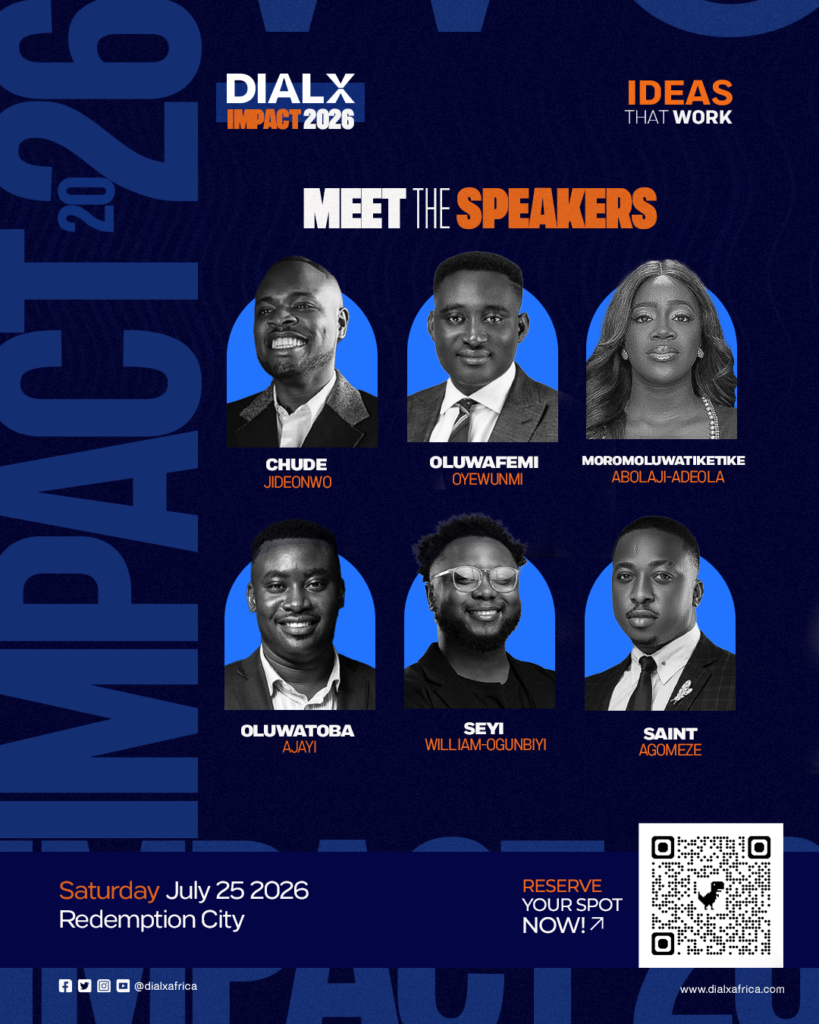
On Saturday, July 25, 2026, founders, entrepreneurs, creators, professionals, students, and emerging leaders will gather at Redemption City, Ogun State, for a one-day conference focused on one simple question:
How do we create impact that lasts?
Rather than another event filled with abstract theories, DialX Impact is designed around practical experiences from people who are actively building businesses, leading communities, creating innovative products, and solving real problems.
With an expected audience of 500+ participants, attendees can expect a full day of insightful conversations, networking, and opportunities that extend beyond the conference itself.
What to Expect at DialX Impact 2026
The conference has been curated to deliver practical value for anyone looking to grow personally or professionally.
Attendees will experience:
Inspiring keynote sessions from accomplished speakers
Actionable lessons on leadership, entrepreneurship, technology, media, innovation, and community building
Networking opportunities with founders, professionals, creators, and innovators
Collaboration opportunities with like-minded builders
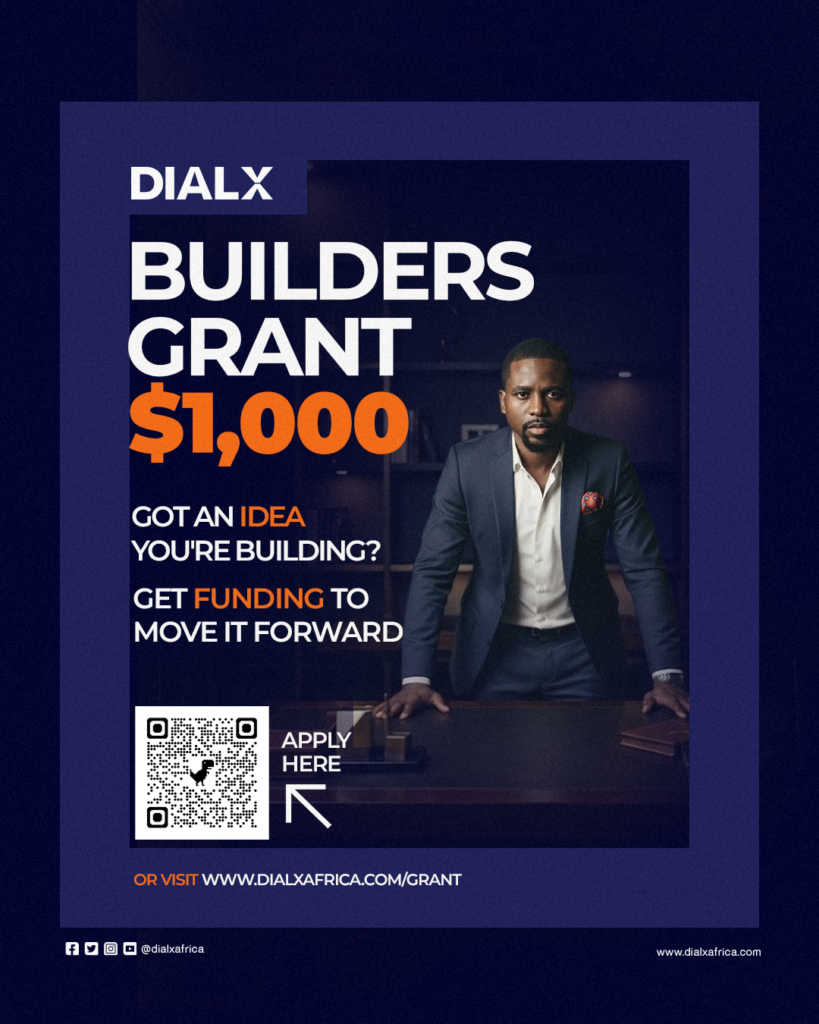
Access to the DialX Impact Builders Grant, a funding initiative designed to support promising startups, businesses, and community-driven projects
Who Should Attend?
DialX Impact 2026 is designed for people who are building, learning, or preparing to lead.
This includes:
Founders and startup entrepreneurs
Business owners
Professionals across industries
Content creators
Students
Emerging leaders
Anyone passionate about creating meaningful impact
According to the organizers, DialX exists to bridge the gap between knowledge and execution.
Its mission is to create a platform where meaningful conversations lead to tangible action by connecting ambitious individuals with the ideas, people, and opportunities they need to grow.
The long-term vision is to establish DialX as one of Africa’s leading platforms for conversations around leadership, entrepreneurship, innovation, and sustainable impact.
Event Details
Event: DialX Impact 2026
Date: Saturday, July 25, 2026
Venue: Redemption City, Ogun State, Nigeria
Expected Attendance: 500+ participants
For founders looking to scale, professionals seeking fresh perspectives, creators building influence, or students preparing for the future, DialX Impact 2026 promises to be more than another conference.
It is positioning itself as a gathering for people who believe that ideas become valuable only when they are executed.
Registration and additional information are available viawww.dialxafrica.com.
Slingshot: Rebuilding Africa’s Workforce for What Comes Next
There’s a quiet shift happening across Africa’s workforce—and it’s not being driven by job titles, degrees, or even traditional career paths.
It’s being driven by pressure.
Pressure from automation reshaping roles faster than institutions can adapt.
Pressure from a young population entering a job market that isn’t expanding at the same pace. Pressure from founders and operators who need talent that can execute, not just qualify.
This is the context in which the 3.0 edition of the African Workforce Summit arrives—with a theme that feels less like a slogan and more like a strategy: Slingshot.
Because Africa doesn’t need a gradual push forward. It needs acceleration.
Why “Slingshot” Matters Now
A slingshot doesn’t move forward by default. It stretches backward first—creating tension, building force, and then releasing at speed.
That metaphor fits where Africa is today.
Across sectors, we’re seeing a workforce that is being pulled in multiple directions:
Traditional education vs. skills-based learning
Local opportunities vs. global remote work
Employment vs. entrepreneurship
Stability vs. adaptability
What looks like fragmentation is actually tension. And if harnessed correctly, that tension can become momentum.
The question is no longer whether Africa’s workforce will evolve. It’s how fast—and in what direction.
From Conversations to Execution
The African Workforce Summit has, over its previous editions, positioned itself as more than a convening. It’s become a space where policy meets practice, and where ideas are stress-tested against real market conditions.
But 3.0 feels different.
There’s a noticeable shift from diagnosing problems to designing systems:
How do we build talent pipelines that match the realities of African startups—not imported frameworks?
What does workforce readiness look like in an AI-influenced economy?
How do companies hire for potential, not just pedigree?
And how do young Africans position themselves not just as job seekers, but as value creators?
These aren’t abstract questions anymore. They’re operational decisions.
The New Definition of “Workforce”
For a long time, the idea of a workforce was tied to employment—jobs, offices, organizations.
That definition is breaking.
Today, Africa’s workforce includes:
Creators building global audiences from local contexts
Developers contributing to distributed teams across continents
Operators scaling startups in markets with limited infrastructure
Informal workers leveraging digital tools to formalize income streams
The lines are blurring. And that’s exactly where the opportunity sits.
A “slingshot” moment isn’t about returning to stability—it’s about redefining what stability even means.
Builders, Not Bystanders
One of the most important shifts happening across the continent is psychological.
There’s a growing recognition that waiting for systems to work is no longer a strategy.
The next generation of African talent is increasingly:
Learning in public
Building in iterations
Monetizing early
And collaborating across borders
They are not waiting to be absorbed into the workforce. They are actively reshaping it.
The role of platforms like the African Workforce Summit, then, is not just to spotlight this shift—but to accelerate it.
What Success Looks Like After 3.0
If the summit achieves anything, it shouldn’t just be more conversations or more visibility.
It should be clarity.
Clarity for:
Founders trying to build teams that can scale with uncertainty
Policymakers navigating the balance between regulation and innovation
Talent looking for direction in a landscape with too many options and not enough guidance
And most importantly, clarity on one thing:
Africa’s workforce advantage will not come from size alone. It will come from alignment—between skills, opportunities, and systems that actually work.
The Release Point
A slingshot is only effective if it releases at the right moment.
Too early, and the impact is weak. Too late, and the tension becomes strain.
Africa is approaching that release point.
The 3.0 edition of the African Workforce Summit isn’t just another event on the calendar. It’s part of a broader inflection point—one where the continent has the chance to move from potential to precision.
From participation to leadership.
From catching up to setting the pace.
The tension is already there.
Now it’s about how far—and how fast—we’re willing to go.
Creative communities rarely grow because of events alone.
More often, they grow through conversations. A designer shares a process. A brand strategist explains a difficult decision. A visual storyteller reveals the thinking behind a campaign. Ideas move from one person to another, relationships form, and over time, a community begins to take shape.
Yet despite the rapid growth of Africa’s creative economy, many designers still work in silos. Graphic designers, product designers, brand strategists, illustrators, photographers, and creative directors often operate within separate circles, even though their work increasingly intersects.
As African brands become more sophisticated and technology continues reshaping how people interact with products, businesses, and culture, the role of design is expanding far beyond aesthetics.
That reality is what inspired The Design Mixer by Rank.
Created as a curated networking and conversation experience, the event brings together designers, creatives, and visual storytellers from different industries to connect, exchange ideas, and explore the growing influence of design in shaping brands, culture, and society.
The mixer also serves as a pre-event experience leading into The Collective, reflecting Rank’s broader commitment to supporting creative communities through collaboration, meaningful dialogue, and shared learning.
But unlike traditional networking events that focus primarily on introductions and portfolio exchanges, The Design Mixer is built around deeper conversations about creativity itself.
One of the central discussions, Design in Africa: Craft, Culture & Commerce, examines how African identity, storytelling, and creative expression intersect with business. As African brands continue to build stronger global recognition, designers are increasingly being asked to balance cultural authenticity with commercial relevance.
Questions around designing for African audiences, preserving cultural narratives through modern design systems, building commercially sustainable creative brands, and the evolution of African visual identity sit at the heart of the conversation.
The second theme, Transcending Design: How Design Shapes the World Beyond Visuals, expands the discussion even further.
Today, design influences far more than logos, websites, and marketing materials. It shapes products, user experiences, behaviours, systems, and communities. From technology platforms and digital products to public services and brand ecosystems, design increasingly functions as a strategic tool for solving problems and creating meaningful experiences.
The conversation explores how design thinking drives innovation, how branding influences culture, and how multidisciplinary creativity is shaping the future of industries across Africa.
As the continent’s creative economy continues to evolve, the importance of spaces where designers can learn from one another, challenge ideas, and build meaningful relationships becomes increasingly valuable.
The Design Mixer represents more than a networking event. It is an opportunity for Africa’s creative community to engage with the ideas shaping the future of design while building the relationships that will influence the next generation of creative work.
Because before great brands, products, and movements are built, there is usually a conversation that starts it all.
In many underserved communities across Nigeria, children are growing up in a digital world that feels close, but not accessible.
They see phones, apps, and the internet shaping everything around them, yet very few are ever shown how to move from being consumers of technology to creators within it.
This gap is not about intelligence, but more about exposure than anything. And what is not introduced early is often never imagined later.
The Kids in Tech Initiative (KITI) was created to change that reality. A TrybebyFUSE community initiative powered by FUSE Varsity, in collaboration with KAAFoundation and Suleiman Abubakar, KITI 2.0 is an impact-driven programme focused on introducing primary school pupils in underserved communities across Lagos and Ilorin, Kwara State, to digital literacy and technology awareness.
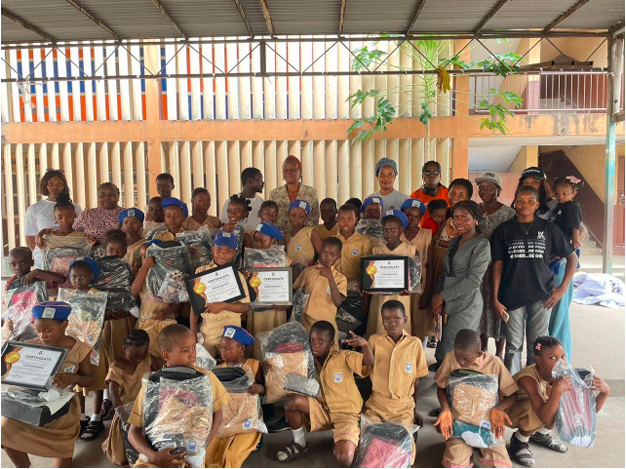
Scheduled to run from May 13th to May 22nd, the initiative aims to reach 1,000 pupils across ten public primary schools.
But beyond the numbers, the focus remains simple: helping children see technology as something they can understand, explore, and eventually grow into.
According to Hassanat, Founder of FUSE Varsity and TrybebyFUSE: “KITI started with a single belief: that the future lies in the hands of children.
Every adult today was once a child, and every child deserves the opportunity to dream, learn, build, and become.”
Through student-centered sessions, the programme introduces children to what technology means, how it shapes their everyday lives, and why digital skills are becoming increasingly important in today’s world.
Rather than overwhelming students with technical language, KITI focuses on curiosity, confidence, and awareness.
Reflecting on its early beginnings, Hassanat adds: “When we started this initiative last year, we were only able to reach one primary school in Lagos with just 45 students.
This year, we wanted to do more; to expand our reach, deepen our impact, and give more children the opportunity to experience technology early.”
Beyond learning, the initiative also recognizes the importance of representation and confidence.
Many children grow up without seeing themselves reflected in technology spaces, which quietly limits what they believe is possible. By engaging directly with students through relatable conversations and encouragement, KITI reinforces that innovation is not defined by background or environment.
The initiative also seeks to build a long-term culture of tech-focused Children’s Month programming while fostering partnerships that can sustain future school outreach efforts.
At its core, the Kids in Tech Initiative is about access, representation, and possibility. Because talent exists everywhere, but opportunity does not.
And when children are exposed early, encouraged to ask questions, and reminded that their ideas matter, the future begins to feel within reach.
As KITI 2.0 moves across schools in Lagos and Kwara this May, its impact will not only be measured in numbers, but in something quieter and more lasting; the moment a child realizes they have not been left out of the future after all.
Because the children we often overlook today are the same ones who will shape what tomorrow becomes.
Hassanat concludes by saying: “This is not just about teaching children technology. It is about reminding them early that they belong in the future being built around them, and that their ideas, voices, and dreams are valid enough to shape it.”
The 2026 edition of the Hult Prize Nigeria National Competition concluded successfully at the University of Lagos on May 9, bringing together some of the country’s brightest student entrepreneurs, investors, academics, and industry leaders in a celebration of innovation and social impact.
Widely regarded as the world’s largest student social entrepreneurship competition and often described as the “Nobel Prize for Students,” the Hult Prize Foundation challenges university teams to build for-profit ventures that solve pressing global problems.
Supported by Hult International Business School and the United Nations, the competition awards a grand prize of $1 million USD to the global winner.
This year’s Nigeria Nationals recorded participation from 44 universities across the country, with 609 startups registered for the competition. Following months of campus programs, mentorship, and selection rounds, only 25 startups advanced to pitch at the national finals in Lagos.
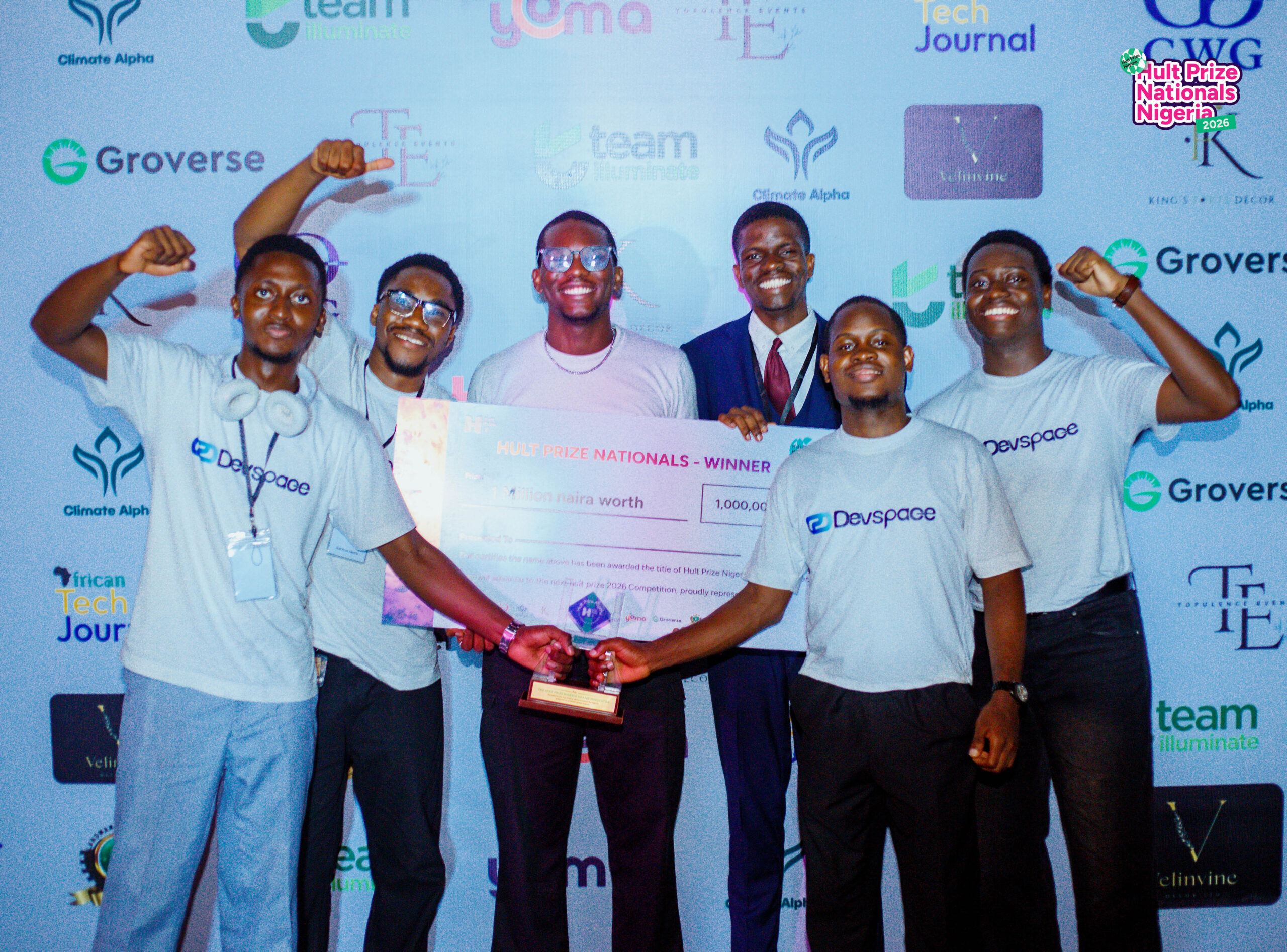
At the end of an intense pitching session before a panel of judges comprising investors, business executives, and innovation experts, Devspace from Covenant University emerged as the national winner, securing first place and advancing to the next stage of the global competition.
Blank Book from the University of Ibadan emerged second, while Aquanut, also representing Covenant University, finished in third place. The remaining startups that made the Top 8 were Blood Deck from Lead City University, Zisocare and Amana from Bayero University Kano, Skycorv from Kwara State University, and Tropical from the University of Uyo.
As national winner, Devspace will proceed to the Hult Prize Digital Incubator, an intensive international entrepreneurship acceleration program where selected startups from around the world receive mentorship, strategic business training, investor access, and funding opportunities as they compete for a place at the Global Finals and the coveted $1 million USD prize.
The Hult Prize Nigeria Nationals is more than a competition; it is proof that young Nigerians are capable of building globally relevant solutions to some of society’s most urgent challenges.
From over 600 registered startups to the exceptional teams that pitched today, we have witnessed the remarkable ingenuity, resilience, and ambition that exists within our universities. — Olamide Otasanya, Hult Prize Nigeria National Coordinator
“On behalf of Hult Prize Nigeria, I congratulate all participating teams and especially Devspace of Covenant University for emerging as our national winner.
We are proud to see them represent Hult Prize Nigeria
Nigeria at the Global Accelerator, where they will join outstanding startups from across the world in refining their ventures for global impact. We also celebrate Blank Book, Aquanut, and every finalist whose ideas demonstrate that innovation remains one of Nigeria’s greatest strengths.
What we witnessed today goes beyond student competition. These young founders are building solutions with the potential to transform industries, create jobs, and improve lives across Africa.
Hult Prize Nigeria continues to demonstrate the power of investing in youth innovation, and we remain proud to support a platform that is shaping the next generation of African entrepreneurs. — Olubunmi Sobande, Member, Hult Prize Board of Governance
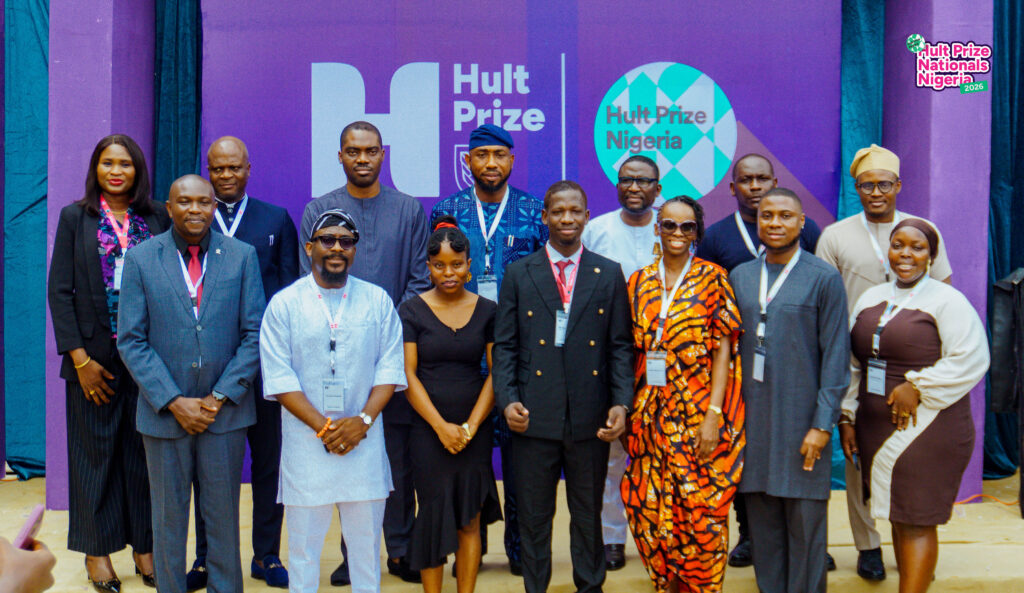
The event concluded with an award ceremony where winning startups, campus leaders, faculty advisors, volunteers and other outstanding contributors were recognized for their excellence and contributions to the growth of the Hult Prize ecosystem in Nigeria.
The Nigeria Nationals also attracted venture capitalists, startup ecosystem leaders, corporate executives, university representatives, members of the press, and innovation stakeholders from across the country, reinforcing the growing importance of youth-led entrepreneurship in driving economic and social transformation.
Enquiries Samuel Olomu Head of PR and Communications [email protected]
About Hult Prize Nigeria Hult Prize challenges university students to solve pressing global issues through scalable, sustainable social enterprises.
In Nigeria, we provide a vital platform for future leaders to develop impactful, purpose-driven ventures, fostering a national community dedicated to profit with purpose and driving significant socio-economic transformation.
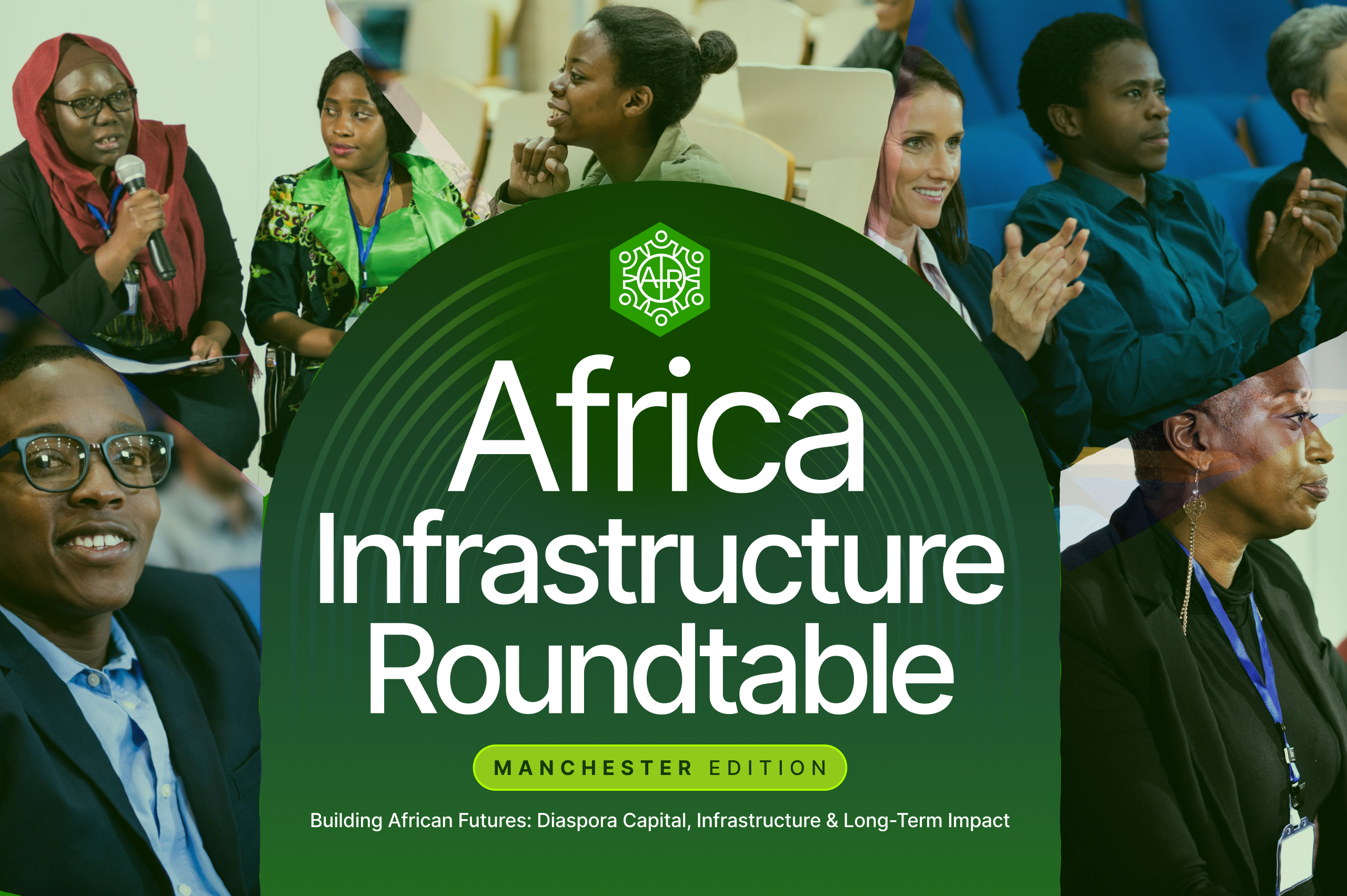
The Africa Infrastructure Roundtable (AIR) is built on a simple but urgent observation: while the African diaspora remains deeply invested in the continent’s future, there are still very few intentional, credible spaces where that interest can translate into structured dialogue, coordinated thinking, and long-term development outcomes. AIR exists to begin addressing this gap; creating a platform where capital, policy, and enterprise can be meaningfully aligned through focused, high-quality conversations.
This edition of the Roundtable will be held in Manchester, United Kingdom, on April 24th, 2026, under the theme:
Building African Futures: Diaspora Capital, Infrastructure & Long-Term Impact
At its core, the conversation will explore how diaspora leadership, investment, and institutional engagement can move beyond remittances and sentiment toward more structured participation in Africa’s infrastructure and economic systems. It will examine how capital can be coordinated for long-term value creation, how trust between diaspora actors and home institutions can be strengthened, and what sustainable, community-aligned development should look like over time.
To ensure the Roundtable is both intentional and deeply engaging, the theme will be explored through two structured conversations:
Community Capital & Infrastructure for Collective Growth This session focuses on how trust can be built within African and diaspora communities to enable more coordinated, community-driven investment ecosystems. It will explore how these systems can translate into credible infrastructure development, and what it takes to move from fragmented efforts to collective, scalable participation.
Institutional Bridges & Future Pathways This session builds on the first by examining how diaspora professionals can connect capital, policy, and enterprise into structured impact.
It will explore the kinds of platforms, partnerships, and institutional frameworks required to enable sustained collaboration between the diaspora and the continent.
The Roundtable will also feature keynote addresses designed to frame and deepen the conversation:
Timi Olagunju, a policy expert, lawyer, and governance strategist, will deliver a keynote titled “From Diaspora Potential to Institutional Impact.” His address will explore how diaspora professionals can move beyond individual success to build structured bridges between capital, policy, and enterprise, and what systems are required to translate influence into measurable, long-term impact.
Sally Amoasah, an impact and investment professional, will deliver a keynote titled “Funding What Matters: Lessons from Impact Investment for Diaspora-Led Development.” Her keynote will focus on how capital can be redirected toward meaningful outcomes, and how funding models can be structured for sustainable and scalable development impact.
The conversations will be guided by experienced moderators with backgrounds across governance, law, business, policy, and leadership, ensuring the dialogue remains structured, insightful, and outcome-oriented.
A number of speakers will be contributing to the discussions, including:
Cameroonian changemaker Paul M. Laka, founder and managing partner of Fuest Construction Brokers, also a diaspora investment and development advisor focused on diaspora engagement and sustainable finance
Jeffrey Williams-Edem, a strategy and investment professional focused on connecting capital, enterprise, and cross-border opportunities. His work centres on building pathways for sustainable investment and fostering partnerships that drive long-term economic growth across African markets.
Henry Adebisi, a finance leader and investor focused on unlocking capital and building scalable businesses across Africa. He is the founder of AfriStakes, a platform connecting African enterprises with local, diaspora, and global investors to bridge capital gaps and drive long-term economic growth
Seun Odusanya, a communications and engagement professional working across public policy, community insight, and youth-focused development initiatives
— among other professionals, founders, and ecosystem leaders contributing diverse perspectives to the dialogue.
The event is being supported by a growing network of Nigerian, African, and Caribbean diaspora communities in the UK, alongside student organisations, unions, and ecosystem groups, reflecting the collective nature of the conversation and the importance of broad-based participation.
AIR will be a hybrid event, taking place in person in Manchester while also being livestreamed to a wider Africa-based and global audience through Langovest’s digital platforms and those of its media partners, ensuring the conversation extends beyond the room and continues to engage a broader community.
Overall, the Africa Infrastructure Roundtable is designed not just as an event, but as a starting point and a deliberate step toward building more structured, collaborative, and sustained diaspora participation in Africa’s long-term development.
There is a version of Lagos that thrives on spectacle. LED screens, demo-day theatrics, founders exchanging LinkedIn QR codes in crowded rooms that promise access but rarely deliver clarity. It is the Lagos of branded lanyards and pitch competitions where the winner is photographed and then largely forgotten. It is loud, visible, and for a certain kind of founder building a certain kind of business, almost entirely useless.
And then there was Baraza Lagos.
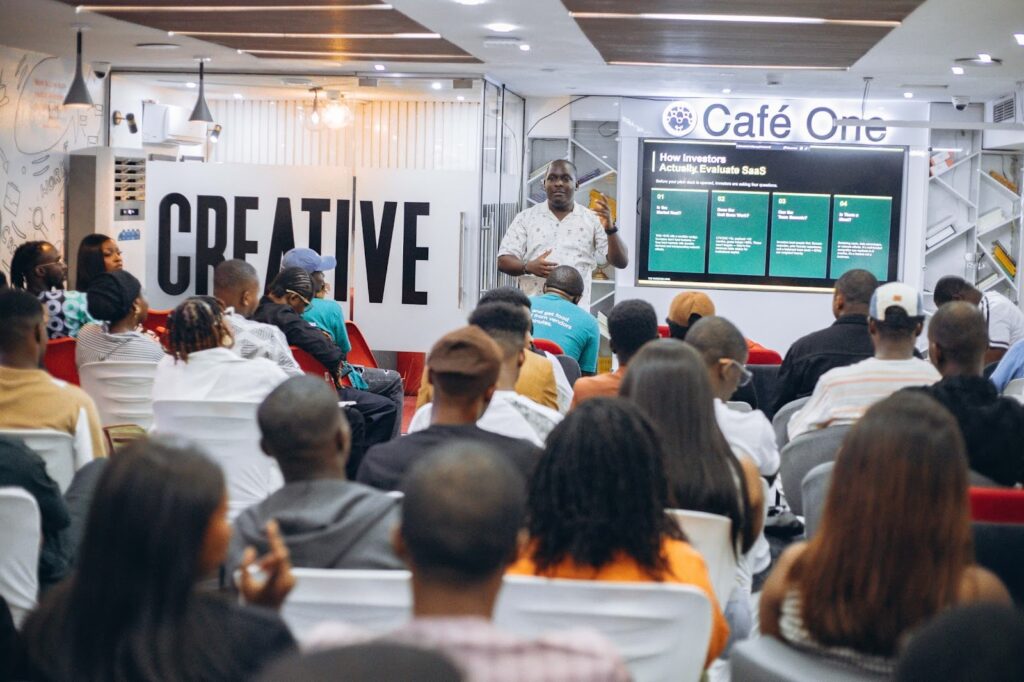
On February 21, 2026, at Café One in Yaba, the energy was noticeably different. The room held roughly a hundred founders, operators, legal advisors, and investors – and what distinguished it was not who was present but what they were doing.
No oversized branding installations. No performative networking rounds with a timer. People were leaning in, not posturing, notebooks were open. When the sessions broke into smaller clusters, nobody was debating valuations in the abstract or rehearsing their elevator pitches on each other.
They were asking specific questions about specific problems. Cap table structures that had been assembled hastily in year one and were now creating friction in year three, compliance obligations that had been deferred and were now threatening deals, governance arrangements that looked fine on paper and were quietly becoming liabilities.
The conversations were, by any conventional measure of tech event programming, deeply unglamorous. They were also exactly the conversations most African founders most need to be having – and almost never are.
Not fundraising hype, not valuation optics. Structure.
Because across African startup ecosystems, failure is rarely caused by lack of ambition. The ideas are frequently correct – correctly identified problems, correctly sized markets, correctly intuited solutions. What kills startups is the infrastructure of bad decisions made before the business had the revenue or the resilience to absorb them: equity structured carelessly in year one, compliance ignored until it becomes expensive in year three, governance reactive rather than proactive throughout, documentation incomplete precisely when due diligence arrives.
Baraza has chosen to sit directly inside that tension.
Kigali: Testing a thesis about serious rooms
Baraza did not begin in Lagos.
The first edition was held in Kigali on November 18, 2025, positioned as a pre-event mixer ahead of Norrsken Africa Week. Not designed to compete with large conferences – designed, rather, to filter them.
The theme was direct: “Funding the Future: What smart money looks for in African founders.”
Behind the design of that room was Semudara Abayomi, the convener known across Lagos’s startup corridors as Bayomi – who had spent enough time inside Africa’s ecosystem events to understand what most of them got wrong. The signal-to-noise problem, the tendency to pack rooms with people and empty them of depth, the gap between the conversations that happened on stage and the conversations founders actually needed to be having with each other.
He had a clear instinct: that the value of a gathering is not proportional to its headcount. That a room of fifty people asking uncomfortable questions is worth more than a hall of five hundred applauding comfortable answers.
Rather than chasing attendance volume, Baraza Kigali focused on curation. Founders, investors, and ecosystem leaders from across seven countries convened in a controlled room where the conversation centred on capital readiness, not capital aspiration.
The thesis that shaped the programming was simple and strategic: serious capital requires serious structure.
In an ecosystem where visibility can be mistaken for viability, Baraza emphasised that investor confidence is built on disciplined cap tables, governance alignment, compliance hygiene, and operational clarity – not on the size of the pitch deck or the ambition of the vision statement.
Intimate rooms, when designed with intention, generate more actionable ecosystem value than conference halls full of badges. Founders didn’t leave with tote bags. They left with clarity.
It proved something important enough to test again. Lagos became the next logical stress test.
Lagos: When compliance became competitive advantage
If Kigali was about funding readiness, Lagos was about structural survival. The theme was unapologetically direct: “Building Compliant, Scalable and Investment-Ready Tech Startups.” The tone shifted from what investors want to what founders must fix – and the room felt that shift from the first session.
Speakers were selected not for inspiration but for operational authority. Practitioners who had lived inside the problems they were discussing and had earned the right to speak to them.
Segun Cole set the temperature early. His point was precise and, for many founders in the room, quietly devastating: a pitch deck does not secure capital. It secures a meeting. What closes the gap or collapses it is disciplined economics, a defensible structure, and the founder’s ability to answer hard questions without deflecting.
Several people in the room, by their own admission afterward, realised mid-session that they were not as ready as they had assumed. That realization was the point.
Omoruyi Edoigiawerie pushed on a different pressure point. The instinct to model African startups on Western templates, to build for a version of a market that exists in San Francisco rather than the one that exists in Lagos, Accra, or Nairobi – is, he argued, one of the more expensive mistakes a founder can make. The frameworks are borrowed. The assumptions embedded in them frequently do not survive first contact with local regulatory and market realities.
Founders who understand this early build differently. They localise not just their product but their operating logic.
Cynthia E. Chisom’s session was the one people were still discussing as they stood in the car park afterward. She drew the line between governance architecture, stakeholder management, and long-term revenue durability in a way that reframed compliance entirely – not as legal overhead bolted onto a business after the fact, but as enterprise infrastructure built into its foundations.
A business with weak governance is not just a compliance risk. It is a revenue risk, a retention risk, a fundraising risk. The room went quiet in the way rooms go quiet when a speaker articulates something the audience already knew but had never heard said directly.
By the end of the evening, the conversation in the room had shifted. Not ‘How do I raise?’ but ‘What needs restructuring before I raise?’ That difference is subtle and transformative.
The format held everything together: short, dense sessions; direct Q&A that ran long because the questions were real; breakout discussions that formed organically and refused to end on schedule.
Founders were not leaving inspired in the vague sense the word usually implies at tech events. They were leaving with specific things to fix.
Why the timing is not accidental
African startup ecosystems are entering a maturity phase, and the terrain is shifting in ways that reward structural discipline. The early era of unchecked experimentation is narrowing. Investors are more cautious, regulatory bodies are more observant, cross-border expansion requires legal clarity that founders of three years ago could afford to defer.
The next generation of African builders will not be measured only by growth curves. They will be measured by governance quality, by the cleanliness of their cap tables, by whether their compliance posture can survive the scrutiny of institutional capital.
In that context, Baraza is less an event series and more a signal. It signals that the ecosystem is recalibrating – from noise toward durability, from visibility toward viability. The founders who treat compliance as leverage rather than liability will likely be the ones still standing when funding cycles shift again. The rooms shaping that mindset are only getting sharper.
The Architecture Behind the Room
A well-run event and a well-told story about a well-run event are two entirely different achievements. Baraza Lagos earned both. The second achievement required a specific and uncommon kind of expertise.
Hype Empire came into the Baraza Lagos story not as a vendor executing a brief but as a strategic communications partner that understood what the event needed to become. The question was never simply how to promote it. It was more foundational than that: how do you translate a room full of serious, non-performative conversations into a public narrative that is equally serious, equally unperformed, and still compelling enough to reach the founders who were not in the room? Events that deliberately resist hype are harder to tell stories about than events designed for it.
The instinct in communications is to reach for the dramatic, the quotable, the shareable spectacle.
Hype Empire’s discipline built over years of working inside Africa’s ecosystem – was to resist that instinct and find the harder, more durable story: that the quietest room at a tech event is sometimes the most important one.
There is a difference between publicity and positioning. Publicity fills a moment. Positioning builds a narrative that compounds. Hype Empire understands that difference, and the Baraza Lagos amplification strategy was built on it.
From pre-event ecosystem framing to post-event media syndication, from curated social heat to visual storytelling that preserved the room’s focused intensity without manufacturing spectacle, the strategy delivered one outcome above all others: Baraza Lagos was perceived not as another tech meetup on the Lagos calendar, but as a structural intervention in how African founders think about building. That perception did not happen by accident. It was engineered.
The involvement of the Nigerian Bar Association, Lagos Branch added institutional gravity. Compliance was not discussed as an afterthought but as architecture. Legal structure treated as foundational to innovation, not antagonistic to it.
Media partners including Africa Tech Journal reinforced the reach, amplifying the discourse beyond Yaba and signalling that this was not a private gathering but a directional shift.
Depth met reach. Substance met visibility. That combination is rare in African tech communications, and it was engineered deliberately. This is what it looks like when PR is treated as strategy rather than afterthought – when the story of an event is designed with the same care and intention as the event itself.
Bayomi’s take
In the short video Baraza released, now making rounds on X and Instagram, convener Semudara Abayomi known across the ecosystem as Bayomi, sounded quietly proud, the way someone does when a bet pays off.
He described Baraza as building “spaces where founders leave with maps, not just memories.”
He spoke about reframing compliance from “that scary legal thing” into “the boring superpower that lets you raise, scale, and sleep at night.” It was a subtle but radical repositioning. Compliance not as constraint. Not as bureaucratic friction. But as leverage.
You could hear relief in his voice. The room had done exactly what it was designed to do.
Less than 48 hours later he was already teasing next moves on X: “Baraza Lagos… Abuja next or Nairobi?”
The continental horizon
Less than 48 hours after Lagos concluded, conversations had already shifted to the next question: Abuja, or Nairobi?
Each city carries a different strategic weight.
Abuja is policy-proximate in ways Lagos is not – a city where decisions inside ministries and regulatory agencies shape the operating terrain for every startup in Nigeria. A Baraza room there would tilt toward regulatory engagement, public-sector dialogue, and the structural realities of building close to federal power. For founders navigating that interface, such a room barely exists today.
Nairobi represents a different frontier. It is Africa’s deepest startup density outside Lagos – cross-border by default, seasoned in fintech regulation, and experienced in scaling across markets with varying compliance demands. The conversation there would not be about whether structure matters, but about which structures to build, in what order, and for which markets.
Different cities. Same DNA: curated rooms, structural honesty, zero performance.
If Kigali tested the thesis and Lagos refined it, the next editions will determine whether Baraza becomes a continental standard – the series serious African builders treat as essential rather than optional.
Build with Hype Empire
At Hype Empire, we don’t just report on what’s happening in Africa’s startup ecosystem, we help shape how it’s understood. The Baraza story is one example of what happens when communications strategy is built with the same intentionality as the event it serves.
If you are building something meaningful and need it positioned with clarity, depth, and long-term narrative relevance – not just a press release, a post-event recap, but a story that compounds over time, Hype Empire is the team that knows how to build it.
The creative industry doesn’t slow down. Algorithms change, trends shift, client expectations evolve and most creators find themselves constantly producing, constantly adapting, but rarely stopping to ask the most important question: am I still building in the right direction?
That’s exactly the gap The Creative Reset 2026 was designed to fill.
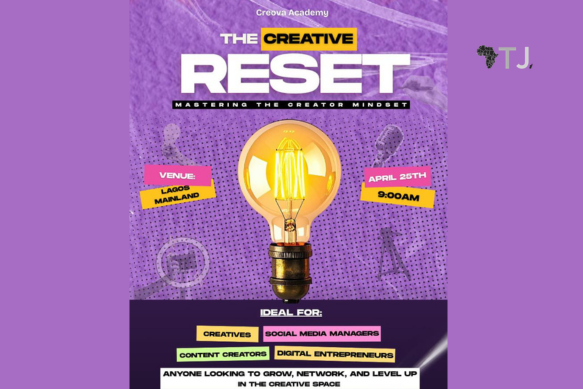
On April 25th, 2026, Creova Academy is hosting its first-ever physical event on the Lagos Mainland ; a one-day educational and community experience built specifically for creatives who are ready to pause, reflect, and realign their creative direction with intention.
What Is The Creative Reset?
The Creative Reset isn’t a motivational event. It’s not about hype or surface-level inspiration. It’s a practical, structured day designed to help you master the internal game that drives everything you create externally.
This year’s theme : Mastering the Creator Mindset which sets the tone for what attendees can expect: deep, honest conversations about the mental, strategic, and creative challenges that content creators, designers, writers, digital entrepreneurs, and social media managers face every single day.
What to Expect
Doors open at 9:00 AM and the day will be packed with value from start to finish. Attendees can look forward to keynote sessions from industry voices, a panel discussion covering real experiences from the creative community, a guided creative reset session to help you reconnect with your craft, and intentional networking with a room full of like-minded creatives.
This isn’t a conference where you sit, listen, and leave unchanged. Every element of the day has been designed to create real, lasting impact on how you think, create, and grow.
For Creova Academy, The Creative Reset 2026 marks the beginning of something much bigger , a long-term commitment to equipping Africa’s creative community with the tools, mindset, and connections needed to thrive in an industry that rewards those who show up with purpose.
If you’re a creative in Lagos or willing to make the trip then this is the room you want to be in.