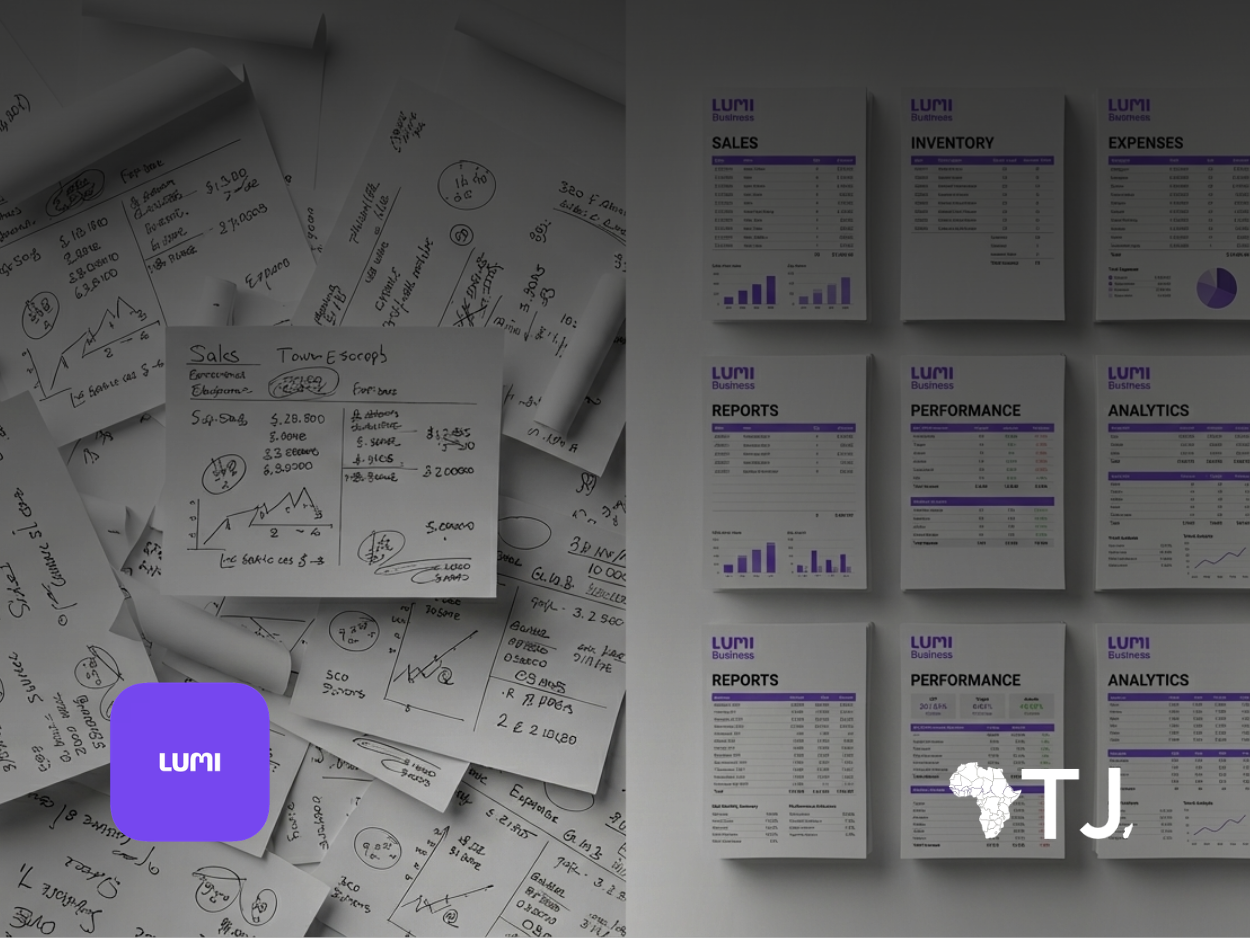
It started during COVID, when movement was restricted, and many of us finally had time to think deeply about the structural problems facing African businesses.
There were four of us at the beginning. We met roughly once a month, not to rush into building a startup, but to talk through patterns we were seeing in the market. One issue kept resurfacing. Most businesses in Nigeria were operating with very little data and almost no modern tools to guide day-to-day decision making.
At the time, many startups were focused almost entirely on payment collection. That mattered, but it felt incomplete. Collecting money is only one part of running a business. Inventory, expenses, reporting, and performance visibility were still largely unmanaged. Businesses were working hard, but without clarity.
That gap became the foundation of Lumi Business.
After Payments, Businesses Were Left Alone
Speaking directly with business owners shaped our conviction. Again and again, we saw that once payments were collected, owners were largely left on their own. Many relied on foreign software that was not built for Nigeria. Others stitched together fragmented local tools that never worked as a single system.
The result was predictable. Decisions were made based on instinct rather than insight. Owners put in effort without knowing what was truly working. That disconnect between effort and clarity pushed us into this space.
We did not want to build another narrow solution. We wanted to help businesses actually run better.
Starting With People and Patience
We started with a technically strong founding team, most of us with engineering backgrounds. Several of us had worked in structured retail and manufacturing environments like KraftHeinz and Pepsi, as well as tech startups serving small and medium businesses. Those experiences shaped how we thought about systems, efficiency, and scale.
On the capital side, we raised a small friends and family round. It allowed us to build an early product, test with real merchants, and iterate quickly without external pressure. Family and close friends were critical, not just financially, but emotionally. Their belief gave us the patience to build deliberately and stay focused on real customer problems.
Trust, Pricing, and Market Reality
Early challenges were unavoidable. The first was trust. Convincing business owners to move critical operations onto a new platform takes time. The second was hiring, especially in an environment where experienced talent often had safer or better-paying options.
Pricing was another constraint. Nigerian businesses are highly price sensitive, and we could not charge what similar tools cost in Europe or North America, even though development costs were comparable. Inflation and currency instability made long-term planning difficult.
Interestingly, recent tax reforms shifted behaviour. More businesses began to understand the importance of proper record keeping and structured systems. That shift aligned closely with what we were building.
Technology as the Foundation
Lumi was technology-first from day one. We were not a traditional business that later adopted tech. Technology was the lever for scale, consistency, and insight.
We built an all-in-one platform combining sales, inventory management, payments, expenses, customer management, analytics, and integrations with financial partners. Internally, strong data infrastructure and scalable cloud systems allowed us to support hundreds of merchants across multiple locations.
Once customers got past the learning curve, many became deeply reliant on the visibility and control the platform provided. Over time, Lumi shifted from being a nice-to-have to being operationally essential.
Growth, Impact, and What Endures
At our peak, we were processing over 400,000 sales transactions monthly and more than ₦11 billion in transaction value across hundreds of merchants. Beyond scale, we are proud that we built a profitable, sustainable business solving real operational problems.
As customers matured, their questions changed. They began asking about margins, trends, and optimisation. Access to data was reshaping how they thought about their businesses.
Through it all, certain principles remained non-negotiable. Treat the team fairly. Reward hard work. Champion the customer. Build patiently.
Looking ahead, the focus is on scaling through aligned partnerships and ensuring technology remains digestible for business owners used to manual systems. As AI reshapes competitive advantage, structured data will be the entry point. That is where Lumi’s foundation matters most.
It feels like we have only scratched the surface.