For many small business owners, running a business means juggling sales, payments, invoices, customers, expenses and a long list of daily tasks, often without having a clear picture of what the numbers actually mean.
This was the problem that led to Tela, a business intelligence platform designed to help small businesses and freelancers not only digitise their operations, but understand what is happening inside their businesses.
Tela’s journey, however, did not start as a technology company.
From managing books to building a platform
Tela’s story began in 2021 when its founder, Adeyemo Damilare, started Rux Finance after graduating from university as a finance graduate. The business helped small businesses manage their finances, organise their books and make sense of their financial activities.
As the business grew, so did the workload.
What initially could be managed with manual processes eventually became too much to handle with what the team described as “pen and paper.” That experience became the starting point for a bigger question: what if these processes could be turned into a product?
Damilare Adeyemo brought in James Dauda , Aaron Daudu and Jumoke Ajayi, who he had known for about 10 years, and together they began working on the idea at a larger scale.
What emerged was Tela, evolving from a financial management solution into a business intelligence platform for small businesses and entrepreneurs.
“We went a step further. Not just digitalizing their product or digitalizing their business, but also making it make sense,” the team explained during an interview with African Tech Journal.
Building around how entrepreneurs actually work
One of Tela’s early challenges was not necessarily figuring out what features to build, but deciding what should not be built.
For the team, small businesses already operate within established habits. Many entrepreneurs rely heavily on WhatsApp, conversational selling and other familiar platforms to manage their businesses.
The challenge was therefore to introduce technology without forcing entrepreneurs to completely change the way they work.
“It’s easy to build a product with too many features,” the team said. The harder task was figuring out what an entrepreneur actually needs to see, what should be automated, what should be explained and what should be left untouched.
This led the team to spend time speaking with customers, vendors and other business owners, while conducting market research to understand their behaviours and expectations.
That approach has continued to shape Tela’s product.
Moving beyond digitalisation with AI
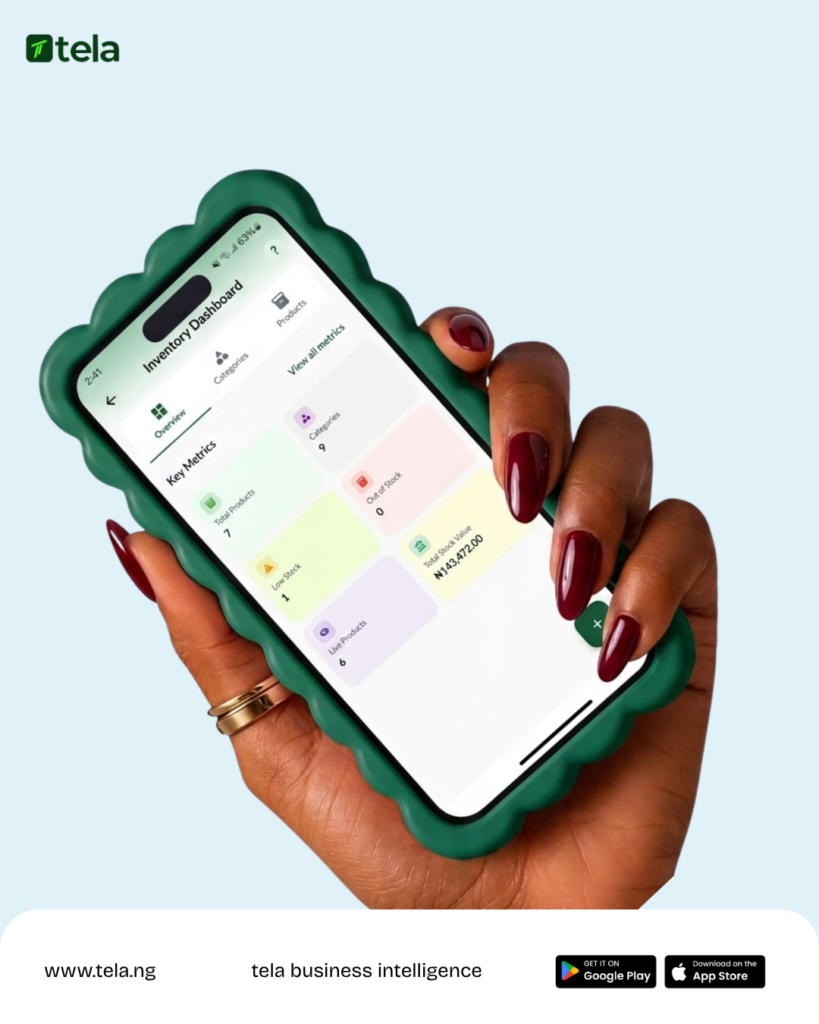
Tela initially operated as a web-based product, offering tools such as invoicing, receipts and payment links. The company has since shifted its focus towards its Android and iOS applications, with the Android and iOS app launching recently.
But the larger shift has been in how Tela thinks about business data.
Rather than simply showing business owners numbers, the team wants Tela to help them understand those numbers.
A business owner might know that sales have fallen by 20 percent compared with the previous week. Tela is being built to go beyond presenting that information by helping answer questions such as why sales are falling and what the business owner could do to improve them.
The team describes this as building Tela on AI rather than simply adding AI as a feature.
The goal is to turn business data into insights that entrepreneurs can understand in clear language, particularly for business owners who already have numerous responsibilities competing for their attention.
For Tela, data is therefore not simply something a business collects. It is part of the technology that can drive the business forward.
Bootstrapping the journey
The company has also grown without external funding.
According to the founders, the co-founders have funded Tela themselves from the beginning and continue to bootstrap the business.
That has meant building with a lean team and making the most of the resources available to them.
For James, one of the biggest lessons from the journey has been the resilience required to keep building.
He described staying together as a team and reaching this stage without external funding as one of the things he is most proud of.
For a startup still navigating product development, adoption and market expansion, that resilience has become an important part of Tela’s story.
Partnerships, payments and early traction
As Tela has evolved, partnerships have also played a role in strengthening the platform.
The company identified its partnership with Anchor as an important milestone, particularly around payments. The founders said the partnership helped improve payment processing and contributed to better reviews and increased adoption.
Tela also processes payments for small businesses, and the team says transaction volumes have been increasing.
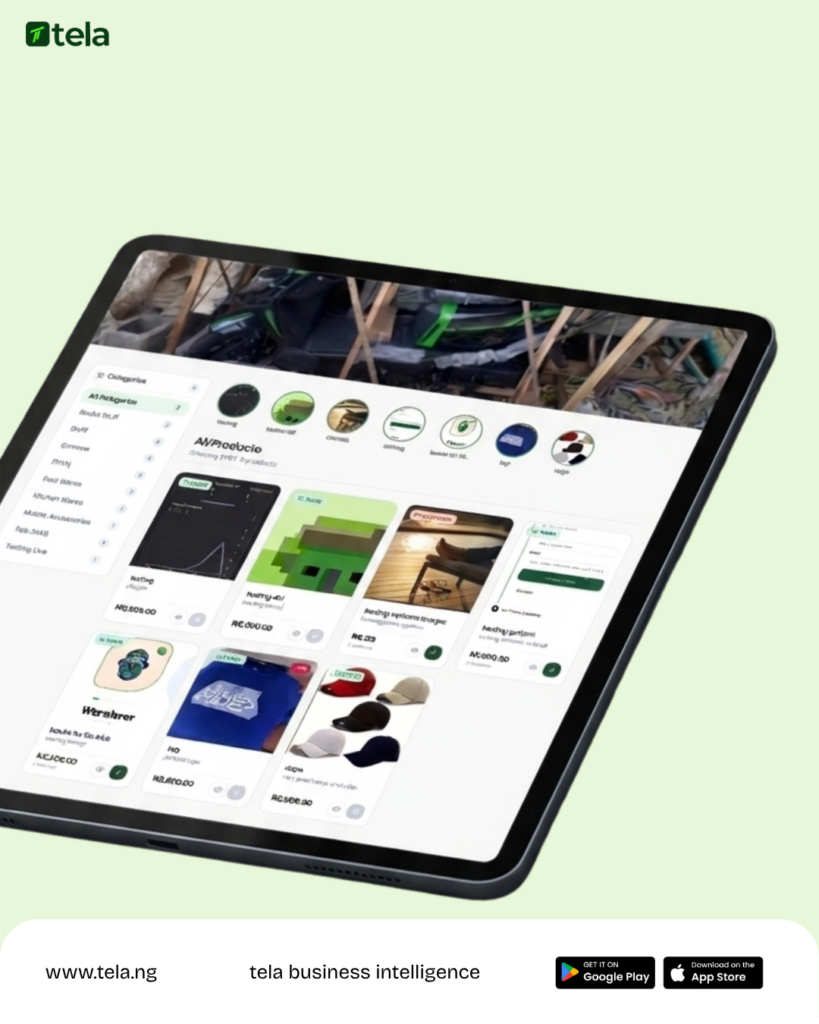
More recently, the company introduced a storefront feature that allows small businesses to sell directly through the platform using payment links.
While the team had not yet begun actively pushing the storefront feature at the time of the interview, it represented another step towards making Tela a more comprehensive platform for businesses.
The company is also beginning to see adoption of its mobile product. Tela says it has surpassed 1,000 active users on its mobile app within its first three months, with more than 3,000 users overall.
From business intelligence to an intelligent operating system
Tela’s ambitions extend beyond its current product.
The founders want the company to eventually become an intelligent operating system for growing and established businesses.
That means expanding beyond its current capabilities and adding more of the tools entrepreneurs rely on to operate their businesses, while continuing to use AI to make those tools more intelligent.
One of the company’s major upcoming products is a standalone sales AI.
The team is working towards a system that can automate significant parts of the sales process, from payment and customer conversations to fulfilment, with the intention of allowing business owners to focus on the parts of the process that still require their direct involvement.
The product is expected to be one of Tela’s major milestones over the coming months.
Looking beyond Nigeria
Tela’s ambitions are not limited to the Nigerian market.
The company plans to expand across Nigeria before moving into other West African markets.
The founders also indicated that they expect to become open to investment as the business grows and the company prepares for its next stage.
For now, however, Tela remains focused on building the product, understanding its users and proving that AI can do more for small businesses than simply automate tasks.
Its larger bet is that the next generation of business software should not only record what happened in a business, but help business owners understand why it happened and what they can do next.
That is the direction Tela is taking as it works towards becoming an intelligent operating system for African businesses.