Tag: tech

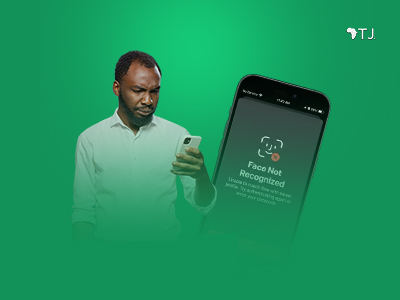
  • Is Face ID Really 2FA? Rethinking Biometric Security in Financial Apps

    Is Face ID Really 2FA? Rethinking Biometric Security in Financial Apps

    Financial institutions increasingly use 2-Factor Authentication (2FA) in their mobile apps to protect customer transactions. Traditionally, 2FA combines two different types of verification. This is usually something you know, such as a transaction PIN or one-time password, and something you have, such as your registered phone or a token.

    In many modern transaction flows, after a user enters a transaction PIN or token, the app then requests biometric authentication. This could be Face ID or a fingerprint, depending on the user’s device. While this improves convenience, it raises an important question. Should device-level biometrics really count as a valid second factor for transaction authentication when the verification does not happen within the financialinstitution’s systems?

    How Biometrics Work in Financial Apps

    When a financial app uses Face ID or fingerprint authentication:

    ● The app does not see or transmit the raw biometric data. Instead, it asks the phone whether the biometric presented matches one of the biometrics already enrolled on the device

    ● The biometric data itself is stored securely on the phone, within protected hardware designed for this purpose. The app simply receives a yes or no response from the device. The financial institution never receives the actual fingerprint or facial data.

    This means the institution is relying on the phone’s confirmation rather than directly verifying the user’s biometric identity.

    Can Biometrics Count as a “Second Factor”?

    Traditionally, 2FA is based on using two different categories of authentication:

    1. Something you know, such as PIN or password

    2. Something you have, such as a phone or token

    3. Something you are, such as a fingerprint or face

    On the surface, combining a transaction PIN with Face ID or a fingerprint appears to meet the definition of 2FA. However, there is an important distinction.

    Because the biometric check is performed entirely on the device, the financial institution cannot independently confirm who was authenticated. For this reason, device biometrics are often best viewed as a strong convenience layer rather than a fully independent second factor on their own. They work best when combined with other institution-verified controls, especially for high-risk transactions.

    Security Risks and Edge Cases

    1. Device Access by Another Person

    If another person is able to register their fingerprint or face on a phone, whether intentionally or under pressure, financial apps that rely on biometrics may treat that person as a legitimate user.

    2. Device Trust Over User Identity

    Because the biometric decision comes from the phone, anyone who can unlock the device and add their biometric may be approved during transactions. The financial institution has no visibility into changes made at the device level.

    3. Spoofing and Advanced Attacks

    While modern phones include strong protections, biometric systems are not immune to spoofing attempts such as fake fingerprints or manipulated facial images, especially on older or less secure devices.

    4. Biometrics Cannot Be Changed

    Unlike a PIN or password, biometrics are permanent. If they are compromised, they cannot simply be reset. This makes them riskier as a primary security control over time.

    Is It Safe to Use Device Biometrics as Part of 2FA?

    Benefits

    ● Convenience. Transactions are faster and easier for users.

    ● Device-level protection. Biometric data is stored securely on the phone and is difficult for remote attackers to extract.

    Limitations

    ● Dependence on the device. If a phone is lost, stolen, or compromised, risk increases.

    ● No direct verification. The financial institution cannot confirm who passed the biometric check.

    ● Accuracy limits. Biometric systems can sometimes fail or incorrectly approve access.

    Regulatory and Legal Considerations

    ● Most financial institutions clearly state in their terms that enabling biometric login means any biometric registered on the device may be able to access the account.

    ● Device manufacturers aren’t legally liable for financial fraud from financial app transactions authenticated via device biometrics. Responsibility typically rests with the financial institution’s policies and local financial regulations.

    ● In many regions, financial institutions must still comply with privacy and data protection laws related to biometric use, even when the data is stored only on the device. However, this does not automatically transfer liability to device providers.

    In conclusion, device biometrics add meaningful value by improving convenience and strengthening security at the device level. However, they are not a perfect or fully independent second factor when used alone for transaction authentication. For users, it is important to maintain strong device security, protect phone access codes, and understand how biometric authentication works.

    For financial institutions, biometrics are most effective when used as part of a layered 2FA approach rather than as the sole line of defense.

    By Sunny Ogbari

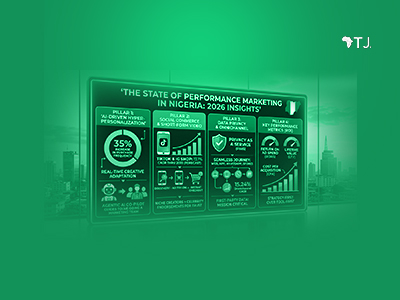
  • The State of Performance Marketing in Nigeria: 2026 Insights  

    The State of Performance Marketing in Nigeria: 2026 Insights  

    What Nigerian Performance Marketers Really Think About ROI, Channels, and the Future  

    Performance marketing in Nigeria is in a very unique position right now. Global trends are influencing the industry, but most marketers are navigating their own paths.

    They are finding solutions to infrastructure challenges, learning about what resonates with Nigerian audiences, and managing tight budgets. I spoke with marketers across to understand what works, what doesn’t, and what the future looks like..  

    Meta Dominating

    Let’s be clear. If you ask most Nigerian performance marketers about their preferred channel, you will likely hear “Meta” (which includes Facebook, Instagram, and Thread) repeatedly. Almost everyone I talked to indicated that Meta Ads provides the best ROI, no question.  

    One media buyer, who has 3 years of experience, stated, “It’s the only Meta I use for now, so I can’t compare.” While this might seem limiting at first, why change what works? If you see results, you should continue using it.

    Of course, it’s not universal. Someone managing campaigns for various sectors mentioned that Meta is great for e-commerce, but for fintech, Snapchat works better. “It has to do with the target audience.” Another marketer with over a decade in hospitality highlighted the necessity of considering both the industry and the audience. What succeeds for one sector might not succeed for another.  

    An agency marketer put it simply: “Our customers are usually very active on this channel.” This is clear. Nigerian audiences are present on Meta, engaging, and making purchases.  

    What Performance Marketers Actually Track

    Metrics are not one-size-fits-all, but a few that dominate:  

    – ROAS (Return on Ad Spend) is the most tracked metric.  

    – CPA (Cost Per Acquisition) and Conversion Rate are also significant.  

    – CTR (Click-Through Rate) is still crucial for optimization.  

    One hospitality marketer keeps tracking straightforward, focusing on “Conversion Rate and CPA (Cost Per Conversion)” before checking ROAS. Meanwhile, someone in iGaming is specifically focused on “sign-ups that lead to first-time deposits”—not every conversion holds the same value.  

    The Attribution Crisis  

    Attribution is a common complaint. Getting to know which ad or channel leads to a conversion can be overwhelming. Marketers struggle to identify what truly drives results. 

    • 67% of those I talked to said attribution and tracking are still nightmares.  
    • Tracking and analytics frequently come up as pain points.  
    • One marketer captured it well: “Lack of accuracy in data attribution skews performance.”  

    A hospitality marketer pointed out the difficulty when products are not sold online. Offline visits and phone calls cannot be easily tracked. This leaves marketers guessing how to allocate their budgets instead of relying on solid data.  

    The Budget Realities  

    Rising ad costs emerged as the second most common challenge. This pressure forces marketers to be more strategic and resourceful. When combined with limited budgets and client constraints, it’s evident: Nigerian performance marketers are expected to achieve more with less money.  

    So, what’s changing?  

    • Marketers are testing more channels before committing fully to a single winner.  
    • Some divide their budgets 50-30-20 or distribute them evenly across several channels.  
    • Others disregard “industry best practices” and rely on what has worked for them previously.  

    An iGaming marketer summarized it: “Ad costs” affect ROI more than anything else.  

    Creative Is King And Queen  

    Despite discussions about channels and tracking, “poor creative quality or ad fatigue” consistently surfaces as a top concern. One media buyer was clear: “Poor creatives” are the biggest issue.  

    A hospitality marketer who has seen it all believes that in 2026, the successful ones will be those who produce “Lots of creatives and continuous testing.” It’s not just about good creatives; it’s about consistently presenting something fresh and different.  

    Channel Combinations That Work  

    Experienced marketers don’t put all their bets on one channel. They diversify to achieve better results. Here’s how some of the top marketers do it:  

    The Meta + Google Ads combination: One agency marketer explained, “how he uses Meta to build awareness, then Google Ads to capture people ready to buy. Meta’s audience targeting and engagement work for the top of the funnel, while Google’s search intent is aimed at ready-to-buy customers.”  

    The Multi-Platform Approach: In hospitality, one marketer spreads the budget across Instagram, Google, and Snap, testing all three before investing more in the best performer. It’s good since audiences aren’t confined to one platform..  

    Industry-Specific Stacks: The iGaming marketer combines “Meta, Trafficstars, Trafficjunky, and X ads”; this mix works when the audience cuts across both mainstream social media and niche, adult-focused sites.  

    Looking Ahead: The 2026 Landscape

    When I asked about trends shaping the next 24 months, a clear pattern appeared:

    1. Everyone is discussing AI-driven ad optimization. Marketers expect AI to address significant headaches, such as attribution issues, creative performance, and smarter budget allocation.
    2. Local creative content is becoming essential. As competition increases, generic ads won’t suffice. Marketers require content that resonates with Nigerian audiences—using the right language and referencing cultural moments.  
    3. The growth of TikTok and short-form video was mentioned by multiple respondents. Although only a few of our samples used TikTok Ads, several see it as an emerging force in Nigerian performance marketing.  
    4. First-party data is becoming increasingly vital. Privacy changes that complicate tracking mean brands need to own their customer data. It’s not just about keeping pace with global trends—it’s about resolving attribution issues once and for all.  
    5. Influencer–performance campaigns are evolving. Influencers are no longer just for brand awareness; marketers want direct results and hold influencers accountable for performance. 

    When I asked marketers what would define true success in 2026, here’s what stood out:

    – Getting real results  

    – Trying new channels  

    – Staying ahead of the changes.  

    – Constant creative testing  

    – Quickly understand your metrics and act on data  

    – Adjusting to changing trends  

    – Delivering consistent quality results  

    What’s clear? The marketers winning will be those who adapt quickly, keep learning, maintain strong creativity, and thoroughly understand their data. Relying on one successful strategy for years is no longer an option.  

    Key Takeaways for Nigerian Performance Marketers

    1. Meta Works, But Stay Flexible: Meta works, but real breakthroughs come from testing unexpected channels. Sometimes your best opportunity for growth lies where others aren’t looking.

    2. Fix Attribution Before You Scale: If you can’t measure it, you can’t improve it. Nail down accurate tracking before ramping up your budget to know what’s effective.  

    3. Creative Volume Beats Perfection: When your audience is tired of seeing the same ad, producing new creatives and content volume is more crucial than obsessing over one “perfect” campaign.  

    4. Combine Channels, Don’t Isolate your channel: The right question isn’t “which channel?” but “which combination?” The best marketers combine platforms to leverage each one’s strengths.  

    5. AI is not here to replace your job, but marketers who embrace AI will surpass those who don’t want to adapt. Start learning now. 

    In Conclusion  

    Performance marketing in Nigeria is challenging, but offers great opportunities.

    Increase in ad costs and tracking issues are real problems, but they also present chances for those who can solve them better than their competitors.

    Success is not about having the biggest budgets or access to every channel. It’s about understanding your audience, continuous testing, measuring the right metrics, and acting fast.

    Abiola Oyajumo 

    Growth and Performance Marketer 

    Abiolaoyajumo.com

  • I said goodbye to scam exchangers, a Raenest app story

    I said goodbye to scam exchangers, a Raenest app story

    N500/$ is the rate I’ll use to exchange the funds. Na my account you take collect am.”

    If you’ve freelanced since the days of oDesk and Elance, you’ll recognise this. It’s what so-called exchangers say to freelancers trying to receive payments from clients worldwide.

    Some exchangers are honest, but many are crooks. They take a large cut of freelancers’ earnings or scam them entirely. It’s shocking!

    I fell victim for years. Freelance platforms then updated to allow direct deposits to Africa. FinTech companies like Raenest emerged, enabling us to be paid in any currency.

    Raenest has addressed the scammer-exchanger issue with popular ACH accounts and useful virtual cards.

    Here are five reasons why I believe they will continue to thrive:

    Timely Free Deposit Offers: I’ve signed up with other fintech companies, but none have offered free payment deposits. My ‘grey’ matter just doesn’t have any memory of it 🙂


    Since joining Raenest, I’ve received many free deposit offers. FinTechs usually charge fees for operational costs and regulations. But with Raenest, my USD, GBP, or EUR deposits periodically come in full, with no fees.

    This shows their commitment to helping global earners keep every cent. I think it’s their most thoughtful ‘gift’ and one of the things I love about the them.

    Cross-border Payments: The distance between Europe and Africa is about 14 kilometers. Although people like Pelumi Nubi have crossed the borders using just their cars, 14km is still a far stretch. Let’s not even fact-check the for America to Africa. Yet, we can send and receive money without traveling that distance! Whether you’re a freelancer or a business in Africa needing payments from the UK, US, or China, Raenest has you covered.

    Stablecoin Integration: Many freelancers want to earn in coins like Ethereum or Tron to handle exchange rate changes. Raenest surprised everyone by announcing stablecoin accounts!

    If you have a USD account, you can easily create a stablecoin wallet. Receive payments in USDT or USDC with competitive exchange rates. Exciting, right? 🤭

    Virtual Cards: Using a virtual credit card has never been cheaper. With Raenest, you can get a virtual card for at a low fee. Fund it easily and use it for subscriptions, courses, or ads!

    Bella’s Exclusive Perks: Raenest has launched ‘Raenest Perks’. This offers special discounts for freelancers and business owners. Whether you need groceries or the latest Adidas shoes at 15% off, Raenest is your go-to.

    In conclusion, business development is key to success. Raenest understands its customers and continues to develop strategies to meet their needs.

    If you’re a freelancer, content creator, or running a business in Africa, visit Raenest today at www.raenest.com. Enjoy hassle-free payments and send money to over 40 countries!

  • Not all tech brands are app or fintech, Meet Mozzi Pizza, a Kigali digital dining game changer

    Not all tech brands are app or fintech, Meet Mozzi Pizza, a Kigali digital dining game changer

    Mozy Pizza Remera–Gisimenti

    When people talk about African tech brands, they usually mention apps, fintech startups, or mobility companies.

    But for me, one of the most impressive tech-driven brands I use almost every week is Mozy Pizza, right in Remera–Gisimenti, Kigali.

    It’s more than a restaurant, it’s a smooth digital experience that makes ordering food in the city feel modern, fast, and stress-free.

    My relationship with Mozy Pizza started on a busy afternoon when I didn’t have time to leave work. A friend told me, “Just order it on Vuba Vuba.” I tried it once… and now it’s my go-to for pizza, burgers, shawarma, and even their surprisingly good coffee. What keeps me loyal isn’t just the food, it’s how technology connects everything, from ordering to payment to fast delivery.

    The first thing I love about Mozy Pizza is how easy it is to order online. Whether I’m at home or at school, I open Vuba Vuba, choose what I want, and confirm. No calling, no waiting, no miscommunication.

    Their menu is always updated, and I can track my order in real time. For a city like Kigali that’s growing quickly, that level of convenience matters.

    Payments are another thing they’ve nailed. Mozy accepts Mobile Money, Visa cards, and other digital options.

    This makes it simple for anyone, whether you prefer MoMo or card payments, to check out in seconds. It feels like the brand truly understands how young Rwandans live: cashless, online, and always on the move.

    And of course, we have to talk about delivery. Mozy Pizza delivers across Kigali, and they are consistently fast.

    Even during peak hours, I get updates, and the riders always arrive with warm food. That reliability is one of the reasons I consider Mozy a tech-enabled brand worth celebrating. They have blended good food with the right digital tools to solve a real problem: getting quality meals quickly and conveniently in a busy city.

    In a market where many restaurants still rely on traditional methods, Mozy Pizza stands out by embracing technology to improve customer experience.

    It may not look like a typical “tech company,” but the way it operates — online ordering, digital payments, and efficient delivery — is exactly what modern African consumers need, and one thing I have noticed is that they are also liked by internationals like Nigerians, Indians, Europeans and those one comes from alba ,, their menu is preferable.

    For me, Mozy Pizza is more than a place that makes great pizza. It’s a perfect example of how technology can transform everyday services and make life easier.

    That’s why it’s the African tech-powered brand I genuinely love.

  • My first dividend alert from Bamboo changed everything

    My first dividend alert from Bamboo changed everything

    I got a credit alert on Friday, and it completely surprised me. At first, I thought it was just a random notification. But when I checked properly, I realized it was my first-ever dividend payout, from one of the stocks I invested in through Bamboo.

    That small moment made everything feel real, like, “Wow, I’m actually investing.”

    My interest in investing started about two years ago, even though I didn’t fully understand it then. Last year at my former workplace, a few of us, the ladies, got into a conversation about savings, wealth-building, and different investment apps.

    Someone mentioned Bamboo, and we all downloaded it on the spot. We tried setting it up that day, but something came up for me, and I didn’t complete my registration. The excitement faded, and life moved on.

    Earlier this year, I started seeing people on X (Twitter) talk about investment again. I love reading those conversations, especially when they break things down in simple ways.

    Bamboo kept coming up, and because I had interacted with it before, I decided to go back to it. This time, I completed my setup and began investing, even though I wasn’t fully consistent and didn’t understand everything at first.

    What made it easier is how simple the Bamboo app is.

    The interface is clean, clear, and beginner-friendly. You can see your stocks, track your money, and understand what’s happening without feeling confused. And even though I didn’t learn from any official community, I picked up so many helpful tips from regular people sharing their experiences on X, things like how dividends work or how to navigate certain features.

    But nothing prepared me for the feeling of seeing that dividend alert on Friday. The amount wasn’t the point.

    What mattered was the realization that something I invested in actually grew and returned value. It felt like a small victory, but a very meaningful one.

    Bamboo stands out to me because it makes investing accessible. It brings global stocks closer and makes the whole process simple enough for anyone who is just starting the journey.

    And that first dividend? It gave me the motivation to keep going.

  • XARA: Banking without a new app

    XARA: Banking without a new app

    Most fintech apps in Nigeria follow the same script.

    Build a shiny interface, pack in features, then fight to convince people to download one more app they’ll barely open. Xara walked away from that playbook.

    Sulaiman Adewale, Xara’s founder, built a financial tool that runs inside WhatsApp. No extra app. No onboarding stress.

    You open the platform you already use every day and handle your transactions from there. With 95% of most Nigerian social media users already active on WhatsApp, this offers an explicit opportunity to leverage.

    What stands out is how smoothly Xara fits into everyday conversation. You can send a voice note in pidgin, drop a photo of an account number, or type: “Send ₦10,000 to Seun for breakfast.” And the system seamlessly understands.

    The AI was trained on Nigerian expressions, so it responds to the way people actually speak. And that’s really important.

    Many banking apps still overwhelm users with interfaces that feel stiff or confusing. Xara removes that friction completely.

    It also works on simple phones with unstable internet connections. You don’t need a fancy device or steady data. You don’t need to switch between apps or search for account numbers. Everything happens on directly on WhatsApp.

    And the way people easily adopted it shows it works. Within two weeks of launch, Xara pulled in 10,000 users and processed over ₦135 million in transactions. These aren’t just people downloading for the sake of it—It works, and they’re using it.

    Xara is worth paying attention to for more than convenience. It’s proof that African tech doesn’t have to copy Western products to succeed. Sometimes the answer is meeting people where they already are, using the tools they already trust. Adewale saw that and built around it.

    There’s still work ahead—building trust, scaling, and regulation. But if Xara grows, it signals something bigger. Financial inclusion doesn’t always hinge on building complex products.

    Sometimes the breakthrough is as simple as moving banking to the space people open every morning.

    In a market that has shut out millions with complexity, Xara’s strength is its simplicity. And that’s why it stands out for me and several other Nigerians.

  • Bango’s Growth to 1,000 Users Reflects Demand for Price Visibility

    Bango’s Growth to 1,000 Users Reflects Demand for Price Visibility

    One of us went to buy a basic food item in Lagos during the Salah period and was quoted a price that felt unusually high. Later that same day, the exact item was found selling for significantly less in another city.

    That experience made something clear.


    Many Nigerians are not overpaying because they are careless. They are overpaying because they do not have access to reliable price information.

    That gap is what became Bango.

    Living in a Market Without Clarity

    Operating in Nigeria means constantly dealing with price changes. Inflation is not abstract. It shows up in everyday purchases. Prices shift quickly, and most people are left to guess what is fair.

    Over time, people develop their own systems. They call friends. They ask traders. They compare notes informally. It works, but only within small circles. Beyond that, there is no structure.

    That is the problem Bango is trying to solve.

    We were not trying to change how people buy. We were trying to give them better visibility before they spend.

    Building Around Existing Behaviour

    From the beginning, the insight was simple. People are already sharing price information. It just does not scale.

    Technology became the way to organize that behaviour. Instead of building something complex, we focused on simplicity. A web-based platform where people can easily contribute prices and find information quickly.

    The goal was not to replace the market culture. It was to structure it.

    As the platform grew, the model shifted. Instead of chasing data ourselves, the community became the source. The platform became the system, and the users became the engine.

    Earning Trust Before Scale

    One of the biggest challenges was trust.

    Price is sensitive. People are naturally skeptical, especially in a market where information is often unreliable. We had to prove that Bango existed to empower users, not to take advantage of them.

    Growth came without paid advertising. In just over a month, we crossed 1,000 users organically. More importantly, users were contributing data on their own. That was the real signal.

    Trust was forming.

    From Guesswork to Data

    As more people began using the platform, behavior started to shift.

    Instead of relying purely on instinct, users began checking prices before buying. There was a gradual move from guesswork to more informed decisions.

    Technology also removed location barriers. Someone could now access price insights beyond their immediate environment. What used to be limited to a small network could now be shared more widely.

    Building a Shared System

    What Bango is building is not just a tool. It is a shared system.

    A way for people to look out for one another before spending their money. A way to make pricing more transparent, not just for buyers, but for sellers as well.

    Looking ahead, the focus is on improving data accuracy, expanding commodity coverage, and building smarter tools that help users act confidently.

    The vision is simple.

    To create a trusted network at scale, where Nigerians are better informed, more confident, and less exposed to inconsistent pricing.

    Because sometimes, the most valuable information is knowing what something should actually cost.

  • Baraza Lagos 2026: Where Compliance Becomes Competitive Advantage

    Baraza Lagos 2026: Where Compliance Becomes Competitive Advantage

    February 21, 2026. Lagos. 100 founders. One mission: build startups that don’t break under legal scrutiny.

    What started in Kigali as an experiment in authentic founder conversations is coming to Lagos and it’s bringing something Nigerian tech rarely talks about openly: the compliance gap that kills promising startups.

    Baraza Lagos: Tech Compliance & Legal Summit isn’t another pitch event or networking circus. It’s a 100-person advisory session designed around a single question: How do you build a tech company that’s scalable, investment-ready, and legally bulletproof?

    The answer, according to organizers like Semudara Abayomi and Abisinuola Adedeji, isn’t more inspiration. It’s honest conversations about the regulatory minefields founders navigate daily and the practical tools to avoid them.

    From Kigali to Lagos: The Baraza Model

    The name comes from the Swahili word for “council” or “gathering” and that’s precisely the vibe. Not panels with polished slides. Not keynotes from people who haven’t built recently. 

    When Baraza launched in Kigali in November 2025, it attracted participants from seven countries and served as a pre-mixer for larger ecosystem gatherings like Norrsken Africa Week. Lagos inherits that model but adds a critical partner: the Nigerian Bar Association (NBA) Lagos Branch. This means founders get direct access to the legal expertise that determines whether a startup scales or stalls at Series A due diligence.

    What Founders Actually Get

    1. Compliance That Unlocks Capital

    VCs invest in structures that won’t blow up during due diligence. Baraza Lagos tackles the unsexy fundamentals:

    • Corporate structuring that survives scrutiny.
    • Equity distributions and vesting schedules.
    • IP protection and NDPR (Data Privacy) compliance.

    2. Regulatory Navigation

    African landscapes are fragmented. Sessions break down how to actually navigate:

    • CBN guidelines for fintechs.
    • SEC rules for crypto and web3.
    • Cross-border compliance for regional scaling.

    3. The 100-Person Advantage

    By capping attendance at 100, Baraza ensures connection quality. Past attendees from Kigali report pitch decks refined on the spot, co-founders found, and investor intros made through these high-trust interactions.

    Who This Is For

    • Founders raising or planning to raise (Seed to Series A+).
    • Co-founders navigating equity splits or governance.
    • Operators building compliance into company culture.
    • Lawyers & Legal Practictioners 

    The Details

    • What: Baraza Lagos: Tech Compliance & Legal Summit 2026
    • When: February 21, 2026
    • Where: Lagos, Nigeria (CafeOne, Yaba)
    • Tickets: nestuge.com/baraza
    • Capacity: 100 seats (strictly limited)
  • Ibadan Tech Expo quietly questions Nigeria’s Lagos-centric tech narrative.

    Ibadan Tech Expo quietly questions Nigeria’s Lagos-centric tech narrative.

    For years, Nigeria’s tech story has followed a predictable path. If a startup is serious, ambitious, or scalable, it must come from Lagos. The coast became shorthand for opportunities, while other cities were treated as feeders at best.

    But as Lagos grows more crowded and expensive, that assumption is beginning to crack. And Ibadan is one of the cities proving why innovation no longer needs to be coastal.

    Ibadan has always been known for education and culture, but in recent years, something else has been taking shape. Builders are no longer just learning there; they are building real products, creating companies, and attracting attention beyond the city.

    Ibadan Tech Expo didn’t create this momentum, it revealed it.

    Speaking on what the Lagos-first narrative has ignored, Mr Taiwo, the World’s Best CMO, a prominent marketing executive who frontlined spreading the news of Ibadan Tech Expo independently, explains:

    “Cities like Ibadan are underestimated under the narrative of depth. Yes, Lagos is fast and ‘gingering’, but the calm environment in Ibadan, the proximity to top-tier institutions, and a strong intellectual tradition are constantly ignored.”

    This perspective reinforces why Ibadan’s progress feels less noisy but deeply rooted.

    Innovation was already happening

    Long before the expo gained attention, Ibadan had already begun producing companies that challenged the idea that serious innovation must come from Lagos. One such example is Alerzo, a logistics company founded in Ibadan in 2019.

    Instead of relocating to Lagos, Alerzo built and scaled its business from Ibadan. Over time, the company expanded its reach beyond the city into multiple regions of Nigeria, while keeping its core operations in Ibadan. 

    Alerzo’s growth tells a simple story: innovation can start inland, scale nationally, and still remain rooted where it began.

    According to Mr Taiwo, emerging tech communities outside Lagos have practical advantages that are often overlooked:

    “There is a low cost of living and operations, which extends the startup runway. There is access to talent in cities like Ibadan, which are more loyal and less distracted. There is also a community with stronger bonds and collaboration that makes marketing easier, speaking from my experience.”

    These conditions quietly give founders room to build without the pressure cooker effect common in larger cities.

    An ecosystem taking shape

    What makes Ibadan’s tech story more compelling is that this progress isn’t happening in isolation.

    The Oyo State Agency for Youth Development partnered with Ibadan Tech Expo 2025 to promote digital empowerment among young people. As part of this effort, the agency sponsored 100 basic tickets for youths, helping them access learning opportunities, industry conversations, and meaningful networks.

    This kind of institutional backing signals intent. It shows that innovation in Ibadan is being nurtured deliberately and not left to chance.

    From his experience working across marketing and ecosystem visibility, Mr Taiwo believes Nigeria’s tech growth has been limited by excessive concentration in one city:

    “Innovation belongs everywhere. Over-concentration can make access limited. It can also make competition turn extractive, and this can prevent great ideas from getting the oxygen they deserve.”

    He adds that platforms like Ibadan Tech Expo, Ibadan Job Fest, and Cirvee Tech Fest play a role in redistributing visibility, capital attention, and confidence across regions.

    When attention moves inward

    Perhaps the clearest sign of Ibadan’s growing relevance is who chooses to show up.

    Across different editions of the expo, speakers and operators from Lagos and beyond have taken part, including Seye Bandele, co-founder and CEO of PaidHR, Seun Onigbinde, Director of BudgIT, Victor Ehindoro of POTTV Media, HR professional Felix Bissong among many others. Executives from organisations like Moniepoint and CcHub have also contributed to the conversation.

    When people who typically operate at the center of Nigeria’s tech ecosystem travel inward to participate, it signals a shift. Ibadan is no longer just observing innovation, it is attracting it.

    On what it will take for Ibadan to compete sustainably as a tech hub, Mr Taiwo notes:

    “Ibadan needs continued collaboration between academia, industry, and government. We need consistent community-led platforms and stronger founder-investor-policy alignment. And we are closer than many people think. The talent is here. The ideas are here too.”

    More than a one-off moment

    With support from brands like LightNG, Ibadan Tech Expo has now held multiple editions, with recurring participation from big brands such as Cardify Africa, Moniepoint, CcHub, Impact Hub.

    This repetition matters. It suggests continuity, growing trust, and an ecosystem that is beginning to sustain itself.

    Mr Taiwo’s personal decision to remain in Ibadan underscores the broader argument the expo highlights:

    “I choose to stay in Ibadan because Lagos is not the sole gateway to success. If a young founder asked me whether they must move to Lagos to succeed, my answer would be NO.”

    He points to his experience with Cardify:

    “I joined Cardify from Day 0, and today, they are being used in over 74 countries in the world. All work done from Ibadan.”

    A broader tech future

    Ibadan is not trying to replace Lagos, and it doesn’t need to. What it is doing, quietly and steadily is expanding Nigeria’s tech map.

    The future of innovation in the country will not belong to one city alone. It will belong to places that invest in people, build structure, and create room for ideas to grow regardless of proximity to the coast.

    As Mr Taiwo puts it plainly, drawing from his experience working on the visibility of the event:

    “The future of Nigerian tech is distributed and inclusive, and Ibadan has a clear and major role to play in that future, unarguably.”

    Ibadan is making that case, one edition at a time.

    Stories like this don’t tell themselves. They are researched, shaped, and positioned with intention.

    At Hype Empire, we don’t just chase attention; we build credibility.

    We help brands, startups, and events turn real work into clear narratives that the media understands, audiences trust, and partners respect.

    If you’re building something meaningful and want it positioned with clarity, context, and long-term relevance, Hype Empire is the team to work with.

    Follow HYPE EMPIRE on social media for more content and information on PR and Promotion:


    X = https://x.com/hypeempire001


    Instagram = https://instagram.com/hypeempire001

    LinkedIn = https://www.linkedin.com/company/hypeempire001/

  • Woomeout app is helping people build confidence and bonds

    Woomeout app is helping people build confidence and bonds

    Growing up, I battled confidence issues because of my dentition.

    Approaching women in person felt intimidating, sometimes impossible.

    But I noticed something about myself early on: when I could express affection, intention, and personality through words first, I felt more understood. I could show who I was before being judged by how I looked.

    That experience stayed with me. And over time, it raised a bigger question.

    What if connection didn’t have to start with physical appearance?

    That question eventually became Woomeout.

    Building Connection Before Attraction

    Woomeout is a matchmaking platform designed around one core belief: emotional connection should come before physical connection. It’s for people who want intention, clarity, and meaning, not endless swiping or surface-level interactions.

    The idea didn’t begin as an app. It began on Instagram.

    By observing how people from different backgrounds interacted online, we launched a simple matchmaking page and started connecting people intentionally.

    We listened. We introduced. We watched conversations turn into real interest. What began as casual matchmaking slowly revealed a deeper need for structure, safety, and purpose in modern dating.

    That was when Woomeout evolved from an idea into a product.

    Bootstrapping a Dating Platform With Purpose

    The Woomeout App team members

    Woomeout was fully self-funded. The Instagram matchmaking service was paid, and the revenue, combined with personal savings, funded the first version of the app. There were no investors at the start, just belief and iteration.

    Because Woomeout doesn’t follow the traditional dating app structure, early users faced a learning curve.

    Some struggled to navigate features like sending date requests, video calls, or participating in challenges.

    Many expected endless chatting, while Woomeout encourages intentional actions such as requesting or scheduling dates.

    What we learned quickly is that building a dating platform isn’t just about technology. It’s about changing behaviour.

    Dating culture has trained people to swipe endlessly and delay intention. Woomeout challenges that and that takes education, reassurance, and trust.

    From Online Matches to Offline Moments

    One of our proudest milestones is turning a deeply personal idea into a growing, community-driven platform.

    Seeing people move from online conversations to curated offline events and real relationships has been especially magical.

    Those events matter. They remind us that technology should enable connection, not replace it.

    Technology allowed us to remove fear and distance. People who might never approach someone in real life now have a safe space to express interest, curiosity, and intention. Across cities and backgrounds, Woomeout creates access to connection beyond physical boundaries.

    What Comes Next for Woomeout

    Our focus isn’t rapid expansion. 

    We’re prioritising better matchmaking quality, expanding curated offline events across more cities, and building features that reward intentional dating over endless interaction.

    Growth will be community-led. We’ll only enter new markets where organic demand already exists.

    If funding or partnerships come in, the priorities are clear: product quality, community trust, and safety.

    That means improving user experience, strengthening moderation, and partnering with venues, event hosts, and community collaborators who support real-world connection.

    More Than a Dating App

    What excites me most about Woomeout’s future is that it’s becoming more than a dating platform. It’s a space where people feel seen, intentional, and confident about how they meet others.

    In a world optimised for speed and surface-level attraction, choosing to slow down and lead with emotional connection feels radical.

    And sometimes, the most meaningful tech doesn’t help people swipe faster.
    It helps them feel understood first.

    Download the Woomeout App