A few weeks ago, a woman jokingly called out her church on Instagram.
For more than a year, she had attended services consistently. She arrived early, sat in the front row, participated actively, and appeared in countless photographs taken during church events. Yet somehow, none of those photos ever made it to social media.
The post was funny, but the comments told a different story. Dozens of people shared similar experiences. They had attended weddings, conferences, concerts, festivals, and community gatherings, watched photographers capture moments around them, and then never saw those images again.
It exposed a problem most people rarely think about until it affects them personally.
In today’s digital culture, photos are more than files.
They are proof of participation, memories preserved in time, and increasingly, part of how people document their lives online. Yet millions of event attendees remain invisible after the event ends—not because photographs were never taken, but because they have no practical way of finding them.
For photographers and event organizers, the challenge is equally familiar. Thousands of images are uploaded to Google Drive folders, Instagram pages, WhatsApp groups, and cloud storage platforms. Organizers cannot realistically tag every attendee or manually sort images for individual guests.
The photos exist, but access remains fragmented.
That observation became the foundation for Nahme.
Rather than viewing photography as the problem, the startup identified a deeper issue: identity and access.
The question was simple—what if people could instantly find every photo they appear in without searching through hundreds or thousands of images?
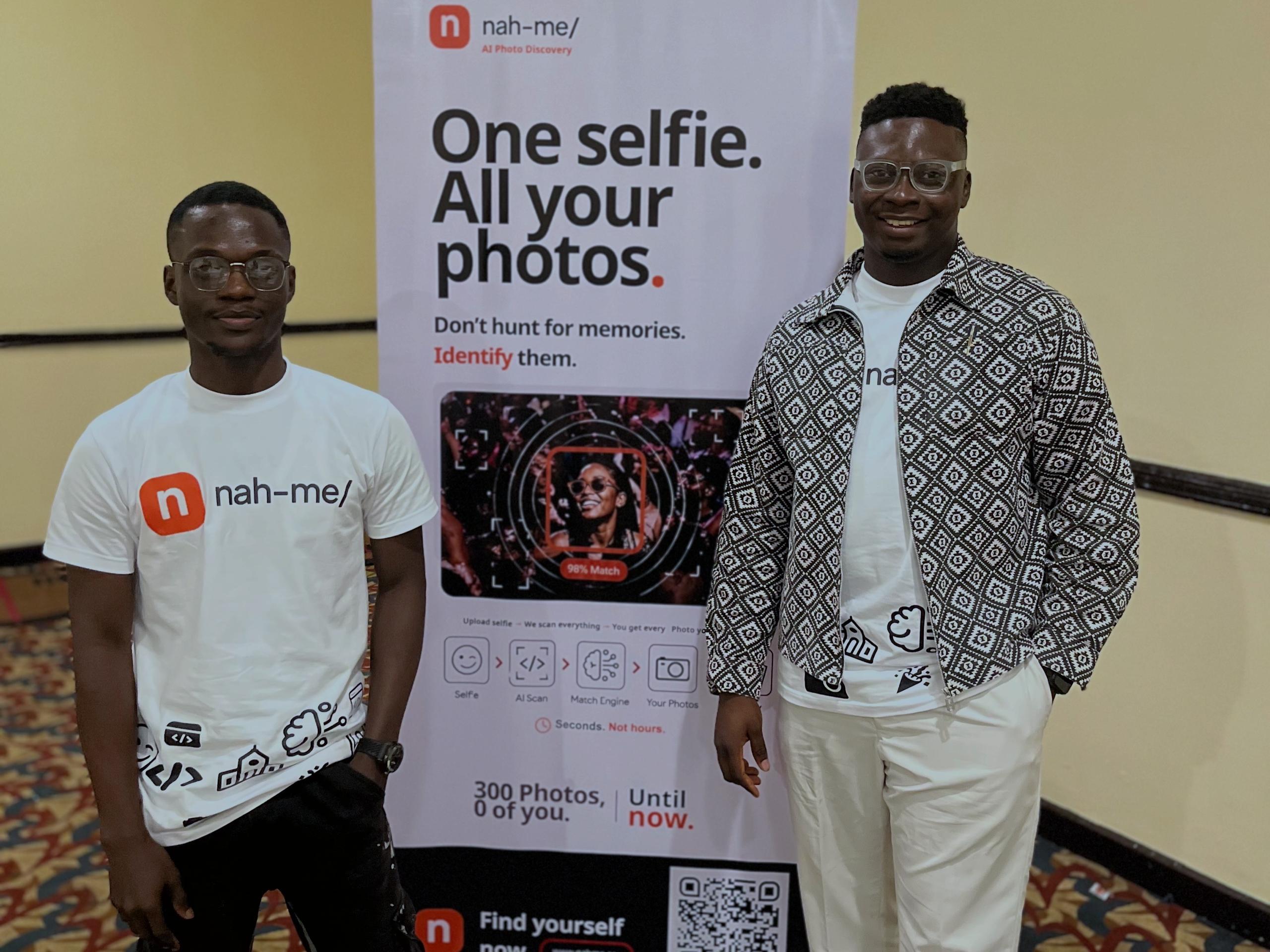
Nahme’s answer combines facial recognition technology with a frictionless user experience. Users simply take a selfie or upload a reference image, and the platform scans event photo collections to identify every image in which they appear. No app download is required. No account creation is necessary. No manual tagging process exists.
The experience transforms photo discovery from a frustrating search exercise into a personalized retrieval system.
The company officially launched in May and has spent its early months validating the product in real-world environments, particularly across churches, events, and large gatherings. Instead of relying on assumptions, the team has adopted an iterative approach, gathering user feedback directly from live deployments and refining the product in real time.
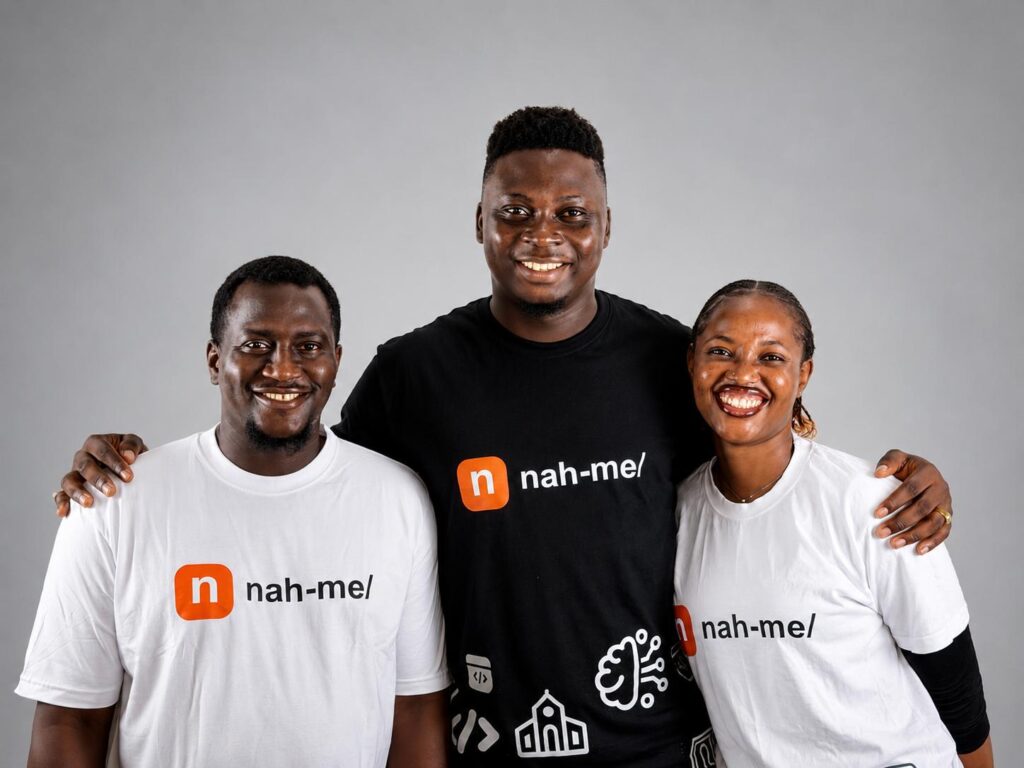
Its use of artificial intelligence reflects a broader trend emerging across African technology ecosystems. Increasingly, startups are not building AI products for the sake of artificial intelligence itself. Instead, they are applying AI to solve specific, everyday problems that already exist.
For Nahme, facial recognition is not the product; it is the infrastructure that makes personalized memory retrieval possible.
“Wait… how did you find all my pictures?” In processing over 10,000 photos across the platform, this has become one of the most consistent responses from users. According to the founders, it is often people’s immediate reaction when trying the platform for the first time.
That moment of surprise highlights the larger opportunity.
As events continue generating millions of images across Africa and beyond, the challenge will no longer be capturing memories. It will be helping individuals access the moments that belong to them. In that sense, Nahme is not attempting to disrupt events or photography. People will continue gathering, celebrating, and documenting their experiences.
The startup’s ambition is simpler: ensuring that when the camera captures a moment, the people in it can actually find it again.
And in a world overflowing with digital content, that may prove more valuable than it sounds.