Category: AI

  • Winumu Is the AI Infrastructure That Proves What You Can Actually Do

    Winumu Is the AI Infrastructure That Proves What You Can Actually Do

    Young Nigerian built an AI-powered skill verification platform that gives learners a trusted way to prove what they know beyond certificates and CVs.

    A certificate can show that someone completed a course.

    It does not always show that the person can actually do the work.

    For Winner Umukoro, that gap became increasingly difficult to ignore while interacting with students, developers, self-taught learners and people trying to build careers in technology.

    Many had taken courses, built projects and developed valuable skills, but still struggled to convince employers and institutions that they could apply what they had learned.

    That experience led Winner to build Winumu around a simple idea: instead of asking people to rely only on certificates, give them a credible way to prove their abilities.

    From Learning to Proof

    Traditional skill verification often depends on certificates, CVs, portfolios and manual assessments.

    While these can provide useful information, they do not always give employers a consistent way to understand what someone can actually do.

    Winumu approaches the problem through AI-powered challenges, evidence of practical work and a public Proof Portfolio.

    The platform is designed to help learners verify their skills and create tangible evidence that can be shared beyond the classroom.

    Its philosophy is captured in a simple line: Don’t just learn it. Prove it.

    For Winner, this is particularly important for people who may have taken alternative routes into technology. A learner does not necessarily need to have attended a prestigious institution to develop a valuable skill, but they still need a credible way to demonstrate it.

    Building Without Outside Capital

    Winner started Winumu without outside capital, relying on a background in software engineering and AI/ML, experience in EdTech and a network built within the technology community.

    Winner built winumu alongside Opemiposi Olusinde who is the Product Manager, a first class computer science graduate from babcock university  bringing experience in product and software development.

    The early challenge, however, was not simply building the technology.

    It was building trust.

    Institutions are careful about anything that affects how they assess or certify learners, while learners can also be skeptical about having to prove skills they have already spent time developing.

    Winumu therefore had to demonstrate that it was not simply another assessment tool.

    The objective was to make existing skills more visible and credible.

    Using AI to Scale Skill Verification

    Technology has been central to Winumu from the beginning.

    Winner recognised that if skill verification was going to reach thousands or eventually millions of learners, it could not depend entirely on manual assessment.

    AI provides a way to automate parts of that process.

    Winumu is built with Next.js, while AI powers its verification and coaching systems. The company initially launched with GPT-4o-mini and has since moved its core AI engine to GPT-5.5. Paystack handles its billing infrastructure.

    Rather than requiring someone to manually review every learner’s evidence, the platform can analyse submitted work, generate relevant verification challenges and assess responses.

    These results contribute to what Winumu calls its Compound Score, giving learners another way to demonstrate their capabilities.

    The platform also allows users to build a Proof Portfolio, creating a public record of their skills and evidence.

    From Individual Learners to Institutions

    Winumu has grown to thousands of users, including paying Pro subscribers, while beginning to expand into institutional partnerships.

    Its first confirmed founding institutional partner is Zindua School in Kenya, marking an important step in the company’s plans to expand beyond Nigeria.

    Winner sees institutional partnerships as an important part of making skill verification part of the learning journey itself, rather than something that happens only after someone completes a course.

    The company is also exploring partnerships with other training institutions across Africa.

    As the platform has grown, Winner has learned that registrations alone do not tell the full story.

    Users become more engaged after completing a verification and seeing tangible evidence of their abilities through their Compound Score and Proof Portfolio.

    That has shifted Winumu’s focus toward activation and actual product usage rather than simply growing registration numbers.

    Building for Africa’s Changing Skills Economy

    The problem Winumu is addressing is particularly relevant to Africa’s growing technology workforce.

    Many people enter tech through bootcamps, online courses, self-directed learning and practical experience.

    For these learners, traditional credentials may not always capture the full picture of what they can do.

    Winumu is attempting to create another layer of credibility around demonstrated ability.

    The company’s progress has also been recognised through several competitions and programmes.

    Winumu made the Top 30 at the MTN Nigeria Pitchathon 2026, won first place in the Coding Category at the DevCareer x Raenest Hackathon, progressed to the next stage of the Startup Abuja Innovation Challenge with AWS and Transnet Cloud, and was accepted into the AyaHQ x Lisk Incubation Program.

    The company has also received $100,000 in Microsoft for Startups Azure credits.

    For Winner, these milestones provide validation as Winumu continues to develop the product and expand its reach.

    What Comes Next for Winumu

    Winumu wants to expand across Africa and become infrastructure for skill verification across different forms of technical and professional learning.

    The company’s near-term targets are 5,000 active users and $8K–$12K in monthly recurring revenue within six months, followed by 25,000 active users and $45K–$60K MRR within twelve months.

    Within 18 months, Winumu is targeting more than 50,000 active users and $120K+ MRR.

    The company is currently raising between $50,000 and $500,000 through a SAFE.

    The proposed allocation includes approximately 40% for product and engineering, 30% for growth and marketing, 20% for AI infrastructure and API costs, and 10% for operations and legal.

    But the larger ambition goes beyond the numbers.

    Winner wants to change how skills are recognised.

    For someone who may not have attended a prestigious institution or followed a traditional career path, being able to demonstrate what they can actually do could become an important part of accessing opportunities.

    As AI continues to change how people learn and work, the question may increasingly become less about whether someone has completed a course and more about whether they can demonstrate the skills they have acquired.

    That is the space Winumu is building for.

    Don’t just learn it. Prove it.

    Learn more about Winumu

  • Cardron Is Building a WhatsApp-First Way to Buy Digital Products in Nigeria

    Cardron Is Building a WhatsApp-First Way to Buy Digital Products in Nigeria

    The Nigerian digital commerce platform is helping users access gift cards, virtual cards, event tickets and other digital products without having to navigate multiple apps and complicated checkout processes.

    For many Nigerians who regularly use digital products, buying something as simple as a gift card, virtual card or software subscription can involve several steps.

    You may need to download an app, create an account, complete verification, fund a wallet, wait for confirmation and then contact support if something goes wrong.

    For developers, creators, influencers and other digital users who depend on these products, what should be a straightforward purchase can quickly become frustrating.

    This was the problem that led to the creation of Cardron, a WhatsApp-first digital commerce platform designed to make digital products easier, faster and more trusted to access.

    The company was built around a simple observation: people already use WhatsApp every day, so buying a digital product should not require them to learn another complicated system.

    Instead, Cardron allows customers to order directly through WhatsApp, reducing the number of steps between deciding what they need and receiving it.

    Building Around a Familiar Platform

    Cardron’s approach is centred around WhatsApp-first commerce.

    Rather than requiring customers to download another application or move through a lengthy signup process, the platform allows them to interact with the business through WhatsApp.

    Behind that experience is a web-based system that manages orders, payments, customer support, fulfilment, notifications and reporting.

    The technology is designed to make the customer experience simpler while giving the team more structure behind the scenes.

    The platform currently focuses on digital products including gift cards, virtual cards, event tickets and other digital access products.

    For Cardron, the choice of WhatsApp is also about accessibility.

    Customers do not have to learn a new platform before making a purchase. They can use a communication channel they already understand and use regularly.

    Trust Became Part of the Product

    One of the biggest challenges Cardron encountered was trust.

    Digital commerce already has a trust problem, particularly when customers have previously dealt with fake vendors, delayed orders or poor customer support.

    The company therefore had to build more than a convenient purchasing process.

    It had to create confidence that customers would receive what they paid for and that there would be someone available to help when something went wrong.

    Cardron’s response has been to focus on speed, reliability, communication and customer support as part of the product experience.

    The wider economic environment has also made these factors more important.

    Inflation and exchange-rate pressures have made customers more careful about where they spend money, particularly when purchasing digital products.

    For Cardron, this reinforces the importance of providing a service that customers can trust.

    From Gift Cards to Digital Commerce

    Cardron did not remain limited to its initial product categories.

    The platform has expanded beyond gift cards and virtual cards into areas including digital fulfilment and event ticketing, with plans to continue expanding its digital product offering.

    That expansion reflects a broader ambition for the company.

    Instead of becoming a platform for one type of digital product, Cardron wants to become a place where people can access different digital products and services through a familiar buying experience.

    Its technology allows the business to manage different parts of the customer journey from one system, including orders, support, delivery and tracking.

    As customer expectations change, the company says users increasingly want faster delivery, clearer communication and less friction when buying online.

    Technology That Solves a Practical Problem

    For Cardron, technology is not the product for its own sake.

    The technology exists to address a practical problem that customers already experience.

    The company began with industry knowledge, technical skills and an understanding of the frustrations people faced when trying to purchase digital products.

    That shaped the product philosophy from the beginning: technology should reduce stress rather than introduce more steps.

    This is also reflected in the company’s view of entrepreneurship.

    One of the key lessons Cardron has taken from its journey is that good business ideas often come from everyday problems. Building something technically advanced is not enough if it does not make life easier for the customer.

    What Comes Next for Cardron

    Cardron plans to continue expanding its digital product categories while improving delivery, automation and customer support.

    Event ticketing is another area the company sees as an opportunity, alongside partnerships that can expand the range of services available through the platform.

    The long-term goal is to build Cardron into a trusted digital platform that people can rely on for different everyday digital needs.

    The company operates under Devloopr Web Solution Ltd, the registered company behind Cardron.

    As digital commerce continues to grow in Nigeria, the platforms competing for customers will not only need to provide access to products. They will also need to make the purchasing experience reliable and easy to understand.

    For Cardron, that means meeting customers on a platform they already use, reducing unnecessary steps and building the systems required to deliver digital products with less friction.

    The company is still building toward that larger vision, but its starting point remains simple: making digital access easier, faster and more reliable.

  • EndowPay Wants to Make Digital Payments Easier for Nigerians Who Are Often Left Behind

    EndowPay Wants to Make Digital Payments Easier for Nigerians Who Are Often Left Behind

    For some Nigerians, sending money from a phone is a simple process. Open an app, select a beneficiary, enter an amount and confirm the transaction.

    But that experience assumes something that is not always true: that the person using the phone is comfortable navigating a financial app.

    For a market woman who can make a phone call but struggles to navigate a smartphone interface, digital banking can still feel inaccessible. For someone who is semi-literate or more comfortable communicating in a local language, the promise of financial technology can remain just that, a promise.

    This was the gap Okunola Orogun and the team behind EndowPay identified when they began building the fintech in November 2024.

    Rather than creating another payment app aimed primarily at digitally confident users, the company is focused on a different question: what would financial technology look like if it was designed around the people who find existing systems difficult to use? 

    Building for People Who Are Often Overlooked

    The conversation around financial inclusion in Africa has largely focused on bringing the unbanked into the formal financial system.

    But EndowPay believes access to a bank account is only one part of the problem.

    The bigger question is whether people can actually use the technology that gives them access.

    Okunola  describes people who may still depend on their children to operate their phones or walk to a POS terminal to send money to family members. For EndowPay, the existence of smartphones and digital payments should make these processes easier, not introduce another barrier.

    The company is therefore exploring natural-language interactions that allow users to communicate with financial technology in ways that feel more familiar.

    The idea is particularly relevant in a country where language, literacy and digital confidence can vary significantly across communities.

    If someone can make a phone call in their preferred language, Endow Pay believes they should eventually be able to use that same simplicity to carry out financial transactions.

    Making Payments Easier, Not Just Faster

    One of the company’s central arguments is that financial technology should remove friction from everyday transactions.

    The team points to a familiar situation. Imagine driving when a child calls to request ₦2,000 urgently. With a conventional banking app, the parent may need to stop, pick up the phone, open the application and complete the transfer.

    EndowPay is working toward a different experience through Endow Bot, which the company says is planned for rollout in Q4 2026.

    The proposed system would allow users to initiate transactions through a text and voice interaction, both in-app and on most popular instant messengers, supported by authentication layers designed to keep the process secure.

    The company’s focus on speed also extends to transaction processing. According to the team, EndowPay is working to make transactions complete within seconds, while its infrastructure is being designed to reduce the delays that customers often experience when payments fail.

    For Endow Pay, this is closely connected to trust.

    Trust Is Still the Biggest Challenge in Fintech

    Getting people to trust a company with their money is difficult, particularly for a young fintech competing against established financial institutions.

    The team says its approach has been to demonstrate value rather than simply talk about it.

    That includes focusing on transaction speed, customer support and reliability, while working with licensed partners to provide key financial services.

    EndowPay’s CTO says it works with CBN-licensed organisations for several of its services and has partnerships across banking and payment infrastructure. The company also says it has put compliance measures in place around anti-money laundering and data protection.

    The founders believe these relationships are important because trust in financial technology is not built through branding alone. It is built through the infrastructure behind the product and the consistency of the customer experience.

    Growth Built Around Active Users

    Since its alpha launch around September 2025, EndowPay says it has recorded steady user growth.

    But the team is less interested in accumulating large registration numbers than in understanding whether people actually use the product.

    Adebola says a significant majority of its current users are active, while the company has a customer retention team that reaches out to users to understand why they may have stopped using the platform and what could be improved.

    That feedback loop is becoming an important part of the company’s product development.

    The team says its upcoming V2 will further redefine the experience as it continues to build around the original goal of making financial technology more accessible.

    Building Without Chasing Funding

    Unlike many African fintech startups, EndowPay is currently 100% bootstrapped.

    The founders say this is intentional.

    Rather than raising capital and potentially adjusting the company’s direction around investor expectations, they want to build the core product and validate the original vision first.

    Okunola’s position is straightforward: funding should follow value rather than become the reason for building the company.

    The team remains open to investment in the future, but only from partners who understand and support the company’s direction.

    What Comes Next for EndowPay

    The company’s roadmap extends beyond consumer payments.

    According to EndowPay’s CTO, EndowPay is exploring a B2B offering that would allow SMEs to access business tools and maintain better financial records, potentially helping them when seeking financing or managing their operations.

    The team is also looking at cross-border payments, remittance services, virtual cards and cross-border accounts that could make it easier for remote workers and businesses to receive money internationally.

    On the infrastructure side, EndowPay is developing transaction routing technology designed to direct payments through available providers and reduce transaction failures.

    The broader ambition is to make financial technology feel less complicated for the people using it.

    For EndowPay, the opportunity is not simply to become another fintech competing for the same digitally savvy customers.

    It is to rethink how financial technology can work for people who have historically been expected to adapt to the technology, rather than having the technology adapt to them.

    And as Nigeria’s financial ecosystem becomes increasingly digital, that distinction could become increasingly important.

    This article is based on an interview with Okunola Orogun and EndowPay’s team conducted by African Tech Journal.

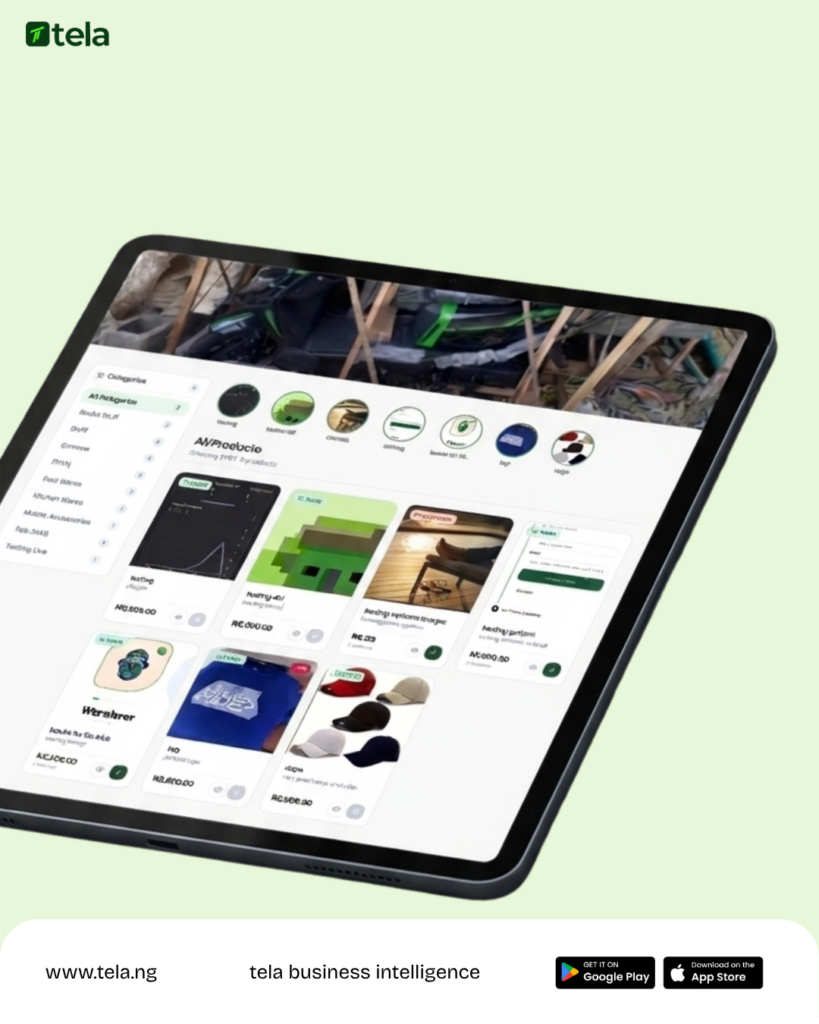
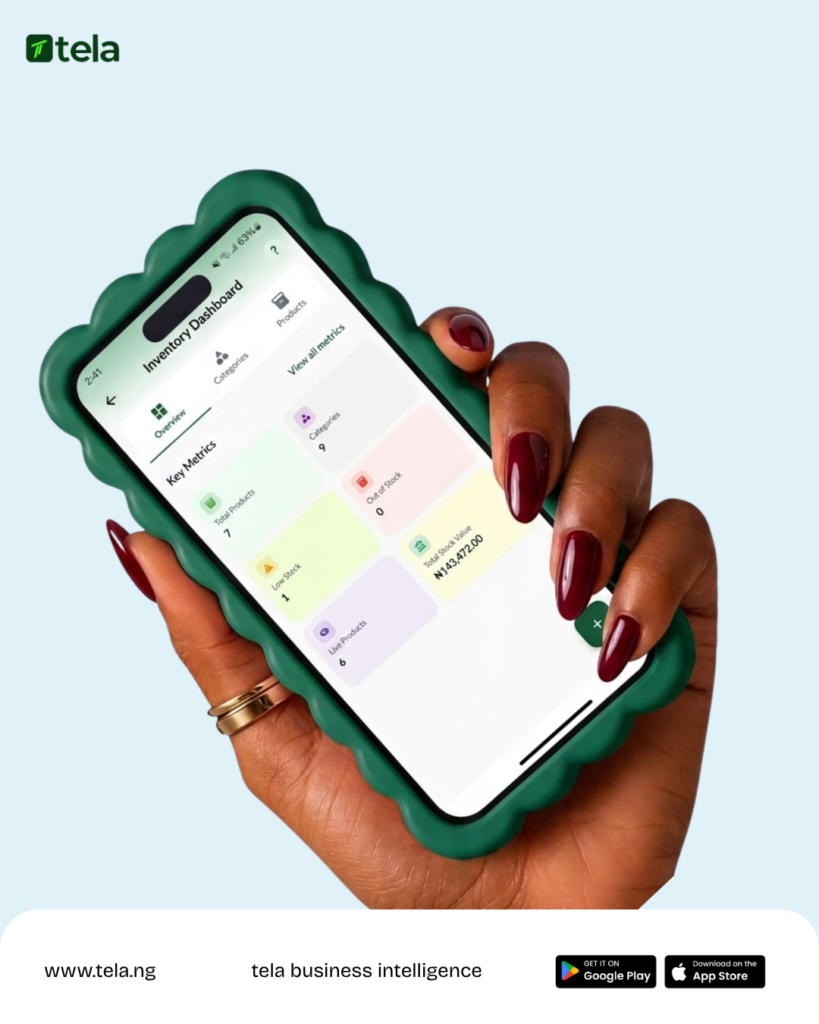
  • How a University-Era Bookkeeping Business Became TELA, a Business Intelligence Platform for SMEs

    How a University-Era Bookkeeping Business Became TELA, a Business Intelligence Platform for SMEs

    For many small business owners, running a business means juggling sales, payments, invoices, customers, expenses and a long list of daily tasks, often without having a clear picture of what the numbers actually mean.

    This was the problem that led to Tela, a business intelligence platform designed to help small businesses and freelancers not only digitise their operations, but understand what is happening inside their businesses.

    Tela’s journey, however, did not start as a technology company.

    From managing books to building a platform

    Tela’s story began in 2021 when its founder, Adeyemo Damilare, started Rux Finance after graduating from university as a finance graduate. The business helped small businesses manage their finances, organise their books and make sense of their financial activities.

    As the business grew, so did the workload.

    What initially could be managed with manual processes eventually became too much to handle with what the team described as “pen and paper.” That experience became the starting point for a bigger question: what if these processes could be turned into a product?

    Damilare Adeyemo brought in James Dauda , Aaron Daudu and Jumoke Ajayi, who he had known for about 10 years, and together they began working on the idea at a larger scale.

    What emerged was Tela, evolving from a financial management solution into a business intelligence platform for small businesses and entrepreneurs.

    “We went a step further. Not just digitalizing their product or digitalizing their business, but also making it make sense,” the team explained during an interview with African Tech Journal.

    Building around how entrepreneurs actually work

    One of Tela’s early challenges was not necessarily figuring out what features to build, but deciding what should not be built.

    For the team, small businesses already operate within established habits. Many entrepreneurs rely heavily on WhatsApp, conversational selling and other familiar platforms to manage their businesses.

    The challenge was therefore to introduce technology without forcing entrepreneurs to completely change the way they work.

    “It’s easy to build a product with too many features,” the team said. The harder task was figuring out what an entrepreneur actually needs to see, what should be automated, what should be explained and what should be left untouched.

    This led the team to spend time speaking with customers, vendors and other business owners, while conducting market research to understand their behaviours and expectations.

    That approach has continued to shape Tela’s product.

    Moving beyond digitalisation with AI

    Tela initially operated as a web-based product, offering tools such as invoicing, receipts and payment links. The company has since shifted its focus towards its Android and iOS applications, with the Android and iOS app launching recently.

    But the larger shift has been in how Tela thinks about business data.

    Rather than simply showing business owners numbers, the team wants Tela to help them understand those numbers.

    A business owner might know that sales have fallen by 20 percent compared with the previous week. Tela is being built to go beyond presenting that information by helping answer questions such as why sales are falling and what the business owner could do to improve them.

    The team describes this as building Tela on AI rather than simply adding AI as a feature.

    The goal is to turn business data into insights that entrepreneurs can understand in clear language, particularly for business owners who already have numerous responsibilities competing for their attention.

    For Tela, data is therefore not simply something a business collects. It is part of the technology that can drive the business forward.

    Bootstrapping the journey

    The company has also grown without external funding.

    According to the founders, the  co-founders have funded Tela themselves from the beginning and continue to bootstrap the business.

    That has meant building with a lean team and making the most of the resources available to them.

    For James, one of the biggest lessons from the journey has been the resilience required to keep building.

    He described staying together as a team and reaching this stage without external funding as one of the things he is most proud of.

    For a startup still navigating product development, adoption and market expansion, that resilience has become an important part of Tela’s story.

    Partnerships, payments and early traction

    As Tela has evolved, partnerships have also played a role in strengthening the platform.

    The company identified its partnership with Anchor as an important milestone, particularly around payments. The founders said the partnership helped improve payment processing and contributed to better reviews and increased adoption.

    Tela also processes payments for small businesses, and the team says transaction volumes have been increasing.

    More recently, the company introduced a storefront feature that allows small businesses to sell directly through the platform using payment links.

    While the team had not yet begun actively pushing the storefront feature at the time of the interview, it represented another step towards making Tela a more comprehensive platform for businesses.

    The company is also beginning to see adoption of its mobile product. Tela says it has surpassed 1,000 active users on its mobile app within its first three months, with more than 3,000 users overall.

    From business intelligence to an intelligent operating system

    Tela’s ambitions extend beyond its current product.

    The founders want the company to eventually become an intelligent operating system for growing and established businesses.

    That means expanding beyond its current capabilities and adding more of the tools entrepreneurs rely on to operate their businesses, while continuing to use AI to make those tools more intelligent.

    One of the company’s major upcoming products is a standalone sales AI.

    The team is working towards a system that can automate significant parts of the sales process, from payment and customer conversations to fulfilment, with the intention of allowing business owners to focus on the parts of the process that still require their direct involvement.

    The product is expected to be one of Tela’s major milestones over the coming months.

    Looking beyond Nigeria

    Tela’s ambitions are not limited to the Nigerian market.

    The company plans to expand across Nigeria before moving into other West African markets.

    The founders also indicated that they expect to become open to investment as the business grows and the company prepares for its next stage.

    For now, however, Tela remains focused on building the product, understanding its users and proving that AI can do more for small businesses than simply automate tasks.

    Its larger bet is that the next generation of business software should not only record what happened in a business, but help business owners understand why it happened and what they can do next.

    That is the direction Tela is taking as it works towards becoming an intelligent operating system for African businesses.

  • Why Your Next Phone or Laptop Is About To Cost More ,Thanks To AI

    Why Your Next Phone or Laptop Is About To Cost More ,Thanks To AI

    AI is buying up the world’s memory chips and Nigerian buyers will pay for it twice.”

    Let’s say you’ve been saving up ₦450,000 for a new laptop, planning to buy in December, by the time you get there, that same laptop might cost ₦550,000 or the ₦450,000 version might come with less storage and RAM than it had six months ago. It is not a pricing gimmick, it would trace back to this simple cause: AI data centers are buying up the memory chips that used to go into your phone and laptop.

    Every phone, laptop and tablet needs a chip called RAM (memory) to run. So does every AI system: ChatGPT, Gemini, the models powering self-driving cars, all of it. The problem is that the same handful of factories make memory chips for both and right now, there isn’t enough to go around.

    Here’s the part that matters: AI chips need a special, more expensive type of memory called HBM (high-bandwidth memory). Think of it like premium fuel versus regular fuel, it’s the same basic product, but one sells for far more.

    A chunk of HBM memory can sell for $60–$100, the same amount of ordinary RAM, the kind in your phone, sells for $5–$10, according to industry reports on the shortage.

    So when a factory has to choose what to produce, it’s not really a choice. Samsung, SK Hynix, and Micron — the three companies that make almost all the world’s memory chips have shifted the bulk of their factories toward HBM for AI.

    That leaves a shrinking slice for everyone else, and it’s why memory prices have jumped over 50% in a single quarter. It is important to emphasize that this isn’t a “coming soon” problem, Apple has already raised prices on MacBooks and iPads, directly blaming the memory shortage. 

    Manufacturers have two ways to deal with this: raise the price, or quietly cut corners. Expect both, a phone that looks the same as last year’s model might ship with a weaker camera, a dimmer screen, or less storage, the same trick soft-drink companies use when they shrink the bottle instead of raising the price.

    Micron itself has said it’s already sold out of 2026 production, and new factories won’t come online until 2027 and 2028 at the earliest.

    Nigerian buyers are about to get squeezed from two directions at once: the naira has already made imported devices expensive in dollar terms, this shortage adds a second, separate layer of cost on top of that, one that has nothing to do with the exchange rate and everything to do with a factory decision made on the other side of the world. The people who’ll feel it first are the ones buying entry-level devices from students, small business owners, anyone stretching to afford their first smartphone or laptop.

    That segment is exactly where manufacturers cut costs first, either by raising prices or dropping the cheapest models altogether.

    One likely side effect worth watching: Nigeria’s already-strong market for fairly-used “London Used’ and refurbished phones and laptops could grow even more as new devices become harder to justify. When new-device prices climb, second-hand markets usually absorb the overflow and Nigeria already has the infrastructure and buyer habits for that. 

    AI’s costs don’t stay contained to AI companies, when a GPU maker and a phone maker are bidding for the same factory output, the phone maker loses and that cost lands on whoever’s buying a device at the till.

    If you’ve been planning to upgrade your phone or laptop, the data points in one direction: sooner is cheaper than later, and relief isn’t expected before 2028.

    Sources:

    1. Tech Insider, The 2026 Memory Chip Shortage: How AI Data Centers Are Making Your Laptop and Phone More Expensive: https://tech-insider.org/memory-chip-shortage-2026-ai-consumer-electronics/
    2. Digital Citizen, Memory Prices Could Rise by Up to 50% in Late 2026 as AI Demand Tightens Supply, June 30th, 2026: https://www.digitalcitizen.life/memory-prices-could-rise-by-up-to-50-in-late-2026-as-ai-demand-tightens-supply/
    3. IDC, Global Memory Shortage Crisis: Market Analysis and the Potential Impact on the Smartphone and PC Markets in 2026, December 18th 2026: https://www.idc.com/resource-center/blog/global-memory-shortage-crisis-market-analysis-and-the-potential-impact-on-the-smartphone-and-pc-markets-in-2026/
  • How Nahme Is Using AI to Return “Memories” to the People Who Made Them

    How Nahme Is Using AI to Return “Memories” to the People Who Made Them

    A few weeks ago, a woman jokingly called out her church on Instagram.

    For more than a year, she had attended services consistently. She arrived early, sat in the front row, participated actively, and appeared in countless photographs taken during church events. Yet somehow, none of those photos ever made it to social media.

    The post was funny, but the comments told a different story. Dozens of people shared similar experiences. They had attended weddings, conferences, concerts, festivals, and community gatherings, watched photographers capture moments around them, and then never saw those images again.

    It exposed a problem most people rarely think about until it affects them personally.

    In today’s digital culture, photos are more than files.

    They are proof of participation, memories preserved in time, and increasingly, part of how people document their lives online. Yet millions of event attendees remain invisible after the event ends—not because photographs were never taken, but because they have no practical way of finding them.

    For photographers and event organizers, the challenge is equally familiar. Thousands of images are uploaded to Google Drive folders, Instagram pages, WhatsApp groups, and cloud storage platforms. Organizers cannot realistically tag every attendee or manually sort images for individual guests.

    The photos exist, but access remains fragmented.

    That observation became the foundation for Nahme.

    Rather than viewing photography as the problem, the startup identified a deeper issue: identity and access.

    The question was simple—what if people could instantly find every photo they appear in without searching through hundreds or thousands of images?

    Nahme’s answer combines facial recognition technology with a frictionless user experience. Users simply take a selfie or upload a reference image, and the platform scans event photo collections to identify every image in which they appear. No app download is required. No account creation is necessary. No manual tagging process exists.

    The experience transforms photo discovery from a frustrating search exercise into a personalized retrieval system.

    The company officially launched in May and has spent its early months validating the product in real-world environments, particularly across churches, events, and large gatherings. Instead of relying on assumptions, the team has adopted an iterative approach, gathering user feedback directly from live deployments and refining the product in real time.

    Its use of artificial intelligence reflects a broader trend emerging across African technology ecosystems. Increasingly, startups are not building AI products for the sake of artificial intelligence itself. Instead, they are applying AI to solve specific, everyday problems that already exist.

    For Nahme, facial recognition is not the product; it is the infrastructure that makes personalized memory retrieval possible.

    “Wait… how did you find all my pictures?” In processing over 10,000 photos across the platform, this has become one of the most consistent responses from users. According to the founders, it is often people’s immediate reaction when trying the platform for the first time. 

    That moment of surprise highlights the larger opportunity.

    As events continue generating millions of images across Africa and beyond, the challenge will no longer be capturing memories. It will be helping individuals access the moments that belong to them. In that sense, Nahme is not attempting to disrupt events or photography. People will continue gathering, celebrating, and documenting their experiences.

    The startup’s ambition is simpler: ensuring that when the camera captures a moment, the people in it can actually find it again.

    And in a world overflowing with digital content, that may prove more valuable than it sounds.

  • Sell, Track and Engage customers without leaving Whatsapp with AVABOOKS

    Sell, Track and Engage customers without leaving Whatsapp with AVABOOKS

    During the pandemic, like many founders, Segun Awoniyi was trying to solve his own problem.

    At the time, he had launched a clothing brand and needed an online store. Shopify seemed like the obvious solution, but the monthly subscription costs raised a simple question. If paying for these tools felt expensive for him, what did it look like for thousands of small businesses trying to sell online in Nigeria?

    That question led to the launch of FinRik, a no-code e-commerce platform built for small businesses. The product gained paying users almost immediately. Merchants signed up, created stores, and began building an online presence.

    But something interesting started happening.

    The websites existed.

    The sales did not.

    Many of the businesses still preferred to close deals on WhatsApp. Customers wanted conversations. They wanted reassurance. They wanted to ask questions before making payments. The storefront had become important, but the transaction itself was still happening elsewhere.

    For Segun, that observation would eventually change the direction of the company.

    Nigerian SMEs Never Really Left WhatsApp

    For years, conversations around small business digitisation in Africa focused heavily on websites, mobile applications, and online storefronts.

    Yet for many Nigerian businesses, commerce still happens inside conversations.

    Products are shared through WhatsApp Status. Orders happen through direct messages. Payments are discussed before they are made. Trust is built through conversation rather than interfaces.

    The average small business owner may not understand SaaS, dashboards, or product ecosystems. But they understand WhatsApp.

    As digital commerce evolved, many businesses found themselves paying for tools they rarely used while continuing to operate inside messaging applications. Websites became digital brochures while customer relationships remained conversational.

    This was not simply a technology problem.

    It was a trust problem.

    The founders realised they had spent years trying to localise Shopify when the real opportunity was much closer to home.

    The Pivot That Led to Ava

    After the currency fluctuations and economic uncertainty that followed the 2023 elections, many businesses struggled. Margins became thinner. Small merchants needed financing, bookkeeping tools, and better visibility into their businesses.

    At the same time, Shagu noticed that many former users of their e-commerce products had returned to selling almost entirely through WhatsApp.

    Instead of fighting that behaviour, the company decided to build around it.

    That decision led to Ava.

    Ava is a bookkeeping and business management platform that operates directly on WhatsApp. Businesses can record sales, track expenses, create invoices, send payment links, and monitor transactions without leaving the platform they already use every day.

    The company later introduced Ava Analytics, an AI-powered data analysis layer capable of processing business data, identifying patterns, and helping businesses make better financial decisions. The long-term vision is to help merchants understand not only how their businesses perform, but whether they qualify for financing and how they can improve operations.

    Building on WhatsApp Comes With Its Own Problems

    The biggest challenge turned out to be speed.

    Users expect messaging applications to respond instantly. If a chatbot delays for a few seconds, many assume the product is broken and simply leave.

    Trust also became another major hurdle.

    Many business owners initially believed their financial information was stored directly on WhatsApp rather than on secure backend infrastructure. The company had to spend time educating users about how the system actually worked.

    For Segun, these lessons reinforced something he already believed.

    Small businesses care less about typography, product aesthetics, or startup buzzwords. They care about trust, sales, and reliability.

    Looking Beyond Nigeria

    Today, Ava serves thousands of businesses through direct community engagement rather than paid advertising. The team works closely with merchant communities, collects feedback continuously, and improves the product based on real usage patterns.

    Looking ahead, the company sees opportunities beyond Nigeria.

    One market stands out.

    Brazil.

    Like Nigeria, Brazil is heavily dependent on WhatsApp as a communication and business tool. For Shagu, expansion should follow user behaviour rather than assumptions.

    “Every expansion should be based on data,” he explained. “Not really based on what you feel or what you want.”

    The broader ambition for Ava is not simply to build another business software product.

    It is to build around where small businesses already work.

    For years, African startups tried to move merchants away from WhatsApp.

    Ava is betting that the smarter approach may be to meet them there.

  • From a Nigerian Kahoot Idea to a Lead Intelligence Platform: The Story Behind Tadlace

    From a Nigerian Kahoot Idea to a Lead Intelligence Platform: The Story Behind Tadlace

    During an event, the founder observed how a simple Kahoot quiz completely changed audience energy. People were engaged, competitive, and fully present. It was not just content consumption, it was participation. That moment triggered a question that would eventually shape the company: what if there was a Nigerian version of Kahoot, built for local engagement and interaction?

    That question became the starting point for Tadlace.

    At the time, the motivation was not heavily business driven. It was more about building something interactive, fun, and different from the wave of fintech products dominating the ecosystem. As a software engineer, the appeal was in the product itself, not necessarily the market category it would eventually fit into. The early vision was simple: create an engaging experience that people actually enjoy using.

    The company started with very limited resources. There was no external funding, no structured team, and no institutional support. It was built by the founders themselves using personal time, technical skills, and a shared belief in the idea. In the early stages, execution depended more on commitment than capital.

    The First Reality Check: Building Is Easier Than Distribution

    Like many early-stage products, Tadlace’s first major challenge was not technology. It was content.

    The platform relied on users creating public quizzes that others could discover and play. Without enough content, the experience quickly felt incomplete. That created a cycle problem. Without users, there was no content. Without content, there were no users.

    Interestingly, competition was not the main pressure point. The larger issue was demand itself. While the product was designed for social, multiplayer engagement, users often defaulted to familiar alternatives like traditional games. The expected level of organic adoption did not materialize in the way the team initially imagined.

    This phase forced a hard realization. Building a product is not the same as building a market.

    Structuring the Chaos: How Tools Changed Execution

    As the product evolved, the team introduced more structure into how they worked. One of the key tools adopted was Linear for product and engineering management. This shift had a noticeable impact on execution.

    Work became more organized. Priorities were clearer. Tasks were tracked more effectively. Instead of scattered development cycles, the team could now operate with better alignment and visibility. This improved coordination directly translated into faster shipping and more consistent iteration.

    More importantly, it allowed the team to experiment faster. Ideas could be tested quickly, user behavior could be observed in real time, and feedback could be used to adjust direction without long delays. That speed of iteration became a critical factor in how the product eventually began to evolve.

    Growth Through Iteration and a Defining Early Milestone

    As Tadlace improved its development cycle, growth started to shift from assumption-driven to feedback-driven. The team began learning directly from user behavior, refining the product based on what people actually engaged with rather than what was originally imagined.

    One of the earliest validation moments came through Lagos Trivia Night, one of the largest trivia events in Nigeria at the time. Tadlace powered the experience, and for the first time, the product was used at real scale in a live environment. That moment served as a strong signal that the platform could support structured, high-volume engagement beyond casual experimentation.

    Alongside organic usage, digital marketing also played a role in expansion. Channels like Instagram ads helped the team reach audiences beyond their immediate network. This allowed them to test different user segments, refine targeting, and understand where the product resonated most strongly.

    Lessons From Building: Distribution Over Everything

    One of the most important lessons from the journey is that go-to-market strategy matters as much as product quality. A strong product without distribution struggles to survive. The real challenge is not just building something valuable, but ensuring it reaches the right users in the right way.

    Another key insight was the importance of validating the problem early. Speaking to customers before writing code helps reduce wasted effort and ensures that what is being built aligns with real demand rather than assumptions. In hindsight, this step would have significantly shaped early decisions.

    The Pivot: From Quizzes to Lead Intelligence

    Tadlace is now in an active phase of evolution.

    The platform is shifting from a simple multiplayer quiz experience into something more structured and commercially driven. Today, Tadlace is being positioned as a tool that turns quizzes into lead qualifying campaigns, allowing businesses to engage users, segment responses, and trigger automated actions based on user inputs.

    This represents a major shift from entertainment-focused interaction to business utility. Instead of quizzes existing purely for engagement, they now serve as structured funnels for understanding and qualifying audiences.

    The Future of Tadlace

    The broader vision is to sit at the intersection of marketing and customer intelligence. As businesses increasingly prioritize engagement-driven acquisition, interactive experiences are becoming more valuable as data collection and segmentation tools.

    Tadlace is positioning itself within that shift. Not just as a quiz platform, but as an infrastructure layer for interactive customer engagement that produces actionable insights.

    What began as a simple idea inspired by a live quiz at an event is now evolving into a platform designed to help businesses better understand and convert their audiences.

    The journey is still ongoing, but the direction is clear. Tadlace is no longer just about quizzes. It is about turning interaction into intelligence.

  • From Checkout to Food Intelligence: Skaap Reaches 2,000 Users Across 9 Countries

    From Checkout to Food Intelligence: Skaap Reaches 2,000 Users Across 9 Countries

    Years ago, while working retail at Lululemon in Canada, he noticed something almost everyone had accepted as normal: long checkout lines. Customers waited. Staff rushed. Stores lost time. Friction was everywhere.

    For many people, it would have remained an annoyance. For Samuel Ayo Oyedemi, it became the seed of Skaap, founded in 2025 and now building at the intersection of AI, retail infrastructure, and nutrition intelligence.

    And what started as a self-checkout idea is quietly becoming something much bigger.

    The Problem Was Never Just Checkout

    Retail, particularly physical retail, has always had an invisible inefficiency tax.

    Consumers waste time in lines, and retailers struggle with store throughput. And increasingly, shoppers are making food decisions with very little understanding of what they are buying.

    Skaap appears to sit at the intersection of all three.

    Its original wedge into the market was mobile self-checkout, allowing users to scan products, pay, and walk out, reducing traditional checkout friction.

    Then Skaap Pivoted Into Something Unexpected: Food Intelligence

    The bigger surprise may be what came next.

    Rather than stop at checkout, Skaap expanded into what it calls Food Intelligence — an AI-powered layer that helps consumers understand what is actually inside the food they consume.

    According to the company, the feature attracted 2,000 users in under five weeks.

    That may sound modest by consumer internet standards. But for a behavior-changing health utility, it is a signal.

    Skaap’s AI analyzes food substances, decodes ingredient labels and helps users understand whether a product aligns with their nutritional profile.

    Take the recent controversy involving Bon Bread, where concerns raised online about bread quality sparked wider debate around preservatives, ingredients and food transparency.

    Whatever side of that debate one sits on, it surfaced a bigger issue: many consumers have questions about what is in everyday products, but often lack tools to interpret labels or verify what they are consuming.

    That is exactly where Skaap’s use case starts to feel timely.

    Instead of relying on speculation or viral discourse, a user could scan a product, decode additives, and make a more informed decision before purchase.

    That moves Skaap beyond convenience and closer to something more foundational: consumer clarity.

    From Lagos Roots to 9 Countries

    Though founded by a Nigerian, Skaap’s ambitions have never been geographically narrow.

    Its Food Intelligence product is already live in nine countries, according to the company, with long-term plans to expand further — including Nigeria.

    And the company has already started attracting editorial attention.

    Recent coverage from Techpoint Africa profiled how Samuel Ayo is taking a Nigerian-inspired retail solution into Canada and the US. (Techpoint Africa)

    The startup has also participated in DMZ, often described as one of Canada’s leading startup programs. (Nigerians in Canada)

    For an early-stage company, those signals matter.

    A Product That Doesn’t Want You to Download Another App

    One subtle but important product choice says a lot about Skaap’s philosophy.

    It is not pushing a traditional mobile app model.

    Instead, the company operates via a Progressive Web App (PWA), allowing users to access the product from the browser and pin it to a home screen.

    What If the Future of Retail Intelligence Is Invisible?

    The most interesting companies often make complexity disappear.

    Skaap seems to be betting that the future of retail and food intelligence should feel ambient — almost invisible.

    And while still early, the contours are becoming visible:

    Connect With Skaap Tech

    Website: https://www.useskaap.com

    Founder LinkedIn: Samuel Oyedemi on LinkedIn

    Editorial Features:

  • The Real Reason Every Startup Pitch Deck Now Has AI in the First Slide

    The Real Reason Every Startup Pitch Deck Now Has AI in the First Slide

    By Tosin Oladokun

    I’ve been reviewing startup pitches lately, and there is a shift that I cannot miss. Two years ago, decks led with the problem being solved, including the customer pain points, market gaps and real user needs. Now, slide one is almost always about AI. “We’re using AI to revolutionise…” “Our AI-powered platform…” “Leveraging artificial intelligence to transform…” My first instinct was to write this off as hype-chasing, another buzzword cycle like blockchain or the metaverse. However, after watching it repeat across dozens of pitches from founders who are clearly not stupid (PhDs, cracked engineers/operators), I think something more structural is going on.

    The surface explanation is that founders put AI on slide one because investors want to see it. Fine, but that doesn’t explain why investors want to see it. The deeper thing is that AI has become shorthand for an answer to the question investors have always cared about most: “How do you scale this without it breaking?” Every scalable business eventually hits the same wall. You need more people to deliver more value, i.e., more customer service reps, more analysts, more operations staff and then the math stops working. AI became the credible answer to that problem, and once it did, it stopped being a feature and became infrastructure.

    The timing matters too. In 2019, machine learning was expensive, complicated, and unreliable for most use cases. You needed specialised teams and massive datasets just to get something mediocre. By 2025, the technology could handle complex decisions with enough accuracy to actually change how a company operates day to day. So founders aren’t just slapping AI onto their decks for decoration — many of the business models that work now genuinely require it to function.

    Founders, though, are missing the point of startup pitching.

    When you build something that works because you figured out regulatory navigation, or you nailed the user experience, or you found a real gap in the market, and then you lead your pitch with “AI-powered platform” – you’ve buried the thing that actually makes it valuable. I’ve seen companies facilitate hundreds of business incorporations not because of some machine learning model, but because they understood how to work with regulatory authorities and make an intimidating process feel simple.

    If those same companies pitched today, I guarantee slide one would say “AI-powered business incorporation.” And that framing would completely miss the point. The better pitch is just: “We solve X problem. Solving it requires doing Y at a massive scale. AI is how we keep the unit economics from falling apart.” That’s a tools-in-service-of-the-mission framing. What we’re getting instead is “We’re an AI company that happens to work in X industry,” which is a fundamentally different claim about what the company is.

    There’s a split coming, and you can already see the edges of it. One camp is companies where AI genuinely is the product — they’re building models, infrastructure, foundational technology.

    Leading with AI makes sense for them because AI is what they sell. The other camp is companies using AI as plumbing to solve real problems in specific industries, and for them, the industry problem should probably come first. Right now, both camps use the same pitch deck template, which muddies what’s actually being built. And most of the AI features being added to products right now aren’t that transformative anyway.

    They’re helpful, they might improve efficiency by 10 or 20 percent, but they’re not the reason the business will succeed or fail. The companies I keep paying attention to are the ones that can tell you what problem they’re solving and why it matters before they ever mention their tech stack.

    When I see a deck leading with AI now, I’ve started asking a simpler question: would this business work without it?

    If the answer is no, I want to understand why. If the answer is yes, I start wondering what they’re not telling me about the actual business and whether AI on slide one is covering for a pitch that doesn’t know what it’s really about.

    Tosin Oladokun is currently pursuing his MBA at UC Berkeley’s Haas School of Business. He previously worked as a Senior Product Manager-Technical Intern at Amazon and has built digital products across Nigeria and the United States.