Category: Tech stories

  • African Tech Stopped Racing and Now It is Acquiring

    African Tech Stopped Racing and Now It is Acquiring

    What 67 deals in a single year tells you about where African tech is actually headed.

    For most of the last decade, the dominant logic in African tech was simple: raise, expand, repeat. Startups competed for market share in fragmented markets, grew headcount faster than revenue, and treated the next funding round as both validation and lifeline.

    The playbook rewarded ambition over discipline, and for a while, capital was available enough to make it work. The 2025 numbers say that era is done and over. African startups recorded 67 merger and acquisition deals across the continent in 2025, the highest annual total ever, a 72% increase from the 39 deals recorded in 2024, and well above the previous record of 40 deals set in 2022. Total funding also grew, reaching $3.4 billion across 502 deals, up 44% year-on-year.

    However fewer deals received more capital, meaning money is concentrating rather than spreading. The ecosystem is not just growing, it is narrowing deliberately around the companies that have proven they can survive. 

    What changed is not just the volume of deals, but the character of them. In earlier years, acquisitions in African tech were largely distress events, a struggling startup selling to avoid a disorderly shutdown.

    The recent wave looks different, well-capitalised companies use acquisitions to buy capabilities they could have built but chose not to wait for, to enter markets without the cost of building from zero, and to secure regulatory licences that would otherwise take years to obtain.

    The deal logic shifted from rescue to strategy, the deals themselves tell the story clearly, Flutterwave acquired Mono; Nigeria’s leading open banking infrastructure provider  in a transaction valued between $25 million and $40 million, folding identity verification, account connectivity, and bank payment capabilities directly into its own stack. One deal turned a competitor relationship into an internal capability.

    Moniepoint moved on two fronts in quick succession: first acquiring Orda, a cloud-based restaurant management platform, to deepen its merchant tooling, then completing a 78% stake acquisition in Kenya’s Sumac Microfinance Bank, a 20-year-old licensed institution to enter East Africa without waiting for new licences the Central Bank of Kenya had frozen.

    South African infrastructure firm Stitch made two acquisitions of its own: ExiPay in January and Efficacy Payments in July, each designed to internalise critical payment rails rather than depend on third parties. Paystack absorbed Ladder Microfinance Bank in Nigeria for similar reasons.

    Twiga Foods in Kenya acquired three distributors to own more of its own supply chain. These were not opportunistic moves. They were deliberate vertical integrations by companies that had decided owning the infrastructure mattered more than partnering with it. 

    Fintech led the wave by some distance, accounting for nearly 46% of all deals in 2025, that concentration is not accidental. Fintech in Africa operates in one of the most regulation-dense environments on the continent. Licences are difficult to obtain, compliance costs are rising, and regulators in Nigeria, Kenya, and South Africa have become more assertive. In that environment, acquiring a company that already holds the right licence in the right market is not just convenient, it is often the only realistic path to expansion at speed.

    Analysts have begun calling this pattern “licence hunting”: acquisitions driven less by customer bases or product fit, and more by the regulatory permissions the target already holds. 

    It is necessary to state that not every company that tried to participate in this wave succeeded, several startups entered acquisition talks in 2024 and 2025, found no takers, and shut down.

    The market has become selective, acquirers are looking for clean governance, clear unit economics, and genuine strategic fit. Distress alone is not enough to close a deal and that selectiveness is itself a sign of maturity.

    African tech M&A has grown up enough to be discriminating. What the data points toward is a smaller number of dominant platforms emerging across the continent’s major markets, companies with vertical integration, cross-border reach, and regulatory moats that make them difficult to displace.

    TechCabal Insights projected the formation of three to four dominant multi-country platforms controlling payments, logistics, and digital banking across multiple African countries by the end of 2026.

    For founders building today, this is the new context. The blitzscaling playbook: raise aggressively, grow fast, figure out the economics later has been replaced by a simpler and harder question: what do you own, and is it worth owning? The companies that can answer that clearly are the ones getting acquired or doing the acquiring. The ones that cannot are the ones disappearing quietly.

    The land grab produced a generation of African startups, the consolidation era will determine which ones actually last.

    Sources:

    1. TechCabal Insights, State of Tech in Africa 2025 — https://insights.techcabal.com/state-of-tech-in-africa-2025-from-growth-at-all-costs-to-sustainable-scale/
    2. TechCabal, Flutterwave-Mono — https://techcabal.com/2026/01/06/aquisitions-in-africas-tech-ecosystem-in-2025/
    3. TechCabal, Moniepoint-Orda and Moniepoint-Sumac — https://techcabal.com/2026/03/26/nigerias-moniepoint-enters-kenya-with-78-stake-in-sumac-microfinance/
    4. BusinessDay, Moniepoint-Sumac — https://businessday.ng/technology/article/nigerias-moniepoint-enters-kenya-through-sumac-acquisition-targeting-sme-lending-boom/
    5. TechPoint, Stitch-Efficacy Payments — https://techpoint.africa/news/stitch-acuires-efficacy-payments/
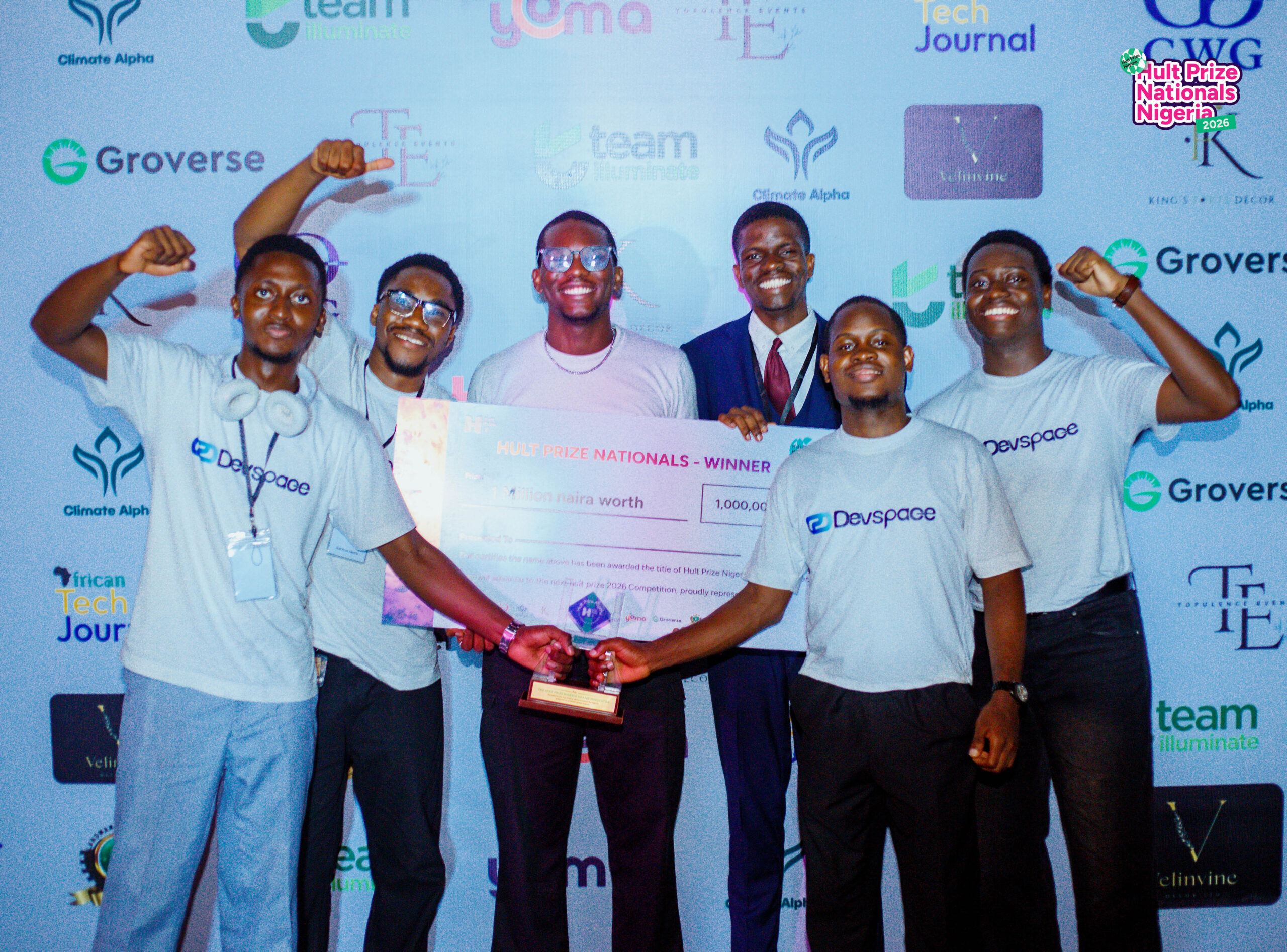
  • Hult Prize Nigeria Nationals 2026 Celebrates Student Innovation, Crowns Devspace National Winner

    Hult Prize Nigeria Nationals 2026 Celebrates Student Innovation, Crowns Devspace National Winner

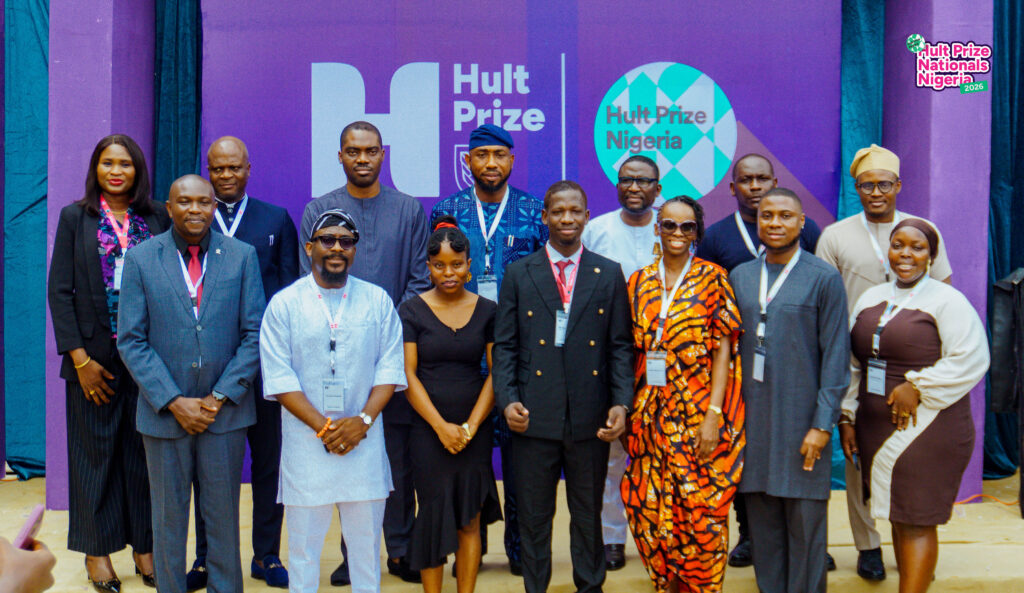
    The 2026 edition of the Hult Prize Nigeria National Competition concluded successfully at the University of Lagos on May 9, bringing together some of the country’s brightest student entrepreneurs, investors, academics, and industry leaders in a celebration of innovation and social impact.


    Widely regarded as the world’s largest student social entrepreneurship competition and often described as the “Nobel Prize for Students,” the Hult Prize Foundation challenges university teams to build for-profit ventures that solve pressing global problems.

    Supported by Hult International Business School and the United Nations, the competition awards a grand prize of $1 million USD to the global winner.


    This year’s Nigeria Nationals recorded participation from 44 universities across the country, with 609 startups registered for the competition. Following months of campus programs, mentorship, and selection rounds, only 25 startups advanced to pitch at the national finals in Lagos.


    At the end of an intense pitching session before a panel of judges comprising investors, business executives, and innovation experts, Devspace from Covenant University emerged as the national winner, securing first place and advancing to the next stage of the global competition.


    Blank Book from the University of Ibadan emerged second, while Aquanut, also representing Covenant University, finished in third place.
    The remaining startups that made the Top 8 were Blood Deck from Lead City University, Zisocare and Amana from Bayero University Kano, Skycorv from Kwara State University, and Tropical from the University of Uyo.


    As national winner, Devspace will proceed to the Hult Prize Digital Incubator, an intensive international entrepreneurship acceleration program where selected startups from around the world receive mentorship, strategic business training, investor access, and funding opportunities as they compete for a place at the Global Finals and the
    coveted $1 million USD prize.


    The Hult Prize Nigeria Nationals is more than a competition; it is proof that young Nigerians are capable of building globally relevant solutions to some of society’s most urgent challenges.

    From over 600 registered startups to the exceptional teams that pitched today, we have witnessed the remarkable ingenuity, resilience,
    and ambition that exists within our universities. — Olamide Otasanya, Hult Prize Nigeria National Coordinator


    “On behalf of Hult Prize Nigeria, I congratulate all participating teams and especially Devspace of Covenant University for emerging as our national winner.

    We are proud to see them represent Hult Prize Nigeria


    Nigeria at the Global Accelerator, where they will join outstanding startups from across the world in refining their ventures for global impact. We also celebrate Blank Book, Aquanut, and every finalist whose ideas demonstrate that innovation remains one of Nigeria’s greatest strengths.


    What we witnessed today goes beyond student competition. These young founders are building solutions with the potential to transform industries, create jobs, and improve lives across Africa.

    Hult Prize Nigeria continues to demonstrate the power of investing in youth innovation, and we remain proud to support a platform that is shaping the next generation of African entrepreneurs. — Olubunmi Sobande, Member, Hult Prize Board of Governance

    The event concluded with an award ceremony where winning startups, campus leaders, faculty advisors, volunteers and other outstanding contributors were recognized for their excellence and contributions to the growth of the Hult Prize ecosystem in Nigeria.


    The Nigeria Nationals also attracted venture capitalists, startup ecosystem leaders, corporate executives, university
    representatives, members of the press, and innovation stakeholders from across the country, reinforcing the growing
    importance of youth-led entrepreneurship in driving economic and social transformation.


    Enquiries
    Samuel Olomu
    Head of PR and Communications
    [email protected]

    About Hult Prize Nigeria
    Hult Prize challenges university students to solve pressing global issues through scalable, sustainable social enterprises.

    In Nigeria, we provide a vital platform for future leaders to develop impactful, purpose-driven ventures, fostering a national
    community dedicated to profit with purpose and driving significant socio-economic transformation.

    ■ www.hultprize-ng.com
    ■ linkedin.com/company/hult-prize-nigeria

  • From Checkout to Food Intelligence: Skaap Reaches 2,000 Users Across 9 Countries

    From Checkout to Food Intelligence: Skaap Reaches 2,000 Users Across 9 Countries

    Years ago, while working retail at Lululemon in Canada, he noticed something almost everyone had accepted as normal: long checkout lines. Customers waited. Staff rushed. Stores lost time. Friction was everywhere.

    For many people, it would have remained an annoyance. For Samuel Ayo Oyedemi, it became the seed of Skaap, founded in 2025 and now building at the intersection of AI, retail infrastructure, and nutrition intelligence.

    And what started as a self-checkout idea is quietly becoming something much bigger.

    The Problem Was Never Just Checkout

    Retail, particularly physical retail, has always had an invisible inefficiency tax.

    Consumers waste time in lines, and retailers struggle with store throughput. And increasingly, shoppers are making food decisions with very little understanding of what they are buying.

    Skaap appears to sit at the intersection of all three.

    Its original wedge into the market was mobile self-checkout, allowing users to scan products, pay, and walk out, reducing traditional checkout friction.

    Then Skaap Pivoted Into Something Unexpected: Food Intelligence

    The bigger surprise may be what came next.

    Rather than stop at checkout, Skaap expanded into what it calls Food Intelligence — an AI-powered layer that helps consumers understand what is actually inside the food they consume.

    According to the company, the feature attracted 2,000 users in under five weeks.

    That may sound modest by consumer internet standards. But for a behavior-changing health utility, it is a signal.

    Skaap’s AI analyzes food substances, decodes ingredient labels and helps users understand whether a product aligns with their nutritional profile.

    Take the recent controversy involving Bon Bread, where concerns raised online about bread quality sparked wider debate around preservatives, ingredients and food transparency.

    Whatever side of that debate one sits on, it surfaced a bigger issue: many consumers have questions about what is in everyday products, but often lack tools to interpret labels or verify what they are consuming.

    That is exactly where Skaap’s use case starts to feel timely.

    Instead of relying on speculation or viral discourse, a user could scan a product, decode additives, and make a more informed decision before purchase.

    That moves Skaap beyond convenience and closer to something more foundational: consumer clarity.

    From Lagos Roots to 9 Countries

    Though founded by a Nigerian, Skaap’s ambitions have never been geographically narrow.

    Its Food Intelligence product is already live in nine countries, according to the company, with long-term plans to expand further — including Nigeria.

    And the company has already started attracting editorial attention.

    Recent coverage from Techpoint Africa profiled how Samuel Ayo is taking a Nigerian-inspired retail solution into Canada and the US. (Techpoint Africa)

    The startup has also participated in DMZ, often described as one of Canada’s leading startup programs. (Nigerians in Canada)

    For an early-stage company, those signals matter.

    A Product That Doesn’t Want You to Download Another App

    One subtle but important product choice says a lot about Skaap’s philosophy.

    It is not pushing a traditional mobile app model.

    Instead, the company operates via a Progressive Web App (PWA), allowing users to access the product from the browser and pin it to a home screen.

    What If the Future of Retail Intelligence Is Invisible?

    The most interesting companies often make complexity disappear.

    Skaap seems to be betting that the future of retail and food intelligence should feel ambient — almost invisible.

    And while still early, the contours are becoming visible:

    Connect With Skaap Tech

    Website: https://www.useskaap.com

    Founder LinkedIn: Samuel Oyedemi on LinkedIn

    Editorial Features:

  • Still Creating for One Audience? Reach 50+ with One Upload Using Reedapt

    Still Creating for One Audience? Reach 50+ with One Upload Using Reedapt

    In a continent where language diversity often limits distribution, Reedapt is taking a different approach: scale African stories across borders without losing their voice.

    Founded in October 2024 in Lagos, Reedapt is an AI startup focused on voice cloning and real-time translation for creators and media companies. Its core idea is simple but powerful: African stories shouldn’t be confined by language.

    At the heart of Reedapt’s offering are two products. Reedapt Dub allows creators from Nollywood filmmakers to faith-based broadcasters to clone their voices and dub content into over 50 languages. Instead of generic voiceovers, audiences hear the original storyteller’s voice, now speaking French, Swahili, or Arabic.

    Then there’s Reedapt Live, built for real-time multilingual streaming and interpretation. This is particularly relevant for churches, live events, and broadcasters targeting pan-African or diaspora audiences.

    The timing is strategic. As African content gains global traction especially through platforms like Netflix and YouTube distribution remains fragmented by language. Reedapt is positioning itself as the infrastructure layer that bridges that gap.

    The founding team reflects this mission. CEO Eri Owoade brings a deeply personal connection to multilingual storytelling, having grown up in Saki, a border town in Oyo State. CTO Maryann leads the AI and data science efforts, alongside COO David Mac-Asore and a product team focused on scalable backend systems.

    Reedapt’s early focus markets include Nollywood, African broadcasters, faith media, and Francophone Africa creators segments where language has historically limited reach and monetization.

    The company officially launched Reedapt Dub on April 17, 2026, with a freemium pricing model starting from free tiers up to enterprise plans. This lowers the barrier for creators to experiment with multilingual distribution.

    For African media, the implications are clear: more reach, more revenue, and more cultural export.

    As the global appetite for African content grows, Reedapt isn’t just translating stories; it’s expanding their surface area.

  • Snagged Is Building a Google Maps for Finding Discounts Across the Internet

    Snagged Is Building a Google Maps for Finding Discounts Across the Internet

    The Internet Has Discounts Everywhere but No Way to Find Them

    Every day, brands and creators share discounts across newsletters, Instagram pages, group chats, Telegram channels, and scattered promotional posts. The problem is not that discounts are rare. The problem is that they are invisible unless you already know where to look.

    Most users miss out on deals not because they are unavailable, but because they are fragmented across too many platforms. Discovery is broken.

    This is the gap Snagged is built to fix.

    What Snagged Is Building

    Snagged is a global discount discovery platform designed to centralize and organize deals from across the internet.

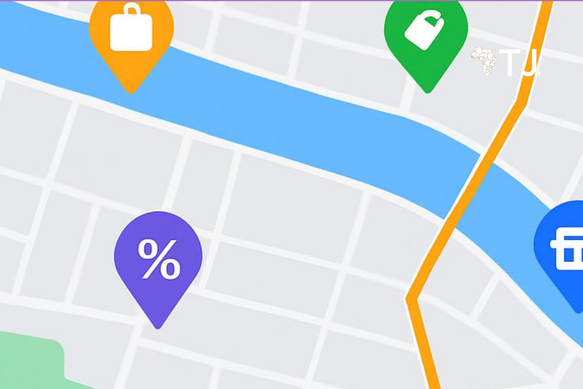
    The simplest way to describe it is this: Snagged is Google Maps, but for finding discounts.

    Instead of searching randomly across social media or relying on word of mouth, users can use Snagged to search and explore discounts in one structured place. It aggregates scattered deals and makes them searchable, accessible, and easy to navigate.

    The goal is not to sell products. The goal is to help people find where the value already exists.

    From Scattered Deals to Structured Discovery

    Today, discounts live in isolated pockets. A fashion brand might post a flash sale on Instagram. A SaaS company might send a limited offer through email. A creator might share a promo code in a Telegram group.

    Each of these works independently, but there is no unified system connecting them.

    Snagged introduces structure to this chaos. It organizes discounts so users can discover them intentionally instead of stumbling upon them by chance.

    This transforms promotions from scattered content into a searchable discovery layer.

    Why snagged?

    Brands spend heavily on promotions, but distribution is inefficient. A discount can go viral in one channel and remain invisible in another. At the same time, users actively want to save money but do not have a reliable way to find all available offers in one place.

    This creates a clear mismatch between supply and discovery.

    Snagged sits in the middle of this gap by making discounts easier to find, compare, and access.

    The Google Maps Analogy

    Snagged uses a familiar mental model to simplify a complex problem.

    Just like Google Maps organizes physical locations into a navigable system, Snagged organizes discounts into a searchable map of value across the internet.

    Users do not need to know where a deal was posted. They only need to search for it in one place.

    This shifts discovery from passive scrolling to active searching.

    Early Stage But Actively Evolving

    Snagged currently has a live version and is still under active development. The platform is being refined based on how users interact with it and how discounts behave across different sources.

    The long term focus is on improving search relevance, expanding deal coverage, and making discovery faster and more intuitive.

    The Value Behind Snagged

    Snagged creates value by bridging the gap between brands and consumers in a more efficient way. Brands get better visibility for their offers. Users get a centralized system for finding savings. The platform becomes the infrastructure that connects both sides.

    Over time, this opens opportunities around featured listings, deal amplification, and partnerships with brands that want structured distribution for their promotions.

    A New Layer for Internet Commerce Discovery

    The internet has made it easy to post deals but difficult to find them. Snagged is building a discovery layer that sits on top of existing platforms and organizes discounts into a usable system.

    Instead of relying on chance, users get intentional access to value that already exists online.

    The biggest problem with discounts today is not creation. It is discovery.

    Snagged is building a system that makes finding deals as simple as searching a map. If successful, it could become the default way people discover value across the internet.

  • MyLagosApp Is Building the Digital Layer for Everyday Life in Lagos

    MyLagosApp Is Building the Digital Layer for Everyday Life in Lagos

    Lagos is one of Africa’s most dynamic cities. It is filled with energy, commerce, and endless opportunity. Yet for many residents, daily life comes with a hidden cost. Finding trusted services, discovering new places, or even identifying what is happening nearby often requires effort, guesswork, and multiple platforms.

    For millions of Lagosians, the city remains fragmented. Information is scattered across social media, informal networks, and disconnected apps. This fragmentation creates friction that slows down everyday life.

    This is the challenge MyLagosApp is built to solve.

    What MyLagosApp Is Building

    MyLagosApp is a city focused platform designed to simplify how people experience Lagos. It brings together essential services, local businesses, events, and opportunities into a single digital environment.

    The goal is simple but powerful. Instead of switching between platforms or relying on inconsistent information, users can access what they need in one place. The app turns Lagos into a structured and navigable digital experience.

    At its core, MyLagosApp is about making the city easier to use.

    From Chaos to Clarity

    What makes MyLagosApp stand out is not just aggregation. It is the ability to make Lagos more understandable and accessible in real time.

    The platform is designed around how people actually move through the city. It focuses on relevance, proximity, and immediate need. This means users are not just browsing information. They are discovering options that are useful in the moment.

    In a city where time and distance directly impact daily decisions, this approach changes how people interact with their environment. Lagos becomes less overwhelming and more actionable.

    Building With Local Context

    Many global platforms have attempted to organize urban living, but Lagos operates differently. Informal systems play a major role in commerce. Trust is often built through personal networks rather than digital platforms. Reliable data can be difficult to find.

    MyLagosApp is built with these realities in mind. Its approach is not about copying global solutions but adapting to local behavior. This local intelligence gives it a stronger foundation to succeed where generic platforms struggle.

    Why This Matters Now

    Lagos continues to grow rapidly, both in population and economic activity. As the city expands, the complexity of navigating it increases.

    This creates a clear need for platforms that reduce friction and improve access. When people can find what they need faster, they save time, make better decisions, and participate more actively in the economy.

    MyLagosApp sits at the center of this shift. It is not just a convenience tool. It is part of a broader movement toward digitizing everyday urban experiences in Africa.

    The Business Behind the Platform

    Beyond user convenience, MyLagosApp creates value across multiple layers of the ecosystem. Local businesses gain visibility and access to customers. Service providers connect with demand more efficiently. Users benefit from a more organized and reliable experience.

    This positions the platform to capture value through business visibility, service transactions, and partnerships tied to urban commerce. As usage grows, the data generated also becomes a powerful asset for understanding consumer behavior in Lagos.

    A Smarter Way to Experience Lagos

    The long term vision for MyLagosApp goes beyond discovery. It is about building the digital infrastructure that supports daily life in Lagos.

    By connecting people to services, opportunities, and experiences in a seamless way, the platform has the potential to reshape how the city is navigated. It moves Lagos closer to becoming a smarter and more accessible urban environment.

  • Good Work Gets Done in a Great Ambience: How Emmanuel Faith Redefined the Human in African Tech

    Good Work Gets Done in a Great Ambience: How Emmanuel Faith Redefined the Human in African Tech

    In the high-velocity world of African startups, the “Human” in Human Resources is often the first thing to get lost in the sprint for scale. Between the high-burn culture of Lagos tech and the cold precision of multinational conglomerates, a new philosophy is emerging.

    I sat down with Emmanuel Faith, a name synonymous with the “relatable” side of tech leadership. From the hallowed halls of General Electric (GE) to the high-stakes trenches of Cowrywise and Big Cabal Media (BCM), Faith has navigated the “storms” of the ecosystem with a unique blend of financial literacy and radical empathy.

    The Origin: From Taxaide to the “Big Boy” Era at GE

    Before he was an HR powerhouse, Emmanuel Faith was a Tax Intern at Taxaide Professional Services, starting just a day after graduation. While many wait for their “dream role” to find them, Faith used his time as a Tax Trainee to study the intersection of payroll automation and people operations.

    When he eventually landed at General Electric (GE), he entered a world of “packaging” and prestige—jumping danfo buses from Iyana-Ipaja to VI by 4 AM, only to stroll into AXA Mansard later that morning looking like a top-tier consultant.

    “There are two kinds of people: those who know GE and those who don’t,” Faith laughs. “I was a ‘big boy’ earning in the upper echelon, but the real growth happened in the ‘bubble assignments’.”

    The “Bubble” Strategy: How Personal Branding Opened Doors

    Faith didn’t start in the HR department at GE, but he made his intentions impossible to ignore. He pioneered the “Bubble Assignment”—proactively asking HR managers for tasks that wouldn’t breach confidentiality.

    His breakthrough came when he branded a company-wide engagement “Chat and Palley.” By leveraging his writing skills and his charisma as an “emergency Emcee,” he recorded a 96% attendance rate—the highest the team had seen in years.

    “The reward for good work is more work,”

    Cowrywise & The “Multipotentialite” HR

    If GE was his training ground for culture, Cowrywise was where his ability was truly tested. In the fintech world, HR isn’t just about payroll; it’s about product. Faith describes this as his “best work,” largely because he wasn’t confined to a silo.

    “Cowrywise tested my ability. I wore a lot of shoes—shoes I was quite capable of wearing,”

    Whether he was partnering with Dev teams to build a product or supporting the marketing engine, his Economics background became his “unfair advantage.”

    The work ethic was relentless. At one point, the company expanded by nearly 90% within 250 days of his joining. Faith himself was in the office for 100 days straight—a testament to the “grit” phase many tech enthusiasts romanticise, but few survive.

    Navigating the Storm: Why the Documentary?

    Every leader faces a season of restructuring. At Big Cabal Media (BCM), Faith joined during a “storm” where several leaders had resigned. He was tasked with “studying the ship” during a period of significant organisational change.

    When BCM eventually underwent a downsizing exercise, Faith found himself among those affected. While a layoff is often seen as a “dip,” Faith used it as a moment of deep reflection. It was during this period of silence—navigating the transition from a high-profile role to the “what’s next”—that the idea for his career documentary was born.

    The documentary isn’t just a highlight reel; it’s an honest, behind-the-scenes look at the pressures, trade-offs, and emotional weight of HR leadership. Faith shared the idea with his editor during this reflective period as a way to “open source” the story behind the scenes. It serves as a playbook for resilience, showing that even when a role ends, your reputation and your “Why” remain intact.

    The Philosophy: “Good work gets done in a great ambience”

    One of the standout phrases Faith insists on is Ambience. In his view, charisma is a tool of leadership, but empathy is the foundation.

    “People come to work for different reasons,” he explains. “Sometimes it’s the person with the ‘gist,’ sometimes it’s the person who dresses well. As HR, you must recognize these diverse motivations.”

    By making himself “easy-going,” Faith created a safe harbour for talent. However, he warns that this friendliness must be balanced: “It’s good for people to recognise you as an easy-going person so that when you are being serious, they recognise that too.”

    Redefining the Gap: The HR Clinic Portfolios

    Emmanuel identified a glaring hole in the African ecosystem: Quality HR service provision. Through HR Clinic, Faith has provided HR advisory for startups, SMEs, and NGOs—including working with high-growth clients like Nestuge. He is democratizing HR knowledge, providing a framework for startups to treat their people as assets rather than expenses.

    The Takeaway: Building Your Career Capital

    For the 18–35-year-old tech cohort, Faith’s story (and his new documentary) offers a playbook on Resilience:

    1. Don’t be shy about what you want: Ask rationally, but ask.
    2. Bet on yourself first: Faith missed movies and social time during NYSC to work on his “Bubble assignments.”
    3. Show your work: You need people speaking for you in rooms you haven’t entered yet.

    Emmanuel Faith’s career proves that in the “New Africa,” the most valuable technology is the way we manage the people building Africa’s Tech.

    🎥 Watch the Journey

    Ready to see the story behind the headlines?

    Click here to watch Emmanuel Faith’s Doing HR in Africa: Eight Years Behind the Scenes

  • Kacha Labs transitions to Wokbud Limited, expands technology operations

    Kacha Labs transitions to Wokbud Limited, expands technology operations

    17th Aug, 2023

    Kacha Labs, a technology company focused on building products for the digital economy, has transitioned to Wokbud Limited as part of the company’s broader evolution and restructuring of its technology operations.

    The transition represents a new phase for the company as it expands its technology activities and develops new products under the Wokbud Technology structure.

    Speaking on the transition, Solomon Okafor and Jephtah Uche , The Founders of Wokbud Limited, said the change reflects the company’s evolving direction and the need for a broader structure to support the products and businesses it was developing.

    “The transition from Kacha Labs to Wokbud Limited reflects the evolution of our business and the direction we are taking as we build and develop new technology products. Wokbud gives us a broader structure for pursuing these opportunities while continuing to support the products and ventures we are building.”

    The company had previously operated as Kacha Labs, building products and solutions targeted at people participating in the digital economy. Public sources also identify Kacha Labs with products serving digital workers and freelancers.

    As part of the transition, Wokbud Limited became the parent company through which Earna was developed and operated. Earna focused on financial technology and building solutions around cross-border payments and financial services.

    The transition from Kacha Labs to Wokbud Technology also resulted in changes to the way the company’s operations and administrative activities were structured. As a result, historical records from this period may reference Kacha Labs, Wokbud Technology and Earna at different stages of the company’s development.

    The new Wokbud Technology structure allowed the company to continue developing technology products while operating Earna as one of its ventures.

    The transition marked another step in the company’s development as it continued to build products for the growing digital economy and explore new opportunities across financial technology and digital products.

  • 2DX Technologies rebrands as WithHalal, launching its own ethical fintech platform for individuals and small businesses

    2DX Technologies rebrands as WithHalal, launching its own ethical fintech platform for individuals and small businesses

    2DX Technologies and Consulting, the product design and technology company known for helping founders build and launch fintech products, has rebranded as WithHalal, marking its transition from a services led consultancy into a product led fintech company focused on non interest, shariah aligned digital finance for everyday users and SMEs.

    The transition formalises a shift that began with the team’s work on Halal, a digital payments and finance platform built to “bank the unbanked with zero interest” and provide a “bank for all”, leveraging Islamic banking principles to support small and medium enterprises with accessible capital and payments infrastructure.

    WithHalal now becomes the flagship product under the new corporate identity, while the company’s experience in building and launching fintech products is channelled into scaling its own financial technology stack.

    WithHalal operates as a three in one solution : a digital bank, 0 percent interest loan provider, and financial solutions platform for individuals and SMEs. The app gives users access to shariah compliant digital and financial products, offering non-interest banking services to both Muslims and non Muslims who want to align their finances with ethical, values driven principles.

    According to the company’s public profiles, WithHalal specialises in loans, savings, payment gateway services, everyday payments and business support for small enterprises.

    At the product level, WithHalal enables users to send and receive money through QR codes, link invitations, phone numbers, and usernames, making financial access “easy for all” and lowering the friction of everyday transactions in both consumer and merchant contexts.

    This multi channel approach is designed to meet users where they are, whether in informal markets, SME operations or digital first businesses, while maintaining the discipline of shariah based finance and avoiding interest bearing structures.

    “WithHalal is the natural evolution of everything we built at 2DX,” said Lukman Ibrahim, founder of WithHalal. “We spent years designing and launching products for other fintech founders.

    Now we are applying that same product discipline to our own platform, building financial tools that are transparent, non exploitative, and accessible to people and small businesses that have historically been underserved by traditional banks.”

    The company’s journey has already intersected with global financial inclusion initiatives. Under the Halal Payment brand, the venture has been profiled as an “all inclusive digital payments service platform” that leverages Islamic banking to provide shariah based financing for SMEs, with a stated focus on job creation, poverty alleviation, and economic productivity.

    It has also participated in programmes such as CATAPULT: Inclusion Africa in Dubai, signalling external validation of its mission to use Islamic fintech as a tool for broad based financial inclusion.

    By rebranding as WithHalal, the company is positioning itself less as a generic technology consultancy and more as a specialised workplace and financial operating system for ethical commerce, connecting payments, lending, savings, and business support into a single platform for SMEs and individuals.

    WithHalal’s emphasis on non interest banking, shariah compliance, and everyday usability places it within the growing Islamic fintech segment, which aims to bridge the gap between faith aligned finance and modern digital products for African and global markets.

    “WithHalal, we are not just adding another banking app to the ecosystem,” Ibrahim Lukman added. “We are building infrastructure that lets people move money, access financing, and grow their businesses without compromising on their values.

    Our experience as 2DX taught us that true scale comes from products that are deeply integrated into people’s daily lives.

    That is the future we are building towards with WithHalal.”