Category: Startups

African tech startups, venture funding, entrepreneurship, and innovation ecosystem

  • How Aidra Is Using Crypto to Unlock Global Fundraising for Underserved Regions

    How Aidra Is Using Crypto to Unlock Global Fundraising for Underserved Regions

    The Biggest Barrier to Global Giving Is Not Willingness but Access

    Across the world, millions of people are willing to support humanitarian causes. From disaster relief to community driven initiatives, the intent to give exists at scale.

    Yet in many regions, especially across parts of Africa and other emerging markets, raising funds globally remains difficult. Traditional payment systems are often restrictive, slow, or completely inaccessible. Cross border transactions fail, fees eat into donations, and organizers struggle to receive funds when they need them most.

    The result is a broken system where help exists but cannot always reach the people who need it.

    This is the gap Aidra is stepping in to solve.

    What Aidra Is Building

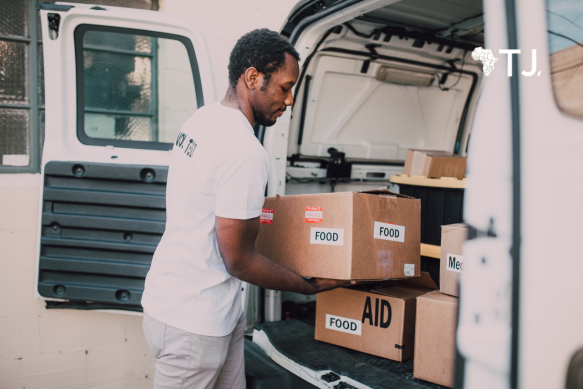
    Aidra is a fundraising platform designed to enable humanitarian campaigns to raise funds globally without the limitations of traditional financial systems.

    At its core, the platform leverages crypto infrastructure to facilitate borderless donations. This allows supporters from anywhere in the world to contribute to causes without being restricted by geography or payment barriers.

    At the same time, Aidra focuses on stability and accessibility for campaign organizers. While donations move through crypto rails, the experience is designed to remain simple and practical for those receiving the funds.

    The goal is not just to move money differently but to make it actually usable.

    Bridging the Gap Between Donors and Impact

    One of the biggest challenges in global fundraising is the disconnect between donors and recipients. Even when funds are successfully raised, delays and inefficiencies can reduce their impact.

    Aidra addresses this by creating a more direct and efficient flow of funds. Donations can move faster across borders, reaching campaigns without the friction that typically slows down traditional systems.

    This creates a more reliable environment for both sides. Donors gain confidence that their contributions will reach the intended cause, while organizers gain faster access to the resources they need.

    Why Crypto

    Crypto has often been discussed in terms of trading and speculation, but its underlying infrastructure offers something more fundamental. It enables value to move globally without relying on traditional intermediaries.

    For humanitarian campaigns operating in regions with limited financial access, this becomes a powerful advantage. It removes barriers that have historically excluded entire communities from global support networks.

    Aidra is applying this infrastructure in a practical way by focusing on real world impact rather than abstract use cases.

    Timing and Opportunity

    The need for more inclusive fundraising tools is growing. As global awareness of social issues increases, more people are willing to contribute to causes beyond their immediate environment.

    At the same time, the limitations of traditional systems are becoming more visible. This creates an opportunity for platforms that can bridge the gap between global intent and local impact.

    Aidra sits at the intersection of these trends, positioning itself as a platform that can expand access to funding for underserved communities.

    The Value Layer Behind Aidra

    Aidra operates within a unique ecosystem that connects donors, campaign organizers, and global financial infrastructure.

    By enabling seamless fundraising across borders, the platform creates value through transaction flows, platform usage, and potential partnerships with organizations operating in the humanitarian space.

    Over time, the data generated from campaigns and donations could also provide insights into giving patterns and emerging needs across regions.

    A Future Where Giving Has No Borders

    The long term vision for Aidra is clear. It is about removing the structural limitations that prevent people from helping each other.

    By making fundraising more accessible and ensuring funds can move freely, the platform has the potential to reshape how humanitarian support is delivered globally.

    This is not just about technology. It is about making generosity more effective.

  • He Applied for 1,423 Jobs in 3 Months. What Africa’s Job Market Never Tells You

    He Applied for 1,423 Jobs in 3 Months. What Africa’s Job Market Never Tells You

    The story of Africa’s job market is not just about unemployment. It is about a system that gives people almost no feedback.

    Clinton Nwachukwu did not start his career with clarity. After completing NYSC in 2020, he entered the job market the way most people do. He knew he needed a job, but he did not know what role fit him, how to position himself, or what employers were actually looking for.

    His first opportunity came through a previous connection who invited him to Lagos. The role paid ₦30,000 a month at a digital marketing and e-commerce agency. Around the same time, he had another offer from a bank that would have paid ₦250,000.

    He chose the ₦30,000 role. It was not a financially comfortable decision. His father had just retired, his mother was the only one working, and he had three siblings in university. There were moments he had to borrow money to support his family and pay it back gradually.

    But the role gave him something more valuable than salary. It gave him exposure to how digital businesses work. He learned marketing, sales, pricing, and how value is created in the digital economy.

    By early 2022, he wanted more. So he went back into the job market. This time, he applied with intensity.

    In three months and two weeks, he submitted 1,423 job applications.

    For most of that period, nothing worked. He got almost no meaningful responses. No useful feedback. Just silence and the occasional rejection email saying the company had moved on with another candidate.

    Then, within two weeks, everything changed. He landed his first two foreign remote roles. The difference was not effort, but understanding.

    The Filter He Did Not Know Existed

    What Clinton did not know at the time was that most of his applications were not even reaching human recruiters.

    They were being filtered out.

    Many organizations rely on Applicant Tracking Systems to handle the volume of applications they receive. These systems scan CVs for specific keywords, structure, and alignment with job descriptions. A CV that appears strong to a human reviewer can fail these systems entirely.

    Clinton was adjusting his CV based on online advice, but he was adjusting blind. He had no visibility into how these systems evaluated his applications.

    When feedback did come, it was generic and unhelpful.

    “We’ve decided to move forward with other candidates.”

    Research from Harvard Business School has shown that automated hiring systems routinely eliminate qualified candidates whose applications do not match predefined criteria.

    The candidate may be qualified. The effort may be real. But the system never passes the application forward.

    In many African job markets, this knowledge is not widely available. Most job seekers are unaware of how these filters work, and so they continue applying without understanding why they are being rejected.

    A System Built Around Volume, Not Clarity

    Across Africa, millions of job seekers are actively applying for roles. In Nigeria alone, estimates from the National Universities Commission suggest that hundreds of thousands of graduates enter the workforce every year.

    At the same time, employers continue to report difficulty finding suitable candidates. The International Labour Organization has consistently highlighted skills mismatch as a major issue across African labour markets.

    This creates a paradox. People are applying in large numbers. Companies are hiring. Yet the connection between the two is inefficient.

    The system encourages activity. It does not provide clarity. Job seekers are told to apply more, learn more, and try harder. But they are rarely shown what exactly is wrong or what needs to change.

    As a result, many people operate on guesswork.

    What Preparation Actually Requires

    Improving job outcomes requires more than effort.

    A job seeker needs to understand whether their CV is structured for the systems evaluating it. They need to know how their experience aligns with the roles they are targeting and how to communicate that alignment clearly.

    They need a realistic assessment of their competitiveness and a clear view of what gaps exist. None of this is provided by a typical job board. Very little of it is provided by traditional learning platforms.

    Where it exists, it is often accessible only through personal networks or expensive coaching. This creates an uneven distribution of opportunity, where some people receive guidance while others are left to navigate the process alone.

    The Shift That Changed Everything

    For Clinton, the turning point came when he moved from volume to clarity. He began to understand how hiring systems evaluate applications. He aligned his CV properly, positioned his experience more effectively, and focused on roles that matched his profile.

    Within two weeks, he secured two foreign remote roles. That shift changed the trajectory of his career.

    Over time, he moved from earning ₦30,000 monthly to earning over $3,000 in a month at certain points. He went on to work with global companies like Yellow Card and BingX, building in growth and SEO, and supporting others in landing remote opportunities.

    But the most important outcome was not financial, it was clarity.

    The Platform That Starts with the Honest Question

    That experience led to the creation of JobLadda. The platform is built around a simple but often ignored question: before applying to more jobs, do you understand why your previous applications are not working?

    JobLadda focuses on helping users assess their job readiness, optimise their CVs for real hiring systems, and gain clear insight into what needs to be improved. It also provides access to career coaching, offering the kind of direct feedback that many job seekers lack.

    The approach prioritizes clarity before action. This is a departure from most existing platforms, which focus on increasing application volume rather than improving understanding.

    Workers’ Day and the Honest Reckoning

    Clinton eventually built a successful career. But his breakthrough did not come because the system worked. It came because he learned how the system worked. That distinction matters.

    On Workers’ Day, conversations often focus on job creation. While important, that focus is incomplete.

    Creating more jobs does not guarantee better outcomes if people are not prepared to access those opportunities.

    Africa’s workforce is growing very fast. According to the United Nations, one in every three young people globally will be African by 2050.

    This represents potential. But realising that potential depends on the systems that support career development.

    Without a better career navigation infrastructure, effort will continue to produce inconsistent outcomes.

    Clinton’s story is not an exception. It is a reflection of how the system currently operates. It raises a simple question. How many people are still applying, waiting, and guessing, without ever being told what they are doing wrong?

  • From Checkout to Food Intelligence: Skaap Reaches 2,000 Users Across 9 Countries

    From Checkout to Food Intelligence: Skaap Reaches 2,000 Users Across 9 Countries

    Years ago, while working retail at Lululemon in Canada, he noticed something almost everyone had accepted as normal: long checkout lines. Customers waited. Staff rushed. Stores lost time. Friction was everywhere.

    For many people, it would have remained an annoyance. For Samuel Ayo Oyedemi, it became the seed of Skaap, founded in 2025 and now building at the intersection of AI, retail infrastructure, and nutrition intelligence.

    And what started as a self-checkout idea is quietly becoming something much bigger.

    The Problem Was Never Just Checkout

    Retail, particularly physical retail, has always had an invisible inefficiency tax.

    Consumers waste time in lines, and retailers struggle with store throughput. And increasingly, shoppers are making food decisions with very little understanding of what they are buying.

    Skaap appears to sit at the intersection of all three.

    Its original wedge into the market was mobile self-checkout, allowing users to scan products, pay, and walk out, reducing traditional checkout friction.

    Then Skaap Pivoted Into Something Unexpected: Food Intelligence

    The bigger surprise may be what came next.

    Rather than stop at checkout, Skaap expanded into what it calls Food Intelligence — an AI-powered layer that helps consumers understand what is actually inside the food they consume.

    According to the company, the feature attracted 2,000 users in under five weeks.

    That may sound modest by consumer internet standards. But for a behavior-changing health utility, it is a signal.

    Skaap’s AI analyzes food substances, decodes ingredient labels and helps users understand whether a product aligns with their nutritional profile.

    Take the recent controversy involving Bon Bread, where concerns raised online about bread quality sparked wider debate around preservatives, ingredients and food transparency.

    Whatever side of that debate one sits on, it surfaced a bigger issue: many consumers have questions about what is in everyday products, but often lack tools to interpret labels or verify what they are consuming.

    That is exactly where Skaap’s use case starts to feel timely.

    Instead of relying on speculation or viral discourse, a user could scan a product, decode additives, and make a more informed decision before purchase.

    That moves Skaap beyond convenience and closer to something more foundational: consumer clarity.

    From Lagos Roots to 9 Countries

    Though founded by a Nigerian, Skaap’s ambitions have never been geographically narrow.

    Its Food Intelligence product is already live in nine countries, according to the company, with long-term plans to expand further — including Nigeria.

    And the company has already started attracting editorial attention.

    Recent coverage from Techpoint Africa profiled how Samuel Ayo is taking a Nigerian-inspired retail solution into Canada and the US. (Techpoint Africa)

    The startup has also participated in DMZ, often described as one of Canada’s leading startup programs. (Nigerians in Canada)

    For an early-stage company, those signals matter.

    A Product That Doesn’t Want You to Download Another App

    One subtle but important product choice says a lot about Skaap’s philosophy.

    It is not pushing a traditional mobile app model.

    Instead, the company operates via a Progressive Web App (PWA), allowing users to access the product from the browser and pin it to a home screen.

    What If the Future of Retail Intelligence Is Invisible?

    The most interesting companies often make complexity disappear.

    Skaap seems to be betting that the future of retail and food intelligence should feel ambient — almost invisible.

    And while still early, the contours are becoming visible:

    Connect With Skaap Tech

    Website: https://www.useskaap.com

    Founder LinkedIn: Samuel Oyedemi on LinkedIn

    Editorial Features:

  • How TBM Events Is Fixing Discovery and Ticketing in One Platform

    How TBM Events Is Fixing Discovery and Ticketing in One Platform

    It’s Saturday evening.

    You’re scrolling through Instagram and see clips from an event everyone seems to be at. Good crowd, good music, people you know. You check the comments, then your group chat.

    “Why didn’t anyone tell me about this?”

    Someone replies, “Tickets sold out since Wednesday.”

    That moment is familiar.

    In many African cities, events don’t suffer from lack of demand. They suffer from how they’re discovered, shared, and managed.

    That gap is what TBM Events is building around.

    Today, event discovery still depends heavily on social media posts, WhatsApp broadcasts, and word of mouth. Information is often incomplete, late, or lost in timelines.

    TBM Events introduces a more structured approach.

    The platform allows users to discover events in one place, purchase tickets seamlessly, and receive instant confirmation through QR-based access. Instead of chasing links or sending DMs, the process becomes straightforward.

    For users, it reduces friction.
    For organizers, it removes guesswork.

    Behind the scenes, event organizers deal with a different set of challenges.

    Tracking attendees manually. Confirming payments across multiple channels. Managing check-ins with little visibility.

    TBM Events brings these processes into a single system.

    Ticketing, payments, and attendee management are handled in one place, allowing organizers to focus on execution rather than coordination. It also creates a clearer picture of attendance and engagement, something that is often missing in traditional setups.

    Distribution as a Missing Layer

    Beyond ticketing, visibility remains a key issue.

    Many events don’t fail because they lack value. They fail because the right audience never sees them early enough.

    TBM Events addresses this by acting as a distribution layer. Events listed on the platform are not just hosted, they are positioned for discovery within an ecosystem where users are already looking for things to attend.

    This shifts discovery from passive scrolling to active searching.

    Reflecting How Events Are Changing

    The way people attend events is also evolving.

    From physical gatherings to webinars and hybrid formats, users expect flexibility. TBM Events supports this shift by accommodating different event types within the same system.

    For organizers, this means broader reach.
    For users, it means more access.

    TBM Events is not trying to redefine events.

    It is addressing the friction that sits around them.

    Finding events late. Missing tickets. Managing attendance manually.

    These are small problems individually, but together, they shape the overall experience.

    By building structure into discovery and ticketing, TBM Events is quietly solving a problem many people already recognize.

    They just haven’t named it yet.

  • Auxtoria is Reimagining Children’s Digital Content Through Story, Culture, and Interactive Learning

    Auxtoria is Reimagining Children’s Digital Content Through Story, Culture, and Interactive Learning

    Children today spend a large portion of their time with digital content, yet much of it does not nurture imagination, values, or cultural identity

    That realisation is where Auxtoria began.

    As a team passionate about technology, education, and storytelling, we started observing children’s cartoons and digital content more intentionally, trying to understand the narratives shaping young minds. It quickly became clear that while many stories entertain, they often fail to reflect the values, cultural experiences, and moral foundations children need.

    This sparked a bold idea to change that narrative.

    Auxtoria was created as a digital interactive playground where children can explore stories, games, and learning experiences that nurture imagination, positive values, Christian virtues, and African culture. By focusing on interactive storytelling and gamified learning, children do more than consume content. They participate, make decisions, solve challenges, and learn in engaging ways.

    The vision is simple but powerful: help children learn, imagine, and grow beyond the traditional four walls of the classroom.

    Stories profoundly shape how children see the world, how they treat others, and who they aspire to become. Yet many digital platforms prioritise entertainment over character formation. This gap, combined with Africa’s rich storytelling tradition, shaped Auxtoria’s direction.

    For generations, storytelling has been used to pass down wisdom, values, and identity. Auxtoria reimagines this tradition for the digital age, combining storytelling, technology, and gamification to help children grow intellectually, morally, and creatively.

    Building Auxtoria came with its own challenges

    One of the earliest was translating a broad and ambitious idea into a practical product experience. Building for children requires more than functionality. It demands careful attention to safety, engagement, and educational value.

    There was also the challenge of integrating different disciplines — technology, storytelling, and education — into one cohesive platform. Each operates differently, and bringing them together required continuous experimentation and iteration.

    At the same time, the team had to build in a market already dominated by global entertainment platforms competing for children’s attention.

    Yet despite the crowded space, a clear gap remained.

    While digital content is abundant, there is still a shortage of platforms focused on meaningful and value-driven experiences. Parents are becoming more aware of what their children consume and are increasingly seeking safer, more intentional digital environments.

    They are not necessarily trying to eliminate screen time. They want better screen time.

    Technology has always been central to Auxtoria’s vision.

    The platform transforms stories into interactive experiences where children actively participate in the narrative. Instead of simply reading or watching, they explore story worlds, make choices, and solve problems. This level of engagement strengthens both learning retention and emotional connection.

    Built on modern digital architecture, Auxtoria supports multiple formats including interactive stories, comics, audiobooks, animated narratives, and educational mini-games. This creates a dynamic ecosystem where both creators and children can engage in meaningful storytelling experiences.

    Technology also enables instant distribution, allowing creators to publish content digitally and reach audiences without geographical limitations. A story created in one part of Africa can reach children across the world within seconds.

    As a digital platform, Auxtoria’s growth is driven by content expansion, creator partnerships, and user adoption.

    As more storytellers, educators, and creatives contribute, the platform becomes richer and more engaging. At the same time, user behaviour continues to evolve. Parents and educators now expect more than passive entertainment. They want content that nurtures creativity, reinforces values, and engages children actively.

    Children, in turn, respond better to experiences that allow them to participate and interact.

    These shifts reinforce Auxtoria’s core focus.


    At its foundation, Auxtoria remains deeply rooted in storytelling and cultural authenticity

    Every story is intentionally designed to reflect real experiences, environments, and values. This ensures that even as the platform grows globally, it remains grounded in its purpose — helping children see themselves in the stories they consume.

    Looking ahead, Auxtoria aims to grow into a comprehensive digital ecosystem for children’s storytelling and interactive learning.

    Future plans include expanding its content library, introducing multiple African languages, and empowering children to create their own stories and content. The goal is to move children from passive consumers to active creators.

    What excites us most is the opportunity to shape a generation of children who grow up with stories that inspire creativity, empathy, courage, and strong moral values.

    Stories influence how children see themselves and the world.

    When they are intentional, interactive, and rooted in positive values, they spark imagination, curiosity, and critical thinking.

    Children deserve digital environments that nurture their creativity and help them imagine better futures.

    Auxtoria is building exactly that.


  • SmarthiveSMS Is Building a Unified Communication Layer for Businesses Across Africa

    SmarthiveSMS Is Building a Unified Communication Layer for Businesses Across Africa

    For many businesses across Africa, customer communication remains fragmented and inefficient. Important messages are often split across multiple tools, from SMS gateways to email platforms and separate WhatsApp solutions. This creates operational complexity, especially for startups and growing businesses trying to scale customer engagement.

    At the same time, customer expectations are rising. Users want instant updates, secure authentication, and timely marketing messages delivered through the channels they already use.

    This gap between need and infrastructure is what SmarthiveSMS is addressing.

    What SmarthiveSMS Is Building

    SmarthiveSMS is a communication platform that enables businesses to engage their customers through SMS, Email, and WhatsApp from a single system.

    The platform is designed to serve both technical and non technical users. For tech startups, SmarthiveSMS provides APIs that allow seamless integration into existing products. These APIs can be used for OTP delivery, transactional alerts, and automated marketing campaigns.

    For non technical businesses, the platform offers a simple web interface where messages can be created and sent without coding.

    The result is a unified communication system that reduces friction across multiple channels.

    From Multiple Tools to One Platform

    Traditionally, businesses have had to rely on different providers for different communication needs. One tool handles SMS. Another handles email. Another is used for WhatsApp messaging. This separation creates inefficiencies in both cost and workflow.

    SmarthiveSMS simplifies this structure by bringing all major communication channels into one platform. This allows businesses to manage customer engagement from a single dashboard or API layer.

    Instead of switching systems, teams can focus on sending the right message at the right time.

    Why Multi Channel Communication Matters

    Customer engagement is no longer limited to one channel. Users may expect a verification code via SMS, a receipt via email, and a promotional update through WhatsApp. Businesses that cannot coordinate across these channels risk losing customer trust and engagement.

    SmarthiveSMS is built to solve this by enabling consistent communication across multiple touchpoints.

    This creates a more reliable and scalable system for businesses that depend on timely customer interactions

    Built for Startups and Growing Businesses

    One of the key strengths of SmarthiveSMS is its flexibility. Startups can integrate its APIs directly into their products to automate communication flows. This is especially useful for authentication, onboarding, and transactional messaging.

    At the same time, smaller or non technical businesses are not left behind. They can still access the platform through a simple interface that does not require development experience.

    This dual approach makes the platform accessible across different levels of technical capability.

    The Value Layer Behind SmarthiveSMS

    SmarthiveSMS sits at the intersection of infrastructure and customer engagement. Businesses rely on it to communicate reliably with their users, which makes messaging a critical part of product experience and marketing performance.

    The platform’s value is driven by message volume, API usage, and business adoption across sectors such as fintech, e commerce, logistics, and service based industries.

    As businesses scale, the demand for reliable communication infrastructure continues to grow.

    A Simpler Way to Reach Customers

    SmarthiveSMS is positioning itself as a unified communication layer for businesses that want to engage customers more effectively without managing multiple tools.

    By combining SMS, Email, and WhatsApp into one system, it reduces complexity while improving speed and consistency of communication.

    Getting Started

    Businesses can begin using the platform by creating an account at app.smarthivesms.com.

    From there, they can access both the web interface and API tools depending on their needs.

  • MyLagosApp Is Building the Digital Layer for Everyday Life in Lagos

    MyLagosApp Is Building the Digital Layer for Everyday Life in Lagos

    Lagos is one of Africa’s most dynamic cities. It is filled with energy, commerce, and endless opportunity. Yet for many residents, daily life comes with a hidden cost. Finding trusted services, discovering new places, or even identifying what is happening nearby often requires effort, guesswork, and multiple platforms.

    For millions of Lagosians, the city remains fragmented. Information is scattered across social media, informal networks, and disconnected apps. This fragmentation creates friction that slows down everyday life.

    This is the challenge MyLagosApp is built to solve.

    What MyLagosApp Is Building

    MyLagosApp is a city focused platform designed to simplify how people experience Lagos. It brings together essential services, local businesses, events, and opportunities into a single digital environment.

    The goal is simple but powerful. Instead of switching between platforms or relying on inconsistent information, users can access what they need in one place. The app turns Lagos into a structured and navigable digital experience.

    At its core, MyLagosApp is about making the city easier to use.

    From Chaos to Clarity

    What makes MyLagosApp stand out is not just aggregation. It is the ability to make Lagos more understandable and accessible in real time.

    The platform is designed around how people actually move through the city. It focuses on relevance, proximity, and immediate need. This means users are not just browsing information. They are discovering options that are useful in the moment.

    In a city where time and distance directly impact daily decisions, this approach changes how people interact with their environment. Lagos becomes less overwhelming and more actionable.

    Building With Local Context

    Many global platforms have attempted to organize urban living, but Lagos operates differently. Informal systems play a major role in commerce. Trust is often built through personal networks rather than digital platforms. Reliable data can be difficult to find.

    MyLagosApp is built with these realities in mind. Its approach is not about copying global solutions but adapting to local behavior. This local intelligence gives it a stronger foundation to succeed where generic platforms struggle.

    Why This Matters Now

    Lagos continues to grow rapidly, both in population and economic activity. As the city expands, the complexity of navigating it increases.

    This creates a clear need for platforms that reduce friction and improve access. When people can find what they need faster, they save time, make better decisions, and participate more actively in the economy.

    MyLagosApp sits at the center of this shift. It is not just a convenience tool. It is part of a broader movement toward digitizing everyday urban experiences in Africa.

    The Business Behind the Platform

    Beyond user convenience, MyLagosApp creates value across multiple layers of the ecosystem. Local businesses gain visibility and access to customers. Service providers connect with demand more efficiently. Users benefit from a more organized and reliable experience.

    This positions the platform to capture value through business visibility, service transactions, and partnerships tied to urban commerce. As usage grows, the data generated also becomes a powerful asset for understanding consumer behavior in Lagos.

    A Smarter Way to Experience Lagos

    The long term vision for MyLagosApp goes beyond discovery. It is about building the digital infrastructure that supports daily life in Lagos.

    By connecting people to services, opportunities, and experiences in a seamless way, the platform has the potential to reshape how the city is navigated. It moves Lagos closer to becoming a smarter and more accessible urban environment.

  • How Quida Is Building a Real time Safety Network in Nigeria

    How Quida Is Building a Real time Safety Network in Nigeria

    In 2024, a series of incidents began to feel less like isolated tragedies and more like a pattern.

    Stories of insecurity were no longer distant headlines. They were personal, frequent, and unsettling. From cases of violence involving trusted individuals to deeply disturbing reports affecting young people, the sense of vulnerability was becoming harder to ignore.

    For the founder of Quida, the turning point came with a realization: reacting emotionally was not enough. If nothing changed, these patterns would continue.

    That moment led to a decision — to build something practical.

    Quida was born from that decision.

    Rethinking Safety as an Everyday Need

    At its core, Quida is built on a simple idea.

    People should not have to rely on luck to stay safe.

    In Nigeria, safety information is often fragmented and reactive. Many people depend on word-of-mouth updates, WhatsApp broadcasts, or social media posts that surface after incidents have already occurred.

    While these systems work to an extent, they lack structure, speed, and reliability.

    Quida is designed to address that gap by creating a system where people can stay informed, connected, and prepared in real time.

    Building With Limited Resources but Clear Intent

    The early days of Quida were defined less by capital and more by conviction.

    With limited financial resources, the team focused on what they had: a clear understanding of the problem, digital skills, and a willingness to learn and build.

    Early influences came from lived experiences and community conversations. The problem was not abstract. It was visible in everyday discussions, shared frustrations, and a growing sense that existing systems were not enough.

    This shaped Quida into more than just a product. It became the foundation for a broader movement around safety awareness and collective responsibility.

    Moving Beyond Reactive Systems

    One of the early insights behind Quida was that traditional approaches to safety are inherently limited.

    They are often delayed, scattered, and reactive.

    By the time information reaches people, the situation has already unfolded.

    Quida takes a different approach. Instead of waiting for information to circulate informally, it focuses on building a structured system that enables:

    • Real-time alerts
    • Location-based safety insights
    • Immediate access to emergency tools
    • Community-driven reporting

    This shift changes safety from something people react to, into something they can actively manage.

    Technology as the Foundation for Scale

    From the beginning, technology has been central to Quida’s model.

    The platform is built to handle real-time data, enabling users to receive alerts, share information, and access emergency support quickly. Features such as location tracking, panic alerts, and crime mapping are designed to make safety information both accessible and actionable.

    But beyond the technology itself, Quida is building an ecosystem.

    Through initiatives like the Quida Movement, WhatsApp communities, and planned campus programs, the platform extends beyond the app into a broader network of users contributing to shared safety awareness.

    This combination of technology and community is what enables scale.

    Early Growth and User Behavior

    At its current stage, Quida’s growth is focused less on revenue and more on awareness, trust, and network building.

    The team has begun developing:

    • A growing digital presence
    • Early community structures
    • A waitlist with active interest
    • Grassroots expansion plans through campus initiatives

    Even at this stage, user behavior is already evolving.

    There is a clear demand for real-time information rather than delayed updates. Users are also more engaged when they feel part of a system, not just passive consumers of information.

    Trust, however, remains critical. For a product like Quida, reliability is not optional. It is foundational.

    Designing for the Nigerian Context

    One of Quida’s core principles is building for real, everyday experiences.

    This means designing around local realities — from public transport risks to informal safety systems people already rely on.

    It also means communicating in ways that feel natural, including the use of local languages and familiar platforms like WhatsApp.

    Rather than forcing entirely new behaviors, Quida builds on existing ones, adding structure and reliability.

    Lessons From the Journey

    Quida’s journey highlights a few key lessons.

    First, meaningful products often come from lived experiences, not abstract ideas.

    Second, starting does not require perfect conditions. Clarity of purpose and consistency can carry a product through uncertainty.

    And finally, community can be as important as the product itself. Especially in a context like safety, where collective awareness strengthens the system.


    Looking Ahead

    The long-term vision for Quida is to evolve into a fully integrated safety ecosystem.

    This includes expanding across major Nigerian cities, scaling campus initiatives, and improving features such as real-time alerts and predictive safety tools.

    There are also plans to extend beyond Nigeria into regions facing similar challenges.

    As technology continues to shape the safety landscape, the shift is clear. Safety is moving from reactive systems to proactive, data-driven networks powered by users themselves.

    Closing Note

    What makes Quida stand out is not just the technology, but the intent behind it.

    It represents a shift from fear to action.

    A move towards giving people more control over their safety.
    And building a system where awareness, connection, and response are not left to chance.

    If it works at scale, Quida will not just be an app.

    It will be a network people rely on every day.

  • How Podcasting is Helping Nigerian Tech Companies Connect More With Their Audience

    How Podcasting is Helping Nigerian Tech Companies Connect More With Their Audience

    Nigerian companies are no longer building products and services, they are shaping the narratives. And Podcasting has quietly become one of the strategic storytelling tools.


    The need for founder visibility, vision-driven growth, proper documentation, distribution control,
    and owning one’s narrative has led to the rise in the adoption of podcasting.

    The rising cost and high barrier to entry of traditional media is driving founders and business owners to target cost-effective approaches like podcasting.

    Between 2021 and 2022, Spotify recorded a whopping 222% increase in podcast listenership in Nigeria, placing Nigeria as number 2, behind South Africa who is leading the charts in Africa.


    Turntable Charts also reported Gen Z and Millennials leading the demography charts in podcast listenership here in Nigeria.


    This signals more than entertainment consumption, it represents an opportunity for brands to build sustained attention and own their narrative.

    Nigerian companies have recognized this shift and are leveraging podcasting in distinct but strategic ways.


    Companies like Fincra, Cowrywise, and Paystack have adopted podcasting to tell their story thus controlling the narrative and connecting more with their users through storytelling.

    Individual podcasts like Afrobility, Afropolitan, The Open Africa Podcast, Founders Connect,Totally on Brand etc feature founders and provide a platform for them to leverage an existing listener base to tell their stories and build brand authority.

    At the core of it all, is the ability to connect more with those who matter; the users and target audience.

    When Piggyvest’s COO, Odunayo Eweniyi appeared on the 210 episode of the London Fintech

    Podcast to shed more light on the origin story of Piggyvest, she wasn’t just telling Nigerians who they were, she was positioning Piggyvest in the global fintech conversation.

    When Nathan Nwachukwu appeared on the Afropolitan Podcast to talk about how Nigeria needs sovereign intelligence, he wasn’t just marketing Terra Industries, he was shaping the intellectual narrative around Africa owned deep tech.

    By creating The Afincran Playbook, Fincra shifted from a fintech infrastructure provider to
    becoming a thought leader in championing cross-border trade across Africa.


    For Cowrywise, Ope’s Money Diary moves beyond product marketing. It humanizes decision-making, allowing Cowrywise to build emotional equity, not just financial trust.


    As more Nigerian tech companies embrace podcasting as a trust and distribution tool, the differentiator is strategy. With the right partner, podcasting moves from being content to becoming infrastructure.

    Nigerian companies are no longer waiting to be invited into
    conversations; they are creating them and inviting the world to listen.


    Nkem Creatives helps brands move beyond simply recording episodes to building intentional podcast ecosystems that drive visibility, authority, and measurable growth.

    From narrative positioning and guest strategy to multi-channel repurposing and distribution, we ensure every episode works as a business asset, not just content.


    If your company is ready to turn conversations into community and influence, partner with Nkem Creatives and build a podcast that moves your business forward.

    Send an email to [email protected]

  • Grace AI Labs: Building Autonomous Digital Workers for Enterprises that cannot afford to stop

    Grace AI Labs: Building Autonomous Digital Workers for Enterprises that cannot afford to stop

    Grace AI, a seed-stage company building intelligent agentic systems for enterprises, businesses, institutions, and defense organizations, is redefining what it means to build AI that works. Founded by Divine Matthew and a small team of co-founders with no external funding, the company has grown from a bold idea into a validated solution trusted by clients across multiple verticals.

    “We didn’t set out to build another AI demo. We set out to build infrastructure that actually deploys, actually works, and actually delivers ROI,” said Divine Matthew, Founder of Grace AI. “The market is flooded with hype. We chose a different path — start with real problems, earn trust through results, and let the work speak for itself.”

    The Problem

    Enterprises scale. Their operations don’t. More markets, more customers, more tickets , same bottlenecks. Hiring can’t keep up. Neither can margins. While the AI industry has exploded with promises, most solutions remain stuck in demo mode ; impressive on stage, useless in production.

    Grace AI was built to solve this gap. The company’s agentic systems are designed with a goal-oriented AGI-base architecture, enabling autonomous digital workers that don’t just answer questions ;they complete complex workflows, eliminate bottlenecks, and scale operations without scaling headcount.

    Built from the Ground Up

    Before Grace AI, Divine Matthew was running a different startup that achieved moderate success but eventually hit a ceiling. The experience was formative ; it revealed the opportunity to automate complex workflows at scale, and exposed a market gap: no one was building AI agents that actually work.

    Grace AI started with just co-founders, no funding, and a conviction that real AI companies are built on deployed solutions. Early believers included the co-founding team and a handful of early customers willing to take a chance on a new approach.

    Overcoming Early Challenges

    The path wasn’t easy. Getting enterprises to trust a new, small company proved difficult. Finding the right early customers who would pay; not just pilot required patience and persistence.

    Market conditions added friction: the Nigerian and African market wasn’t ready for AI pricing, enterprise sales cycles were painfully long, and the AI hype cycle made buyers skeptical of any solution claiming real results.

    The lowest point came when a sizable contract with one of the company’s first business prospects fell through a deal that would have been transformative at that stage. Rather than retreat, the team doubled down and found better customers. The setback became a filter: Grace AI learned to sell only to enterprises with real problems, to focus on deployment over demos, and to build relationships rather than just sales pipelines.

    The Turning Point

    Everything changed when Grace AI landed a major enterprise client that validated the model. The company secured its first case study with real ROI numbers, and word of mouth began generating inbound leads. Since then, the company has seen significant growth in clients across enterprises, businesses, and institutions, along with revenue and product capabilities.

    Results delivered to clients include: tasks automated that previously took humans hours or days, meaningful cost savings through reduced headcount needs, measurable accuracy improvements versus manual processes, and dramatic speed gains ; what took days now takes minutes.

    The Vision Ahead

    Grace AI’s ambitions extend far beyond enterprise automation. Over the next one to two years, the company plans to expand into more enterprise verticals, enter international markets across the US, Europe, and Middle East, and pursue opportunities in defense ; providing enhanced defensive capabilities as Nigeria faces rising security challenges — and agriculture, maximizing output in a country that urgently needs greater food production.

    “Companies without AI operations will fall behind. Agentic AI will become standard enterprise infrastructure. And emerging markets will leapfrog with AI adoption,” said Matthew. “We’re not just building a company. We’re proving that world-class AI infrastructure can be built from Africa, for the world.”

    If funding or partnerships come in, the priority is clear: AI research to tackle more complex problems, and infrastructure to handle extended, complex enterprise deployments at scale.

    About Grace AI

    Grace AI builds intelligent agentic systems that automate complex workflows, eliminate bottlenecks, and scale operations. The company’s goal-oriented AGI-base architecture delivers autonomous digital workers for enterprises, businesses, institutions, and defense organizations. Founded in Nigeria and built for the world, Grace AI represents a new playbook for AI companies in emerging markets — one where deployment beats demos, results beat hype, and trust is earned through delivery.

    About the Founder

    Divine Matthew is the Founder of Grace AI. A serial entrepreneur with previous startup experience, Matthew identified the opportunity to build AI agents that actually work after years of automating workflows and seeing the gap between AI hype and AI reality. He leads Grace AI with a philosophy rooted in deployment over demos, relationships over transactions, and letting results speak louder than pitches.

    LinkedIn: https://www.linkedin.com/company/grace-ai-

    X: lab/https://x.com/GraceAiLab

    Youtube: www.youtube.com/@GraceAilabs

    Email: [email protected]