Category: Business

  • Cardron Is Building a WhatsApp-First Way to Buy Digital Products in Nigeria

    Cardron Is Building a WhatsApp-First Way to Buy Digital Products in Nigeria

    The Nigerian digital commerce platform is helping users access gift cards, virtual cards, event tickets and other digital products without having to navigate multiple apps and complicated checkout processes.

    For many Nigerians who regularly use digital products, buying something as simple as a gift card, virtual card or software subscription can involve several steps.

    You may need to download an app, create an account, complete verification, fund a wallet, wait for confirmation and then contact support if something goes wrong.

    For developers, creators, influencers and other digital users who depend on these products, what should be a straightforward purchase can quickly become frustrating.

    This was the problem that led to the creation of Cardron, a WhatsApp-first digital commerce platform designed to make digital products easier, faster and more trusted to access.

    The company was built around a simple observation: people already use WhatsApp every day, so buying a digital product should not require them to learn another complicated system.

    Instead, Cardron allows customers to order directly through WhatsApp, reducing the number of steps between deciding what they need and receiving it.

    Building Around a Familiar Platform

    Cardron’s approach is centred around WhatsApp-first commerce.

    Rather than requiring customers to download another application or move through a lengthy signup process, the platform allows them to interact with the business through WhatsApp.

    Behind that experience is a web-based system that manages orders, payments, customer support, fulfilment, notifications and reporting.

    The technology is designed to make the customer experience simpler while giving the team more structure behind the scenes.

    The platform currently focuses on digital products including gift cards, virtual cards, event tickets and other digital access products.

    For Cardron, the choice of WhatsApp is also about accessibility.

    Customers do not have to learn a new platform before making a purchase. They can use a communication channel they already understand and use regularly.

    Trust Became Part of the Product

    One of the biggest challenges Cardron encountered was trust.

    Digital commerce already has a trust problem, particularly when customers have previously dealt with fake vendors, delayed orders or poor customer support.

    The company therefore had to build more than a convenient purchasing process.

    It had to create confidence that customers would receive what they paid for and that there would be someone available to help when something went wrong.

    Cardron’s response has been to focus on speed, reliability, communication and customer support as part of the product experience.

    The wider economic environment has also made these factors more important.

    Inflation and exchange-rate pressures have made customers more careful about where they spend money, particularly when purchasing digital products.

    For Cardron, this reinforces the importance of providing a service that customers can trust.

    From Gift Cards to Digital Commerce

    Cardron did not remain limited to its initial product categories.

    The platform has expanded beyond gift cards and virtual cards into areas including digital fulfilment and event ticketing, with plans to continue expanding its digital product offering.

    That expansion reflects a broader ambition for the company.

    Instead of becoming a platform for one type of digital product, Cardron wants to become a place where people can access different digital products and services through a familiar buying experience.

    Its technology allows the business to manage different parts of the customer journey from one system, including orders, support, delivery and tracking.

    As customer expectations change, the company says users increasingly want faster delivery, clearer communication and less friction when buying online.

    Technology That Solves a Practical Problem

    For Cardron, technology is not the product for its own sake.

    The technology exists to address a practical problem that customers already experience.

    The company began with industry knowledge, technical skills and an understanding of the frustrations people faced when trying to purchase digital products.

    That shaped the product philosophy from the beginning: technology should reduce stress rather than introduce more steps.

    This is also reflected in the company’s view of entrepreneurship.

    One of the key lessons Cardron has taken from its journey is that good business ideas often come from everyday problems. Building something technically advanced is not enough if it does not make life easier for the customer.

    What Comes Next for Cardron

    Cardron plans to continue expanding its digital product categories while improving delivery, automation and customer support.

    Event ticketing is another area the company sees as an opportunity, alongside partnerships that can expand the range of services available through the platform.

    The long-term goal is to build Cardron into a trusted digital platform that people can rely on for different everyday digital needs.

    The company operates under Devloopr Web Solution Ltd, the registered company behind Cardron.

    As digital commerce continues to grow in Nigeria, the platforms competing for customers will not only need to provide access to products. They will also need to make the purchasing experience reliable and easy to understand.

    For Cardron, that means meeting customers on a platform they already use, reducing unnecessary steps and building the systems required to deliver digital products with less friction.

    The company is still building toward that larger vision, but its starting point remains simple: making digital access easier, faster and more reliable.

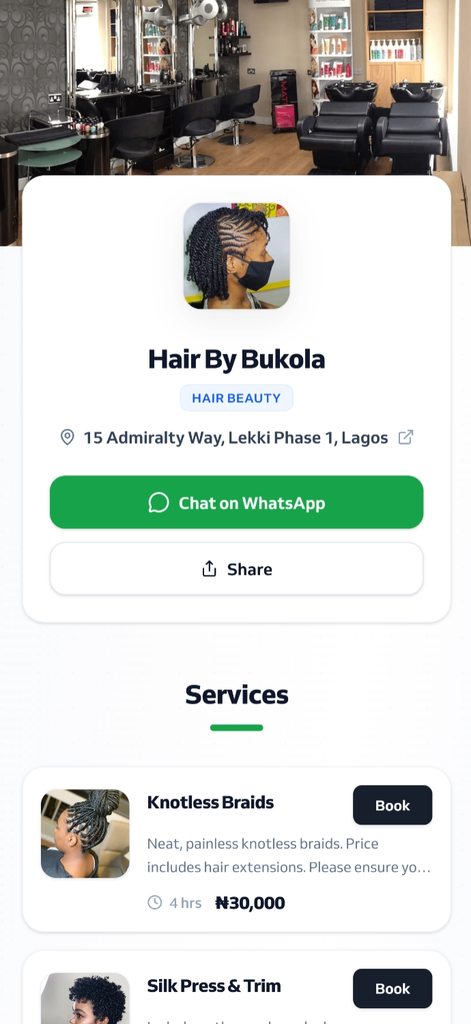
  • BookAm wants to become the default appointment software for service businesses in Nigeria

    BookAm wants to become the default appointment software for service businesses in Nigeria

    The Nigerian-built booking platform is helping service professionals replace WhatsApp back-and-forth with a simpler way to manage appointments, collect deposits, and keep customers informed. 

    For many service businesses in Nigeria, a booking can begin with a simple WhatsApp message. 

    A customer asks for availability. The business owner checks their schedule, responds, confirms a time, sends payment details, waits for a transfer screenshot, and then manually records the appointment. 

    Then comes another message. 

    And another. 

    As the business grows, so does the number of conversations to manage. 

    For barbers, makeup artists, photographers, tutors, consultants, fitness trainers, salons, and other appointment-based businesses, WhatsApp has become an important part of how they communicate with customers. But it was never designed to be a booking management system. 

    That gap is what BookAm is building around. 

    From WhatsApp conversations to structured bookings BookAm is a booking and payment platform built specifically for Nigerian service businesses. 

    The idea is straightforward: instead of asking customers to message a business every time they want to book, businesses can create a professional booking page that handles the process for them. 

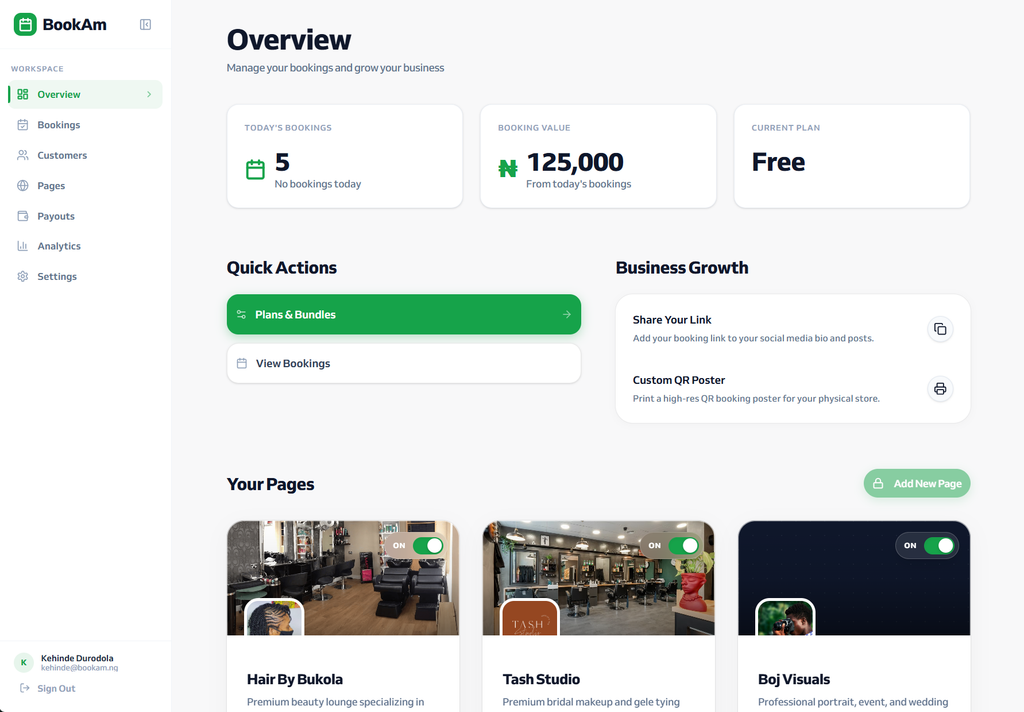
    A business owner can add their services, prices, working hours, and availability. They can then share their personal BookAm booking link through WhatsApp, Instagram, TikTok, or anywhere else their customers already find them. 

    Customers open the link, choose a service, select an available time, and pay a deposit or the required amount to secure the appointment.

    The booking is then confirmed automatically. 

    For the business owner, the entire process is managed from a single dashboard. 

    The goal is not to replace the conversations businesses have with their customers. It is to remove the repetitive conversations that do not need to happen in the first place. 

    Why the problem matters 

    The problem with manual booking becomes more obvious as a service business gets busier. 

    A business owner may be working with a customer while another person is asking about availability. Someone else may be requesting a price. Another customer may have sent a payment screenshot that needs to be confirmed. 

    Then there are the customers who forget their appointments. 

    For businesses where every appointment represents a limited and valuable time slot, a missed appointment can mean lost revenue that cannot be recovered. 

    BookAm approaches these problems by turning the booking process into a structured workflow. 

    Customers can see the services available, choose a time based on the business’s availability, and make the required payment without waiting for the business owner to respond manually. 

    BookAm also sends automated booking confirmations and appointment reminders through WhatsApp and email, reducing the amount of manual follow-up required from the business. 

    Built around how Nigerian businesses already operate 

    One of BookAm’s biggest design decisions is to avoid forcing service professionals to completely change how they reach customers. 

    Many already have an audience on WhatsApp, Instagram, TikTok, or other social platforms. BookAm gives them a booking link they can place where their customers already are. 

    There is no mobile app that customers need to download before making an appointment. A customer can simply open the booking page in a browser, select a service and time, and complete the booking. 

    Payments are also designed around the Nigerian market, with customers able to pay through supported local payment methods.

    The platform is built to keep the experience familiar for both sides while making the underlying booking process more structured. 

    More than just a booking link 

    While the booking page is the part customers see, BookAm is designed to give business owners more control behind the scenes. 

    Businesses can manage bookings and customers from a central dashboard, track their booking activity, manage services and availability, and give staff members or branch managers their own access where needed. 

    The platform also includes features such as client management, analytics, QR-based booking, and automated notifications. 

    The idea is to give service businesses the operational structure they need without forcing them into a complicated enterprise system. 

    For a small business owner, the software should feel like something that removes work rather than something that creates more of it. 

    Why Kehinde Durodola built BookAm 

    BookAm was built by Kehinde Durodola, a software engineer who wanted to solve a problem he kept seeing among Nigerian service professionals. 

    For Kehinde, the opportunity was not simply to build another generic scheduling tool. The goal was to build something that understood the realities of the businesses it was serving. 

    That meant thinking about how Nigerian businesses communicate with customers, how they collect payments, how customers discover them, and how important upfront deposits can be for businesses whose income depends on appointments being kept. 

    It also meant building the product around the idea that the business owner should not need to become a technology expert to use it. 

    “BookAm” itself reflects that local approach. The name comes from the Nigerian expression “book am”, meaning “book it”. It is short, familiar, and intentionally local. 

    Starting free 

    BookAm is available for businesses to start using without a monthly subscription.

    The platform operates on a model where businesses can create their booking pages and begin accepting appointments without committing to a recurring software subscription. 

    For an early-stage service business, the goal is to make the first step as easy as possible: create an account, set up services and availability, share the booking link, and start accepting bookings. 

    The company believes that the software should first prove its value to the business before asking the business to make a larger commitment. 

    Building with the businesses, not just for them 

    BookAm officially launched in 2026 and is now onboarding its first set of service businesses across Nigeria. 

    At this stage, the company is focused heavily on conversations with business owners and understanding how they currently manage bookings. 

    Those conversations are already influencing how the product evolves. 

    For Kehinde, launching the software is not the end of the development process. It is the beginning of a much more important phase: seeing how real businesses use it, where they struggle, and what needs to be improved. 

    The long-term ambition is bigger than simply providing another booking link. 

    BookAm wants to become the default appointment software for Nigeria’s service businesses, giving independent professionals and growing service teams the infrastructure to manage bookings, payments, customers, and appointments more professionally. 

    The market is still early. 

    But the problem is already familiar. 

    For thousands of service businesses, the next customer booking may still arrive as a WhatsApp message. 

    BookAm wants to make what happens after that message much simpler.

  • How a University-Era Bookkeeping Business Became TELA, a Business Intelligence Platform for SMEs

    How a University-Era Bookkeeping Business Became TELA, a Business Intelligence Platform for SMEs

    For many small business owners, running a business means juggling sales, payments, invoices, customers, expenses and a long list of daily tasks, often without having a clear picture of what the numbers actually mean.

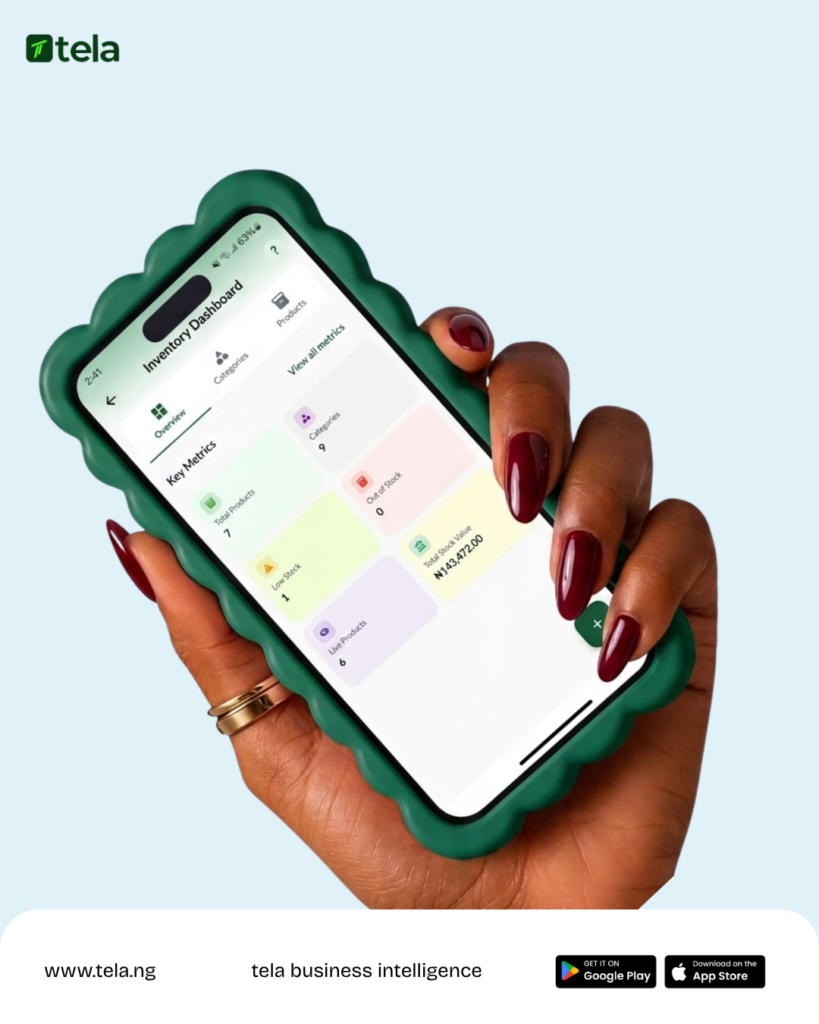
    This was the problem that led to Tela, a business intelligence platform designed to help small businesses and freelancers not only digitise their operations, but understand what is happening inside their businesses.

    Tela’s journey, however, did not start as a technology company.

    From managing books to building a platform

    Tela’s story began in 2021 when its founder, Adeyemo Damilare, started Rux Finance after graduating from university as a finance graduate. The business helped small businesses manage their finances, organise their books and make sense of their financial activities.

    As the business grew, so did the workload.

    What initially could be managed with manual processes eventually became too much to handle with what the team described as “pen and paper.” That experience became the starting point for a bigger question: what if these processes could be turned into a product?

    Damilare Adeyemo brought in James Dauda , Aaron Daudu and Jumoke Ajayi, who he had known for about 10 years, and together they began working on the idea at a larger scale.

    What emerged was Tela, evolving from a financial management solution into a business intelligence platform for small businesses and entrepreneurs.

    “We went a step further. Not just digitalizing their product or digitalizing their business, but also making it make sense,” the team explained during an interview with African Tech Journal.

    Building around how entrepreneurs actually work

    One of Tela’s early challenges was not necessarily figuring out what features to build, but deciding what should not be built.

    For the team, small businesses already operate within established habits. Many entrepreneurs rely heavily on WhatsApp, conversational selling and other familiar platforms to manage their businesses.

    The challenge was therefore to introduce technology without forcing entrepreneurs to completely change the way they work.

    “It’s easy to build a product with too many features,” the team said. The harder task was figuring out what an entrepreneur actually needs to see, what should be automated, what should be explained and what should be left untouched.

    This led the team to spend time speaking with customers, vendors and other business owners, while conducting market research to understand their behaviours and expectations.

    That approach has continued to shape Tela’s product.

    Moving beyond digitalisation with AI

    Tela initially operated as a web-based product, offering tools such as invoicing, receipts and payment links. The company has since shifted its focus towards its Android and iOS applications, with the Android and iOS app launching recently.

    But the larger shift has been in how Tela thinks about business data.

    Rather than simply showing business owners numbers, the team wants Tela to help them understand those numbers.

    A business owner might know that sales have fallen by 20 percent compared with the previous week. Tela is being built to go beyond presenting that information by helping answer questions such as why sales are falling and what the business owner could do to improve them.

    The team describes this as building Tela on AI rather than simply adding AI as a feature.

    The goal is to turn business data into insights that entrepreneurs can understand in clear language, particularly for business owners who already have numerous responsibilities competing for their attention.

    For Tela, data is therefore not simply something a business collects. It is part of the technology that can drive the business forward.

    Bootstrapping the journey

    The company has also grown without external funding.

    According to the founders, the  co-founders have funded Tela themselves from the beginning and continue to bootstrap the business.

    That has meant building with a lean team and making the most of the resources available to them.

    For James, one of the biggest lessons from the journey has been the resilience required to keep building.

    He described staying together as a team and reaching this stage without external funding as one of the things he is most proud of.

    For a startup still navigating product development, adoption and market expansion, that resilience has become an important part of Tela’s story.

    Partnerships, payments and early traction

    As Tela has evolved, partnerships have also played a role in strengthening the platform.

    The company identified its partnership with Anchor as an important milestone, particularly around payments. The founders said the partnership helped improve payment processing and contributed to better reviews and increased adoption.

    Tela also processes payments for small businesses, and the team says transaction volumes have been increasing.

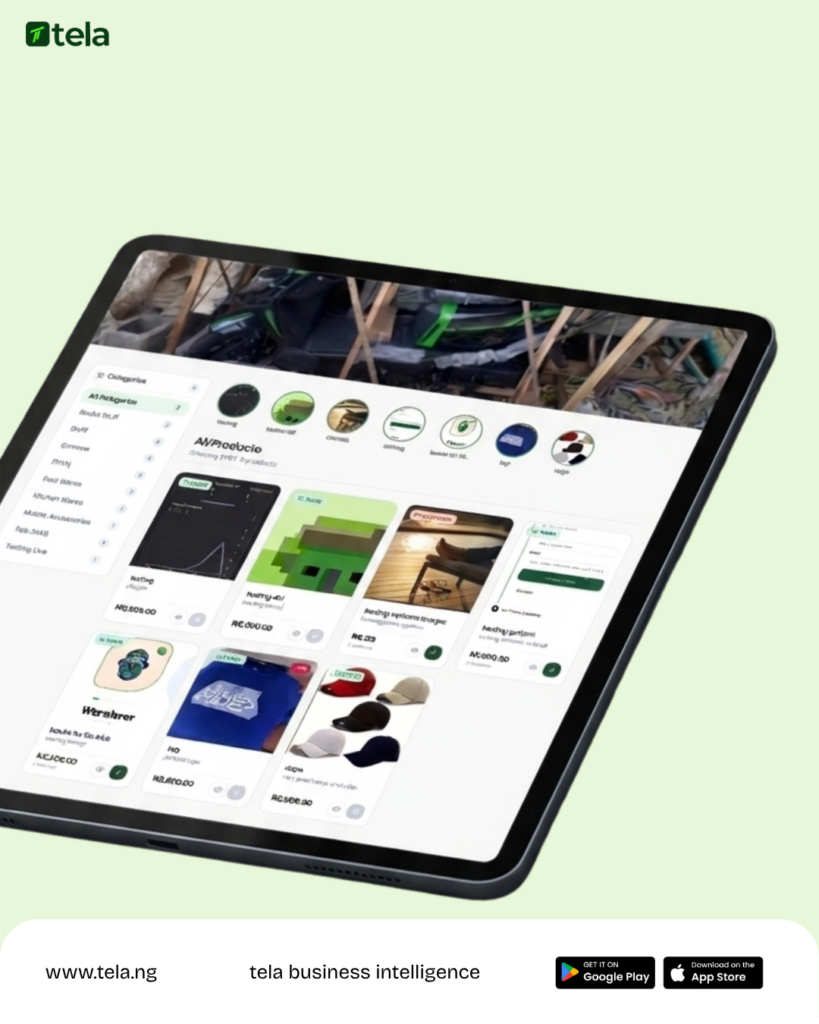
    More recently, the company introduced a storefront feature that allows small businesses to sell directly through the platform using payment links.

    While the team had not yet begun actively pushing the storefront feature at the time of the interview, it represented another step towards making Tela a more comprehensive platform for businesses.

    The company is also beginning to see adoption of its mobile product. Tela says it has surpassed 1,000 active users on its mobile app within its first three months, with more than 3,000 users overall.

    From business intelligence to an intelligent operating system

    Tela’s ambitions extend beyond its current product.

    The founders want the company to eventually become an intelligent operating system for growing and established businesses.

    That means expanding beyond its current capabilities and adding more of the tools entrepreneurs rely on to operate their businesses, while continuing to use AI to make those tools more intelligent.

    One of the company’s major upcoming products is a standalone sales AI.

    The team is working towards a system that can automate significant parts of the sales process, from payment and customer conversations to fulfilment, with the intention of allowing business owners to focus on the parts of the process that still require their direct involvement.

    The product is expected to be one of Tela’s major milestones over the coming months.

    Looking beyond Nigeria

    Tela’s ambitions are not limited to the Nigerian market.

    The company plans to expand across Nigeria before moving into other West African markets.

    The founders also indicated that they expect to become open to investment as the business grows and the company prepares for its next stage.

    For now, however, Tela remains focused on building the product, understanding its users and proving that AI can do more for small businesses than simply automate tasks.

    Its larger bet is that the next generation of business software should not only record what happened in a business, but help business owners understand why it happened and what they can do next.

    That is the direction Tela is taking as it works towards becoming an intelligent operating system for African businesses.

  • One Tweet by Temi Drove Thousands of Buzz, But Her First Brand Had Already Taught Her How to Build

    One Tweet by Temi Drove Thousands of Buzz, But Her First Brand Had Already Taught Her How to Build

    Before Temi started Tees & Co, she had already built a successful shoe brand.

    That experience would become important when she eventually moved into apparel. She was no longer entering the consumer business completely from scratch. She had already learned some of the fundamentals that come with building and selling a physical product: finding manufacturers, understanding customers, managing inventory, thinking about margins and figuring out how to turn attention into sales.

    So when she started Tees & Co, she had some of the rudiments already in place.

    What she did not necessarily expect was how quickly people would pay attention.

    Temi started Tees & Co with a tweet, and the post generated thousands of interactions around the new business. For a young consumer brand, that kind of attention can be difficult to manufacture. Temi had it from the beginning, giving the business an early advantage as she began figuring out how to turn the buzz into something sustainable.

    The motivation for starting the business was partly financial, but there was also a familiarity with the industry. Temi had sold shirts while she was in school on commission, so apparel was not an entirely unfamiliar space.

    This time, however, she was building the business for herself.

    She also did not have a wealthy relative financing the idea. Temi funded the business herself, which meant that every decision around production, inventory and cash had to be made carefully.

    Rather than simply buying large quantities of products and hoping they would sell, she developed a direct relationship with manufacturers and became strategic about what she stocked. Product colours were one example. Instead of trying to carry every possible variation, the business paid attention to what customers actually wanted, with colours such as black and white becoming reliable choices.

    These decisions may seem small, but for a growing consumer business, they can determine how much cash gets tied up in inventory.

    Her previous experience with the shoe brand gave her a useful foundation, but Tees & Co also presented a different challenge: building a recognisable apparel brand in a market where customers have plenty of alternatives.

    Turning an Early Buzz Into a Brand

    The initial tweet created attention, but Temi understood that attention could not be the entire business model.

    Customers might discover a brand because of a post, an advert or an influencer. They return because of the experience they have after making the purchase.

    That became increasingly important to how Tees & Co approached growth.

    The company began working with influencers and trusted communities, focusing on relationships that could introduce the brand to relevant audiences rather than simply chasing reach.

    Over time, this helped Tees & Co build a social community of more than 20,000 people in less than three years.

    For Temi, customer experience became one of the ways the company could differentiate itself.

    Growing Without Giving Up Ownership

    Temi has also taken a deliberate approach to financing the company’s growth.

    While raising external investment has become a common route for many startups, Tees & Co has focused on growing without giving up equity.

    Inventory expansion has been supported through carefully managed debt and operating cash flow, allowing the business to continue expanding while retaining ownership.

    Her approach reflects something that is often overlooked when discussing consumer businesses.

    Growth is not always about how much capital a company can raise. Sometimes it is about how well a founder understands demand, manages inventory and reinvests money back into the business.

    Temi’s earlier experience with her shoe brand gave her some of that understanding before Tees & Co began.

    Building Beyond Tees & Co

    The ambitions for the business now extend beyond selling directly to consumers.

    Tees & Co is growing its B2B operations while laying the groundwork for broader distribution across Nigeria. Plans include warehouse infrastructure across four major regions to support future expansion and improve fulfilment.

    There are also plans for additional product lines, including a women-focused brand.

    Longer term, Temi wants to build a broader group of companies rather than remain focused on a single apparel business.

    Her journey has also shaped how she thinks about entrepreneurship.

    One of the principles she often returns to is to “do it afraid.”

    For Temi, starting does not require having every answer figured out. Her own journey from building a shoe brand, to starting Tees & Co with a tweet, to developing a growing consumer business reflects that process.

    She also believes entrepreneurs should document their journeys. Recording milestones makes it easier to recognise progress, particularly during periods when growth feels slower than expected.

    Tees & Co may have started with a tweet, but the foundations of the business were built long before that post.

    They came from Temi’s earlier experience building a shoe brand, selling products while in school, learning how to work with manufacturers and understanding what it takes to manage a consumer business with limited resources.

    The tweet brought the attention.

    The experience she had already gained helped her know what to do with it.

  • Circlebox Wants to Fix How African Communities Organize: Starting With Events

    Circlebox Wants to Fix How African Communities Organize: Starting With Events

    For many African communities, event planning still looks the same as it did years ago.

    Someone creates a WhatsApp group. A flyer goes up on Instagram. Registrations are collected through Google Forms. Payments are handled somewhere else entirely. And by the time the event actually happens, the organizer has been juggling five different tools, three group chats, and a spreadsheet that stopped making sense once it starts getting longer.

    Attendees show up confused. Organizers show up exhausted.

    Mubarak Hammed watched this happen enough times that he decided to do something about it.

    He’s a software engineer with experience across finance, healthcare, and HR. But it wasn’t a corporate problem that pushed him to build his own company. It was a simpler, more personal one, the fact that communities around him still had no decent tool for organizing themselves.

    That observation became Circlebox.

    What the Platform Does

    At its core, Circlebox is an events platform. But it’s built around a specific frustration: that African organizers have always had to stitch together too many separate tools just to run a single event.

    The platform brings it under one roof. Organizers can list events, manage capacity, send communications, and track attendance through QR-based check-ins,  all in one place. There are dedicated group chats for each event, Google Maps integration for physical locations, and embedded meeting links for virtual ones.

    Think of it as what Meetup might look like if it was designed with African communities in mind from the start, rather than adapted for them as an afterthought.

    Circlebox is currently live on Android and iOS.

    The Bigger Picture

    But Mubarak is clear that events are just the entry point.

    “What we have right now,” he says, “is maybe 30% of what we’re building toward.”

    The rest of that vision is about communities themselves, not just the events they host, but the infrastructure around them. That means community pages, interest-based networking, payment integrations, and long-term member management tools that let groups actually grow in an organized way.

    One of the more unexpected directions the company is exploring is a B2B product for churches. Not a generic tool, but something purpose-built, designed to help churches manage attendance, coordinate zones and parishes, track members, and run internal operations digitally. It’s a niche that doesn’t get much attention, but it reflects exactly the kind of thinking behind Circlebox: communities that are already large and active, but still running on informal systems that don’t scale.

    AI plays a role too, though a quiet one. The platform uses it to help organizers auto-generate event descriptions and create banner images. It’s not the headline feature, and that’s probably intentional. Rather than positioning itself as an AI company, Circlebox is using AI the way most practical builders do: to remove friction from the parts of the process people find tedious.

    The Hard Part

    Mubarak doesn’t oversell where the company is right now.

    The user base is still small. Partnerships are limited. The company is bootstrapped, with no outside investment. And he’s not rushing that part,  his focus right now is on validating the product and building real traction before going to investors.

    But the thing he talks about most honestly isn’t funding or growth numbers. It’s the lesson that caught him off guard as a technical founder.

    “Development is only half the work,” he said.

    Marketing, partnerships, content, user adoption, these turned out to be just as hard as building the product itself. It’s a lesson many technically strong founders learn later than they’d like. A good product, it turns out, doesn’t automatically find its users.

    Why This Space Makes Sense

    Africa’s creator economy is growing. So are its professional networks, its startup communities, its churches, and its local organizations. But most of them are still organizing on platforms that were never really designed for them.

    WhatsApp works, until a group gets too big and too noisy. Telegram works, until it doesn’t. And none of it gives organizers any real visibility into who showed up, who engaged, or how to reach their community again next time.

    That gap is what Circlebox is betting on.

    Whether it gets there depends on a lot of things like adoption, partnerships, whether organizers are willing to move off tools they already know. None of that is guaranteed.

    But the problem Mubarak identified is real. And the communities that need a better solution aren’t getting smaller.

  • Mytherapist.ng Partners with Ally Healthcare to Expand Access to Mental Health Support

    Mytherapist.ng Partners with Ally Healthcare to Expand Access to Mental Health Support

    Mytherapist.ng, a leading Nigerian health-tech platform focused on accessible mental healthcare, has entered into a service partnership with Ally Healthcare HMO to provide mental health support services to Ally Healthcare users.

    Through this partnership, Mytherapist.ng will deliver professional mental health services to Ally Healthcare’s customers, giving them access to licensed therapists and mental health professionals through Mytherapist.ng’s secure platform or any other agreed service channel based on the selected plan.

    The collaboration reflects a shared commitment by both organisations to make mental health support more accessible, structured, confidential, and responsive for individuals, families, and organisations.
    Mytherapist.ng, a leading Nigerian health-tech platform focused on accessible mental healthcare, has entered into a service partnership with Ally Healthcare HMO to provide mental health support services to Ally Healthcare users.

    As part of the agreement, Mytherapist.ng will provide access to therapy services, onboarding support, platform orientation, periodic usage and engagement reports, crisis support for critical cases, and strict confidentiality protocols in line with professional ethical standards and applicable data protection regulations.

    Speaking on the partnership, Oluwaseun Raphael Afolayan, Co-founder and CEO of Mytherapist.ng, said:

    “This partnership is an important step in our mission to make quality mental healthcare more accessible to Nigerians. Ally Healthcare has built a strong reputation for providing comprehensive and affordable health solutions, and we are pleased to support their users with professional mental health services that are private, convenient, and clinically grounded.”

    Also commenting on the partnership,Mr Ayoola Johnson Ally Healthcare’s MD / CEO said “At Ally Healthcare, we recognize that mental health is an essential part of overall health and wellbeing. This partnership with Mytherapist.ng reinforces our commitment to providing comprehensive and affordable health insurance solutions by giving our clients access to professional, confidential, and high-quality mental health support. We are excited to collaborate with a trusted partner that shares our vision of making mental healthcare more accessible, affordable, and responsive to the needs of individuals, families, and organizations across Nigeria.”

    The partnership will also support Ally Healthcare’s broader wellness goals by providing structured reporting on service usage, user engagement, and outcomes, while maintaining strict confidentiality around individual client information.

    Ally Healthcare, a health service organisation focused on comprehensive, affordable, and personalised health solutions, will work with Mytherapist.ng to make the service accessible to eligible users and support the onboarding process.

    The service agreement is expected to run for an initial period of one year, with room for renewal by mutual agreement.

    This partnership further strengthens Mytherapist.ng’s growing role as a trusted mental health infrastructure provider for healthcare organisations, employers, communities, and institutions seeking to offer accessible therapy and emotional wellness support to their members.

    About Mytherapist.ng

    Mytherapist.ng is a Nigerian mental health platform that provides easy access to therapy services through licensed therapists and mental health professionals. The platform supports users through therapy sessions, mental health resources, and a community focused on helping people understand and prioritise their mental wellbeing.

    About Ally Healthcare

    Ally Healthcare is a health service organisation dedicated to providing comprehensive, affordable, and personalised health solutions for individuals, families, and organisations.

  • Sell, Track and Engage customers without leaving Whatsapp with AVABOOKS

    Sell, Track and Engage customers without leaving Whatsapp with AVABOOKS

    During the pandemic, like many founders, Segun Awoniyi was trying to solve his own problem.

    At the time, he had launched a clothing brand and needed an online store. Shopify seemed like the obvious solution, but the monthly subscription costs raised a simple question. If paying for these tools felt expensive for him, what did it look like for thousands of small businesses trying to sell online in Nigeria?

    That question led to the launch of FinRik, a no-code e-commerce platform built for small businesses. The product gained paying users almost immediately. Merchants signed up, created stores, and began building an online presence.

    But something interesting started happening.

    The websites existed.

    The sales did not.

    Many of the businesses still preferred to close deals on WhatsApp. Customers wanted conversations. They wanted reassurance. They wanted to ask questions before making payments. The storefront had become important, but the transaction itself was still happening elsewhere.

    For Segun, that observation would eventually change the direction of the company.

    Nigerian SMEs Never Really Left WhatsApp

    For years, conversations around small business digitisation in Africa focused heavily on websites, mobile applications, and online storefronts.

    Yet for many Nigerian businesses, commerce still happens inside conversations.

    Products are shared through WhatsApp Status. Orders happen through direct messages. Payments are discussed before they are made. Trust is built through conversation rather than interfaces.

    The average small business owner may not understand SaaS, dashboards, or product ecosystems. But they understand WhatsApp.

    As digital commerce evolved, many businesses found themselves paying for tools they rarely used while continuing to operate inside messaging applications. Websites became digital brochures while customer relationships remained conversational.

    This was not simply a technology problem.

    It was a trust problem.

    The founders realised they had spent years trying to localise Shopify when the real opportunity was much closer to home.

    The Pivot That Led to Ava

    After the currency fluctuations and economic uncertainty that followed the 2023 elections, many businesses struggled. Margins became thinner. Small merchants needed financing, bookkeeping tools, and better visibility into their businesses.

    At the same time, Shagu noticed that many former users of their e-commerce products had returned to selling almost entirely through WhatsApp.

    Instead of fighting that behaviour, the company decided to build around it.

    That decision led to Ava.

    Ava is a bookkeeping and business management platform that operates directly on WhatsApp. Businesses can record sales, track expenses, create invoices, send payment links, and monitor transactions without leaving the platform they already use every day.

    The company later introduced Ava Analytics, an AI-powered data analysis layer capable of processing business data, identifying patterns, and helping businesses make better financial decisions. The long-term vision is to help merchants understand not only how their businesses perform, but whether they qualify for financing and how they can improve operations.

    Building on WhatsApp Comes With Its Own Problems

    The biggest challenge turned out to be speed.

    Users expect messaging applications to respond instantly. If a chatbot delays for a few seconds, many assume the product is broken and simply leave.

    Trust also became another major hurdle.

    Many business owners initially believed their financial information was stored directly on WhatsApp rather than on secure backend infrastructure. The company had to spend time educating users about how the system actually worked.

    For Segun, these lessons reinforced something he already believed.

    Small businesses care less about typography, product aesthetics, or startup buzzwords. They care about trust, sales, and reliability.

    Looking Beyond Nigeria

    Today, Ava serves thousands of businesses through direct community engagement rather than paid advertising. The team works closely with merchant communities, collects feedback continuously, and improves the product based on real usage patterns.

    Looking ahead, the company sees opportunities beyond Nigeria.

    One market stands out.

    Brazil.

    Like Nigeria, Brazil is heavily dependent on WhatsApp as a communication and business tool. For Shagu, expansion should follow user behaviour rather than assumptions.

    “Every expansion should be based on data,” he explained. “Not really based on what you feel or what you want.”

    The broader ambition for Ava is not simply to build another business software product.

    It is to build around where small businesses already work.

    For years, African startups tried to move merchants away from WhatsApp.

    Ava is betting that the smarter approach may be to meet them there.

  • Building Credit Rails for the African Missing Middle: The Quiet Work of Bidemi Adebayo

    Building Credit Rails for the African Missing Middle: The Quiet Work of Bidemi Adebayo

    From factory floors in China to fintech infrastructure in Abuja Nigeria — one operator’s long road to solving SME finance.

    There is a type of founder the African tech ecosystem does not talk about loudly enough: the operator. Not the one chasing headlines or viral launches, but the one doing the quiet, technical work building underwriting systems, structuring partnerships, and designing credit policies that determine whether a business gets access to capital or not.

    Bidemi Adebayo is one of those founders.

    As co-founder and CEO of Hadi Finance, she is focused on building structured credit infrastructure for African SMEs the segment often described as the “missing middle.” Businesses too large for microfinance, yet too informal or unstructured for traditional bank lending.

    Her focus is clear: close the cash-flow gaps that keep viable businesses from scaling.

    As she puts it, “The issue is not demand, it’s timing.”

    Learning trade at its most practical level

    Before fintech, before partnerships, there was a steel factory in Jinzhou, in China’s Liaoning province.

    Adebayo spent over two years there as a translator intern, converting documents from Chinese to English, working with foreign clients, and observing how industrial trade operates across borders. It was not glamorous work, but it offered something more valuable—exposure to how trust, contracts, and relationships underpin commerce.

    Those lessons carried into her time at Stackfill, where she verified over 2,500 OEM manufacturers across China, Taiwan, Hong Kong, and India. Within six months, she built a sales pipeline of over $400,000, while also establishing partnerships with logistics companies and an asset financing firm to support customers.

    It was early exposure to a simple truth: goods, money, and trust move together—or not at all.

    From distribution to infrastructure

    At CrowdForce, her focus shifted to distribution at scale.

    As Growth and Partnerships Manager, she onboarded over 150 partners within eleven months and helped grow transaction volume by 70% in three months. But the numbers were only part of the story. What made that growth sustainable was the structure behind it commission systems, policy documentation, and ongoing communication with partners.

    Growth without structure does not last. Systems do.

    That mindset carried into Hadi, where she co-founded the company and served as COO, helping to build and scale a network that supported over 1,000 retailers across Africa. The work involved more than onboarding. It meant building delivery partnerships, improving inventory systems, and understanding how small businesses actually operate day to day.

    The credit problem she is solving

    In 2025, Adebayo stepped into the CEO role at Hadi Finance, the financial services arm that grew out of that operational foundation.

    The transition was a natural progression from building and running the system to now leading the credit infrastructure behind it.

    The focus is specific: build credit systems that work in the realities of African markets.

    This means designing for environments where credit bureau data is limited, collateral is inconsistent, and cash flows are often seasonal. These are not edge cases. They are the operating conditions.

    “You don’t route around the environment, you build for it,” she says.

    Hadi Finance focuses on invoice and inventory financing.

    The logic is straightforward. Suppliers deliver goods but wait weeks or months to get paid, locking up cash in receivables. Retailers, on the other hand, need to restock constantly to keep selling, but often lack the liquidity to do so.

    The result is a broken cycle goods move, but cash lags behind.

    Invoice financing unlocks cash after delivery. Inventory financing ensures businesses can continue buying and selling without interruption. Together, they keep both sides of the cycle moving.

    This is not generic working capital. It is credit tied directly to real transactions, with clearer visibility into how businesses earn and repay.

    A focus on women-led businesses

    Part of that focus is on women-led enterprises, shaped by both experience and observation.

    Growing up, Adebayo watched her mother run a retail business and saw how access to the right kind of capital could change its trajectory. Later, during her time in China, she saw what happens when small businesses operate within systems that support their growth.

    Coming back to Nigeria and across Africa, the contrast is clear.

    Women are a significant part of the informal economy. They are the traders and operators keeping commerce moving every day, yet they remain consistently underserved by formal financial systems.

    Not because they are less capable, but because they have been mispriced and misunderstood for years.

    The approach at Hadi reflects that reality. The products are not charity—they are disciplined credit solutions designed for a segment that has long been overlooked.

    The operator’s edge

    Her background also includes early work at Mobile Forms, where she was involved in large-scale field operations and data collection across Nigeria.

    She worked on TraderMoni, supporting the onboarding of over 3 million retailers, and contributed to nationwide facility audits across primary healthcare centers in collaboration with the Federal Ministry of Health, alongside projects with FMCG companies.

    What sets Adebayo apart is not just her focus on credit, but the range of experience she brings to it.

    Her work spans data collection, government-backed programs, international trade, logistics, distribution, and now credit. Each role added a layer of understanding about how systems function and where they break.

    Individually, those experiences may seem unrelated. Together, they form a clear pattern: a career built around understanding how value moves, and what happens when it doesn’t. That perspective shapes how she approaches credit not as a standalone product, but as infrastructure.

    For Bidemi, the work is not about speed or visibility. It is about building systems that hold.And in markets where financial access remains uneven, that kind of work matters.

    Bidemi Adebayo is co-founder and CEO at Hadi Finance. She is based in Nigeria. Connect with her on LinkedIn.

  • Chowdeck Is Coming for Your Courier App Too

    Chowdeck Is Coming for Your Courier App Too

    The food delivery darling just made its boldest move yet – and it has nothing to do with jollof rice.

    There is a peculiar ritual Nigerians know well. You order something from a vendor on Instagram. They quote you a delivery fee. You haggle. You balance the rider “small something”. The package arrives two hours late, slightly roughed up, with no way to track where it’s been. You swear you’ll never do it again. You do it again next week.

    This is the informal courier economy that has propped up millions of small businesses and frustrated millions more customers. It is disorganised by design, personal by necessity, and ripe for disruption by anyone with a large enough rider network.

    Chowdeck has that network, and now, it is coming for that market.

    This May, the Lagos-based food delivery company pushed its Relay courier service into the spotlight with a flat ₦1,000 intra-city delivery offer. Same-day. Tracked. Backed by the same logistics infrastructure that has made Chowdeck one of Nigeria’s most reliable delivery brands.

    It is a quiet pivot. But the ambitions behind it are anything but.

    The Company That Outlasted Everyone

    Founded in October 2021 by Femi Aluko, Olumide Ojo, and Lanre Yusuf, all veterans of Paystack, the fintech acquired by Stripe, Chowdeck launched as a simple idea: get food from Lagos restaurants to customers in under 30 minutes.

    The timing looked naïve. The graveyard of food delivery in Nigeria was already crowded. Jumia Food had burnt through capital and retreated. Bolt Food had exited Nigeria altogether. Glovo was hedging its bets. Every major player had tried and failed to crack what was obviously a huge market, and just as obviously, a brutal one.

    Chowdeck survived by doing the boring things well. Its geotagging system matched orders to the nearest rider with precision that competitors couldn’t match. Its incentive structure kept couriers loyal in a market notorious for rider churn. And it kept delivery fees honest enough to build trust with price-sensitive Nigerian consumers.

    By October 2023, the platform crossed ₦1 billion ($830,000) in monthly order value for the first time. By March 2024, that figure had more than doubled to ₦2.4 billion ($2 million). That same year, Chowdeck closed a $9 million Series A, one of the largest fundraises ever for a local African food delivery player, with investors betting on the company’s ability to scale beyond meals.

    Today, Chowdeck operates across eight cities in Nigeria, processes over 30,000 daily deliveries, runs a fleet of roughly 20,000 riders, and has facilitated over $19 million in vendor deliveries on its platform alone. In August 2025, it launched in Accra, Ghana, hitting 1,000 daily orders in just three months, a milestone that took nearly a year to reach in Lagos.

    The company is not just surviving. It is compounding.

    The Courier Gap Is Worth $230 Million

    Here is what makes the Relay push strategically sensible: the infrastructure Chowdeck has already built is overkill for food delivery alone.

    Twenty thousand vetted, geotagged, app-enabled riders across major Nigerian cities, that is an asset most logistics companies would spend hundreds of millions of dollars to assemble. Chowdeck assembled it to deliver jollof rice. The marginal cost of routing some of those riders to deliver packages instead is nearly zero.

    Meanwhile, the market they are entering is enormous and deeply underserved.

    Nigeria’s last-mile delivery market is currently valued at $230 million, with urbanisation, e-commerce growth, and smartphone penetration driving steady expansion. The broader African last-mile delivery market stood at $1.45 billion in 2024 and is projected to reach $3.02 billion by 2033, growing at a compound annual rate of 8.45%.

    In Nigeria specifically, e-commerce orders grew 22% year-on-year in Q1 2025, with 58% of total orders now originating from secondary cities, an indicator that demand for reliable delivery is spreading beyond Lagos and Abuja. Yet the courier experience for most consumers and small businesses remains chaotic, unreliable, and opaque.

    Existing players like GIG Logistics, Kwik Delivery, and Sendbox have carved out niches. But none of them holds the brand trust that Chowdeck has built through millions of successful food deliveries. Trust, in a market defined by theft, delays, and accountability gaps, is a moat.

    ₦1,000 Is Not a Price. It’s a Statement.

    The flat ₦1,000 rate for intra-city delivery is not just a promotional offer. It is a market signal, Chowdeck telling competitors, small business owners, and individual senders that it intends to compete aggressively on price.

    For context, most Lagos courier services charge between ₦1,500 and ₦4,000 for same-day intra-city delivery depending on distance, package size, and the rider’s mood. Kwik, one of the better-organised options, raised $4.7 million to build its two-hour delivery promise in Lagos and Abuja. GIG Logistics operates 100+ service centres across Nigeria using a hub-and-spoke model, but its pricing reflects that infrastructure overhead.

    Chowdeck has no such overhead problem. Its riders are already on the road. Its app already handles live tracking, payments, and customer support. All it needs is to redirect existing capacity to a new category.

    The ₦1,000 flat rate is designed to make the switching cost for a first-time Relay user essentially zero and to make the comparison with informal bike-rider delivery unmistakably favourable.

    Beyond Delivery: The Superapp That Won’t Say It Is One

    What is really happening here is a quiet superapp strategy.

    Chowdeck has spent three years building the hard parts: a reliable rider network, a geolocation stack competitors couldn’t replicate, and consumer trust earned meal by meal. Now it is running those assets across multiple revenue lines.

    The product map tells the story clearly:

    • Food delivery, the core, is still growing
    • Grocery & pharmacy delivery, launched alongside 1,500+ vendors across multiple verticals
    • Chowpass, a subscription product that drives retention and revenue predictability
    • Relay, intra-city courier for packages
    • Mira, a restaurant POS and operations tool acquired in June 2025, is extending Chowdeck’s footprint into vendor-side infrastructure

    Each of these is independently useful. Together, they form a logistics and commerce operating system, one that makes Chowdeck increasingly difficult to displace from the lives of its users.

    This is the same playbook Grab executed in Southeast Asia: start with the thing people need every day (food, rides), earn their trust, then expand the surface area of the relationship. The difference is that Chowdeck is doing it in a market where the baseline infrastructure is far less mature, which means both the challenge and the ceiling are considerably higher.

    Chowdeck’s CEO, Femi Aluko, has been careful not to use the “superapp” label. But the feature releases suggest a company that has figured out what it wants to be when it grows up.

    What This Means for Nigerian Small Businesses

    For Instagram vendors, WhatsApp merchants, and small shop owners across Lagos, Port Harcourt, and Abuja, Relay could represent something genuinely transformative: a named, trackable, accountable courier service at a price that doesn’t eat their margin.

    The informal delivery economy that currently serves these businesses is large but unreliable. Theft is common. Accountability is rare. When a customer does not receive a package, the business owner absorbs the cost of the goods, the refund, and the reputational damage. Organised logistics apps have helped, but at price points that make per-order economics painful for low-ticket items.

    A ₦1,000 flat delivery rate changes the calculus. For a vendor selling a ₦5,000 product, with a 20% logistics overhead, it is still meaningful but workable. For a vendor who previously lost packages or paid ₦3,000 for unreliable delivery, it is a revelation.

    And because Relay rides on Chowdeck’s existing app infrastructure, it comes with live delivery tracking and vetted riders, the two features small business owners most need and have historically been unable to afford.

    The Road Ahead

    Relay is not yet a fully realised product. Its rollout is still limited in scope, and the ₦1,000 rate appears to be an introductory offer rather than a permanent pricing floor. The long-term unit economics will need to hold up as volume grows and the promotional period fades.

    There are also structural challenges that no app can fully resolve. Lagos traffic is a logistics problem with no software solution. Fuel prices remain volatile and represent a significant cost pressure on rider margins. And the informal courier culture, built on personal relationships and flexible arrangements, will not simply dissolve because a better-priced alternative exists.

    But Chowdeck has already demonstrated that it can build trust in a market that did not believe trust was possible. It cracked food delivery in Nigeria, which was supposed to be uncrackable. It is now applying the same model to a courier market that is larger, more fragmented, and arguably even more broken.

    The food was just the beginning. Chowdeck wants to deliver everything else, too.

    Data sourced from TechCrunch, Rest of World, Afridigest, Ken Research, Straits Research, Mordor Intelligence, and Chowdeck’s official communications.

  • The Real Reason Every Startup Pitch Deck Now Has AI in the First Slide

    The Real Reason Every Startup Pitch Deck Now Has AI in the First Slide

    By Tosin Oladokun

    I’ve been reviewing startup pitches lately, and there is a shift that I cannot miss. Two years ago, decks led with the problem being solved, including the customer pain points, market gaps and real user needs. Now, slide one is almost always about AI. “We’re using AI to revolutionise…” “Our AI-powered platform…” “Leveraging artificial intelligence to transform…” My first instinct was to write this off as hype-chasing, another buzzword cycle like blockchain or the metaverse. However, after watching it repeat across dozens of pitches from founders who are clearly not stupid (PhDs, cracked engineers/operators), I think something more structural is going on.

    The surface explanation is that founders put AI on slide one because investors want to see it. Fine, but that doesn’t explain why investors want to see it. The deeper thing is that AI has become shorthand for an answer to the question investors have always cared about most: “How do you scale this without it breaking?” Every scalable business eventually hits the same wall. You need more people to deliver more value, i.e., more customer service reps, more analysts, more operations staff and then the math stops working. AI became the credible answer to that problem, and once it did, it stopped being a feature and became infrastructure.

    The timing matters too. In 2019, machine learning was expensive, complicated, and unreliable for most use cases. You needed specialised teams and massive datasets just to get something mediocre. By 2025, the technology could handle complex decisions with enough accuracy to actually change how a company operates day to day. So founders aren’t just slapping AI onto their decks for decoration — many of the business models that work now genuinely require it to function.

    Founders, though, are missing the point of startup pitching.

    When you build something that works because you figured out regulatory navigation, or you nailed the user experience, or you found a real gap in the market, and then you lead your pitch with “AI-powered platform” – you’ve buried the thing that actually makes it valuable. I’ve seen companies facilitate hundreds of business incorporations not because of some machine learning model, but because they understood how to work with regulatory authorities and make an intimidating process feel simple.

    If those same companies pitched today, I guarantee slide one would say “AI-powered business incorporation.” And that framing would completely miss the point. The better pitch is just: “We solve X problem. Solving it requires doing Y at a massive scale. AI is how we keep the unit economics from falling apart.” That’s a tools-in-service-of-the-mission framing. What we’re getting instead is “We’re an AI company that happens to work in X industry,” which is a fundamentally different claim about what the company is.

    There’s a split coming, and you can already see the edges of it. One camp is companies where AI genuinely is the product — they’re building models, infrastructure, foundational technology.

    Leading with AI makes sense for them because AI is what they sell. The other camp is companies using AI as plumbing to solve real problems in specific industries, and for them, the industry problem should probably come first. Right now, both camps use the same pitch deck template, which muddies what’s actually being built. And most of the AI features being added to products right now aren’t that transformative anyway.

    They’re helpful, they might improve efficiency by 10 or 20 percent, but they’re not the reason the business will succeed or fail. The companies I keep paying attention to are the ones that can tell you what problem they’re solving and why it matters before they ever mention their tech stack.

    When I see a deck leading with AI now, I’ve started asking a simpler question: would this business work without it?

    If the answer is no, I want to understand why. If the answer is yes, I start wondering what they’re not telling me about the actual business and whether AI on slide one is covering for a pitch that doesn’t know what it’s really about.

    Tosin Oladokun is currently pursuing his MBA at UC Berkeley’s Haas School of Business. He previously worked as a Senior Product Manager-Technical Intern at Amazon and has built digital products across Nigeria and the United States.