Category: Business

  • Forget SaaS. Xara Runs Your Sales, Payments, and Operations on WhatsApp

    Forget SaaS. Xara Runs Your Sales, Payments, and Operations on WhatsApp

    The average African founder is suffering from “App Fatigue.” Between the bank app for transfers, a spreadsheet for profit and losses, a separate tool for invoicing, and a different platform for payroll, the sheer volume of tasks just to run a business is stifling innovation.

    We’ve been tracking a shift toward “Conversational Finance,” the idea that you shouldn’t have to leave your chat app to manage your cap table or your customer follow-ups

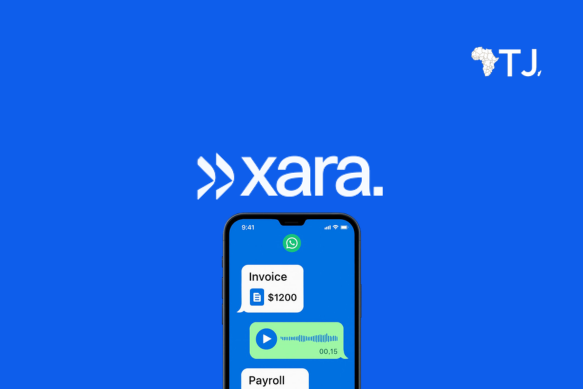
    Leading this charge is Xara, a platform that is effectively building “The WeChat of Nigeria” by turning WhatsApp into a high-powered business personal assistant.

    With over 48,000 users and billions of naira already processed, the market has sent a clear signal: The future of business infrastructure isn’t a new app; it’s a better conversation.

    1. Collapsing the Stack: WhatsApp as a Backend

    Xara isn’t just another payment gateway. It is a conversational layer that handles the “boring” parts of business ops so you can focus on growth. For the 18-45 founder, this means the end of app-switching.

    • Automated Invoicing: You can share a quote, generate a professional invoice, and deliver it to your customer—all within the same WhatsApp thread.
    • Frictionless Payments: Customers pay directly via bank transfer, crypto, or the Xara wallet without ever leaving the chat.
    • Real-time Follow-ups: Xara acts as your assistant, handling delivery check-ins and customer communication on your behalf.

    2. Visibility Without the Spreadsheet Headache

    Most SMEs fly blind because tracking profit and loss is a manual nightmare. Xara’s Business Accounts narrative is built on Financial Visibility.

    • Profit and Loss Tracking: Automatically monitor your profits and losses to understand your true margins.
    • Spending Analysis: Get context-aware breakdowns of where the money is going, supporting better decision-making.
    • Tax & Compliance: Integrated tax calculation and management to simplify a process that usually requires a consultant.

    3. Payroll Management

    Managing a team shouldn’t be a three-day ordeal at the end of every month. Xara allows organizations to upload employee data and automate salary payments directly. This turns a manual transaction into a scheduled workflow, freeing up founder time for high-leverage tasks.

    4. The Crypto-to-Cash Conversion System.”

    For Tier 3 users, Xara provides a seamless way to fund wallets using stablecoins (USDT, USDC, BUSD) across multiple networks. The “Killer App” here is the automatic conversion to naira, which eliminates the risks and delays of peer-to-peer (P2P) trading. It’s a faster, compliant alternative for businesses operating in a global, digital-first economy.

    The Verdict

    Founders don’t want “more features”; they want “less friction.” Xara’s strength lies in its Conversational Logic. By meeting the business owner where they already are—WhatsApp—Xara has bypassed the “onboarding wall” that kills most B2B tools.

    The traction metrics—moving from ₦135M in early weeks to billions in volume—validate that the African SME isn’t looking for a complex dashboard. They are looking for a personal assistant who lives in their pocket.

    If you can text, you can run a multi-million-naira operation. Xara has turned the “Invisible Office” into a reality, proving that the most powerful business infrastructure is the one you already know how to use.

  • SmarthiveSMS Is Building a Unified Communication Layer for Businesses Across Africa

    SmarthiveSMS Is Building a Unified Communication Layer for Businesses Across Africa

    For many businesses across Africa, customer communication remains fragmented and inefficient. Important messages are often split across multiple tools, from SMS gateways to email platforms and separate WhatsApp solutions. This creates operational complexity, especially for startups and growing businesses trying to scale customer engagement.

    At the same time, customer expectations are rising. Users want instant updates, secure authentication, and timely marketing messages delivered through the channels they already use.

    This gap between need and infrastructure is what SmarthiveSMS is addressing.

    What SmarthiveSMS Is Building

    SmarthiveSMS is a communication platform that enables businesses to engage their customers through SMS, Email, and WhatsApp from a single system.

    The platform is designed to serve both technical and non technical users. For tech startups, SmarthiveSMS provides APIs that allow seamless integration into existing products. These APIs can be used for OTP delivery, transactional alerts, and automated marketing campaigns.

    For non technical businesses, the platform offers a simple web interface where messages can be created and sent without coding.

    The result is a unified communication system that reduces friction across multiple channels.

    From Multiple Tools to One Platform

    Traditionally, businesses have had to rely on different providers for different communication needs. One tool handles SMS. Another handles email. Another is used for WhatsApp messaging. This separation creates inefficiencies in both cost and workflow.

    SmarthiveSMS simplifies this structure by bringing all major communication channels into one platform. This allows businesses to manage customer engagement from a single dashboard or API layer.

    Instead of switching systems, teams can focus on sending the right message at the right time.

    Why Multi Channel Communication Matters

    Customer engagement is no longer limited to one channel. Users may expect a verification code via SMS, a receipt via email, and a promotional update through WhatsApp. Businesses that cannot coordinate across these channels risk losing customer trust and engagement.

    SmarthiveSMS is built to solve this by enabling consistent communication across multiple touchpoints.

    This creates a more reliable and scalable system for businesses that depend on timely customer interactions

    Built for Startups and Growing Businesses

    One of the key strengths of SmarthiveSMS is its flexibility. Startups can integrate its APIs directly into their products to automate communication flows. This is especially useful for authentication, onboarding, and transactional messaging.

    At the same time, smaller or non technical businesses are not left behind. They can still access the platform through a simple interface that does not require development experience.

    This dual approach makes the platform accessible across different levels of technical capability.

    The Value Layer Behind SmarthiveSMS

    SmarthiveSMS sits at the intersection of infrastructure and customer engagement. Businesses rely on it to communicate reliably with their users, which makes messaging a critical part of product experience and marketing performance.

    The platform’s value is driven by message volume, API usage, and business adoption across sectors such as fintech, e commerce, logistics, and service based industries.

    As businesses scale, the demand for reliable communication infrastructure continues to grow.

    A Simpler Way to Reach Customers

    SmarthiveSMS is positioning itself as a unified communication layer for businesses that want to engage customers more effectively without managing multiple tools.

    By combining SMS, Email, and WhatsApp into one system, it reduces complexity while improving speed and consistency of communication.

    Getting Started

    Businesses can begin using the platform by creating an account at app.smarthivesms.com.

    From there, they can access both the web interface and API tools depending on their needs.

  • Why the African Tech Future will be Built by Creators; not Corporations

    Why the African Tech Future will be Built by Creators; not Corporations

    For years, Africa’s tech narrative has revolved around large corporations, venture capital funding, While those stories dominate headlines, they don’t fully capture where real momentum is building. The truth is quieter and more powerful. Africa’s tech future is increasingly being shaped by creators.

    Creators In this context are not just Influencers . They are developers building niche tools from their bedrooms. Designers launching digital products on low budgets. Writers monetizing knowledge online. Educators running tech communities. Small founders solving hyper local problems with simple but scalable solutions.

    Unlike large corporations, creators move with speed. They are not slowed down by heavy bureaucracy or shareholder pressure. They experiment quickly, respond directly to their audiences , and build products rooted in lived experience. In a continent as diverse and dynamic as Africa, this agility matters.

    Technology has also lowered the barrier to entry. With access to no code platforms, AI tools Fintech APis, and global distribution channels, individuals can now build and monetize ideas without massive capital. A laptop, internet access, and skill are often enough to start. This democratization of innovation is changing the power structure of tech.

    Corporation will always have a role especially in infrastructure and large scale investment. But creators understand culture. They understand language, behavior, and community. They build solutions that feel personal, not imposed. And in emerging markets, trust and relatability are currency.

    Across Africa, we are already seeing this shift. Independent developers are launching fintech tools tailored to specific communities. Content creators are education thousands about coding, investing, and digital skills. Small tech founders are building for real problems not pitch decks.

    The next wave of African innovation may not come from towering headquarters, it may come from shared work spaces, small studios, and home offices. It will come from people who see gaps in their immediate environment and decide to build. 

    Africa’s strength has always been its entrepreneurial spirit. Technology is simply amplifying it.

    The future will not belong solely to corporations with capital. It will belong to creators with courage, clarity, and connection.

  • Why Nigerians are not Budgeting : Our Money Moves Different

    Why Nigerians are not Budgeting : Our Money Moves Different

    It’s the 26th. You’ve got ₦47k left. Groceries almost done ₦35k. Your data just finished. Your mom needs ₦5,000. Femi’s owambe is Saturday. 

    On New Year’s, you made a budget. Excel sheet, colour-coded, formulas. You felt responsible. Adult. You haven’t opened it since January 3rd. 

    You’re not bad at budgeting. The system was never built for you. 

    Your Income Isn’t Predictable 

    Traditional budgeting starts with, “How much do you earn monthly?” 

    In Nigeria, the first rule of budgeting is “We don’t talk about salary.” 

    Even with a salary, you’ve got freelance gigs, black tax, and fluctuating exchange rates. Your income isn’t predictable. Regular budgeting methods assume one employer, one salary, and regular expenses. 

    Nigeria doesn’t work like that. 

    Your Expenses Aren’t Optional 

    Budgeting apps separate spending into “wants” and “needs”. 

    Here, everything is urgent: 

    Family is insurance. Ajo contributions, mumsi’s allawee, last borns, emergencies; ₦50k to ₦100k minimum. Apps call this “overspending on gifts”. You call it Monday. 

    Fuel scarcity adds ₦7k to transport. NEPA kills your inverter battery—₦45k fiam. Data finishes mid-meeting—₦2k. Generator maintenance, water shortages? You can’t budget chaos. 

    Appearances are investments. That owambe costs ₦150k (aso-ebi, tailor, shoes, hair, gift). Not going? It’s your boss’s wife’s birthday. Apps tag it entertainment. Reality? ‘Networking’. 

    The Apps Don’t Speak Your Language 

    I tried Mint once. Beautiful app. Very Un-Nigerian. 

    Couldn’t track ₦20k across four vendors. Didn’t understand Opay, Palmpay, or my domiciliary account. Wanted me to categorise keke rides!

    What category is “replacing your phone screen because okada fell”? Or “sending money to mumsi who’ll give it to your brother—basically paying his rent, but asking questions feels wrong”? 

    By week two: 37 uncategorised transactions. App said I’m “falling behind”. 

    No. Nigeria is beyond your comprehension. 

    Looking at Your Finances Feels Like Failure 

    Not checking your balance is self-preservation. 

    When fuel goes from ₦175 to ₦1,030 in a day, tracking documents your powerlessness. The app suggests “cut back on transportation”. Sure. I’ll just stop going to work. 

    Budget breaks on Day 3, you abandon it. No grace for emergencies. No way forward in this economy designed to frustrate you. 

    What If You Just… Knew? 

    Don’t say ‘budgeting’. Try ‘witnessing’. 

    Market women keep small notebooks. Freelancers forward receipts to one WhatsApp chat. Bankers voice-note expenses while driving. 

    They’re not using apps. They’re using what’s already in their hands. 

    That’s the insight everyone misses: Nigerian budgeting doesn’t fail because Nigerians lack discipline. It fails because the tools demand new behavior. 

    Download apps. Build spreadsheets. Link banks. Set up categories. These aren’t small asks, they’re requests to change your entire routine. 

    But what if you didn’t have to change at all? 

    Your Money Is Already Talking. Text It. 

    You’re already on WhatsApp 50 times a day. What if budgeting happened there too? 

    Not by downloading anything new. Just by texting what you spend. 

    “2k fuel.” 

    “15k mumsi’s medicine.” 

    Done.

    That’s what we built at MonieDiary. A WhatsApp bot that turns your existing behavior into financial clarity. Four months in, I discovered ₦52,000 monthly in expenses I never noticed. 

    Knowing you spent ₦180k on food doesn’t mean you failed. It means you have data. Data lets you decide: cut back? Worth it? Okay with it? 

    Those questions only matter if you know the numbers. 

    The bigger lesson: Tools that work in Nigeria don’t fight Nigerian behavior. They work with it. They meet people where they are, on WhatsApp, texting, living their lives. 

    Your money is already talking. The question is: are you listening?

  • The Silent Tsunami: How Onobiren Cracked the Code of Viral Distribution in Nollywood

    The Silent Tsunami: How Onobiren Cracked the Code of Viral Distribution in Nollywood

    In the Nigerian attention economy, N30.1 million isn’t just a box office number—it’s a data point.

    When Onobiren: A Woman’s Story debuted on March 6, 2026, it didn’t just enter the cinemas; it colonized the timeline. Surpassing both local and Hollywood heavyweights in its opening weekend, the film’s success has become a distribution masterclass for the next generation of African creators. The message is clear: Distribution is no longer about billboards; it’s about “Social Proofing.”

    The Death of the Traditional Ad

    The “Onobiren Effect” proves a theory we’ve been tracking at African Tech Journal: The 18-35 demographic has developed a biological filter against traditional ads. We don’t buy tickets because of a radio jingle; we buy them because of a shared “Hot Take” on X or a high-energy Reel on Instagram.

    Laju Iren’s strategy wasn’t built on a massive traditional marketing budget. Instead, it leveraged inclusive virality. By positioning the story as a universal tale of resilience rather than a niche “faith-based” film, the production team tapped into multiple overlapping communities—from the CCI network to the secular Nollywood fanbase.

    The Mechanics of the “Silent Tsunami”

    Why did it work? Because the marketing mirrored the product: Empathy-driven.

    1. Organic Amplification: The film used hashtags like #OnobirenTheMovie to turn viewers into advocates. When @OfficialSuo called the film a “silent tsunami” of excellence, it wasn’t just a review—it was a trust signal that reached 80,000+ people instantly.
    2. Community-as-Infrastructure: The launch utilized existing community networks not as a closed circle, but as a distribution node. This grassroots momentum converted online hype into real-world, sold-out screenings across Nigeria and Ghana.
    3. The “Drop the Should” Hook: By creating culturally resonant taglines, the film invited user-generated content (UGC). This allowed the audience to co-author the film’s identity, moving it from a “product” to a “movement.”

    The “Onobiren” Playbook: Distribution as Infrastructure

    The opening weekend success of Onobiren isn’t just a win for Nollywood; it’s a roadmap for any builder looking to pierce the noise of the 2026 African market. To win, you have to move from “running ads” to “building rails.”

    • The Logic of “Social Proofing”: In a low-trust environment, the most expensive ad is less effective than a single “Hot Take” from a credible peer. Onobiren succeeded because the team didn’t just market a film; they engineered a trust signal. By leveraging high-engagement nodes and micro-influencers, they turned “viewers” into “distribution infrastructure.”
    • Context Over Content: The data shows a massive engagement spike specifically around the film’s local nuances and pidgin dialogue. For the 18-35 demographic, “generic” is invisible. Whether you are building an app or a movie, your product must speak the specific language of its community. If it isn’t shareable in a 15-second “silent tsunami” moment, it doesn’t exist.
    • Ownership of the Narrative: The N30.1M opening weekend proves that in the modern attention economy, the audience is the distributor. By using user-generated hooks like the “Drop the Should” challenge, the production team decentralized their marketing. They stopped being the only ones talking about the product, allowing the ecosystem to take ownership of the story.

    The Verdict

    The era of the “Gatekeeper” is dead. Onobiren cracked the code by recognizing that Community is the new Algorithm. For builders, the lesson is clear: Build a product worth defending, identify the nodes that will amplify it, and let the organic momentum handle the scale.

    Read more about how Nollywood’s new wave is influencing the African Tech ecosystem at www.africantechjournal.com

  • Grace AI Labs: Building Autonomous Digital Workers for Enterprises that cannot afford to stop

    Grace AI Labs: Building Autonomous Digital Workers for Enterprises that cannot afford to stop

    Grace AI, a seed-stage company building intelligent agentic systems for enterprises, businesses, institutions, and defense organizations, is redefining what it means to build AI that works. Founded by Divine Matthew and a small team of co-founders with no external funding, the company has grown from a bold idea into a validated solution trusted by clients across multiple verticals.

    “We didn’t set out to build another AI demo. We set out to build infrastructure that actually deploys, actually works, and actually delivers ROI,” said Divine Matthew, Founder of Grace AI. “The market is flooded with hype. We chose a different path — start with real problems, earn trust through results, and let the work speak for itself.”

    The Problem

    Enterprises scale. Their operations don’t. More markets, more customers, more tickets , same bottlenecks. Hiring can’t keep up. Neither can margins. While the AI industry has exploded with promises, most solutions remain stuck in demo mode ; impressive on stage, useless in production.

    Grace AI was built to solve this gap. The company’s agentic systems are designed with a goal-oriented AGI-base architecture, enabling autonomous digital workers that don’t just answer questions ;they complete complex workflows, eliminate bottlenecks, and scale operations without scaling headcount.

    Built from the Ground Up

    Before Grace AI, Divine Matthew was running a different startup that achieved moderate success but eventually hit a ceiling. The experience was formative ; it revealed the opportunity to automate complex workflows at scale, and exposed a market gap: no one was building AI agents that actually work.

    Grace AI started with just co-founders, no funding, and a conviction that real AI companies are built on deployed solutions. Early believers included the co-founding team and a handful of early customers willing to take a chance on a new approach.

    Overcoming Early Challenges

    The path wasn’t easy. Getting enterprises to trust a new, small company proved difficult. Finding the right early customers who would pay; not just pilot required patience and persistence.

    Market conditions added friction: the Nigerian and African market wasn’t ready for AI pricing, enterprise sales cycles were painfully long, and the AI hype cycle made buyers skeptical of any solution claiming real results.

    The lowest point came when a sizable contract with one of the company’s first business prospects fell through a deal that would have been transformative at that stage. Rather than retreat, the team doubled down and found better customers. The setback became a filter: Grace AI learned to sell only to enterprises with real problems, to focus on deployment over demos, and to build relationships rather than just sales pipelines.

    The Turning Point

    Everything changed when Grace AI landed a major enterprise client that validated the model. The company secured its first case study with real ROI numbers, and word of mouth began generating inbound leads. Since then, the company has seen significant growth in clients across enterprises, businesses, and institutions, along with revenue and product capabilities.

    Results delivered to clients include: tasks automated that previously took humans hours or days, meaningful cost savings through reduced headcount needs, measurable accuracy improvements versus manual processes, and dramatic speed gains ; what took days now takes minutes.

    The Vision Ahead

    Grace AI’s ambitions extend far beyond enterprise automation. Over the next one to two years, the company plans to expand into more enterprise verticals, enter international markets across the US, Europe, and Middle East, and pursue opportunities in defense ; providing enhanced defensive capabilities as Nigeria faces rising security challenges — and agriculture, maximizing output in a country that urgently needs greater food production.

    “Companies without AI operations will fall behind. Agentic AI will become standard enterprise infrastructure. And emerging markets will leapfrog with AI adoption,” said Matthew. “We’re not just building a company. We’re proving that world-class AI infrastructure can be built from Africa, for the world.”

    If funding or partnerships come in, the priority is clear: AI research to tackle more complex problems, and infrastructure to handle extended, complex enterprise deployments at scale.

    About Grace AI

    Grace AI builds intelligent agentic systems that automate complex workflows, eliminate bottlenecks, and scale operations. The company’s goal-oriented AGI-base architecture delivers autonomous digital workers for enterprises, businesses, institutions, and defense organizations. Founded in Nigeria and built for the world, Grace AI represents a new playbook for AI companies in emerging markets — one where deployment beats demos, results beat hype, and trust is earned through delivery.

    About the Founder

    Divine Matthew is the Founder of Grace AI. A serial entrepreneur with previous startup experience, Matthew identified the opportunity to build AI agents that actually work after years of automating workflows and seeing the gap between AI hype and AI reality. He leads Grace AI with a philosophy rooted in deployment over demos, relationships over transactions, and letting results speak louder than pitches.

    LinkedIn: https://www.linkedin.com/company/grace-ai-

    X: lab/https://x.com/GraceAiLab

    Youtube: www.youtube.com/@GraceAilabs

    Email: [email protected]

  • Peerless Launches SeaBaas Lite to Transform Core Banking for Nigerian Microfinance Institutions

    Peerless Launches SeaBaas Lite to Transform Core Banking for Nigerian Microfinance Institutions

    Peerless, a modern enterprise technology company, has officially announced the launch of SeaBaas Lite. This core banking solution is built to support the digital transformation of microfinance institutions (MFIs) and fintechs across Africa.

    The product represents a standardized version of the company’s flagship SeaBaas core, designed for rapid deployment and operational efficiency.

    The Nigerian financial sector currently faces significant infrastructure hurdles. High capital expenditure on hardware, foreign exchange volatility affecting software maintenance, and the complexity of local regulatory compliance have created barriers for many institutions.

    SeaBaas Lite addresses these challenges by offering a cloud-native platform hosted on Huawei Cloud with local data residency. This ensures that Nigerian financial data stays within the country, meeting the requirements of the Central Bank of Nigeria (CBN) and the Nigeria Data Protection Regulation (NDPR).

    SeaBaas Lite is built on an API-first modern core. This technical foundation allows for seamless integration with external channels, facilitating automatic verifications and faster customer onboarding. By removing the need for manual data entry and disjointed verification processes, institutions can reduce their transaction processing time by 60%.

    The platform also solves a major pain point for compliance officers through built-in regulatory reporting templates. These templates are pre-mapped to local requirements, allowing banks to generate reports for regulators with a single click. This automation reduces the risk of manual errors and the potential for regulatory fines.

    Data is a central component of the new offering. SeaBaas Lite provides robust analytics that give banks rich insights into customer behavior. These data-driven tools help institutions move beyond simple record-keeping to identify new revenue opportunities and improve credit scoring models.

    “Peerless is on a mission to remove the high barriers of entry that have historically held back African financial institutions,” says Dr. Joachim Adenusi, Co-Founder and CEO of Peerless. “SeaBaas Lite gives MFBs and regional banks access to world-class infrastructure without the heavy price tag of legacy systems. We believe every institution deserves a core that supports growth instead of hindering it.”

    Support remains a key differentiator for Peerless. Unlike global competitors that often manage support from different time zones, Peerless maintains a top-quality technical and customer support team based in Lagos. This proximity allows for one-hour response times and a deeper understanding of local integration rails and network conditions.

    The track record of the SeaBaas infrastructure is substantial. The platform has served over 12 million end users and processed more than 4 billion transactions. These operations have led to over $30 million in operational savings for Peerless customers. The system maintains a 99.99% availability rate, providing stability even during peak transaction periods.

    Olumide Odeyemi, Marketing & Growth Manager at Peerless, notes that the transition from traditional hardware ownership to cloud access is a necessity in the current economic climate. “The cost of maintaining rigid legacy systems consumes budgets that should go toward innovation. SeaBaas Lite moves these costs from a heavy upfront investment to a predictable operational expense.”

    SeaBaas Lite is now open for subscription. Interested institutions can visit https://bepeerless.co/product/seabaaslite to learn more about the platform’s capabilities and the 30-day deployment promise.


    About Peerless

    Peerless is a modern enterprise technology company purpose-built to support the digital transformation of institutions in emerging markets. With offices in Nigeria and the UAE, Peerless provides core digital infrastructure including core banking software, business process automation, and customer relationship management tools.

  • Inside KeepAm: The Product Turning Tax Confusion Into Clarity for Millions of Nigerians

    Inside KeepAm: The Product Turning Tax Confusion Into Clarity for Millions of Nigerians

    In early 2026, a quiet panic started spreading across Nigeria’s informal economy.

    Freelancers, creators, and small business owners were all asking the same question:

    “How does this new tax law actually affect me?”

    No one had a clear answer.

    That confusion is what led Emmanuel Olorunshola to build KeepAm.


    Where It Started

    The Nigeria Tax Act 2025 didn’t just introduce new rules. It exposed something deeper.

    Millions of Nigerians were earning, but very few understood what they owed or how to stay compliant without overpaying. Some turned to accountants and paid heavily for guidance. Others ignored the system entirely and hoped for the best.

    Neither option worked.

    Emmanuel had seen this pattern before while building compliance tools in a different market. The insight carried over:

    People don’t avoid compliance because they want to break the law. They avoid it because they don’t understand it.

    KeepAm was built to solve that.


    A Different Kind of Tax Product

    From the beginning, KeepAm was not designed like traditional accounting software.

    It wasn’t built for finance teams or enterprises. It was built for the everyday Nigerian earning online or running a small business without formal structures.

    The idea was simple. Show people what they earn, what they owe, and how to reduce it legally. No complexity. No jargon. Just clarity.

    That simplicity became the product.


    The Real Challenge Was Trust

    Building a tax product in Nigeria comes with a unique problem: trust.

    Tax is already sensitive, and many people approach it with skepticism. Add that to the broader distrust of digital financial tools, and the barrier becomes even higher.

    KeepAm had to position itself carefully.

    Not as a system helping the government collect more money, but as a tool helping users keep more of theirs legally. The tone, messaging, and even certifications were intentional. Everything had to signal credibility without overpromising.

    Because in this category, trust is not a feature. It is the product.


    Why Technology Was Non-Negotiable

    Serving millions of users meant one thing: this had to be a technology-first business.

    KeepAm was built as a Progressive Web App, designed to work instantly from a browser without forcing downloads. In a market where data costs matter and phone storage is limited, that decision removed a major barrier to adoption.

    The experience is simple, but the infrastructure behind it is deliberate. From payments to AI-assisted tax guidance, everything is built to scale access without increasing complexity.

    The goal is not just functionality. It is accessibility.


    Early Growth Came From the Problem, Not Marketing

    KeepAm launched in January 2026.

    Within seven weeks, over 1,000 users had signed up.

    There was no heavy advertising push. Growth came from people sharing their experiences. Someone calculates their tax, reacts to the result, and sends it to a friend. Conversations move from WhatsApp to Twitter to real-life discussions.

    The product spread because the problem was already there.

    When people finally understood their numbers, it triggered something immediate. Sometimes shock. Often relief.

    But most importantly, clarity.


    Building With Users, Not Assumptions

    One of the most important product decisions didn’t come from strategy. It came from a user.

    The initial roadmap prioritized bank integrations. But users hesitated. Many didn’t want to link their accounts to a new platform.

    Instead, they asked for something simpler: the ability to upload their bank statements manually.

    That request shifted priorities.

    It reinforced a key lesson about building in Nigeria. Adoption is not just about what is possible. It is about what people are comfortable with.


    Keeping It Local

    Even the name “KeepAm” reflects the thinking behind the product.

    It is simple. Familiar. Nigerian.

    The brand doesn’t sound like a financial institution. It sounds like someone explaining money to you in a way that makes sense.

    That choice is not cosmetic. It is strategic.

    Because in markets like Nigeria, products that feel local travel faster than those that feel imported.


    What Comes Next

    KeepAm is still early, but the direction is clear.

    The immediate focus is on deeper integrations, better automation, and eventually making tax filing seamless. The long-term vision is a system where users track their income throughout the year and complete their filings in a single flow.

    No friction. No confusion.

    Just completion.


    The Bigger Picture

    KeepAm is solving for tax, but the real story is about access.

    Access to understanding.
    Access to compliance.
    Access to keeping more of what you earn.

    In a country where millions operate outside structured systems, that kind of access is powerful.

    Because sometimes, the most important innovation is not creating something entirely new.

    It is making something complicated finally make sense.

  • Building Products That Connect

    Building Products That Connect

    A Conversation with Oluwasanya Taiwo Ruth on Building Products That Resonate with Users

    A form of innovation driven by empathy rather than dashboard metrics alone is a distinctive and remarkable perspective that she had brought to the field of product marketing. Her methodology combines technical discipline with genuine human concern, this is shaped by her journey from Nigeria to the UK and across FMCG, streaming services, and financial services.

    I sat down with Oluwasanya Taiwo Ruth to understand how she balances security requirements with emotional engagement, captures user sentiment in real-time, and why she believes the most impactful products fuse engineering prowess with emotional involvement.

    What are some of the product design lessons you have learned in designing consumer goods and streaming as well as financial services that you have applied to fintech to make sure offerings truly resonate with users?

    One of the biggest lessons I’ve taken from consumer goods and streaming is that people gravitate toward products that reduce friction and make decisions feel effortless. In consumer goods, simplicity drives adoption; in streaming, it’s about instant clarity, users expect to understand what they can do within seconds. I bring that same mindset to fintech by making sure the core value of a feature is immediately visible, and that the path to taking action is as short as possible.

    Another key lesson is that emotional trust is just as important as functional value. With streaming, users trust that when they hit play, the content will be there. With financial services, that trust takes on added weight because it involves people’s money. So I’ve learned to design for reassurance: clear language, predictable behaviors, and contextual signals that reinforce security and transparency. This has proven essential in helping fintech users feel confident enough to try new tools or shift financial behaviors.

    From consumer goods, I also learned the importance of leaning into real-life use cases rather than abstract features. People don’t buy products; they buy outcomes. In fintech, that means illustrating how a feature helps someone save time, avoid fees, build habits, or reduce anxiety. Translating benefits into everyday scenarios ensures the experience feels practical, not technical.

    How can you balance incompatible technical requirements of security, scalability, and compliance against emotional engagement that drives loyalty?

    Since day one, our security, UX, and development teams adopted security-by-design, incorporating interconnected end-to-end encryption and robust data protection into every release pipeline, and UX design workstreams created micro-moments to provide moments of reassurance. You know, like that subtle success animation after a bill payment or budget milestone. Are you aware that a company that is a leader in customer experience can achieve more revenue growth than its peers, and I have seen that when users feel safe and appreciated, they can experiment with more advanced features instead of leaving the app.

    Real-time feedback loops have been said to be essential. Can you tell me about your processes of capturing and utilizing user sentiment throughout the early product life cycles?

    We’re working on a rollout where users are asked to submit a one-tap satisfaction rating with an optional text field after initial usage or after key interactions. Those inputs would feed a live dashboard tracked by product and engineering leads, allowing us to identify friction points quickly. In a previous project, this approach helped us spot a confusing button label that was driving a spike in errors within two days. We corrected it and watched error rates revert to baseline, an agility that reassured users we were listening and acting.

    Digital socialization can strengthen the process of community building. What have offline brand communities taught you that applies to fintech platforms?

    In many cases FMCG brands have ambassadors to sell products in the markets. What this means is that we can do this by providing a virtual product council of power users who would have early access to new features and video workshops each month. A community-driven development can also increase the adoption rates of our products, and our council members would become our most credible spokespeople, telling genuine experiences that attracted more referrals than any paid cycle.

    So as a final question, I want to go back to your frontline experience and ask, what is the guiding principle that you could provide to fintech teams developing products to fit in our digital world?

    The guiding principle is simple: pair strong technical discipline with genuine concern for real users. Fintech products must be designed with the practical financial challenges of target users in mind. When performance is seamless and communication feels human, users quickly become loyal advocates.

    This was clear during Spendify’s virtual unveiling across Nigeria, Ghana, Kenya, South Africa, and the diaspora, where we showed how the platform helps people move from manual records to organised, digital financial management. In that balance of engineering clarity and human insight lies the core of products that truly make a difference.

    About Oluwasanya Taiwo Ruth

    Oluwasanya Taiwo Ruth is a product marketing strategist and author with over a decade of experience across FMCG, streaming, and fintech. Currently at Spendify, she’s a CIM member and graduate of the Forward programme. She’s the author of The Ad Man Guide and holds an MSc in Advertising and Marketing from The University of Hull, UK.

  • The State of Performance Marketing in Nigeria: 2026 Insights  

    The State of Performance Marketing in Nigeria: 2026 Insights  

    What Nigerian Performance Marketers Really Think About ROI, Channels, and the Future  

    Performance marketing in Nigeria is in a very unique position right now. Global trends are influencing the industry, but most marketers are navigating their own paths.

    They are finding solutions to infrastructure challenges, learning about what resonates with Nigerian audiences, and managing tight budgets. I spoke with marketers across to understand what works, what doesn’t, and what the future looks like..  

    Meta Dominating

    Let’s be clear. If you ask most Nigerian performance marketers about their preferred channel, you will likely hear “Meta” (which includes Facebook, Instagram, and Thread) repeatedly. Almost everyone I talked to indicated that Meta Ads provides the best ROI, no question.  

    One media buyer, who has 3 years of experience, stated, “It’s the only Meta I use for now, so I can’t compare.” While this might seem limiting at first, why change what works? If you see results, you should continue using it.

    Of course, it’s not universal. Someone managing campaigns for various sectors mentioned that Meta is great for e-commerce, but for fintech, Snapchat works better. “It has to do with the target audience.” Another marketer with over a decade in hospitality highlighted the necessity of considering both the industry and the audience. What succeeds for one sector might not succeed for another.  

    An agency marketer put it simply: “Our customers are usually very active on this channel.” This is clear. Nigerian audiences are present on Meta, engaging, and making purchases.  

    What Performance Marketers Actually Track

    Metrics are not one-size-fits-all, but a few that dominate:  

    – ROAS (Return on Ad Spend) is the most tracked metric.  

    – CPA (Cost Per Acquisition) and Conversion Rate are also significant.  

    – CTR (Click-Through Rate) is still crucial for optimization.  

    One hospitality marketer keeps tracking straightforward, focusing on “Conversion Rate and CPA (Cost Per Conversion)” before checking ROAS. Meanwhile, someone in iGaming is specifically focused on “sign-ups that lead to first-time deposits”—not every conversion holds the same value.  

    The Attribution Crisis  

    Attribution is a common complaint. Getting to know which ad or channel leads to a conversion can be overwhelming. Marketers struggle to identify what truly drives results. 

    • 67% of those I talked to said attribution and tracking are still nightmares.  
    • Tracking and analytics frequently come up as pain points.  
    • One marketer captured it well: “Lack of accuracy in data attribution skews performance.”  

    A hospitality marketer pointed out the difficulty when products are not sold online. Offline visits and phone calls cannot be easily tracked. This leaves marketers guessing how to allocate their budgets instead of relying on solid data.  

    The Budget Realities  

    Rising ad costs emerged as the second most common challenge. This pressure forces marketers to be more strategic and resourceful. When combined with limited budgets and client constraints, it’s evident: Nigerian performance marketers are expected to achieve more with less money.  

    So, what’s changing?  

    • Marketers are testing more channels before committing fully to a single winner.  
    • Some divide their budgets 50-30-20 or distribute them evenly across several channels.  
    • Others disregard “industry best practices” and rely on what has worked for them previously.  

    An iGaming marketer summarized it: “Ad costs” affect ROI more than anything else.  

    Creative Is King And Queen  

    Despite discussions about channels and tracking, “poor creative quality or ad fatigue” consistently surfaces as a top concern. One media buyer was clear: “Poor creatives” are the biggest issue.  

    A hospitality marketer who has seen it all believes that in 2026, the successful ones will be those who produce “Lots of creatives and continuous testing.” It’s not just about good creatives; it’s about consistently presenting something fresh and different.  

    Channel Combinations That Work  

    Experienced marketers don’t put all their bets on one channel. They diversify to achieve better results. Here’s how some of the top marketers do it:  

    The Meta + Google Ads combination: One agency marketer explained, “how he uses Meta to build awareness, then Google Ads to capture people ready to buy. Meta’s audience targeting and engagement work for the top of the funnel, while Google’s search intent is aimed at ready-to-buy customers.”  

    The Multi-Platform Approach: In hospitality, one marketer spreads the budget across Instagram, Google, and Snap, testing all three before investing more in the best performer. It’s good since audiences aren’t confined to one platform..  

    Industry-Specific Stacks: The iGaming marketer combines “Meta, Trafficstars, Trafficjunky, and X ads”; this mix works when the audience cuts across both mainstream social media and niche, adult-focused sites.  

    Looking Ahead: The 2026 Landscape

    When I asked about trends shaping the next 24 months, a clear pattern appeared:

    1. Everyone is discussing AI-driven ad optimization. Marketers expect AI to address significant headaches, such as attribution issues, creative performance, and smarter budget allocation.
    2. Local creative content is becoming essential. As competition increases, generic ads won’t suffice. Marketers require content that resonates with Nigerian audiences—using the right language and referencing cultural moments.  
    3. The growth of TikTok and short-form video was mentioned by multiple respondents. Although only a few of our samples used TikTok Ads, several see it as an emerging force in Nigerian performance marketing.  
    4. First-party data is becoming increasingly vital. Privacy changes that complicate tracking mean brands need to own their customer data. It’s not just about keeping pace with global trends—it’s about resolving attribution issues once and for all.  
    5. Influencer–performance campaigns are evolving. Influencers are no longer just for brand awareness; marketers want direct results and hold influencers accountable for performance. 

    When I asked marketers what would define true success in 2026, here’s what stood out:

    – Getting real results  

    – Trying new channels  

    – Staying ahead of the changes.  

    – Constant creative testing  

    – Quickly understand your metrics and act on data  

    – Adjusting to changing trends  

    – Delivering consistent quality results  

    What’s clear? The marketers winning will be those who adapt quickly, keep learning, maintain strong creativity, and thoroughly understand their data. Relying on one successful strategy for years is no longer an option.  

    Key Takeaways for Nigerian Performance Marketers

    1. Meta Works, But Stay Flexible: Meta works, but real breakthroughs come from testing unexpected channels. Sometimes your best opportunity for growth lies where others aren’t looking.

    2. Fix Attribution Before You Scale: If you can’t measure it, you can’t improve it. Nail down accurate tracking before ramping up your budget to know what’s effective.  

    3. Creative Volume Beats Perfection: When your audience is tired of seeing the same ad, producing new creatives and content volume is more crucial than obsessing over one “perfect” campaign.  

    4. Combine Channels, Don’t Isolate your channel: The right question isn’t “which channel?” but “which combination?” The best marketers combine platforms to leverage each one’s strengths.  

    5. AI is not here to replace your job, but marketers who embrace AI will surpass those who don’t want to adapt. Start learning now. 

    In Conclusion  

    Performance marketing in Nigeria is challenging, but offers great opportunities.

    Increase in ad costs and tracking issues are real problems, but they also present chances for those who can solve them better than their competitors.

    Success is not about having the biggest budgets or access to every channel. It’s about understanding your audience, continuous testing, measuring the right metrics, and acting fast.

    Abiola Oyajumo 

    Growth and Performance Marketer 

    Abiolaoyajumo.com