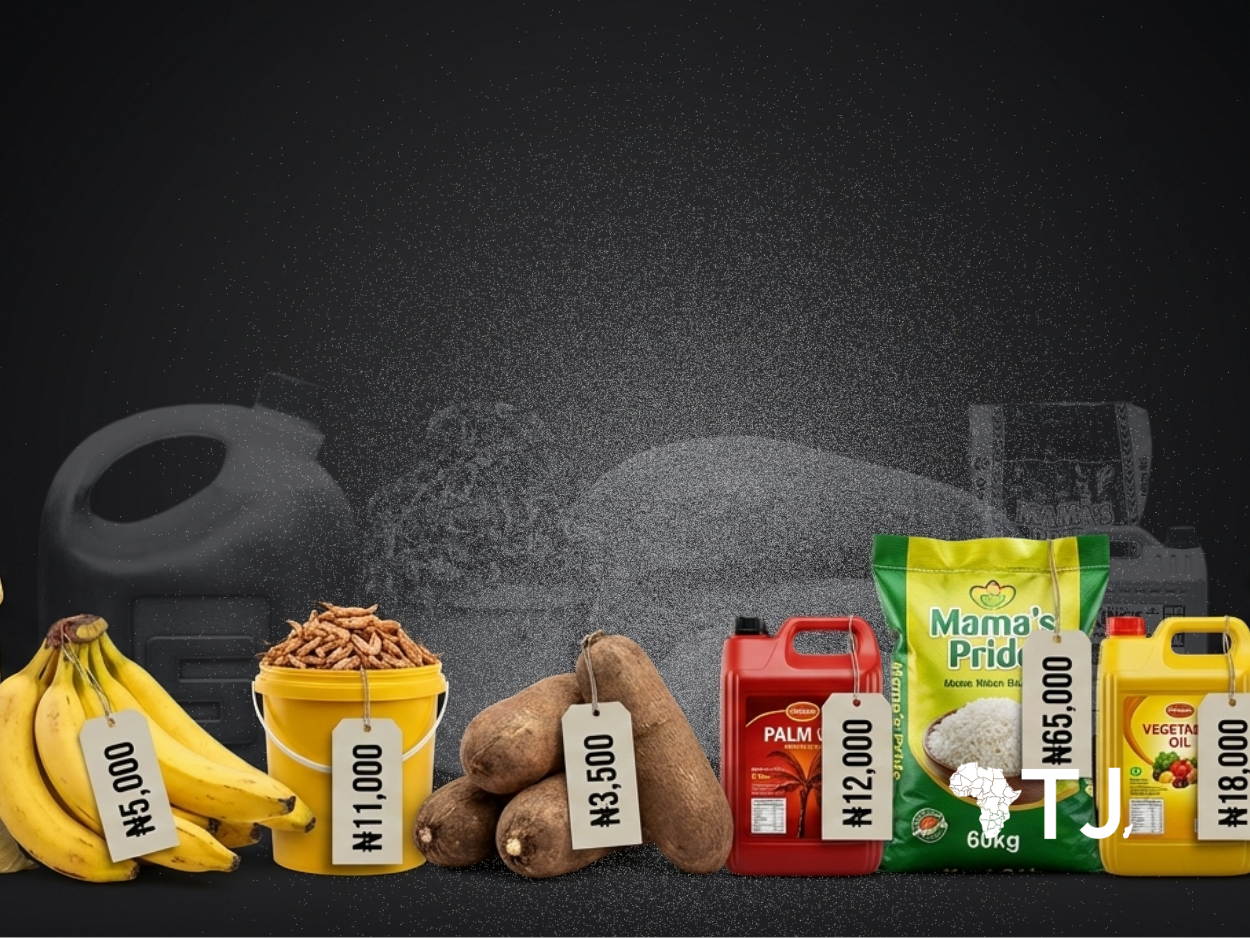
One of us went to buy a basic food item in Lagos during the Salah period and was quoted a price that felt unusually high. Later that same day, the exact item was found selling for significantly less in another city.
That experience made something clear.
Many Nigerians are not overpaying because they are careless. They are overpaying because they do not have access to reliable price information.
That gap is what became Bango.
Living in a Market Without Clarity
Operating in Nigeria means constantly dealing with price changes. Inflation is not abstract. It shows up in everyday purchases. Prices shift quickly, and most people are left to guess what is fair.
Over time, people develop their own systems. They call friends. They ask traders. They compare notes informally. It works, but only within small circles. Beyond that, there is no structure.
That is the problem Bango is trying to solve.
We were not trying to change how people buy. We were trying to give them better visibility before they spend.
Building Around Existing Behaviour
From the beginning, the insight was simple. People are already sharing price information. It just does not scale.
Technology became the way to organize that behaviour. Instead of building something complex, we focused on simplicity. A web-based platform where people can easily contribute prices and find information quickly.
The goal was not to replace the market culture. It was to structure it.
As the platform grew, the model shifted. Instead of chasing data ourselves, the community became the source. The platform became the system, and the users became the engine.
Earning Trust Before Scale
One of the biggest challenges was trust.
Price is sensitive. People are naturally skeptical, especially in a market where information is often unreliable. We had to prove that Bango existed to empower users, not to take advantage of them.
Growth came without paid advertising. In just over a month, we crossed 1,000 users organically. More importantly, users were contributing data on their own. That was the real signal.
Trust was forming.
From Guesswork to Data
As more people began using the platform, behavior started to shift.
Instead of relying purely on instinct, users began checking prices before buying. There was a gradual move from guesswork to more informed decisions.
Technology also removed location barriers. Someone could now access price insights beyond their immediate environment. What used to be limited to a small network could now be shared more widely.
Building a Shared System
What Bango is building is not just a tool. It is a shared system.
A way for people to look out for one another before spending their money. A way to make pricing more transparent, not just for buyers, but for sellers as well.
Looking ahead, the focus is on improving data accuracy, expanding commodity coverage, and building smarter tools that help users act confidently.
The vision is simple.
To create a trusted network at scale, where Nigerians are better informed, more confident, and less exposed to inconsistent pricing.
Because sometimes, the most valuable information is knowing what something should actually cost.