Tag: food

  • He Once Called 112 Because He Needed Food. Now He’s Building openChow to Help Students Fight Hunger

    He Once Called 112 Because He Needed Food. Now He’s Building openChow to Help Students Fight Hunger

    There was a period during university when finding his next meal became more urgent than focusing on his studies.

    For the founder of openChow, the situation became so difficult that he once called 112 to see if he could get help getting food. He didn’t get the help he needed.

    At the time, it felt like a deeply personal problem. But as he began speaking to other students, he realised that his experience was far from unique. Many students had struggled with food insecurity while trying to navigate school, often without knowing where to turn for help.

    That experience eventually became the starting point for openChow.

    The platform was built around a simple idea: no student or vulnerable person should have to face hunger alone.

    Student hunger is often discussed as a financial problem, but the effects extend into education and everyday life. When a student is worried about where their next meal will come from, concentrating in class, studying for an exam, or simply getting through the day becomes considerably harder.

    The challenge is also not only about getting food to people who need it. There is another question that often comes with charitable giving: what happens after someone makes a donation?

    For openChow, building trust has become one of the most important parts of the product.
    Rather than directing donations into an anonymous pool, the platform allows donors to choose a specific MamaPut and fund meals online. Donated meals are then publicly tracked, giving contributors greater visibility into where their support is going.

    Technology, in this case, is not simply being used to make donations more convenient. It is being used to create a more transparent connection between the person giving and the person receiving.

    That approach has also helped openChow build an early community around its mission. After the founder shared his own experience publicly, thousands of people responded with stories of their own experiences with hunger during university.

    For the founder, that response became an important validation of the problem openChow was trying to solve. The platform was not simply addressing one person’s experience. It was responding to a wider issue affecting students and vulnerable people.

    One of the lessons the team has taken from this is that people respond to honesty. openChow has chosen to build in public, sharing its challenges, numbers, and progress with its community. That transparency has become part of how the platform approaches trust.

    The next stage is to expand beyond its current network of vendors into more cities across Nigeria. The team also wants to work with businesses, universities, and organisations that share its belief that people should not have to choose between learning and eating.

    If additional funding comes in, the priorities are straightforward: expand the vendor network, improve the technology, and strengthen the systems that keep the platform transparent and sustainable.

    What started with one university student’s struggle to find his next meal is now becoming an attempt to build a more organised way for communities to respond to hunger.

    For openChow, the ambition is not simply to make food donations easier. It is to make them more visible, accountable, and accessible to the people who need them.

  • Why Chowdeck is the Unsung Hero of Lagos Hustle Culture

    Why Chowdeck is the Unsung Hero of Lagos Hustle Culture

    Before Chowdeck showed up, ordering food without bleeding money on delivery fees or waiting two hours felt like a fairy tale.

    Bike men would quote you 5k to cross two neighbourhoods, Jumia Food, and the others slapped ridiculous charges on every order, and most times your jollof still arrived cold.

    Then Chowdeck landed in Lagos and quietly changed the game.

    Chowdeck isn’t just another delivery app, it’s a community of riders, restaurants, and everyday hustlers who finally made “quick and cheap” mean something real.

    In a city where traffic can swallow three hours of your life without warning, being able to get a full plate of egusi and pounded yam (or shawarma, or indomie deluxe) delivered for as low as ₦600 is revolutionary.

    That’s cheaper than the okada you’d take to the buka and back, and you can get free deliveries and a couple other freebies with a members subscription starting at just ₦3,500 a month.

    I’m the typical Lagos creative: 14-hour workdays, back-to-back Zoom calls, deadlines breathing down my neck.

    The moment hunger hits, my brain wants to shut down. Stepping out isn’t an option. Lagos traffic doesn’t care about your client presentation at 4 pm.


    Cooking? I love my kitchen, but not when I’m in the zone. Chowdeck became my lifeline.

    I’ve ordered from Chicken Republic in Ikorodu to my house in Federal Low Cost Housing Estate at 7:47 pm and had hot food in my hands by 8:09 pm. Two thousand five hundred naira total, including delivery. Try doing that with any other platform in 2019–2021.

    But it’s bigger than my personal convenience. Chowdeck created real jobs for thousands of young riders who now earn daily without needing a “connection” or university degree.

    Restaurants that were barely surviving now get orders from customers 30 minutes away, they would never have reached. Small businesses think that a woman making killer asun in Surulere or the guy doing moi-moi and akara in Ajah can now list on Chowdeck and blow up overnight.

    In a continent where logistics remains one of the biggest barriers to everything (e-commerce, healthcare, you name it), Chowdeck proved you can build hyper-efficient last-mile delivery that actually works for African wallets and African chaos.

    They’re in Morocco, Kenya, Uganda, Ghana, Côte d’Ivoire, and still flying under the radar while the spotlight stays on fintech unicorns.

    Chowdeck deserves way more flowers. In the middle of Lagos madness, they made it possible for us to stay locked in, eat well, and keep creating without breaking the bank or wasting half the day. If that’s not proper African innovation, I don’t know what is.

  • Not all tech brands are app or fintech, Meet Mozzi Pizza, a Kigali digital dining game changer

    Not all tech brands are app or fintech, Meet Mozzi Pizza, a Kigali digital dining game changer

    Mozy Pizza Remera–Gisimenti

    When people talk about African tech brands, they usually mention apps, fintech startups, or mobility companies.

    But for me, one of the most impressive tech-driven brands I use almost every week is Mozy Pizza, right in Remera–Gisimenti, Kigali.

    It’s more than a restaurant, it’s a smooth digital experience that makes ordering food in the city feel modern, fast, and stress-free.

    My relationship with Mozy Pizza started on a busy afternoon when I didn’t have time to leave work. A friend told me, “Just order it on Vuba Vuba.” I tried it once… and now it’s my go-to for pizza, burgers, shawarma, and even their surprisingly good coffee. What keeps me loyal isn’t just the food, it’s how technology connects everything, from ordering to payment to fast delivery.

    The first thing I love about Mozy Pizza is how easy it is to order online. Whether I’m at home or at school, I open Vuba Vuba, choose what I want, and confirm. No calling, no waiting, no miscommunication.

    Their menu is always updated, and I can track my order in real time. For a city like Kigali that’s growing quickly, that level of convenience matters.

    Payments are another thing they’ve nailed. Mozy accepts Mobile Money, Visa cards, and other digital options.

    This makes it simple for anyone, whether you prefer MoMo or card payments, to check out in seconds. It feels like the brand truly understands how young Rwandans live: cashless, online, and always on the move.

    And of course, we have to talk about delivery. Mozy Pizza delivers across Kigali, and they are consistently fast.

    Even during peak hours, I get updates, and the riders always arrive with warm food. That reliability is one of the reasons I consider Mozy a tech-enabled brand worth celebrating. They have blended good food with the right digital tools to solve a real problem: getting quality meals quickly and conveniently in a busy city.

    In a market where many restaurants still rely on traditional methods, Mozy Pizza stands out by embracing technology to improve customer experience.

    It may not look like a typical “tech company,” but the way it operates — online ordering, digital payments, and efficient delivery — is exactly what modern African consumers need, and one thing I have noticed is that they are also liked by internationals like Nigerians, Indians, Europeans and those one comes from alba ,, their menu is preferable.

    For me, Mozy Pizza is more than a place that makes great pizza. It’s a perfect example of how technology can transform everyday services and make life easier.

    That’s why it’s the African tech-powered brand I genuinely love.

  • Bango’s Growth to 1,000 Users Reflects Demand for Price Visibility

    Bango’s Growth to 1,000 Users Reflects Demand for Price Visibility

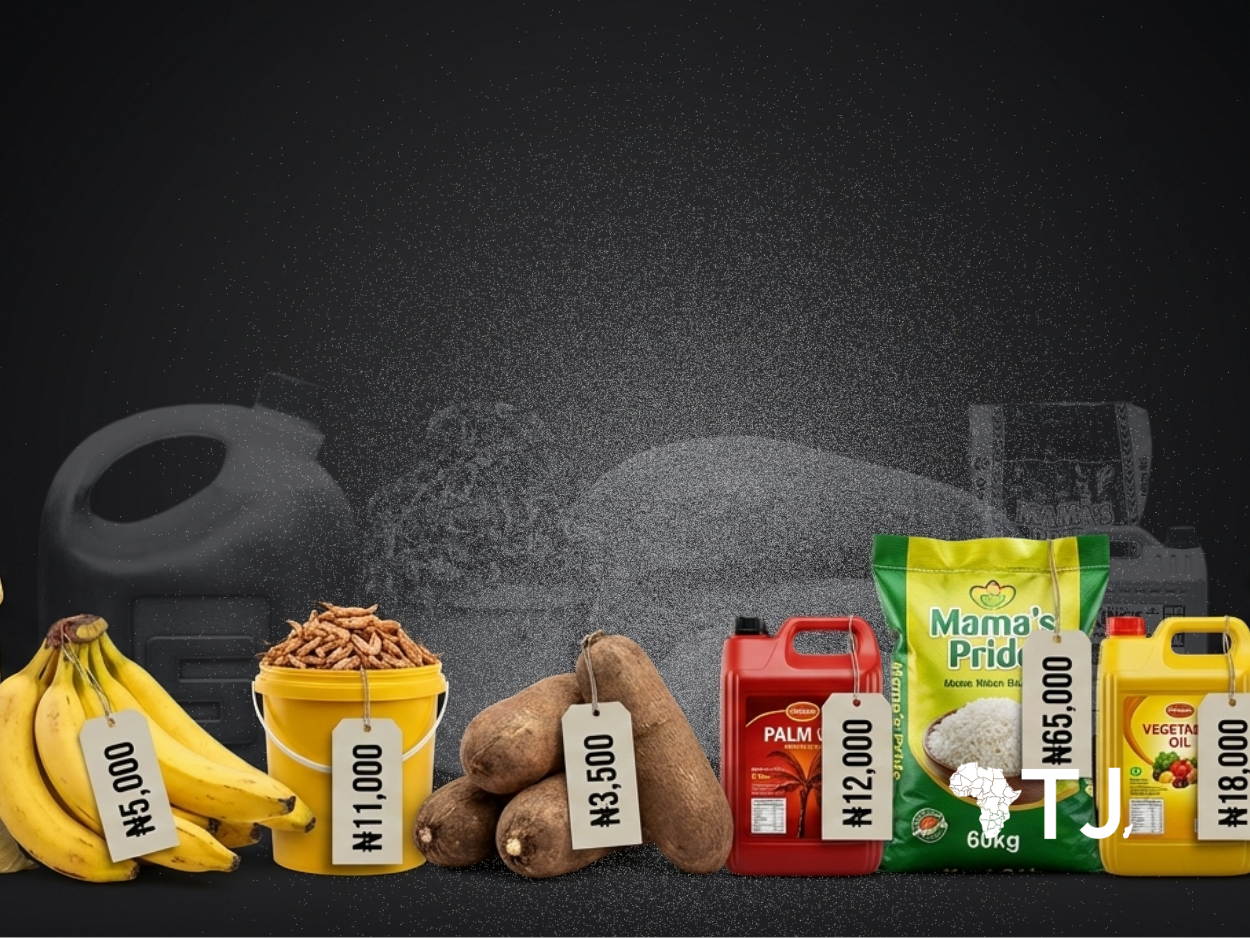
    One of us went to buy a basic food item in Lagos during the Salah period and was quoted a price that felt unusually high. Later that same day, the exact item was found selling for significantly less in another city.

    That experience made something clear.


    Many Nigerians are not overpaying because they are careless. They are overpaying because they do not have access to reliable price information.

    That gap is what became Bango.

    Living in a Market Without Clarity

    Operating in Nigeria means constantly dealing with price changes. Inflation is not abstract. It shows up in everyday purchases. Prices shift quickly, and most people are left to guess what is fair.

    Over time, people develop their own systems. They call friends. They ask traders. They compare notes informally. It works, but only within small circles. Beyond that, there is no structure.

    That is the problem Bango is trying to solve.

    We were not trying to change how people buy. We were trying to give them better visibility before they spend.

    Building Around Existing Behaviour

    From the beginning, the insight was simple. People are already sharing price information. It just does not scale.

    Technology became the way to organize that behaviour. Instead of building something complex, we focused on simplicity. A web-based platform where people can easily contribute prices and find information quickly.

    The goal was not to replace the market culture. It was to structure it.

    As the platform grew, the model shifted. Instead of chasing data ourselves, the community became the source. The platform became the system, and the users became the engine.

    Earning Trust Before Scale

    One of the biggest challenges was trust.

    Price is sensitive. People are naturally skeptical, especially in a market where information is often unreliable. We had to prove that Bango existed to empower users, not to take advantage of them.

    Growth came without paid advertising. In just over a month, we crossed 1,000 users organically. More importantly, users were contributing data on their own. That was the real signal.

    Trust was forming.

    From Guesswork to Data

    As more people began using the platform, behavior started to shift.

    Instead of relying purely on instinct, users began checking prices before buying. There was a gradual move from guesswork to more informed decisions.

    Technology also removed location barriers. Someone could now access price insights beyond their immediate environment. What used to be limited to a small network could now be shared more widely.

    Building a Shared System

    What Bango is building is not just a tool. It is a shared system.

    A way for people to look out for one another before spending their money. A way to make pricing more transparent, not just for buyers, but for sellers as well.

    Looking ahead, the focus is on improving data accuracy, expanding commodity coverage, and building smarter tools that help users act confidently.

    The vision is simple.

    To create a trusted network at scale, where Nigerians are better informed, more confident, and less exposed to inconsistent pricing.

    Because sometimes, the most valuable information is knowing what something should actually cost.

  • How Amoke Oge Turned Lagos Food Business Into A ₦2.3 Billion Success With Technology

    How Amoke Oge Turned Lagos Food Business Into A ₦2.3 Billion Success With Technology

    There’s something inspiring about watching someone turn passion into serious money. Hajia Amoke Odukoya, better known as Amoke Oge, did exactly that with her Amala food business. Today, it’s a ₦2.3 billion success story.

    Her journey isn’t just about cooking great food. Although her amala is legendary in Lagos, it’s also about how she used food technology and delivery platforms to solve real problems. As a result, she scaled beyond the walls of a single kitchen and built one of the most inspiring food businesses in Lagos.

    Starting Small, Dreaming Big

    In the early 2010s, Amoke Oge started with less than ₦200,000. She learned to cook from her sister, Alhaja Saudi (known locally as Iya Amoke), who was already making waves with food in Lagos. With her husband, Ishola Ade, supporting the vision, they began grinding yam and cassava the traditional way, feeding their community from a single kitchen.

    However, success brought its own problems. As inflation hit 28.9% in 2023, running a physical restaurant became brutal. Stores were packed. Customers grew frustrated while waiting for tables. Seating was limited. The traditional model was hitting its limits. After all, you can only serve so many people at once when they must physically show up.

    The Platform Play

    Photo from Refined.ng
    The Platform Play Image Caption

    Two to three years ago, Amoke Oge made a move that changed everything. She joined Chowdeck, one of Nigeria’s fastest-growing food delivery platforms.

    This wasn’t just about adding delivery as a side option. Instead, she went all-in on the platform model, letting Chowdeck handle logistics while she focused entirely on cooking. Consequently, this strategic embrace of food technology turned a beloved local kitchen into a scalable food business in Lagos.

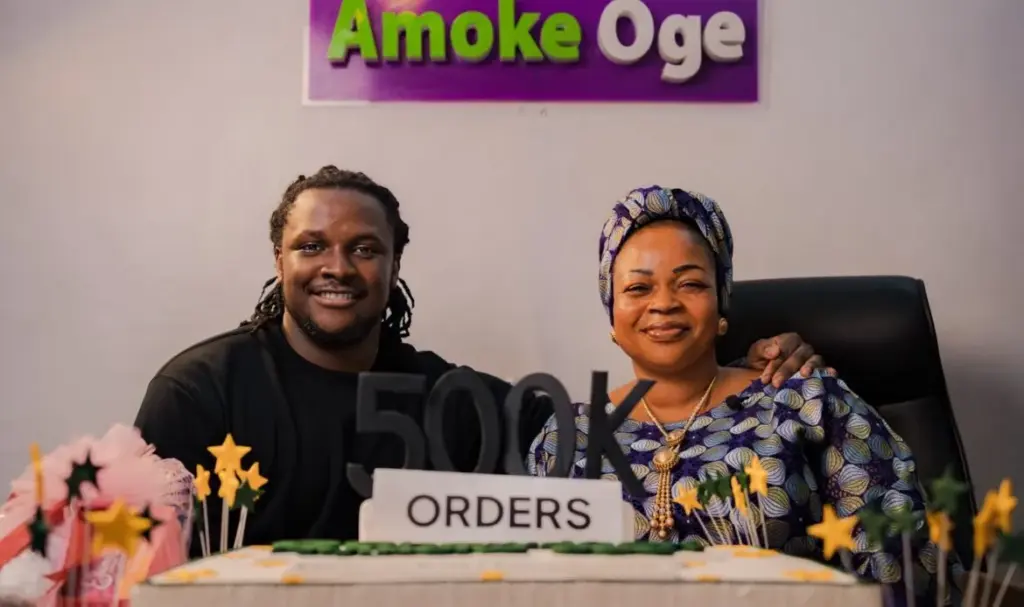
    The results speak for themselves. Over 500,000 deliveries have been completed, making her the first woman-led business to hit that milestone on the platform.

    The numbers are striking. Amoke Oge is now averaging ₦4,600 per order. Yes, that’s higher than what you’d pay eating in a traditional bukka. Yet it’s also what people are willing to pay for convenience and quality delivered to their door.

    Just by leveraging food delivery technology in Lagos, Amoke Oge moved from a single kitchen to multiple outlets. In addition, she built a repeatable system for growth.

    Scale and Strategy

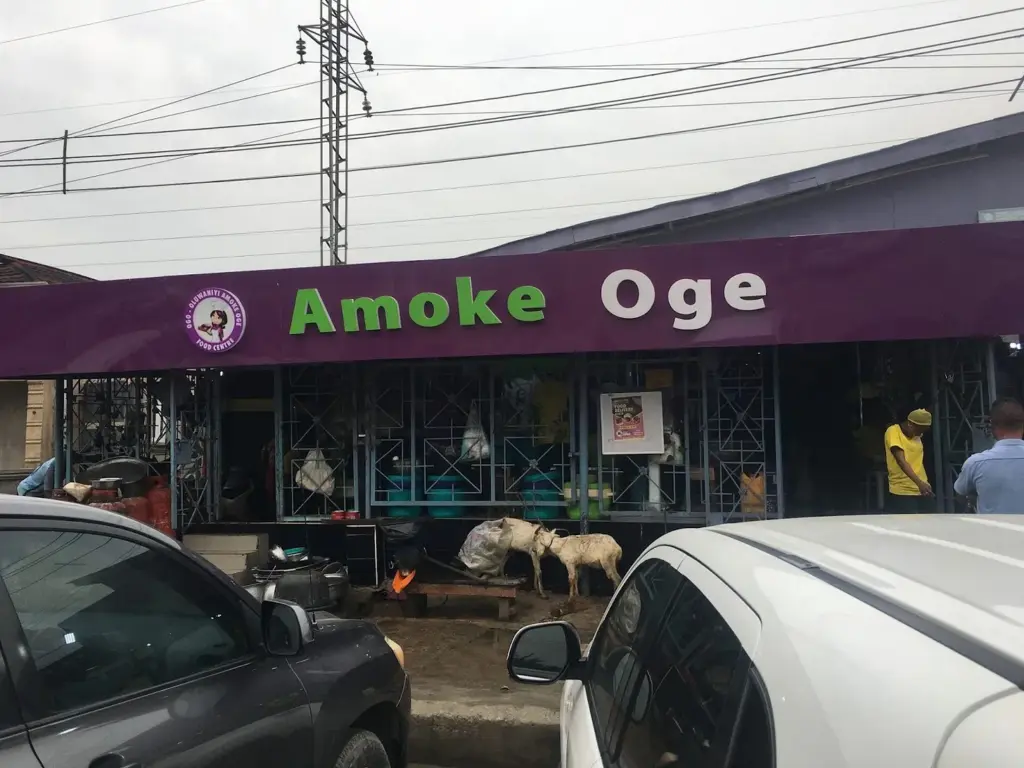
    Today, Amoke Oge operates seven locations across Lagos — Oshodi, Surulere, and others — with plans to expand to ten branches soon. That expansion is directly enabled by the delivery model.

    It’s a technology-based food delivery platform where Chowdeck manages the connection between vendors, delivery riders, and customers. Therefore, vendors like Amoke Oge can focus on cooking while leveraging the platform’s infrastructure for order fulfillment and delivery.

    Instead of worrying about foot traffic and prime real estate for each new location, she can focus on kitchen efficiency and meeting delivery demand.

    The ₦2.3 billion in revenue isn’t just impressive. It’s also proof of concept for how traditional food businesses in Lagos can use food technology to reach entirely new markets and price points.

    Why This Matters

    Amoke Oge’s story resonates because it’s not about replacing tradition with technology. She’s preserved the authenticity of Yoruba cuisine while using modern tools to reach more people. Amala isn’t just food. It’s a cultural heritage. Yet she’s found a way to scale that without losing what makes it special.

    For entrepreneurs watching from the sidelines, there are clear lessons here. She identified a real constraint (physical space limiting customers), found a technology solution that addressed it (delivery platforms), and executed consistently enough to become a category leader.

    Meanwhile, the timing worked in her favor too. Chowdeck just raised $9 million in Series A funding, which suggests investors believe in the model she’s been proving works.

    Lessons for Food Entrepreneurs in Lagos

    • Start with authenticity. Whether it’s amala, suya, or small chops, build your food business around something real.
    • Also, use food technology as leverage. Platforms like Chowdeck or Glovo can handle logistics while you focus on quality.
    • Think beyond your kitchen. Delivery means your reach isn’t limited by foot traffic or seating space.
    • Consistency matters. High quality and prompt delivery build trust and repeat customers.
    • Finally, track your numbers. Knowing your order averages and growth patterns helps you plan expansion intelligently.
    • For small food businesses in Lagos, these lessons are a practical blueprint you should follow. The sky is wide enough for everyone to fly if you do it strategically.

    What’s Next for Amoke Oge

    Photo from Businesspost

    Amoke Oge represents something bigger than one successful food business. She’s part of a generation of African entrepreneurs who are figuring out how to use food technology platforms to scale traditional businesses without losing their essence.

    Her success creates a template. Start with something you’re genuinely good at. Identify where technology can remove constraints. Execute consistently. Not revolutionary advice, but clearly effective when done right.

    The real question now is who follows her playbook next, and in which industries. Because if you can scale amala to ₦2.3 billion, what else becomes possible?