In 2016, the idea that would eventually become PlyVerd did not look like a tech startup.
It looked like frustration.
Nkwachikwere Amadi was running a travel agency while pitching software solutions when he helped a student apply to study abroad using the traditional manual method. The process was fragmented, paperwork-heavy, and ultimately unsuccessful. Schools in Lagos and Abuja rejected partnership attempts. The system felt opaque and inefficient.
But one question stayed with him:
What if this could be rebuilt as technology?
He carried that thought for years. In 2022, he finally acted on it.
With just $100, Google Forms, Airtable, and a basic WordPress site, he launched DemeraldStudys. There were no investors. No safety net. Just the determination to solve a problem he had seen derail lives.
Still, something felt incomplete.
At Lagos Startup Week in 2023, Amadi had a defining realization. He was not supposed to digitize the old immigration model. He needed to rebuild it entirely.
That was the birth of PlyVerd.
Turning Migration Into Infrastructure
The core insight behind PlyVerd is simple but powerful.
Talent is borderless. Opportunity is not.
Across Africa, highly skilled professionals face invisible walls not because they lack ability, but because the migration process is often chaotic, opaque, and riddled with misinformation. Families liquidate savings. Professionals trust unverified “agents.” Rejections become financially and emotionally devastating.
PlyVerd was built to replace guesswork with structure.
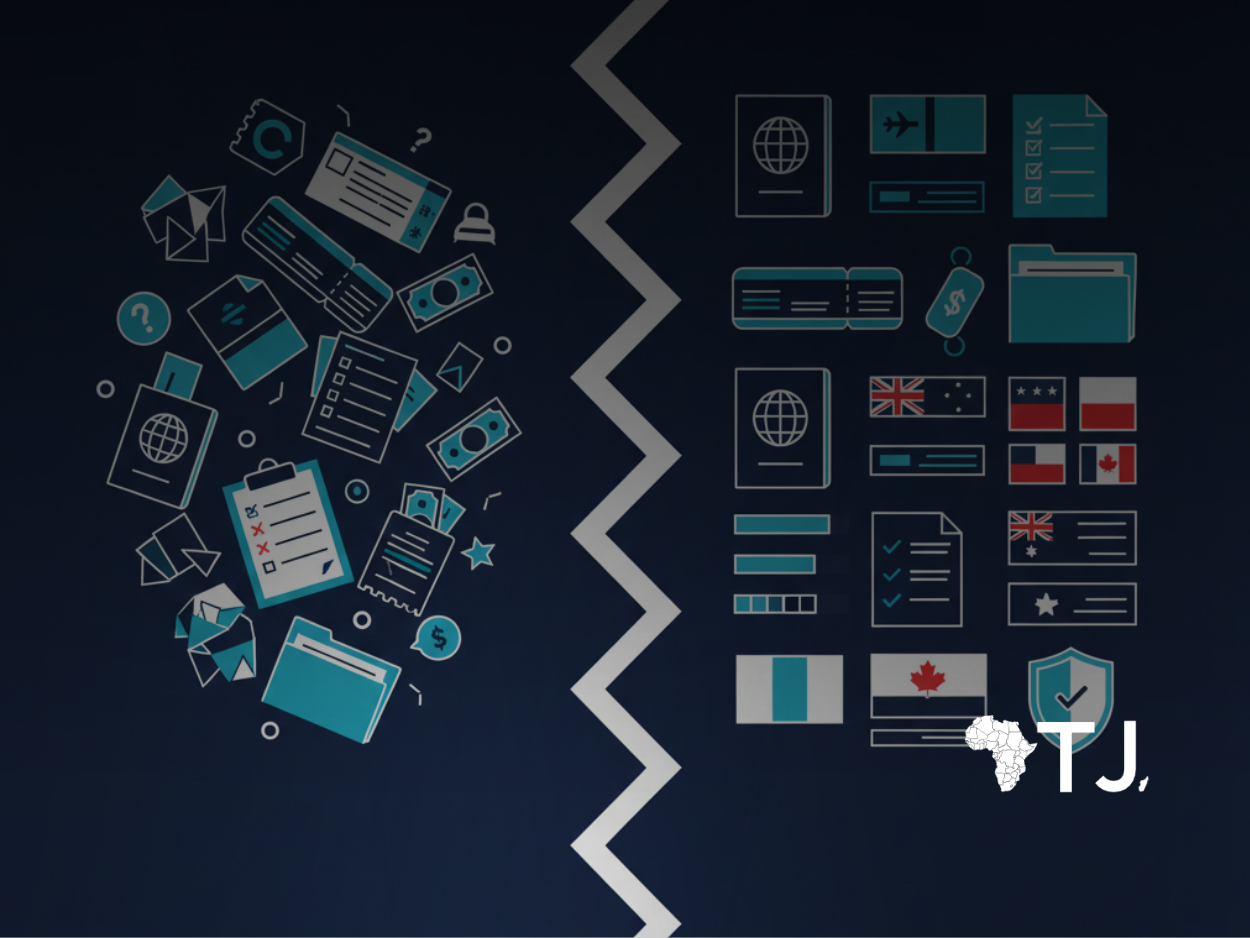
Instead of acting as a traditional travel agency or document processor, the platform positions itself as an operating system for legal migration. It consolidates a user’s entire immigration history, audits eligibility across countries, and tracks application progress in a centralized digital vault.
Migration, in this model, becomes a managed lifecycle rather than a one-time gamble.
Bootstrapping in a Low-Trust Market
Starting in Nigeria’s immigration services market meant confronting a credibility crisis.
The industry has long been associated with scams, broken promises, and exploitation. Convincing users that PlyVerd was infrastructure, not another scheme, was one of the company’s steepest challenges.
The early phase between 2022 and 2023 relied on simple tools. Google Forms, Airtable, and WhatsApp communities were used to validate demand and prove that transparency itself had value. Over 1,800 community members engaged during this period.
But the scale required more than spreadsheets.
Immigration policies change constantly, with hundreds of updates globally each year. Manual tracking could not keep up. In 2024 and early 2025, the team rebuilt everything into a proprietary AI-driven compliance engine that automates eligibility assessments, identifies documentation gaps, and flags risk factors before submission.
In July 2025, PlyVerd officially launched its WebApp.
Data as Dignity
One of the most transformative shifts for users has been psychological.
Before PlyVerd, applicants depended on agents for updates. Documents were scattered. Past applications were difficult to track. The process felt opaque.
With PlyVerd’s Digital Vault, users consolidate visas, credentials, and documentation into one secure system they control. They can audit their profile against major pathways, including the UK, US, Canada, and Australia, simultaneously.
This transparency shifts migration from desperation to strategy.
To date, the platform has completed over 900 eligibility assessments and maintains a 100 percent client satisfaction rate, all achieved without paid advertising. The business has grown sustainably through customer revenue.
As users mature on the platform, their behavior evolves. The question shifts from “How fast can I leave?” to “How do I optimize my profile across multiple countries?”
That change signals deeper product-market alignment.
Defining Migration as a Service
PlyVerd is positioning itself within a new category: Migration as a Service.
Instead of selling visa outcomes, it productizes the process itself. The value lies in clarity, compliance, and lifetime profile management.
Amadi believes the future of migration is digital-first and AI-driven. Physical paperwork is fading. E-visas are becoming standard. Borderless identity management will define the next era.
PlyVerd’s long-term vision is ambitious: audit and secure 600,000 African profiles within three years and become the trusted operating system for African mobility.
The company is also exploring interoperability with embassy systems for one-click verification and building toward a future where digital mobility profiles function much like financial credit scores.
Building With Discipline
Bootstrapping from $100 shaped PlyVerd’s philosophy.
Constraints forced focus. Every feature had to solve a real problem. Customer revenue validated demand more reliably than investor capital.
If funding comes, the priority remains infrastructure and access. Strengthen the digital identity backbone. Expand language support. Improve mobile-first accessibility. Move faster without sacrificing sustainability.
The Mission
At its core, PlyVerd is about agency.
It envisions a future where an African professional can open a dashboard and know with certainty where their skills are competitive globally. Where migration decisions are informed by data, not desperation.
That is more than a tech story.
It is about dignity.