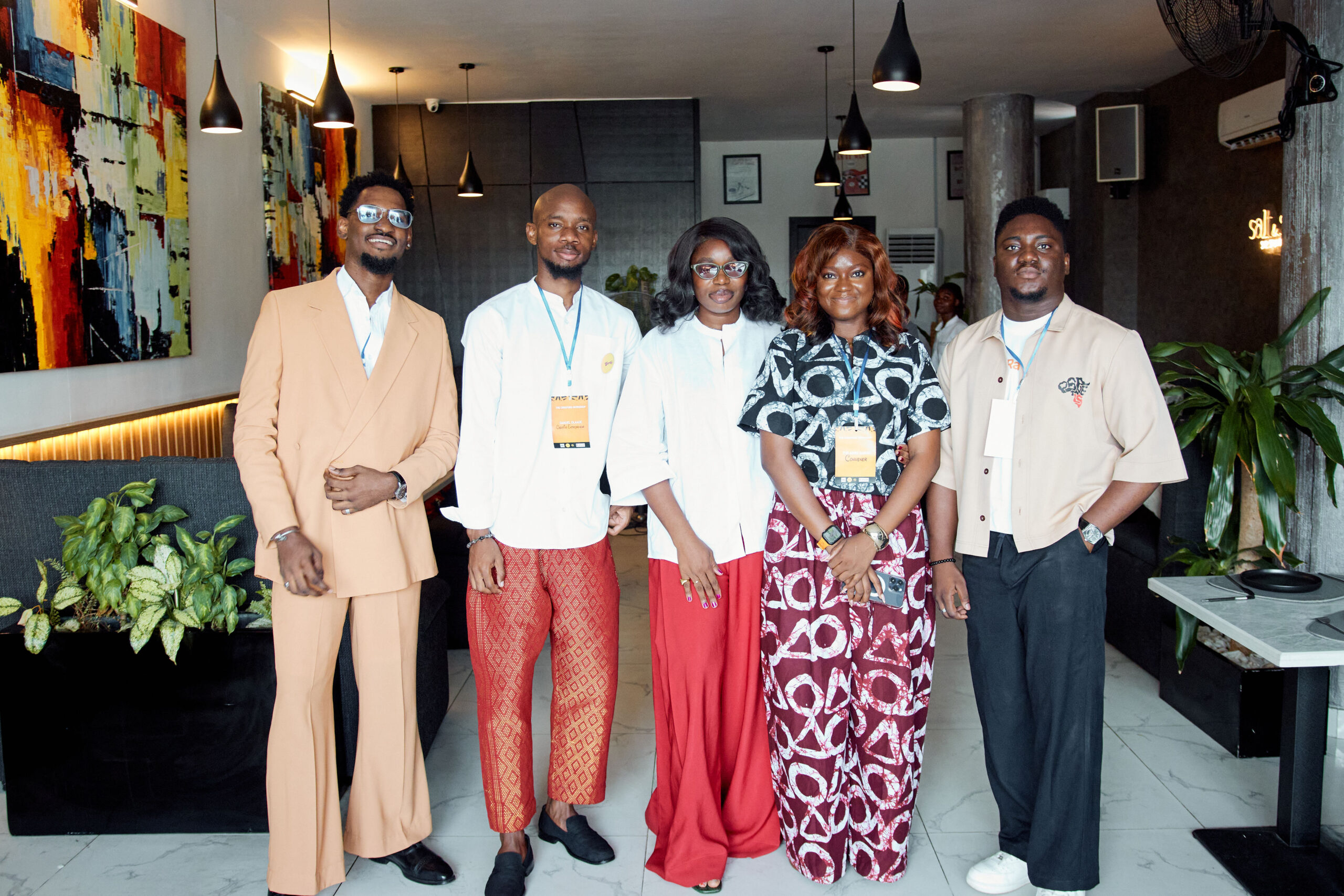
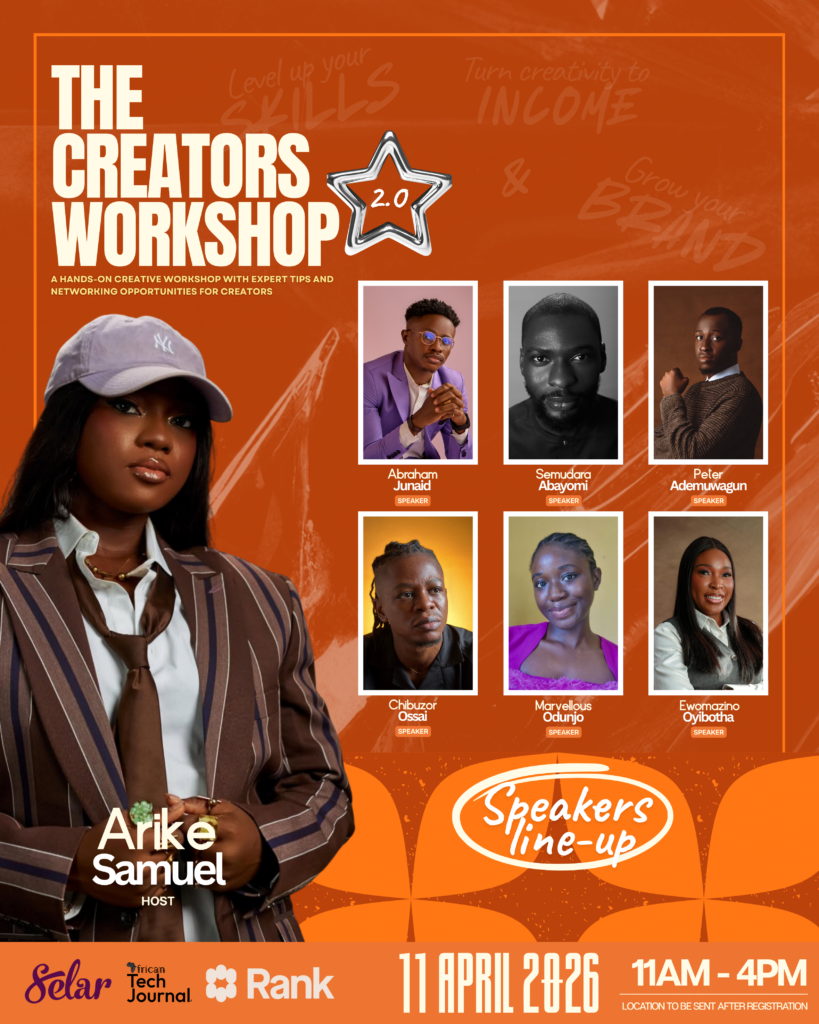
Creators Workshop 2.0 is the third edition of a hands-on creative learning experience designed to help creators sharpen their skills, learn practical strategies for content creation, storytelling, branding and scaling their creative business. Participants will gain actionable insights and real-time hands-on experience to grow their creative careers.
ORGANISER’S QUOTE
“The Creators Workshop was born out of a simple but powerful belief, that whatever idea or dream you’re sitting on, you actually can do it. This is the room we wished we had when we were starting out.” — Arike, Founder, The Creators Workshop
SPEAKERS & SESSIONS
Marvellous Odunjo — Video Editing & Storytelling in the Creator Economy Marvellous
Chibuzor Ossai — Video Editing & Color Grading Chibuzor
Peter Ademuwagun — Designing Compelling Content with Canva
Abayomi Semudara — Creating Content That Cuts Through the Noise
Abraham Junaid (AjayWhisper) — Building a Creative Career & Scaling Opportunities
Ewomazino — Protecting Your Work A focused session on the legal framework every creator needs.
KEY TAKEAWAYS FOR PARTICIPANT: Practical skills in video editing, storytelling, design and branding; insights into growing a sustainable creative career and monetising content; understanding of IP rights and how to protect creative assets; and networking and collaboration opportunities with fellow creators.
SOCIAL HANDLES & HASHTAG Organiser: @workwitharike
February 21, 2026. Lagos. 100 founders. One mission: build startups that don’t break under legal scrutiny.
What started in Kigali as an experiment in authentic founder conversations is coming to Lagos and it’s bringing something Nigerian tech rarely talks about openly: the compliance gap that kills promising startups.
Baraza Lagos: Tech Compliance & Legal Summit isn’t another pitch event or networking circus. It’s a 100-person advisory session designed around a single question: How do you build a tech company that’s scalable, investment-ready, and legally bulletproof?
The answer, according to organizers like Semudara Abayomi and Abisinuola Adedeji, isn’t more inspiration. It’s honest conversations about the regulatory minefields founders navigate daily and the practical tools to avoid them.
From Kigali to Lagos: The Baraza Model
The name comes from the Swahili word for “council” or “gathering” and that’s precisely the vibe. Not panels with polished slides. Not keynotes from people who haven’t built recently.
When Baraza launched in Kigali in November 2025, it attracted participants from seven countries and served as a pre-mixer for larger ecosystem gatherings like Norrsken Africa Week. Lagos inherits that model but adds a critical partner: the Nigerian Bar Association (NBA) Lagos Branch. This means founders get direct access to the legal expertise that determines whether a startup scales or stalls at Series A due diligence.
What Founders Actually Get
1. Compliance That Unlocks Capital
VCs invest in structures that won’t blow up during due diligence. Baraza Lagos tackles the unsexy fundamentals:
Corporate structuring that survives scrutiny.
Equity distributions and vesting schedules.
IP protection and NDPR (Data Privacy) compliance.
2. Regulatory Navigation
African landscapes are fragmented. Sessions break down how to actually navigate:
CBN guidelines for fintechs.
SEC rules for crypto and web3.
Cross-border compliance for regional scaling.
3. The 100-Person Advantage
By capping attendance at 100, Baraza ensures connection quality. Past attendees from Kigali report pitch decks refined on the spot, co-founders found, and investor intros made through these high-trust interactions.
Who This Is For
Founders raising or planning to raise (Seed to Series A+).
Co-founders navigating equity splits or governance.
Operators building compliance into company culture.
For years, Nigeria’s tech story has followed a predictable path. If a startup is serious, ambitious, or scalable, it must come from Lagos. The coast became shorthand for opportunities, while other cities were treated as feeders at best.
But as Lagos grows more crowded and expensive, that assumption is beginning to crack. And Ibadan is one of the cities proving why innovation no longer needs to be coastal.
Ibadan has always been known for education and culture, but in recent years, something else has been taking shape. Builders are no longer just learning there; they are building real products, creating companies, and attracting attention beyond the city.
Ibadan Tech Expo didn’t create this momentum, it revealed it.
Speaking on what the Lagos-first narrative has ignored, Mr Taiwo, the World’s Best CMO, a prominent marketing executive who frontlined spreading the news of Ibadan Tech Expo independently, explains:
“Cities like Ibadan are underestimated under the narrative of depth. Yes, Lagos is fast and ‘gingering’, but the calm environment in Ibadan, the proximity to top-tier institutions, and a strong intellectual tradition are constantly ignored.”
This perspective reinforces why Ibadan’s progress feels less noisy but deeply rooted.
Innovation was already happening
Long before the expo gained attention, Ibadan had already begun producing companies that challenged the idea that serious innovation must come from Lagos. One such example is Alerzo, a logistics company founded in Ibadan in 2019.
Instead of relocating to Lagos, Alerzo built and scaled its business from Ibadan. Over time, the company expanded its reach beyond the city into multiple regions of Nigeria, while keeping its core operations in Ibadan.
Alerzo’s growth tells a simple story: innovation can start inland, scale nationally, and still remain rooted where it began.
According to Mr Taiwo, emerging tech communities outside Lagos have practical advantages that are often overlooked:
“There is a low cost of living and operations, which extends the startup runway. There is access to talent in cities like Ibadan, which are more loyal and less distracted. There is also a community with stronger bonds and collaboration that makes marketing easier, speaking from my experience.”
These conditions quietly give founders room to build without the pressure cooker effect common in larger cities.
An ecosystem taking shape
What makes Ibadan’s tech story more compelling is that this progress isn’t happening in isolation.
The Oyo State Agency for Youth Development partnered with Ibadan Tech Expo 2025 to promote digital empowerment among young people. As part of this effort, the agency sponsored 100 basic tickets for youths, helping them access learning opportunities, industry conversations, and meaningful networks.
This kind of institutional backing signals intent. It shows that innovation in Ibadan is being nurtured deliberately and not left to chance.
From his experience working across marketing and ecosystem visibility, Mr Taiwo believes Nigeria’s tech growth has been limited by excessive concentration in one city:
“Innovation belongs everywhere. Over-concentration can make access limited. It can also make competition turn extractive, and this can prevent great ideas from getting the oxygen they deserve.”
He adds that platforms like Ibadan Tech Expo, Ibadan Job Fest, and Cirvee Tech Fest play a role in redistributing visibility, capital attention, and confidence across regions.
When attention moves inward
Perhaps the clearest sign of Ibadan’s growing relevance is who chooses to show up.
Across different editions of the expo, speakers and operators from Lagos and beyond have taken part, including Seye Bandele, co-founder and CEO of PaidHR, Seun Onigbinde, Director of BudgIT, Victor Ehindoro of POTTV Media, HR professional Felix Bissong among many others. Executives from organisations like Moniepoint and CcHub have also contributed to the conversation.
When people who typically operate at the center of Nigeria’s tech ecosystem travel inward to participate, it signals a shift. Ibadan is no longer just observing innovation, it is attracting it.
On what it will take for Ibadan to compete sustainably as a tech hub, Mr Taiwo notes:
“Ibadan needs continued collaboration between academia, industry, and government. We need consistent community-led platforms and stronger founder-investor-policy alignment. And we are closer than many people think. The talent is here. The ideas are here too.”
More than a one-off moment
With support from brands like LightNG, Ibadan Tech Expo has now held multiple editions, with recurring participation from big brands such as Cardify Africa, Moniepoint, CcHub, Impact Hub.
This repetition matters. It suggests continuity, growing trust, and an ecosystem that is beginning to sustain itself.
Mr Taiwo’s personal decision to remain in Ibadan underscores the broader argument the expo highlights:
“I choose to stay in Ibadan because Lagos is not the sole gateway to success. If a young founder asked me whether they must move to Lagos to succeed, my answer would be NO.”
He points to his experience with Cardify:
“I joined Cardify from Day 0, and today, they are being used in over 74 countries in the world. All work done from Ibadan.”
A broader tech future
Ibadan is not trying to replace Lagos, and it doesn’t need to. What it is doing, quietly and steadily is expanding Nigeria’s tech map.
The future of innovation in the country will not belong to one city alone. It will belong to places that invest in people, build structure, and create room for ideas to grow regardless of proximity to the coast.
As Mr Taiwo puts it plainly, drawing from his experience working on the visibility of the event:
“The future of Nigerian tech is distributed and inclusive, and Ibadan has a clear and major role to play in that future, unarguably.”
Ibadan is making that case, one edition at a time.
Stories like this don’t tell themselves. They are researched, shaped, and positioned with intention.
At Hype Empire, we don’t just chase attention; we build credibility.
We help brands, startups, and events turn real work into clear narratives that the media understands, audiences trust, and partners respect.
If you’re building something meaningful and want it positioned with clarity, context, and long-term relevance, Hype Empire is the team to work with.
Follow HYPE EMPIRE on social media for more content and information on PR and Promotion:
What started as a networking meetup has evolved into Africa’s most consequential deal-making platform and a signal of where Nigeria’s tech ecosystem is headed next.
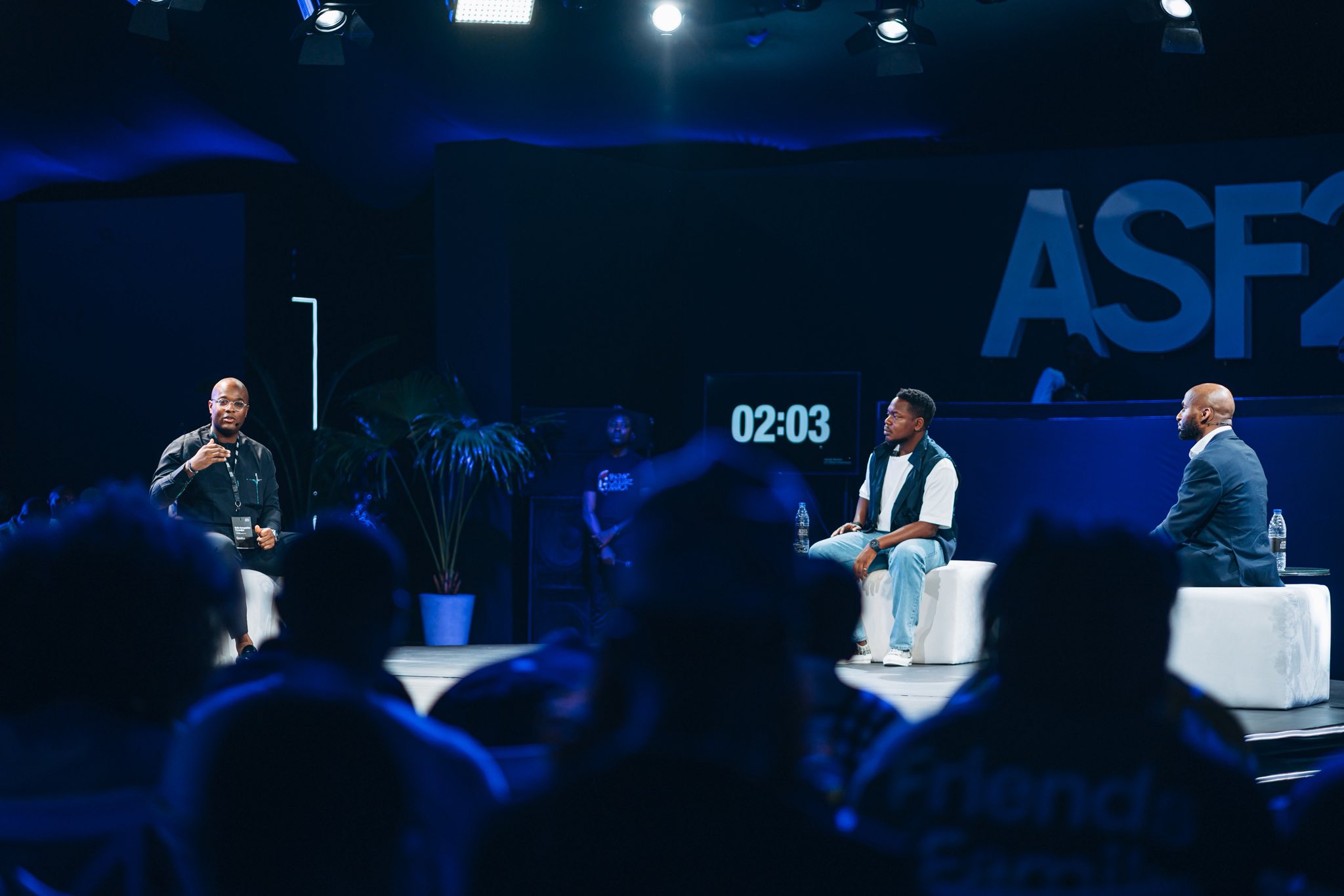
In 2023, the Africa Startup Festival (ASF) quietly began in Lagos with a simple but urgent idea: bring Nigeria’s growing startup ecosystem into one room.
At the time, founders were building in silos. Investors were searching for quality deals and operators needed visibility. ASF emerged as a meeting point, a space designed for conversations, introductions, and shared ambition. Hosted by Spark Africa, the festival was first reported in 2023 as an innovation and networking gathering that convened founders, investors, and ecosystem builders.
That first edition exceeded expectations. It attracted 3,658 participants from six different countries, brought together 1,953 startups and 65 investors. It sparked hundreds of investment conversations according to Lagos Metropolitan. What started as a networking hub had revealed something bigger: Nigeria was ready for structured deal flow.
2024 Edition: When Conversations Became Opportunities
By 2024, ASF entered its growth stage. The festival evolved from introductions to intention. Panels became sharper, pitch sessions became structured, and Investor participation became deliberate. ASF began positioning itself as a platform where capital meets clarity, not just ideas.
That year, ASF established itself as a go-to showcase for innovations and enterprise solutions shaping Africa’s future, while giving startups clearer pathways to investors, partnerships, and market exposure (Africa Tech Radio).
This edition marked an inflection point. ASF was no longer just facilitating meetings, it was designing outcomes.
2025 Edition: The Deal-Making Era Arrives
ASF hosted its biggest edition yet at the Balmoral Convention Centre, Federal Palace, Lagos on November 28, 2025. According to techpoint Africa, over 3,000 attendees filled the venue including founders, investors, operators, and ecosystem leaders from across Nigeria and beyond.
This time, ASF felt different.
The festival introduced three dedicated stages. A main stage for keynote speeches and industry panels, a startup stage spotlighting emerging founders and growth stories, and an investor stage designed for venture capital conversations and serious networking.
There were also deal rooms. Private, one-on-one spaces where startups and investors met with a clear goal: close meaningful conversations.
Sessions focused on the challenges founders face. Revenue model rigor, operations, scaling in tough markets. Reflecting a broader shift in Nigeria’s tech ecosystem from hype to sustainability.
By now, ASF had become what Business Insider describes as Africa’s top deal-making and networking event. Its definitive end-of-year gathering is one that sets the tone for partnerships and deals.
Antler Super Day pitch or founders celebrating wins
It started as a networking hub, offering much needed connection points in a growing but fragmented ecosystem.
Over time, it matured into a deal-making platform, structured pitch, investor matchmaking, and mentor outcomes took centre stage as seen in partnerships like the Antler Super Day initiative and curated investor talks in 2025. (Techpoint Africa).
Today, hosted in Lagos, Nigeria’s tech capital. ASF draws founders from across Africa while spotlighting Nigerian startups as serious global contenders. As Nnaemeka Clinton, CEO of Spark Africa, puts it, ASF is “more than an event; it’s a movement that empowers Africa’s startup ecosystem and provides a launchpad for African ingenuity to solve global problems” (Lagos Metropolitan).
From conversations in 2023 to capital in 2025, the Africa Startup Festival didn’t just grow.
It evolved step by step into a powerhouse where ideas meet action, and deals begin.
Closing ceremony or crowd applause shot from ASF 2025
At Hype Empire, we don’t just tell stories, we help build them.
If your startup or event is entering its next growth phase, let’s design the story and the strategy that moves it forward.
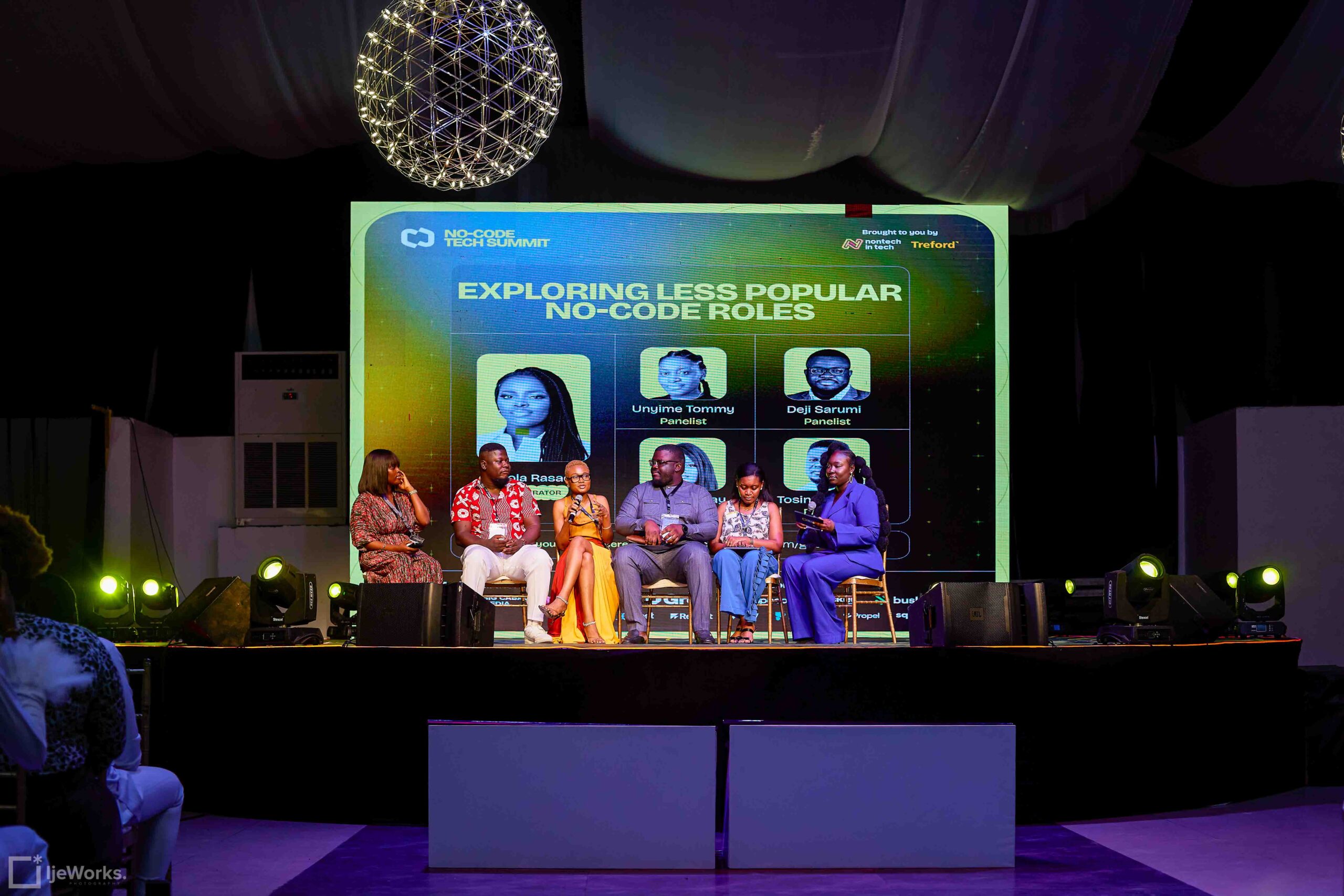
African Tech Journal is excited to spotlight the No-Code Tech Summit & Awards 3.0, an annual gathering driving the future of no-code technology in Africa and beyond.
This year’s edition brings together builders, creators, experts, and enthusiasts shaping the tech landscape without writing a single line of code.
Date: February 21, 2026 Location: Lagos, Nigeria Theme:BEYOND THE TOOLS: PEOPLE, PROCESS, AND POLICY
No-Code Tech Summit & Awards 3.0 is more than a typical tech event — it is a purpose-built platform for non-technical builders, operators, and founders shaping Africa’s tech ecosystem.
Attendees will gain practical insights from industry leaders, engage in focused sessions across People, Policy, and Process, and take part in conversations that go beyond tools to address how real tech products and companies are built and sustained.
The experience concludes with the No-Code Tech Awards, celebrating individuals and teams driving impact and excellence across the ecosystem.
Confirmed Highlights So Far:
– Award nominees across categories have been reviewed and selected, and public voting is now live. You can vote here – nocodetechsummit.com/awards/
– Awards will be presented at the official awards ceremony following the summit, exclusive to paid ticket holders.
– Three concurrent breakout masterclass sessions focused on people, policy, and process will be held.
– Expect a keynote session from a renowned industry leader
– Curated networking experience designed for meaningful connections
– Early Bird tickets are now available at ₦7,000 for a limited period.
Whether you’re a product designer, marketer, growth specialist, UX designer, community builder, or tech enthusiast, this summit offers learning, networking, and recognition in one space.
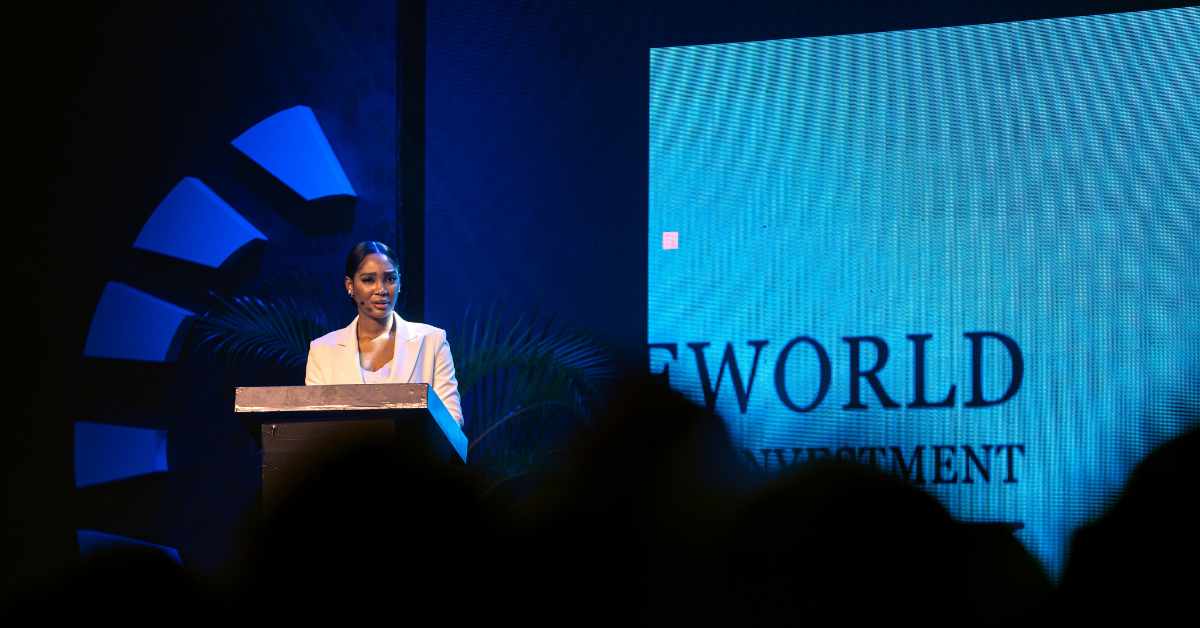
The Loveworld Trade & Investment Forum (LTIF) 2025, a two-day gathering designed to strengthen trade, investment, and enterprise growth across Africa’s emerging markets.
The inaugural edition, themed “Trust, Trade & Transformation,” brings together entrepreneurs, investors, policymakers, innovators, and business leaders to explore practical pathways for building resilient, scalable ventures in today’s evolving economic landscape.
Event Details – Date: November 19–20, 2025 – Time: 10:00 AM – 4:00 PM daily – Venue: Balmoral Convention Center, Ikeja, Lagos – Registration: Click Here
The Forum is structured as both a conference and a business exhibition, creating space for real dialogue, real deal flow, and real market access.
Over two days, attendees will engage across keynote conversations, high-level business panels, pitch sessions, investment roundtables, and industry masterclasses.
The exhibition floor will showcase solutions, brands, and ventures positioning themselves for scale in African and global markets.
For African Tech Journal, this aligns with our mission to document the work, the builders, and the systems shaping Africa’s innovation economy.
Events like LTIF provide more than networking value; they reveal how organizations, founders, and investors are actively redesigning growth models and cross-border collaboration in real time.
What To Expect Inside the Forum • Keynotes and strategic dialogues on trade, financing, and enterprise development • Investor roundtables on capital access and market expansion • Startup and SBO pitch blocks (early-stage and scale-ready) • Panels on technology, innovation, and operational resilience • Exhibition showcase featuring solution-driven African ventures
This is a platform for decision-makers, implementers, and emerging operators who are committed to building businesses that last.
If you are building, expanding, or looking to partner across African markets, LTIF is a space you should be in.
The 2025 edition of the 10Alytics Global Hackathon has officially wrapped and once again, it proved why it remains Africa’s premier data competition.
From thousands of registrations to project submissions, this year set a new benchmark for innovation, skill, and global participation.
If joined the 48-hour sprint or are catching up on the highlights. Here’s a full breakdown of what happened.
What Exactly is the 10Alytics Global Hackathon
The 10Alytics Global Hackathon is a high-energy, 48-hour virtual competition where Data enthusiasts compete to solve real-world problems using datasets, all while racing against the clock.
Prizes include: Up to $52,000 in cash, Scholarships, Industry visibility, Global networking opportunities, Portfolio-ready project experience.
2025 Edition
The 2025 edition happened November 29–30, 2025, Fully Virtual (Zoom + YouTube Live) and Open to participants worldwide
With thousands joining from across Africa, Europe, the Americas, and the Middle East, the hackathon has grown into a global showcase of Africa’s rising data talent.
What Happened During the Hackathon
DAY 1 – Kickoff, Dataset Reveal & Orientation
2,000+ registrations recorded, 300+ participants joined live across YouTube, Instagram, and LinkedIn
Judges were introduced alongside their career journeysand participants received problem statement briefing, competition rules & submission guidelines
From dataset exploration to community bonding, Day 1 set the stage for intense analytics work behind the scenes.
DAY 2 — Final Presentations & Live Judging
After 11 hours of analysis, visualization, and modeling
The top 30 were shortlisted, 13 finalists presented live on the YouTube stream for the Judges, Presenters had 10 minutes each to pitch their solutions, and judges scored each project in real-time.
Winners & Rewards
$2,000 in cash prizes shared among the top 3 winners
Top 4–10 finalists secured internship placements to grow, build, and accelerate their tech careers
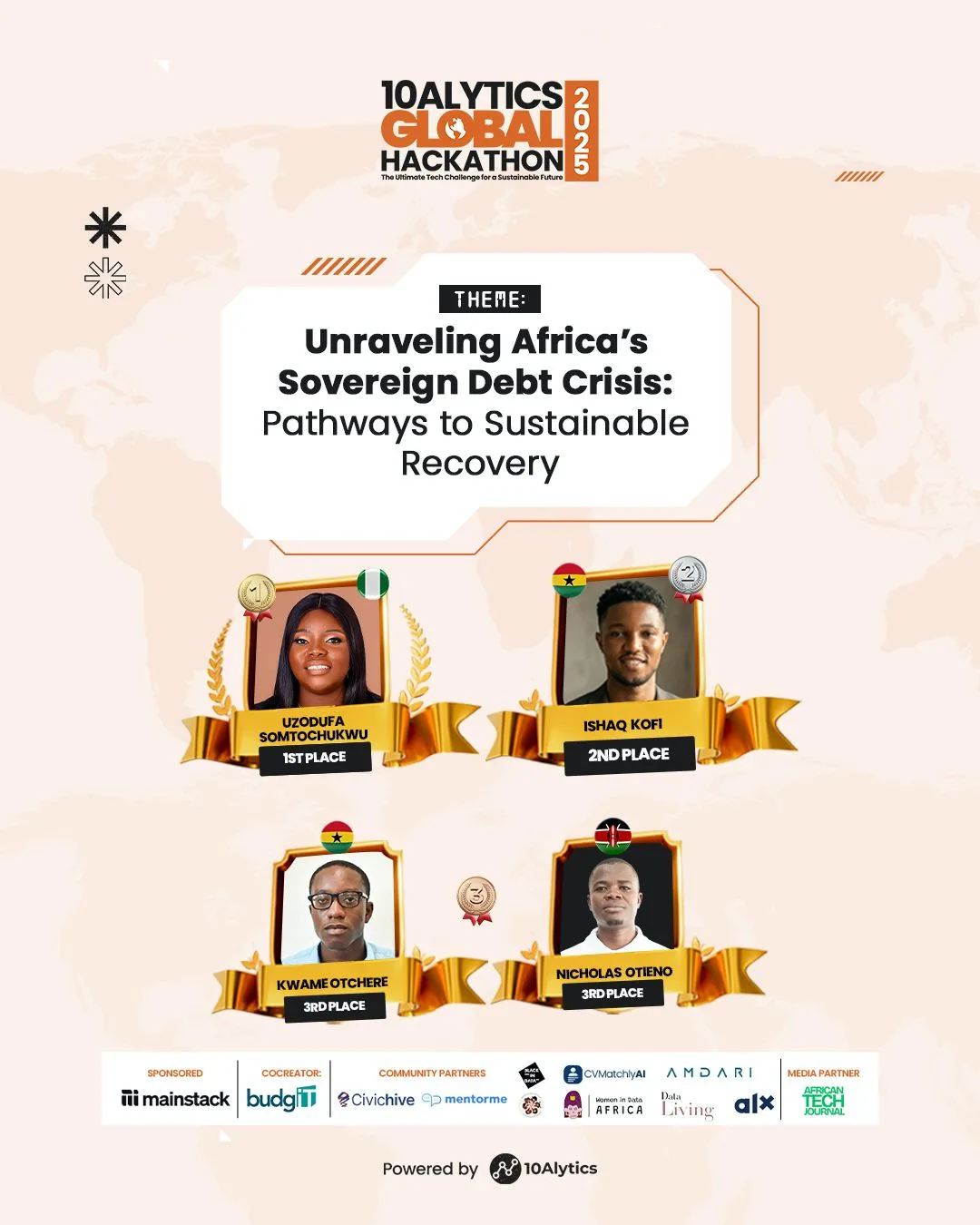
Uzodufa Somtocochukwu came prepared, and it absolutely showed! Her sharp timing and unforgettable presentation style wowed the judges. Competing against brilliant talents from Ghana, Kenya, and Nigeria, she earned an impressive 81.71%, sealing her victory.
Right behind her was Ghana’s own Ishaq Kofi, securing a strong second place. And in a plot twist nobody saw coming, Kenya’s Nicholas Otieno, who pitched last, delivered a standout performance that tied him with Ghana’s Kwame Otchere for third place.
The Ecosystem Behind the Hackathon
The 10Alytics Global Hackathon is deeply rooted in the broader mission of 10Alytics, a leading EdTech company committed to equipping Africans and the global diaspora with industry-ready technology skills. For five years, 10Alytics has built and nurtured talent for the global tech workforce, helping more than 2,500 individuals transition from the classroom into their first tech roles across the UK, US, Canada, Europe, Africa, and Asia.
The organization delivers premium, experiential training across high-demand fields such as Data Analytics, Business Analysis, Data Engineering, Data Science, Financial Analytics, HR Analytics, Scrum, CyberSecurity, DevOps Engineering and Product Design. Their Team brings deep practical experience, ensuring that learners receive hands-on, career-driven training that truly prepares them for real-world challenges. Maintaining a community of 10,000+ learners & alumni globally
2025 Hackathon Strategic Partners
BudgIT — Co-creation partner
Mainstack — Official sponsor
African Tech Journal – Media Partner
Community Partnerships with organizations such as Data Living, Women in Data Africa, Civic Hive, ALX Nigeria, MentorME, Amdari, Women in Data Network, Amdari, and the African Tech Journal.
The 10Alytics Global Hackathon is more than a competition. It is a platform that as over the years created a community for data enthusiasts to use their skills to solve real-world problems.
It proves that African data professionals have consistently demonstrated that they can compete at global standards when given the right platforms to showcase their abilities.
At a time when millions of African youth are seeking career pathways, the hackathon bridges the gap, connecting skills to opportunities, learning to earning, and talent to global recognition.