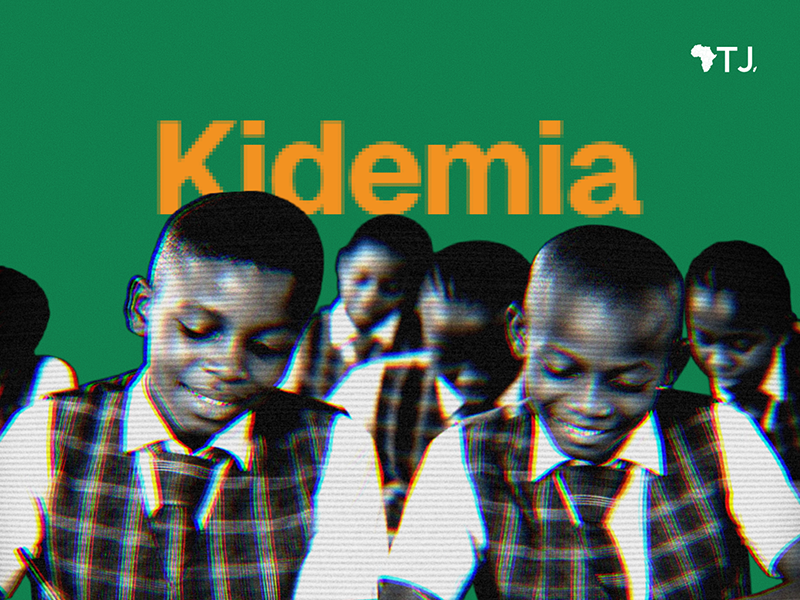
There is a moment many parents know very well.
A child studies for weeks, attends extra lessons, completes assignments, and still struggles during examinations. The problem is often not a lack of intelligence. Sometimes, it is simply not understanding how to approach the examination itself.
Many students know the material. Fewer understand how to answer questions under pressure, manage time effectively, or identify the areas where they need improvement.
For years, exam preparation in Nigeria has relied heavily on textbooks, lesson notes, and after-school lessons. Students often only discover their weaknesses after an examination has already been written. By then, the opportunity to improve has already passed.
That observation eventually became the foundation for Kidemia.
The idea began in an unexpected place.
In 2017, Shehu Zubairu, HR professional and co-founder, Kidemia prepared for the SHRM-SCP certification examination using an international assessment platform that promised strong outcomes if users consistently achieved certain scores during practice sessions. After using the platform and consistently meeting those benchmarks, he eventually passed the examination, becoming one of the few Nigerians in his cohort to do so. This is case of how predictive analysis can be used to improve performance. That experience raised a simple question: if assessment technology could help adults prepare for professional examinations, why couldn’t similar tools help children?
At the same time, their son was preparing for common entrance examinations.
The family noticed something many parents had experienced before. There was often a difference between knowing a subject and knowing how to pass an examination. Students needed more than information. They needed feedback.
That realization led to the creation of Kidemia.
The platform allows children to take assessments and receive detailed performance breakdowns across individual topics. Instead of simply receiving a score in mathematics, students can understand whether they struggle with fractions, probability, HCF, or other specific areas. This gives parents and learners clearer insight into strengths and weaknesses while helping children improve over time.
As the company began growing, partnerships became an important part of its strategy.
Kidemia entered into a collaboration with AfriLearn, one of Nigeria’s digital learning communities, allowing students within the platform to access Kidemia’s assessment tools. The company has also secured a partnership with the Lagos State Universal Basic Education Board to support public school students. For Ruth Zubairu, this represents something larger than product growth.
It is about making quality educational support available beyond private schools.
“Brilliance does not select,” she explained during a conversation with African Tech Journal. Public school students should have access to the same learning opportunities as children in more privileged environments.
Building for Nigeria, however, introduced several challenges.
Internet access remains inconsistent in many areas. Parents often share devices with their children, limiting learning time. Pricing also became a difficult consideration. While many edtech platforms charge premium subscription fees, Kidemia realized that the communities they hoped to reach often could not afford those costs.
This led the company to rethink its model.
Instead of focusing entirely on direct consumer revenue, Kidemia increasingly sees itself as a platform through which governments, organizations, and corporate social responsibility initiatives can support educational access at scale. The company is also exploring dedicated learning tablets with parental controls and educational content designed specifically for children.
Looking ahead, what excites the founder most is not growth metrics or funding rounds.
It is possibility.
The possibility that a child attending a public school in Nigeria could one day access opportunities, scholarships, and educational outcomes that previously seemed out of reach.
For Kidemia, the goal is not simply helping children pass examinations.
It is helping them understand their potential before the world decides what it is.