Tag: payment

  • Lumi business -an idea to 400,000 monthly sales transactions in peak periods

    Lumi business -an idea to 400,000 monthly sales transactions in peak periods

    It started during COVID, when movement was restricted, and many of us finally had time to think deeply about the structural problems facing African businesses.

    There were four of us at the beginning. We met roughly once a month, not to rush into building a startup, but to talk through patterns we were seeing in the market. One issue kept resurfacing. Most businesses in Nigeria were operating with very little data and almost no modern tools to guide day-to-day decision making.

    At the time, many startups were focused almost entirely on payment collection. That mattered, but it felt incomplete. Collecting money is only one part of running a business. Inventory, expenses, reporting, and performance visibility were still largely unmanaged. Businesses were working hard, but without clarity.

    That gap became the foundation of Lumi Business.

    After Payments, Businesses Were Left Alone

    Speaking directly with business owners shaped our conviction. Again and again, we saw that once payments were collected, owners were largely left on their own. Many relied on foreign software that was not built for Nigeria. Others stitched together fragmented local tools that never worked as a single system.

    The result was predictable. Decisions were made based on instinct rather than insight. Owners put in effort without knowing what was truly working. That disconnect between effort and clarity pushed us into this space.

    We did not want to build another narrow solution. We wanted to help businesses actually run better.

    Starting With People and Patience

    We started with a technically strong founding team, most of us with engineering backgrounds. Several of us had worked in structured retail and manufacturing environments like KraftHeinz and Pepsi, as well as tech startups serving small and medium businesses. Those experiences shaped how we thought about systems, efficiency, and scale.

    On the capital side, we raised a small friends and family round. It allowed us to build an early product, test with real merchants, and iterate quickly without external pressure. Family and close friends were critical, not just financially, but emotionally. Their belief gave us the patience to build deliberately and stay focused on real customer problems.

    Trust, Pricing, and Market Reality

    Early challenges were unavoidable. The first was trust. Convincing business owners to move critical operations onto a new platform takes time. The second was hiring, especially in an environment where experienced talent often had safer or better-paying options.

    Pricing was another constraint. Nigerian businesses are highly price sensitive, and we could not charge what similar tools cost in Europe or North America, even though development costs were comparable. Inflation and currency instability made long-term planning difficult.

    Interestingly, recent tax reforms shifted behaviour. More businesses began to understand the importance of proper record keeping and structured systems. That shift aligned closely with what we were building.

    Technology as the Foundation

    Lumi was technology-first from day one. We were not a traditional business that later adopted tech. Technology was the lever for scale, consistency, and insight.

    We built an all-in-one platform combining sales, inventory management, payments, expenses, customer management, analytics, and integrations with financial partners. Internally, strong data infrastructure and scalable cloud systems allowed us to support hundreds of merchants across multiple locations.

    Once customers got past the learning curve, many became deeply reliant on the visibility and control the platform provided. Over time, Lumi shifted from being a nice-to-have to being operationally essential.

    Growth, Impact, and What Endures

    At our peak, we were processing over 400,000 sales transactions monthly and more than ₦11 billion in transaction value across hundreds of merchants. Beyond scale, we are proud that we built a profitable, sustainable business solving real operational problems.

    As customers matured, their questions changed. They began asking about margins, trends, and optimisation. Access to data was reshaping how they thought about their businesses.

    Through it all, certain principles remained non-negotiable. Treat the team fairly. Reward hard work. Champion the customer. Build patiently.

    Looking ahead, the focus is on scaling through aligned partnerships and ensuring technology remains digestible for business owners used to manual systems. As AI reshapes competitive advantage, structured data will be the entry point. That is where Lumi’s foundation matters most.

    It feels like we have only scratched the surface.

  • XARA: Banking without a new app

    XARA: Banking without a new app

    Most fintech apps in Nigeria follow the same script.

    Build a shiny interface, pack in features, then fight to convince people to download one more app they’ll barely open. Xara walked away from that playbook.

    Sulaiman Adewale, Xara’s founder, built a financial tool that runs inside WhatsApp. No extra app. No onboarding stress.

    You open the platform you already use every day and handle your transactions from there. With 95% of most Nigerian social media users already active on WhatsApp, this offers an explicit opportunity to leverage.

    What stands out is how smoothly Xara fits into everyday conversation. You can send a voice note in pidgin, drop a photo of an account number, or type: “Send ₦10,000 to Seun for breakfast.” And the system seamlessly understands.

    The AI was trained on Nigerian expressions, so it responds to the way people actually speak. And that’s really important.

    Many banking apps still overwhelm users with interfaces that feel stiff or confusing. Xara removes that friction completely.

    It also works on simple phones with unstable internet connections. You don’t need a fancy device or steady data. You don’t need to switch between apps or search for account numbers. Everything happens on directly on WhatsApp.

    And the way people easily adopted it shows it works. Within two weeks of launch, Xara pulled in 10,000 users and processed over ₦135 million in transactions. These aren’t just people downloading for the sake of it—It works, and they’re using it.

    Xara is worth paying attention to for more than convenience. It’s proof that African tech doesn’t have to copy Western products to succeed. Sometimes the answer is meeting people where they already are, using the tools they already trust. Adewale saw that and built around it.

    There’s still work ahead—building trust, scaling, and regulation. But if Xara grows, it signals something bigger. Financial inclusion doesn’t always hinge on building complex products.

    Sometimes the breakthrough is as simple as moving banking to the space people open every morning.

    In a market that has shut out millions with complexity, Xara’s strength is its simplicity. And that’s why it stands out for me and several other Nigerians.

  • How Amoke Oge Turned Lagos Food Business Into A ₦2.3 Billion Success With Technology

    How Amoke Oge Turned Lagos Food Business Into A ₦2.3 Billion Success With Technology

    There’s something inspiring about watching someone turn passion into serious money. Hajia Amoke Odukoya, better known as Amoke Oge, did exactly that with her Amala food business. Today, it’s a ₦2.3 billion success story.

    Her journey isn’t just about cooking great food. Although her amala is legendary in Lagos, it’s also about how she used food technology and delivery platforms to solve real problems. As a result, she scaled beyond the walls of a single kitchen and built one of the most inspiring food businesses in Lagos.

    Starting Small, Dreaming Big

    In the early 2010s, Amoke Oge started with less than ₦200,000. She learned to cook from her sister, Alhaja Saudi (known locally as Iya Amoke), who was already making waves with food in Lagos. With her husband, Ishola Ade, supporting the vision, they began grinding yam and cassava the traditional way, feeding their community from a single kitchen.

    However, success brought its own problems. As inflation hit 28.9% in 2023, running a physical restaurant became brutal. Stores were packed. Customers grew frustrated while waiting for tables. Seating was limited. The traditional model was hitting its limits. After all, you can only serve so many people at once when they must physically show up.

    The Platform Play

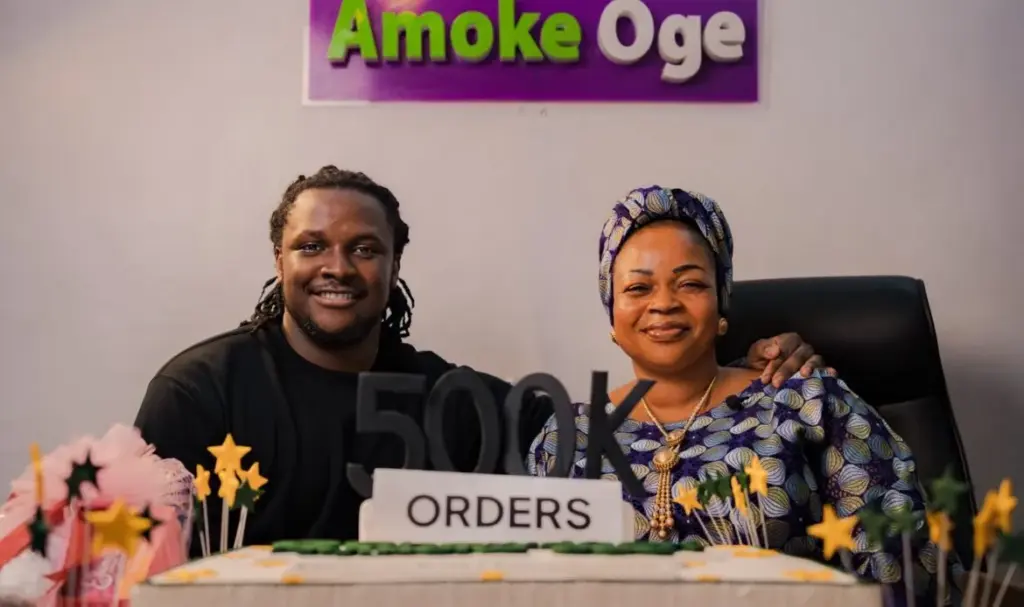
    Photo from Refined.ng
    The Platform Play Image Caption

    Two to three years ago, Amoke Oge made a move that changed everything. She joined Chowdeck, one of Nigeria’s fastest-growing food delivery platforms.

    This wasn’t just about adding delivery as a side option. Instead, she went all-in on the platform model, letting Chowdeck handle logistics while she focused entirely on cooking. Consequently, this strategic embrace of food technology turned a beloved local kitchen into a scalable food business in Lagos.

    The results speak for themselves. Over 500,000 deliveries have been completed, making her the first woman-led business to hit that milestone on the platform.

    The numbers are striking. Amoke Oge is now averaging ₦4,600 per order. Yes, that’s higher than what you’d pay eating in a traditional bukka. Yet it’s also what people are willing to pay for convenience and quality delivered to their door.

    Just by leveraging food delivery technology in Lagos, Amoke Oge moved from a single kitchen to multiple outlets. In addition, she built a repeatable system for growth.

    Scale and Strategy

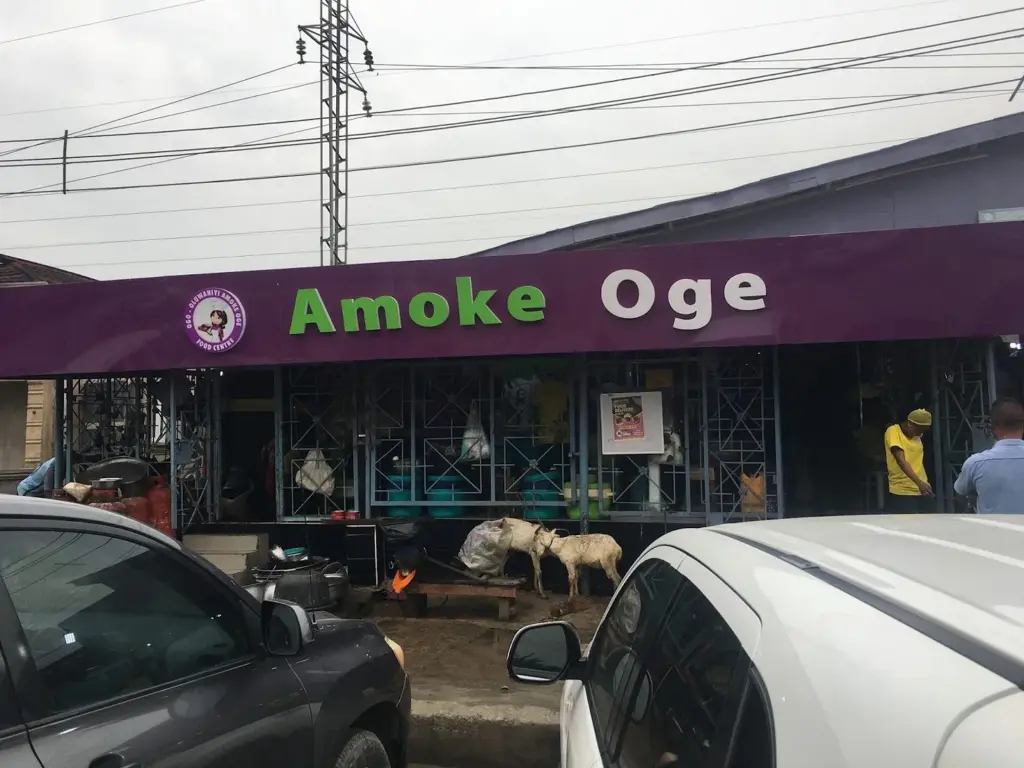
    Today, Amoke Oge operates seven locations across Lagos — Oshodi, Surulere, and others — with plans to expand to ten branches soon. That expansion is directly enabled by the delivery model.

    It’s a technology-based food delivery platform where Chowdeck manages the connection between vendors, delivery riders, and customers. Therefore, vendors like Amoke Oge can focus on cooking while leveraging the platform’s infrastructure for order fulfillment and delivery.

    Instead of worrying about foot traffic and prime real estate for each new location, she can focus on kitchen efficiency and meeting delivery demand.

    The ₦2.3 billion in revenue isn’t just impressive. It’s also proof of concept for how traditional food businesses in Lagos can use food technology to reach entirely new markets and price points.

    Why This Matters

    Amoke Oge’s story resonates because it’s not about replacing tradition with technology. She’s preserved the authenticity of Yoruba cuisine while using modern tools to reach more people. Amala isn’t just food. It’s a cultural heritage. Yet she’s found a way to scale that without losing what makes it special.

    For entrepreneurs watching from the sidelines, there are clear lessons here. She identified a real constraint (physical space limiting customers), found a technology solution that addressed it (delivery platforms), and executed consistently enough to become a category leader.

    Meanwhile, the timing worked in her favor too. Chowdeck just raised $9 million in Series A funding, which suggests investors believe in the model she’s been proving works.

    Lessons for Food Entrepreneurs in Lagos

    • Start with authenticity. Whether it’s amala, suya, or small chops, build your food business around something real.
    • Also, use food technology as leverage. Platforms like Chowdeck or Glovo can handle logistics while you focus on quality.
    • Think beyond your kitchen. Delivery means your reach isn’t limited by foot traffic or seating space.
    • Consistency matters. High quality and prompt delivery build trust and repeat customers.
    • Finally, track your numbers. Knowing your order averages and growth patterns helps you plan expansion intelligently.
    • For small food businesses in Lagos, these lessons are a practical blueprint you should follow. The sky is wide enough for everyone to fly if you do it strategically.

    What’s Next for Amoke Oge

    Photo from Businesspost

    Amoke Oge represents something bigger than one successful food business. She’s part of a generation of African entrepreneurs who are figuring out how to use food technology platforms to scale traditional businesses without losing their essence.

    Her success creates a template. Start with something you’re genuinely good at. Identify where technology can remove constraints. Execute consistently. Not revolutionary advice, but clearly effective when done right.

    The real question now is who follows her playbook next, and in which industries. Because if you can scale amala to ₦2.3 billion, what else becomes possible?