Tag: banking

  • EndowPay Wants to Make Digital Payments Easier for Nigerians Who Are Often Left Behind

    EndowPay Wants to Make Digital Payments Easier for Nigerians Who Are Often Left Behind

    For some Nigerians, sending money from a phone is a simple process. Open an app, select a beneficiary, enter an amount and confirm the transaction.

    But that experience assumes something that is not always true: that the person using the phone is comfortable navigating a financial app.

    For a market woman who can make a phone call but struggles to navigate a smartphone interface, digital banking can still feel inaccessible. For someone who is semi-literate or more comfortable communicating in a local language, the promise of financial technology can remain just that, a promise.

    This was the gap Okunola Orogun and the team behind EndowPay identified when they began building the fintech in November 2024.

    Rather than creating another payment app aimed primarily at digitally confident users, the company is focused on a different question: what would financial technology look like if it was designed around the people who find existing systems difficult to use? 

    Building for People Who Are Often Overlooked

    The conversation around financial inclusion in Africa has largely focused on bringing the unbanked into the formal financial system.

    But EndowPay believes access to a bank account is only one part of the problem.

    The bigger question is whether people can actually use the technology that gives them access.

    Okunola  describes people who may still depend on their children to operate their phones or walk to a POS terminal to send money to family members. For EndowPay, the existence of smartphones and digital payments should make these processes easier, not introduce another barrier.

    The company is therefore exploring natural-language interactions that allow users to communicate with financial technology in ways that feel more familiar.

    The idea is particularly relevant in a country where language, literacy and digital confidence can vary significantly across communities.

    If someone can make a phone call in their preferred language, Endow Pay believes they should eventually be able to use that same simplicity to carry out financial transactions.

    Making Payments Easier, Not Just Faster

    One of the company’s central arguments is that financial technology should remove friction from everyday transactions.

    The team points to a familiar situation. Imagine driving when a child calls to request ₦2,000 urgently. With a conventional banking app, the parent may need to stop, pick up the phone, open the application and complete the transfer.

    EndowPay is working toward a different experience through Endow Bot, which the company says is planned for rollout in Q4 2026.

    The proposed system would allow users to initiate transactions through a text and voice interaction, both in-app and on most popular instant messengers, supported by authentication layers designed to keep the process secure.

    The company’s focus on speed also extends to transaction processing. According to the team, EndowPay is working to make transactions complete within seconds, while its infrastructure is being designed to reduce the delays that customers often experience when payments fail.

    For Endow Pay, this is closely connected to trust.

    Trust Is Still the Biggest Challenge in Fintech

    Getting people to trust a company with their money is difficult, particularly for a young fintech competing against established financial institutions.

    The team says its approach has been to demonstrate value rather than simply talk about it.

    That includes focusing on transaction speed, customer support and reliability, while working with licensed partners to provide key financial services.

    EndowPay’s CTO says it works with CBN-licensed organisations for several of its services and has partnerships across banking and payment infrastructure. The company also says it has put compliance measures in place around anti-money laundering and data protection.

    The founders believe these relationships are important because trust in financial technology is not built through branding alone. It is built through the infrastructure behind the product and the consistency of the customer experience.

    Growth Built Around Active Users

    Since its alpha launch around September 2025, EndowPay says it has recorded steady user growth.

    But the team is less interested in accumulating large registration numbers than in understanding whether people actually use the product.

    Adebola says a significant majority of its current users are active, while the company has a customer retention team that reaches out to users to understand why they may have stopped using the platform and what could be improved.

    That feedback loop is becoming an important part of the company’s product development.

    The team says its upcoming V2 will further redefine the experience as it continues to build around the original goal of making financial technology more accessible.

    Building Without Chasing Funding

    Unlike many African fintech startups, EndowPay is currently 100% bootstrapped.

    The founders say this is intentional.

    Rather than raising capital and potentially adjusting the company’s direction around investor expectations, they want to build the core product and validate the original vision first.

    Okunola’s position is straightforward: funding should follow value rather than become the reason for building the company.

    The team remains open to investment in the future, but only from partners who understand and support the company’s direction.

    What Comes Next for EndowPay

    The company’s roadmap extends beyond consumer payments.

    According to EndowPay’s CTO, EndowPay is exploring a B2B offering that would allow SMEs to access business tools and maintain better financial records, potentially helping them when seeking financing or managing their operations.

    The team is also looking at cross-border payments, remittance services, virtual cards and cross-border accounts that could make it easier for remote workers and businesses to receive money internationally.

    On the infrastructure side, EndowPay is developing transaction routing technology designed to direct payments through available providers and reduce transaction failures.

    The broader ambition is to make financial technology feel less complicated for the people using it.

    For EndowPay, the opportunity is not simply to become another fintech competing for the same digitally savvy customers.

    It is to rethink how financial technology can work for people who have historically been expected to adapt to the technology, rather than having the technology adapt to them.

    And as Nigeria’s financial ecosystem becomes increasingly digital, that distinction could become increasingly important.

    This article is based on an interview with Okunola Orogun and EndowPay’s team conducted by African Tech Journal.

  • The African Tech Brand Quietly changing lives : Paystack

    The African Tech Brand Quietly changing lives : Paystack

    When I think about the African tech brand that has quietly made life easier for thousands of creatives, small business owners, and dreamers like me, Paystack is the first name that comes to mind. It’s funny because I didn’t start out paying attention to fintech at all.

    I just wanted to understand why so many business pages on Instagram were suddenly taking payments smoothly without all the usual back-and-forth. Somewhere along the line, the answer kept pointing back to one company: Paystack.

    My first real interaction with the brand wasn’t even as a business owner. It was as a customer. I remember trying to pay for a virtual class and expecting the usual stress-failed transactions, double debits, or the “network not available” message.

    But the payment went through instantly, and the receipt hit my email before I could even refresh the page.

    It was such a small moment, but it made me pause. In this country, where simple things often become complicated, that small moment of ease meant something.

    The more I paid attention, the more I realized how deeply Paystack is woven into the daily hustle across Africa.

    The vendors who rely on payment links. The creators who send invoices. The startups that feel “official” because they have a proper checkout page. Even NGOs and schools use it now.

    Paystack somehow manages to be present but not loud , almost like a quiet backbone that keeps so many ideas alive.

    What I love most is how simple they make things feel. You don’t need to be tech-savvy to use it. You don’t need a big business. You don’t even need a website.

    There’s something empowering about that the idea that anyone with a skill or a passion can start collecting payments and building something real.

    And of course, the global recognition they’ve gotten, especially after their acquisition by Stripe, made me genuinely proud. It felt like a win for everyone who believes Africa can build world-class technology.

    But beyond the headlines and the milestones, Paystack represents something personal to me: possibility.

    The possibility that African problems can be solved by African innovators. The possibility that a simple idea can transform how we work and create.

    Paystack may be a fintech company, but to me, it’s a reminder that progress doesn’t always have to be loud. Sometimes, it’s the quiet systems running in the background that change the most lives.

    That’s why Paystack is the tech brand I love.

  • Is Face ID Really 2FA? Rethinking Biometric Security in Financial Apps

    Is Face ID Really 2FA? Rethinking Biometric Security in Financial Apps

    Financial institutions increasingly use 2-Factor Authentication (2FA) in their mobile apps to protect customer transactions. Traditionally, 2FA combines two different types of verification. This is usually something you know, such as a transaction PIN or one-time password, and something you have, such as your registered phone or a token.

    In many modern transaction flows, after a user enters a transaction PIN or token, the app then requests biometric authentication. This could be Face ID or a fingerprint, depending on the user’s device. While this improves convenience, it raises an important question. Should device-level biometrics really count as a valid second factor for transaction authentication when the verification does not happen within the financialinstitution’s systems?

    How Biometrics Work in Financial Apps

    When a financial app uses Face ID or fingerprint authentication:

    ● The app does not see or transmit the raw biometric data. Instead, it asks the phone whether the biometric presented matches one of the biometrics already enrolled on the device

    ● The biometric data itself is stored securely on the phone, within protected hardware designed for this purpose. The app simply receives a yes or no response from the device. The financial institution never receives the actual fingerprint or facial data.

    This means the institution is relying on the phone’s confirmation rather than directly verifying the user’s biometric identity.

    Can Biometrics Count as a “Second Factor”?

    Traditionally, 2FA is based on using two different categories of authentication:

    1. Something you know, such as PIN or password

    2. Something you have, such as a phone or token

    3. Something you are, such as a fingerprint or face

    On the surface, combining a transaction PIN with Face ID or a fingerprint appears to meet the definition of 2FA. However, there is an important distinction.

    Because the biometric check is performed entirely on the device, the financial institution cannot independently confirm who was authenticated. For this reason, device biometrics are often best viewed as a strong convenience layer rather than a fully independent second factor on their own. They work best when combined with other institution-verified controls, especially for high-risk transactions.

    Security Risks and Edge Cases

    1. Device Access by Another Person

    If another person is able to register their fingerprint or face on a phone, whether intentionally or under pressure, financial apps that rely on biometrics may treat that person as a legitimate user.

    2. Device Trust Over User Identity

    Because the biometric decision comes from the phone, anyone who can unlock the device and add their biometric may be approved during transactions. The financial institution has no visibility into changes made at the device level.

    3. Spoofing and Advanced Attacks

    While modern phones include strong protections, biometric systems are not immune to spoofing attempts such as fake fingerprints or manipulated facial images, especially on older or less secure devices.

    4. Biometrics Cannot Be Changed

    Unlike a PIN or password, biometrics are permanent. If they are compromised, they cannot simply be reset. This makes them riskier as a primary security control over time.

    Is It Safe to Use Device Biometrics as Part of 2FA?

    Benefits

    ● Convenience. Transactions are faster and easier for users.

    ● Device-level protection. Biometric data is stored securely on the phone and is difficult for remote attackers to extract.

    Limitations

    ● Dependence on the device. If a phone is lost, stolen, or compromised, risk increases.

    ● No direct verification. The financial institution cannot confirm who passed the biometric check.

    ● Accuracy limits. Biometric systems can sometimes fail or incorrectly approve access.

    Regulatory and Legal Considerations

    ● Most financial institutions clearly state in their terms that enabling biometric login means any biometric registered on the device may be able to access the account.

    ● Device manufacturers aren’t legally liable for financial fraud from financial app transactions authenticated via device biometrics. Responsibility typically rests with the financial institution’s policies and local financial regulations.

    ● In many regions, financial institutions must still comply with privacy and data protection laws related to biometric use, even when the data is stored only on the device. However, this does not automatically transfer liability to device providers.

    In conclusion, device biometrics add meaningful value by improving convenience and strengthening security at the device level. However, they are not a perfect or fully independent second factor when used alone for transaction authentication. For users, it is important to maintain strong device security, protect phone access codes, and understand how biometric authentication works.

    For financial institutions, biometrics are most effective when used as part of a layered 2FA approach rather than as the sole line of defense.

    By Sunny Ogbari

  • Digital at Scale: Inside the DevOps Strategies Fueling Nigeria’s Financial Services Boom

    Digital at Scale: Inside the DevOps Strategies Fueling Nigeria’s Financial Services Boom

    Infrastructure as a growth lever

    Nigeria’s financial services sector is experiencing unprecedented digital transformation, with traditional banks racing to match fintech innovation while maintaining regulatory compliance and operational stability.

    To understand the infrastructure strategies driving this evolution, Fabunmi Raphael spoke with Olaitan Falolu, Head DevOps of the leading financial institute in Nigeria, whose seven-year career spans platform engineering at multiple tier-1 financial institutions.

    Falolu has led teams that achieved 99.9% uptime for critical banking systems while reducing cloud costs by 35% and cutting deployment times by 40%. metrics that have become benchmarks for financial services infrastructure in Nigeria.

    Nigeria’s financial sector is undergoing massive digital transformation.

    From your perspective leading DevOps at one of the leading commercial banks in Nigeria, what infrastructure challenges are banks facing that most people don’t see?

    The biggest challenge is that Nigerian banks are essentially running two businesses simultaneously. We have traditional banking operations that require absolute stability and regulatory compliance, while also building fintech-style digital services that need to deploy features daily and scale instantly.

    Most people see the mobile app or web interface, but behind that is infrastructure that must handle millions of transactions during peak periods like salary payment days when transaction volumes can spike 300% in a few hours. Our systems need to auto-scale seamlessly while maintaining the security and compliance standards that banking regulations demand.

    The complexity isn’t just technical. We’re managing infrastructure that serves customers across Nigeria with varying network conditions, device capabilities, and usage patterns. A deployment strategy that works for Lagos connectivity doesn’t necessarily work for rural areas, so our platform architecture has to be resilient across these different operating environments.

    What specific DevOps strategies have you implemented to address these scaling challenges?

    The game changer is focusing on what I call “intelligent automation”—not just automating manual processes, but building systems that make smart decisions about resource allocation and deployment strategies.

    – We implemented Azure DevOps pipelines with intelligent staging that automatically provisions testing environments that mirror production configurations exactly. This eliminated the configuration drift issues that were causing 30% of our deployment failures.

    – The game-changer was integrating our monitoring stack—Dynatrace, Prometheus, and Grafana—directly into the CI/CD pipeline. Now our deployment system automatically validates performance metrics before promoting releases to production. If a deployment causes any degradation in response times or error rates, it automatically rolls back without human intervention.

    – We also implemented what we call “feature flagging infrastructure” that allows us to deploy code to production but control feature availability at the infrastructure level. This means we can push updates during low-traffic periods and then enable features instantly when market conditions are optimal.

    You’ve helped tier-1 financial institutions achieve 99.9% uptime across their digital banking platforms. In the Nigerian operating environment, that’s incredibly difficult.

    What’s your approach to reliability?

    Reliability in Nigerian banking infrastructure requires anticipating failure modes that don’t exist in other markets. Power infrastructure variability, network connectivity challenges, and the fact that digital banking services are essential infrastructure for millions of people create unique reliability requirements.

    Our approach is built on redundancy at every layer. We run multi-region deployments across Azure availability zones, but we also maintain on-premises backup systems for critical functions. If cloud connectivity fails, customers can still access core banking services through alternative pathways.

    The monitoring strategy is predictive rather than reactive. We’ve configured Dynatrace to identify performance patterns that typically precede system failures. When we see database query times increasing or memory utilization following specific patterns, our systems automatically scale resources and alert engineers before customers experience any impact.

    We also implemented what I call “graceful degradation architecture.” During high-load periods or partial system failures, the platform automatically disables non-essential features while maintaining core banking functions. Customers might not be able to view detailed transaction histories during peak periods, but they can always check balances and make payments.

    Security is obviously critical in banking. How do you integrate security into DevOps processes without slowing down deployment velocity?

    Security integration has to be invisible to development teams, or they’ll find ways around it. We embedded security scanning using SNYK directly into Azure DevOps pipelines, so vulnerability assessment happens automatically during the build process. Developers never have to think about running security scans—they just get alerts if issues are detected.

    The key insight was treating security as infrastructure code rather than a separate process. Our Terraform modules include security policy enforcement, network segmentation rules, and access control configurations. When engineers provision new resources, they automatically inherit security standards rather than having to implement them separately.

    We also implemented automated compliance validation. Every deployment automatically checks configurations against CBN [Central Bank of Nigeria] requirements and international banking standards. If a deployment would create compliance issues, it fails automatically with specific guidance on what needs to be fixed.

    This approach actually accelerated deployment velocity because engineers no longer have to wait for security reviews. They get immediate feedback during development, and they know that anything that passes pipeline validation will meet security and compliance requirements.

    Cost optimization is crucial for Nigerian banks. How do you balance performance requirements with cost efficiency?

    Cost optimization in banking infrastructure isn’t just about spending less money—it’s about spending money more intelligently to support business growth. We reduced cloud costs by 35%, but transaction processing capacity actually increased during the same period.

    The strategy focuses on dynamic resource allocation based on actual usage patterns rather than peak capacity provisioning. Nigerian banking has very predictable transaction patterns—salary days, month-end processing, holiday periods—so we designed autoscaling policies that anticipate these patterns rather than just reacting to them.

    We implemented intelligent caching layers that reduce database load during high-traffic periods. Instead of scaling database resources to handle peak loads, we cache frequently accessed data and serve it from high-performance Redis clusters. This provides better customer experience at lower infrastructure costs.

    The biggest cost optimization came from eliminating unused resources. We implemented automated resource lifecycle management that provisions development and testing resources when needed and destroys them when projects complete.

    This eliminated the “forgotten infrastructure” that was consuming significant budget without providing business value.

    How do you see fintech competition affecting infrastructure strategies for traditional banks?

    Fintech companies have forced traditional banks to adopt startup-style infrastructure thinking, but banks have advantages that fintechs don’t fully appreciate yet. Fintechs can build greenfield infrastructure optimized for specific use cases, but banks need infrastructure that supports both legacy systems and modern digital services.

    The opportunity for banks is building platform foundations that enable fintech-style innovation velocity while maintaining the operational stability that regulatory compliance requires. This means investing in platform engineering capabilities rather than just application development teams.

    We’re building what I call “fintech-ready infrastructure”—platform foundations that can support rapid feature development, A/B testing, and real-time personalization while maintaining the security and compliance standards that banking requires.

    The banks that will succeed are those that recognize infrastructure as a competitive advantage rather than just operational overhead. When you can deploy features in hours instead of weeks, you can respond to customer feedback and market opportunities faster than competitors—even fintech startups.

    What advice would you give to other financial institutions looking to optimize their DevOps capabilities?

    Start with monitoring and observability before you optimize anything else. You can’t improve what you can’t measure accurately. Many banks are trying to optimize deployment processes without understanding their current performance baselines or failure patterns.

    Invest in platform engineering teams as business enablers, not just technical support. The engineers who understand both infrastructure optimization and business requirements are the ones who deliver transformational results rather than just technical improvements.

    Don’t try to implement everything simultaneously. We achieved our 40% deployment improvement through systematic optimization over six months, not a single massive change. Focus on eliminating the biggest bottlenecks first, then build additional capabilities on stable foundations.

    Most importantly, treat security and compliance as infrastructure requirements rather than external constraints. When security is built into your platform architecture, it enables faster development rather than slowing it down.

    Looking ahead, how do you see DevOps evolving in Nigerian financial services?

    The next phase will be about intelligent infrastructure that makes decisions automatically based on business context, not just technical metrics.

    We’re already implementing systems that automatically optimize resource allocation based on transaction patterns, customer behavior, and market conditions.

    Cross-border expansion is driving demand for platform architectures that can adapt to different regulatory environments automatically. Nigerian banks expanding across Africa need infrastructure that can deploy the same applications while meeting different compliance requirements in each market.

    The bigger opportunity is positioning Nigerian platform engineering expertise globally. The engineers who can maintain 99.9% uptime while optimizing costs in challenging operating environments bring capabilities that financial institutions worldwide need. Nigerian DevOps expertise isn’t just supporting local digital transformation—it’s creating competitive advantages that transcend geographic boundaries.

    Olaitan Falolu is the Head DevOps of the leading financial institute in Nigeria, where he leads platform engineering initiatives supporting Nigeria’s digital banking transformation.

    His expertise in Azure cloud optimization, security integration, and DevOps team leadership spans seven years of financial services infrastructure experience across Nigeria’s banking sector.

    Connect with him on LinkedIn

  • Traditional Banks have ignored you, but Bank78 here to change the game.

    Traditional Banks have ignored you, but Bank78 here to change the game.

    Bank78 is changing the banking game.

    Most banks in Nigeria are built for high-profile customers.

    The kind that get relationship managers, priority queues, and exclusive perks. The rest of us don’t really have a choice. We still keep our real money with traditional banks, while fintech apps handle quick transfers and small payments.

    We trust fintechs for speed, but not always for stability.

    The gap Bank78 MFB is trying to close.

    Bank78 is saying: we are a bank too, but not your typical traditional bank. A digital-first bank that actually cares about the middle — professionals, founders, SMEs, and upwardly mobile Nigerians who earn well but don’t have ₦50 million sitting idle just to be treated properly.

    Testing the Bank78 Experience

    As part of our review process at African Tech Journal, our team downloaded the Bank78 app.

    The first thing we noticed was how lightweight it was. For a banking app, the size was small, the interface clean, and the onboarding process largely seamless.

    However, we did encounter a registration issue.

    We reached out via Instagram and didn’t get a response for a day. At that point, we needed to be sure whether this was a system issue or just an oversight. The team tried other contact channels, and once we got through, the response was prompt and the issue was resolved.

    Since then, transactions have been smooth and reliable.

    To be honest, we don’t know what exactly they’re “serving” behind the scenes but Bank78 is clearly one to watch.

    Prestige Without Exclusion

    Bank78’s positioning isn’t accidental. Its Chairman, Bright Ajaegbu, alongside Director EviOghene Osifo-Whiskey, recognised something many banks missed: prestige in banking doesn’t have to mean exclusivity.

    Their philosophy is simple: prestige made accessible.

    What Bank78 Means for You as a Customer

    For customers, Bank78’s promise is straightforward.

    It means you don’t need to deposit ₦50 million to be treated well.
    It means you can access premium digital banking without special connections. It means you get the same privileges others enjoy without hidden rules.

    Behind the scenes, Bank78 operates as a fully licensed and regulated bank, approved by the Central Bank of Nigeria and insured by the Nigeria Deposit Insurance Corporation.

    This isn’t a fintech experimenting with money: it’s a bank built for reliability first.

    Bank78 represents a clear maturation of Nigeria’s digital banking ecosystem.

    It proves that world-class financial infrastructure can be built locally.

    It shows that mass affluent Nigerians deserve better experiences.

    It demonstrates that technology, including AI, can enhance banking without dehumanizing it.

    Bank78 is live nationwide. Learn more at https://bank78.co.

    Sometimes, the most radical thing a bank can do is simply work consistently.

    And that’s the bet Bank78 is making.

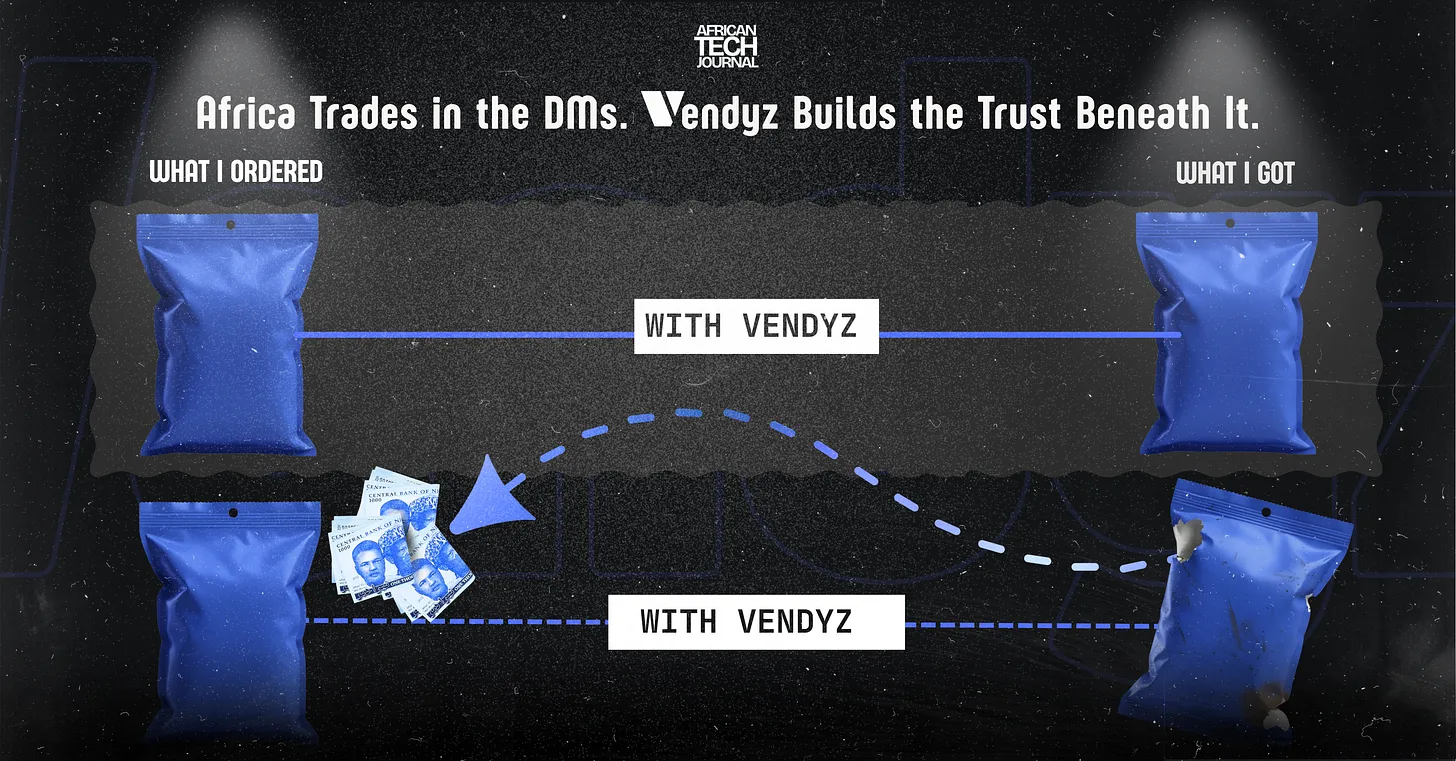
  • How Vendyz Is Powering Africa’s Surging Social Commerce Infrastructure

    How Vendyz Is Powering Africa’s Surging Social Commerce Infrastructure

    The Beginning: Born from a Painful Loss

    Most startups begin with market research, pitch decks, and investor meetings. Vendyz started with a gut punch: a significant loss to an online scammer.

    For the average online entrepreneur in Nigeria, that’s not just money—it’s months of hustle, saved income, and deferred dreams. But instead of accepting it as “the cost of doing business” in Nigeria’s Wild West online marketplace, the Vendyz team asked a different question:

    What if trust didn’t have to be a gamble?

    That question sparked what would become one of Africa’s most authentic social commerce stories—a journey defined not by Silicon Valley playbooks, but by the messy, beautiful reality of building for Africans who trade on WhatsApp, Instagram, and Facebook every single day.

    The Hard Truth: When Your Co-Founder Walks and the Market Doesn’t Care

    Let’s get real about what “building from scratch” actually means.

    Just as Vendyz started gaining momentum, their CTO and co-founder exited. Not after Series A. Not after product-market fit. Right when the foundation was being laid.

    For a bootstrapped team funding operations personally, this wasn’t a minor setback—it was an existential crisis. There was no budget to hire senior engineers. No safety net of investor capital. Just a mission and a decision: fold or find another way.

    They chose the latter. They found people willing to learn, trained them, and kept building.

    But the market had other lessons waiting.

    The Escrow Paradox

    Here’s what nobody tells you about building in Nigeria: sometimes the problem you’re solving is real, but the market isn’t ready for your solution.

    Vendyz launched as an escrow platform—a logical answer to the trust crisis in online transactions. The research made sense. The pain point was validated. Users agreed they needed protection.

    But behavior told a different story.

    People wanted safety, but they didn’t want process. They wanted protection, but they didn’t want to explain escrow to every buyer. They wanted trust, but they wanted it to feel as seamless as a regular bank transfer.

    And quietly, competitors who started in escrow were pivoting away. No press releases. No public admissions. Just silent repositioning into other fintech verticals.

    Vendyz could have followed them out the door. Instead, they did something harder: they stayed and adapted.

    The Pivot: Meeting Africans Where They Already Trade

    The breakthrough came from watching how Africans actually buy and sell online.

    While some trade through e-commerce platforms and Shopify stores, the overwhelming majority operate in WhatsApp groups, Instagram DMs, Facebook Marketplace, and TikTok comments.

    Social commerce wasn’t a buzzword for Vendyz’s users—it was reality. Vendors were already building businesses in chat threads, managing inventory through phone galleries, and coordinating deliveries via voice notes.

    So Vendyz made a critical decision: **instead of changing user behavior, build around it.**

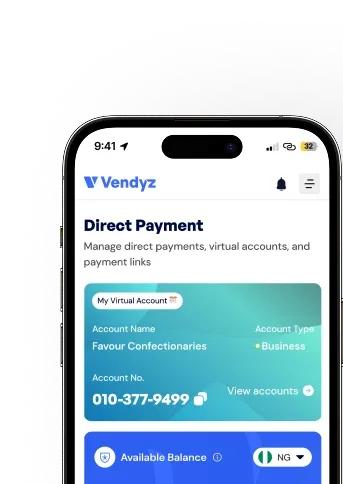
    They evolved from a standalone escrow platform into a social commerce infrastructure company—one that integrated direct payments, escrow for those who wanted it, and access to over 50 logistics providers, all while vendors continued trading exactly where they were comfortable.

    The market validated the shift immediately. Africa’s social commerce market is projected to explode from $3.51 billion in 2024 to $9.43 billion by 2030 (16.2% CAGR). In Nigeria alone, it’s expected to nearly double from $2.04 billion in 2025 to $3.96 billion by 2030.

    Vendyz wasn’t chasing a trend. They were building infrastructure for a revolution already happening in millions of DMs across the continent.

    The Tech Stack: From Manual Chaos to Automated Trust

    The turning point came after the first few dozen transactions.

    Manual coordination between buyers and sellers might work for 10 deals. Maybe 50. But at scale? Impossible.

    That’s when Vendyz became a technology company, not just a payment facilitator.

    The Build

    They constructed an automated escrow system that held funds securely and released them only when both parties confirmed satisfaction—no human intervention required for happy paths, full support available for disputes.

    Then they integrated the tools that turned them from early-stage startup to serious infrastructure:

    – Korapay and Palmpay for payment processing

    – Google Cloud for hosting and security  

    – Shipbubble for 50+ logistics provider integrations

    – Tawk.to for live customer support

    – GA4 and GTM for behavioral analytics

    – Custom dashboards for real-time transaction monitoring

    On the operations side, they built structured workflows through Google Sheets and Slack Workspace, ensuring product, design, operations, and marketing stayed aligned without expensive project management tools.

    The Impact

    The change was immediate and measurable:

    – Transactions became faster

    – Error handling improved dramatically  

    – Internal communication became seamless

    – Customer trust skyrocketed

    Users started describing Vendyz as “simple, safe, and easy to use”—the three words every fintech founder dreams of hearing in a market saturated with complexity.

    The Cultural Secret: Building for Behavior, Not Ideals

    Here’s what separates Vendyz from most African tech startups: they never tried to “educate the market” out of its habits.

    They didn’t build a fancy app and then wonder why adoption was low. They didn’t create workflows that required users to change how they already did business.

    Instead, they met Africans exactly where they were:

    The WhatsApp Marketplace

    Recognizing that WhatsApp is Africa’s primary commerce platform, Vendyz built a verified vendor marketplace directly within WhatsApp. Sellers could list products, buyers could discover them, and transactions could happen without anyone leaving the app they were already in.

    The Language

    They kept communication simple, human, and personal. No corporate jargon. No fintech buzzwords. Just clear language that made sense to someone selling shoes from their apartment or a university student flipping tech gadgets.

    The Process

    Instead of forcing escrow on everyone, they offered direct pay for those who wanted speed and escrow for those who wanted protection. User choice, not company preference.

    This cultural authenticity is why Vendyz has been able to grow organically in a market where most fintech startups burn millions on user acquisition.

    The Numbers: What Organic Growth Actually Looks Like

    Since launching their MVP in mid-March 2025, Vendyz has achieved metrics that most funded startups would envy:

    – 600+ verified buyers and sellers in active marketplace

    – 500+ active users engaging regularly with the platform

    – 50+ integrated logistics providers enabling nationwide delivery

    – Strategic partnerships with Anchor, Korapay, PalmPay, and other fintech infrastructure players

    But here’s what matters more than the numbers: Vendyz deliberately chose quality over vanity metrics.

    They started with over 1,000 onboarded users. Then they refined their verification process and cleaned the database down to 600 verified, trustworthy participants.

    Why? Because in a trust-based business, credibility > scale.

    One scammer in your marketplace destroys more value than 100 legitimate users create. Vendyz understood this from Day 1.

    The Milestones That Matter

    Every milestone at Vendyz tells a story of resilience over resources:

    1. The WhatsApp Marketplace Launch

    Creating a free, verified vendor marketplace inside WhatsApp wasn’t just product innovation—it was cultural adaptation. It proved that African vendors didn’t need to learn new platforms; platforms needed to meet them where they already were.

    2. The ₦3M Transaction Milestone

    Processing over ₦3 million organically within months of launch validated the core hypothesis: Africans want trust-based payments when executed with simplicity.

    3. The Verification System

    Choosing to reduce their user count from 1,000 to 600 verified participants was a defining moment. It signaled to the market that Vendyz prioritized safety over growth theater.

    4. The Community Trust Signal

    The most meaningful milestone? Organic referrals.

    Users started recommending Vendyz without prompting. Vendors shared testimonials unpaid. Buyers referred friends naturally. That’s when Vendyz knew they’d built something real.

    The Lessons: What Vendyz Teaches African Founders

    1. Start with Empathy, Not Features

    Vendyz didn’t begin with “let’s build fintech.” They began with “we got scammed, and that needs to stop.” Real innovation starts with real pain.

    2. Don’t Scale Noise; Scale Trust

    It’s better to have 600 verified, engaged users than 6,000 inactive ones. Growth without trust eventually collapses.

    3. Build Lean, But Build Consistently

    Every milestone was achieved without external capital by focusing ruthlessly on user value and operational discipline.

    4. Adapt Fast, But Stay True

    The market shifted from escrow to direct pay, from app to WhatsApp, from standalone payments to full commerce infrastructure. But Vendyz’s mission—enabling safe online trade—never changed. That clarity created resilience.

    5. Culture Drives Success

    Building a team culture rooted in accountability, empathy, and clarity will always outperform even the best strategies. Vendyz’s team evolution from small founding group to full-function operation proves this.

    The Future: Building Africa’s Social Commerce Backbone

    Vendyz isn’t done. In fact, they’re just warming up.

    The Next 3 Years: Three Growth Pillars

    1. Product Expansion

    Launching Vendyz Storefronts—allowing any vendor to create a professional mini-store in minutes that integrates payments, delivery, and reviews. Think Shopify simplicity meets WhatsApp ubiquity.

    2. Geographical Growth

    Expanding to Ghana and Kenya first, where informal trade and social selling mirror Nigeria’s dynamics. The playbook is proven; now it’s about regional adaptation.

    3. Financial Enablement

    Deepening access to business tools like Virtual Business Accounts (VBA), enabling small sellers to transact with the credibility of structured businesses.

    The Technology Vision

    Vendyz is investing heavily in:

    – Automation of vendor verification, payouts, and analytics

    – Data systems that help vendors understand their customers

    – AI-driven insights for inventory management and pricing

    – Reputation scoring to build trust at scale

    If Funding Comes

    Vendyz has been approached by investors, but they’ve been selective. If capital arrives, priorities are clear:

    1. Technology infrastructure (strengthen escrow/direct pay, expand logistics integrations)

    2. Marketing and growth (vendor education, university ambassador programs)

    3. Talent development (ensuring the team grows with the company)

    Why This Story Matters

    Vendyz represents something bigger than a fintech startup.

    They’re proof that:

    ✅ You can build trust-first technology without external funding 

    ✅ Cultural adaptation beats market education

    ✅ Organic growth is possible when mission > hype  

    ✅ African innovation often comes from lived experience, not imported playbooks

    In a tech ecosystem obsessed with fundraising announcements and unicorn valuations, Vendyz is building the unsexy, essential infrastructure that enables thousands of everyday Africans to trade safely online.

    They’re not chasing headlines. They’re opening doors.

    The Vendyz Playbook: Questions for Reflection

    For every African entrepreneur reading this, ask yourself:

    1. Are you building for the market you wish existed, or the one that actually does?

    2. Have you truly met your users where they are, or are you asking them to meet you? 

    3. Are you measuring vanity metrics or building real trust?

    4. Can you articulate your mission in one sentence that a street vendor would understand?

    Vendyz can. Their mission is simple: Make online trade safe for everyday Africans.

    Everything else—the tech, the partnerships, the pivots—flows from that clarity.

    Join the Movement

    Vendyz isn’t just building a platform. They’re building the infrastructure for Africa’s next generation of digital vendors.

    If you’re a vendor tired of trust issues, a buyer tired of scams, or an entrepreneur inspired by resilient building—Vendyz’s story is your invitation.

    The future of African commerce isn’t happening in boardrooms alone. It’s happening in WhatsApp chats, Instagram DMs, Shopify stores, and communities of builders who refuse to accept “that’s just how things are.”

    Vendyz is proof that another way is possible.

    Want to be part of Africa’s social commerce revolution? Follow Vendyz’s journey and join their verified marketplace. Because trust shouldn’t be a luxury—it should be infrastructure.

    🚪 Welcome to the new wave of African tech.