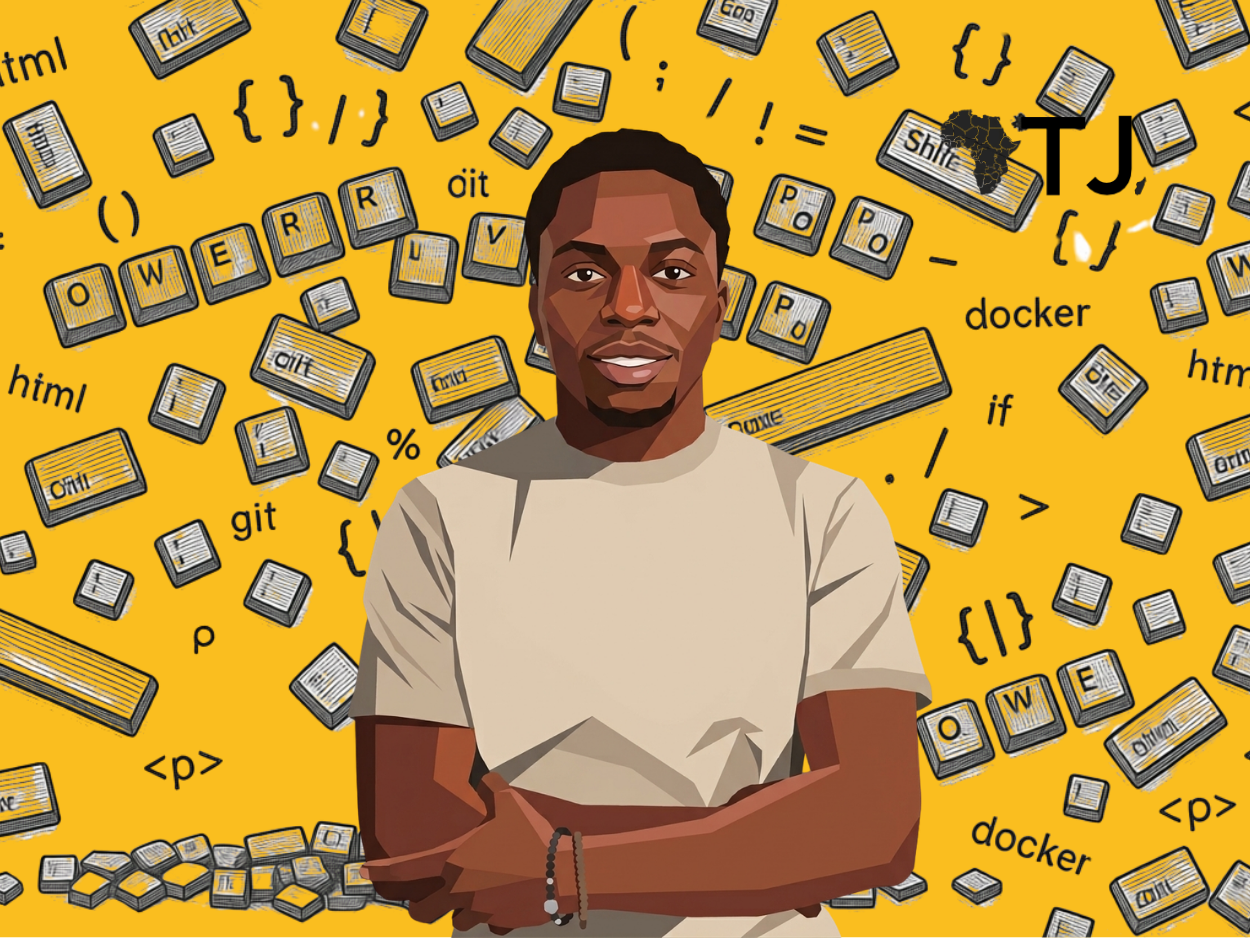
As Nigeria’s technology ecosystem matures, conversations about innovation increasingly move beyond software development alone to include product design, user experience, and the practical skills needed to build technology people actually use. While engineers often receive the spotlight, designers also play a central role in shaping the digital products powering businesses across the continent.
In a conversation with Joel Owolabi, we discussed the growing importance of design thinking in African technology products, the discipline required to translate ideas into usable systems, and the evolving role of designers within distributed product teams.
Owolabi works as a product (UI/UX) and graphics designer at Terabyte Communications Limited, a Lagos-based ICT firm that develops websites, digital platforms, and training programmes for businesses and institutions across Nigeria. His work focuses on interface architecture, user experience structure, and product usability for web platforms developed by engineering teams.
The conversation explored how product design has shifted from visual presentation toward structured problem-solving.
1. Product design is often misunderstood as visual aesthetics. How do you define the discipline in the context of digital technology?
Product design is fundamentally about solving user problems through structured interaction systems. The visual layer is important, but it represents only one part of the process. A designer studies how people interact with a system, how information is organized, and how tasks can be completed with the least friction.
That process involves research, wireframing, prototyping, and collaboration with developers. When businesses invest in product design early, the resulting technology becomes easier for users to understand and adopt.
2. Your work involves collaboration with engineers and product teams. How does that relationship influence the outcome of digital products?
Strong collaboration between design and engineering teams determines whether a product succeeds or fails. Designers translate business goals into interface logic while engineers convert that structure into working systems. If designers and developers work independently, usability problems appear later in the product lifecycle.
When they collaborate early, the system becomes more stable because usability and technical feasibility develop together. This collaboration is especially important in markets like Nigeria, where many users interact with digital platforms for the first time.
3. Nigeria’s digital economy continues to grow rapidly. How does this environment influence the way designers approach product development?
The Nigerian market requires designers to think carefully about accessibility and usability. Many users access digital platforms through mobile devices, sometimes with limited connectivity. Designers must build interfaces that remain simple, responsive, and intuitive.
If a product is complicated or difficult to navigate, users will abandon it quickly. Understanding local user behaviour helps designers create systems that feel natural to the people using them.
4. You work with an ICT company that provides both development and training services. How important is skills development within the technology sector?
Digital skills development is one of the most important factors shaping the future of the technology sector. Software tools continue to evolve, and organisations need professionals who understand both technology and user experience.
Beyond professional work, I contribute to design education as an instructor at SQI College of ICT, where I teach UI/UX design and digital product fundamentals.
Teaching allows me to help emerging designers understand the principles behind product development. When designers learn structured thinking early, they build products that perform better in real business environments.
5. Your background includes branding, visual communication, and product interface design. How have these different disciplines influenced your design philosophy?
Working across multiple design disciplines builds a broader perspective. Branding teaches consistency and visual identity, while product design focuses on usability and interaction.
The combination allows designers to build products that are visually coherent and functionally efficient. Businesses benefit when both elements are present.
A strong product interface communicates the brand while helping users achieve their goals.
6. The design profession is evolving globally. What opportunities do you see for African designers within international technology ecosystems?
African designers are increasingly participating in global technology projects. Remote collaboration tools and distributed product teams allow designers to contribute to international platforms regardless of location.
The key requirement is professionalism and technical competence. Designers must understand research methods, design systems, and collaborative workflows.
When designers demonstrate those capabilities, geographic location becomes less of a barrier.
7. Events such as hackathons often bring together engineers, designers, and founders. What role do these gatherings play in shaping the ecosystem?
Hackathons create environments where people from different disciplines collaborate on real problems. Designers, developers, and entrepreneurs work together to produce solutions within a limited timeframe.
This process encourages experimentation and exposes participants to new ideas and workflows.
For designers, hackathons also reinforce the importance of rapid prototyping and collaborative problem-solving.
8. Many young designers enter the field through graphics or visual design. What advice would you give them as they transition toward product design?
Graphic design provides a strong foundation because it develops visual communication skills. Transitioning into product design requires learning additional frameworks such as usability analysis, interaction design, and user research.
Designers must also become comfortable working within multidisciplinary teams that include developers and product managers. Curiosity and continuous learning remain essential in this profession.
9. What qualities distinguish a strong product designer within modern technology teams?
Strong product designers combine creativity with analytical thinking. They ask questions about how users behave, how systems function, and how technology can reduce complexity. Attention to detail is important, but so is the ability to think about the entire product ecosystem.
Designers must understand business goals, technical constraints, and user expectations simultaneously. Those who develop that balance contribute significantly to product development.
10. Looking ahead, how do you see product design influencing the next phase of digital growth across Africa?
Product design will play a larger role as technology adoption continues across industries. Businesses increasingly understand that usability affects customer retention and operational efficiency.
Designers will influence how platforms for finance, education, logistics, and commerce evolve across the continent. The goal remains consistent, which is to create digital systems that people can understand and trust.